Understanding The Rise Of Quiet Luxury Fashion
The compliments on this site’s most-read outfit posts almost never mention a brand name. Readers describe the coat, the color, the fit, never the logo. That pattern is what pushed us to look at quiet luxury as more than a hashtag.
The Silent Revolution in Fashion
Something remarkable happened on the way to 2025. While fast fashion brands screamed for attention with neon logos and viral micro-trends, the world’s most discerning dressers were doing something completely different. They were whispering.
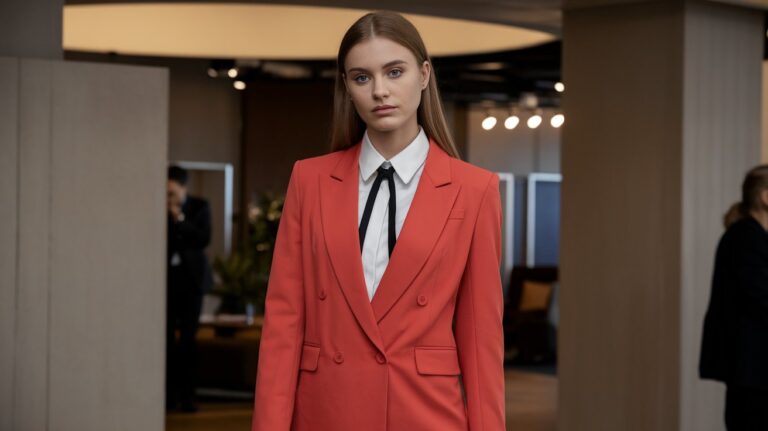
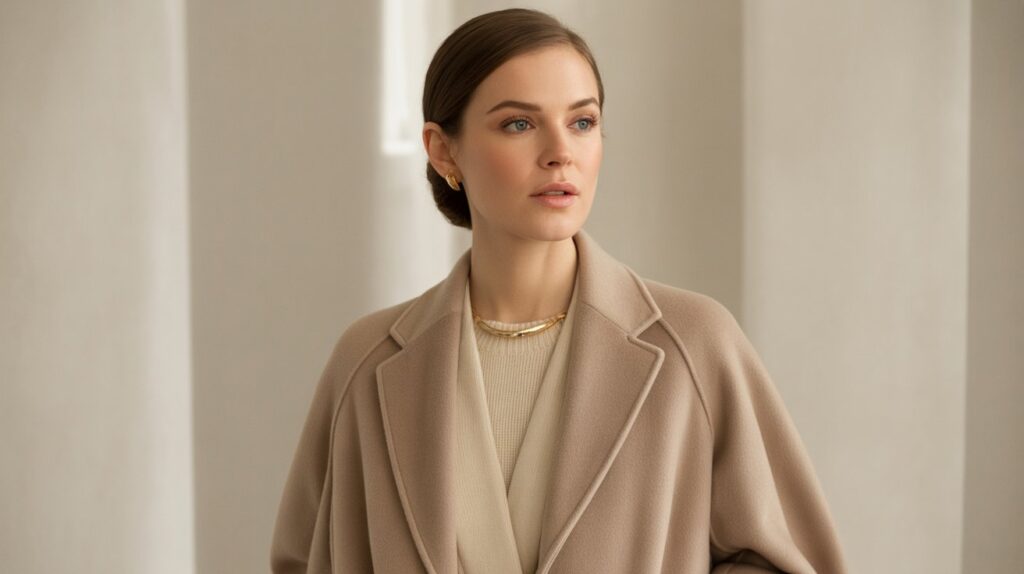
Welcome to the era of quiet luxury—where a perfectly tailored coat speaks louder than any logo ever could, and where true wealth doesn’t need to announce itself. This isn’t just another fleeting fashion trend; it’s a fundamental shift in how we think about style, status, and substance in an increasingly noisy world.
If you’ve found yourself drawn to Gwyneth Paltrow’s courtroom wardrobe, mesmerized by the wardrobes in Succession, or simply exhausted by the constant churn of fast fashion, you’re part of a movement that’s reshaping the entire fashion landscape.
The global luxury fashion market reached $259.74 billion in 2024 and is projected to grow to $431.43 billion by 2033, with quiet luxury representing a significant and growing segment of this massive industry.
But here’s what most articles won’t tell you: this trend isn’t really about fashion at all. It’s about identity, confidence, and a radical rejection of performative wealth in favor of genuine quality.
Once you understand why stealth wealth resonates so deeply with our current cultural moment, you’ll never look at your wardrobe the same way again.
What is Quiet Luxury? Understanding Stealth Wealth Fashion
Defining the Undefinable
Quiet luxury—also known as stealth wealth, silent luxury, or the old money aesthetic—represents a sophisticated approach to dressing that prioritizes quality, craftsmanship, and timeless design over obvious branding and trend-driven pieces.
Think of it this way: If logomania is shouting your net worth from the rooftops, quiet luxury is the art of the knowing glance between people who recognize quality when they see it.
The core principles include:
- Invisible excellence: Impeccable construction that only reveals itself upon close inspection
- Material mastery: Premium fabrics like cashmere, silk, fine wool, and butter-soft leather
- Logo-free design: The complete absence of visible branding
- Timeless silhouettes: Classic cuts that transcend seasonal trends
- Subtle sophistication: Muted color palettes dominated by neutrals, earth tones, and monochromatics
- Investment mindset: Pieces designed to last decades, not seasons
Quiet Luxury vs. Stealth Wealth: Is There a Difference?
While these terms are often used interchangeably, there’s a nuanced distinction worth understanding:
| Aspect | Quiet Luxury | Stealth Wealth |
|---|---|---|
| Primary Focus | Aesthetic philosophy and lifestyle | Specifically hiding wealth through fashion |
| Communication | Subtly signals taste and refinement | Actively conceals economic status |
| Scope | Extends beyond clothing (homes, travel, lifestyle) | Primarily fashion-focused |
| Intent | Appreciate quality without ostentation | Privacy and avoiding unwanted attention |
| Recognition | For those “in the know” | Designed to go unnoticed by most |
Both approaches reject conspicuous consumption, but quiet luxury is about refined taste, while stealth wealth is about strategic discretion. Think of quiet luxury as the aesthetic choice, and stealth wealth as the practical application.
The Historical Roots: Why Wealth Has Always Whispered
From European Aristocracy to Wall Street
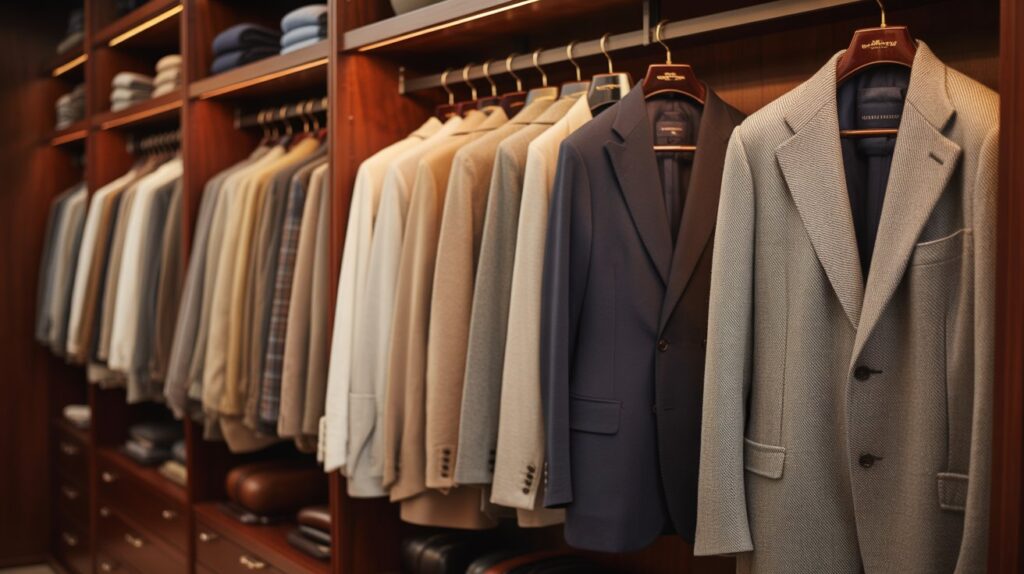
The concept of understated elegance isn’t new—it’s centuries old. In 18th and 19th century Europe, as power shifted from monarchies to capitalist elites, the newly wealthy adopted more subdued clothing to differentiate themselves from the ostentatious court styles of the aristocracy.
This period saw the “Great Male Renunciation,” where men abandoned lace, powdered wigs, and flamboyant dress in favor of somber suits and muted colors. It was a visual declaration: “We don’t need peacock feathers to prove our worth.”
In the Anglosphere, this aesthetic became associated with “old money”—inherited wealth that didn’t need to announce itself. Our old money outfit ideas guide covers how that same aesthetic translates into a modern wardrobe. F. Scott Fitzgerald captured this perfectly in The Great Gatsby, where Tom Buchanan’s understated elegance contrasts sharply with Jay Gatsby’s pink suits and lavish parties—marking the latter as gauche “new money.”
The Logomania Detour (1980s-2010s)
The 1980s brought a dramatic shift. With the economic boom, fashion became about conspicuous consumption. Luxury brands plastered their logos across everything—bigger was better, louder was more successful.
This trend accelerated through the 2000s and early 2010s, fueled by hip-hop culture, celebrity endorsements, and the rise of Instagram. Fashion became performative, with each post a billboard advertising your purchasing power.
But cycles always turn. The 2008 recession briefly interrupted logomania, and by 2023, the trend had swung back decisively toward discretion—with a vengeance.
Why Now? The Perfect Storm Behind Quiet Luxury’s Dominance
1. Economic Anxiety and “Recessioncore”
Let’s address the elephant in the room: flaunting wealth during economic hardship feels tone-deaf. With inflation squeezing middle-class budgets, mass layoffs affecting multiple industries, and genuine financial anxiety permeating society, walking around in a logo-covered outfit sends the wrong message.
The fashion industry has always been acutely aware of social dynamics. During times of economic stress, overt displays of wealth become socially unacceptable. We saw this after the 2008 recession, and we’re seeing it again now. The ultra-wealthy didn’t stop spending—they just became more discreet about it.
This has even spawned the term “recessioncore” to describe fashion’s response to economic uncertainty.
2. The Succession Effect: Pop Culture’s Influence
HBO’s Succession didn’t just entertain millions—it created a masterclass in quiet luxury dressing. The Roy family’s wardrobes, featuring perfectly tailored Loro Piana, Brunello Cucinelli, and subtle Hermès, became aspirational for viewers worldwide.
The show demonstrated a crucial insight: true power doesn’t need to announce itself. Kendall Roy’s Tom Ford hoodies and Shiv Roy’s neutral-toned power dressing spoke volumes about status without a single visible logo.
Similarly, Gwyneth Paltrow’s March 2023 courtroom appearance became an unexpected fashion moment. Her daily wardrobe—featuring The Row, Celine, and Loro Piana—generated millions in media impressions and perfectly encapsulated the quiet luxury aesthetic.
3. Sustainability and Conscious Consumption
The environmental crisis has made thoughtful consumption not just fashionable but necessary. Quiet luxury aligns perfectly with sustainable fashion values, and the data backs this up. According to McKinsey research, 67% of consumers consider the use of sustainable materials an important purchasing factor, with 63% considering a brand’s promotion of sustainability equally important.
- Buy less, choose well, make it last (as Vivienne Westwood advised)
- Quality over quantity means less textile waste
- Timeless design resists the fast fashion cycle
- Durable construction extends garment lifespan
- Classic styles can be repaired and tailored rather than discarded
Consumers increasingly recognize that a $500 sweater worn 200 times ($2.50 per wear) is more sustainable—and economical—than ten $50 sweaters worn a handful of times each.
4. Social Media Fatigue and the Quest for Authenticity
After years of Instagram culture prioritizing performance over substance, people are craving authenticity. The constant pressure to showcase wealth, experiences, and possessions has left many feeling exhausted and empty.
Quiet luxury offers an antidote: confidence that doesn’t require external validation. It’s fashion for people who know their worth doesn’t depend on others recognizing their brand names.
This shift reflects a broader cultural trend toward mindfulness, intentionality, and genuine quality over performative consumption.
5. The Exclusivity Paradox
Here’s the irony: as logomania made luxury brands more accessible and recognizable, they became less exclusive. When everyone can spot your Gucci belt or Louis Vuitton bag, where’s the exclusivity?
Quiet luxury recreates genuine exclusivity through knowledge. Only those “in the know” recognize the subtle hallmarks of Loro Piana cashmere or the distinct cut of a Row blazer. It’s a secret handshake among those who understand that true luxury doesn’t need to shout.
The Psychology of Stealth Wealth: What Your Wardrobe Says About You
Confidence Without Validation
People who embrace quiet luxury demonstrate a particular kind of confidence: they’re secure enough in their identity that they don’t need external validation through recognizable brands.
This psychological profile includes:
- Internal locus of control: Self-worth comes from within, not from others’ perceptions
- Delayed gratification: Willingness to invest in quality that pays dividends over time
- Refined taste: Appreciation for subtle details and craftsmanship
- Privacy consciousness: Desire to avoid unwanted attention or judgment
- Anti-trend mentality: Resistance to following the crowd
Research in consumer psychology shows that people with higher self-esteem and established identity are less likely to rely on conspicuous consumption for status signaling.
They’ve moved beyond using possessions to communicate who they are—they simply are. Studies published in Scientific Reports confirm that sustainable fashion consumption is strongly influenced by environmental concern and perceived value, with consumers willing to pay premium prices for quality pieces that align with their values.
The Signaling Theory
Fashion has always been a form of communication, but quiet luxury operates on a more sophisticated frequency. It engages in what economists call “costly signaling”—demonstrating status through means that require genuine resources and knowledge to replicate.
A fake Gucci bag with visible logos is easy to counterfeit. But replicating the drape of a perfectly tailored Brunello Cucinelli suit or the hand-feel of genuine Loro Piana cashmere? That requires real investment.
This creates what some call “IYKYK” culture (If You Know, You Know)—a form of social signaling that’s deliberately exclusive to the informed.
The Paradox of Stealth Wealth Going Mainstream
Here’s where things get interesting: can stealth wealth remain stealthy when everyone’s talking about it? As the aesthetic gained mainstream attention through TikTok, Instagram, and fashion media, a curious contradiction emerged.
Mass-market brands like Banana Republic and Alo Yoga rushed to create “accessible quiet luxury” collections. But if everyone’s wearing the same minimalist aesthetic, has it just become another uniform—another form of conspicuous consumption, just quieter?
The answer reveals the trend’s staying power: True quiet luxury isn’t about following an aesthetic—it’s about investing in genuine quality. You can’t fake craftsmanship, material quality, or timeless design. The trend may popularize the look, but the real thing remains out of reach for most.
The Definitive Quiet Luxury Brand Guide
Heritage Luxury Houses (The Originals)
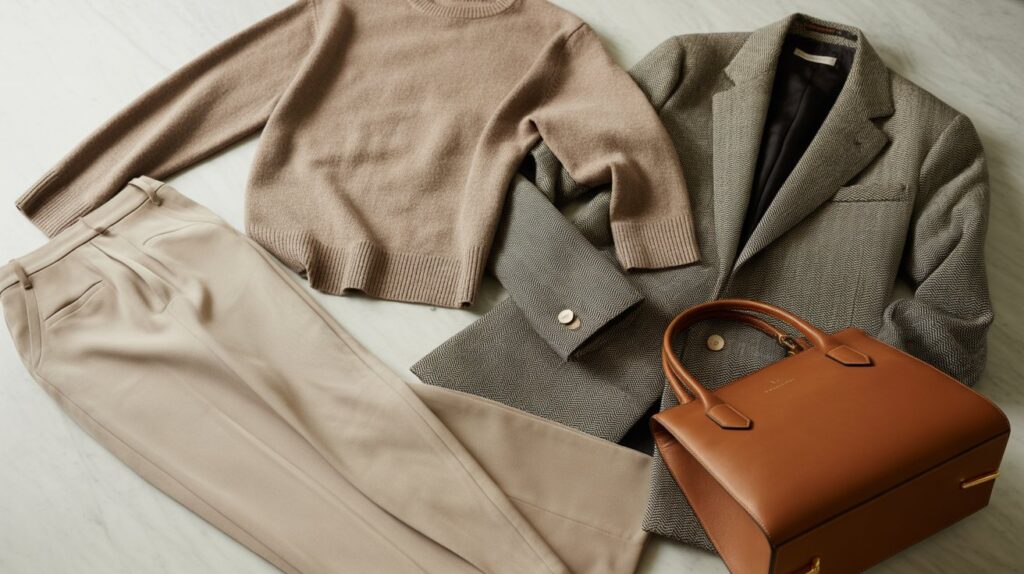
Loro Piana – The undisputed king of quiet luxury, this Italian house specializes in the world’s finest cashmere and vicuña. Their pieces are so subtle that they’re often unrecognizable to the untrained eye—yet insiders know a Loro Piana coat can cost $8,000+.
Hermès – While known for the logo-heavy Birkin, Hermès excels at understated luxury in their ready-to-wear collections. Think impeccably crafted leather goods and silk scarves that last generations.
Brunello Cucinelli – The “King of Cashmere” builds entire collections around neutral palettes and exquisite materials. His philosophy centers on “humanistic capitalism” and timeless elegance.
Zegna – Italian menswear excellence with 110+ years of heritage. Known for fabric innovation and understated sophistication.
Modern Minimalists (The New Guard)
The Row – Founded by Mary-Kate and Ashley Olsen, The Row has become the ultimate celebrity favorite for refined, logo-free luxury. Their aesthetic: if you have to ask, it’s not for you.
Bottega Veneta – Under various creative directors, Bottega has maintained its “when your own initials are enough” philosophy. Their intrecciato weave is recognizable without being obvious.
Jil Sander – German precision meets minimalist philosophy. Jil Sander pieces are studies in proportion, cut, and restraint.
Khaite – The contemporary brand making waves with architectural silhouettes and unexpected details that stop just short of being trendy.
Toteme – Swedish brand offering accessible luxury with Stockholm minimalism. Their pieces work across seasons and occasions.
The Accessible Alternatives
COS – H&M’s sophisticated sibling offers minimalist design at more accessible price points.
Everlane – Transparent pricing and ethical production meet quiet luxury aesthetics.
Arket – Scandinavian simplicity for the budget-conscious.
Cuyana – “Fewer, better things” as a business model.
How to Master the Quiet Luxury Aesthetic: A Practical Guide
The Foundation: Building Your Capsule Wardrobe
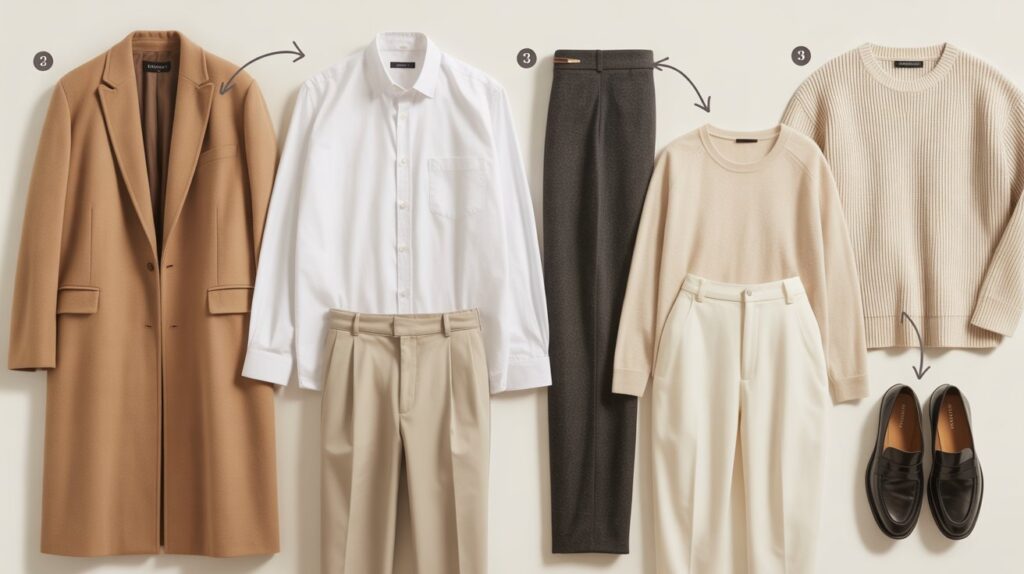
Essential Pieces for Women: Our capsule wardrobe guide covers how to build a foundation like this without losing your personal style.
- The Perfect Blazer – Single-breasted, neutral tone (camel, navy, black), tailored to your exact measurements
- Cashmere Sweaters (3-5) – Crewneck, V-neck, and turtleneck in neutral colors
- White Button-Down Shirts (2-3) – Crisp cotton or silk, impeccable fit
- Tailored Trousers (2-3 pairs) – Wide-leg, straight-leg, in neutral colors
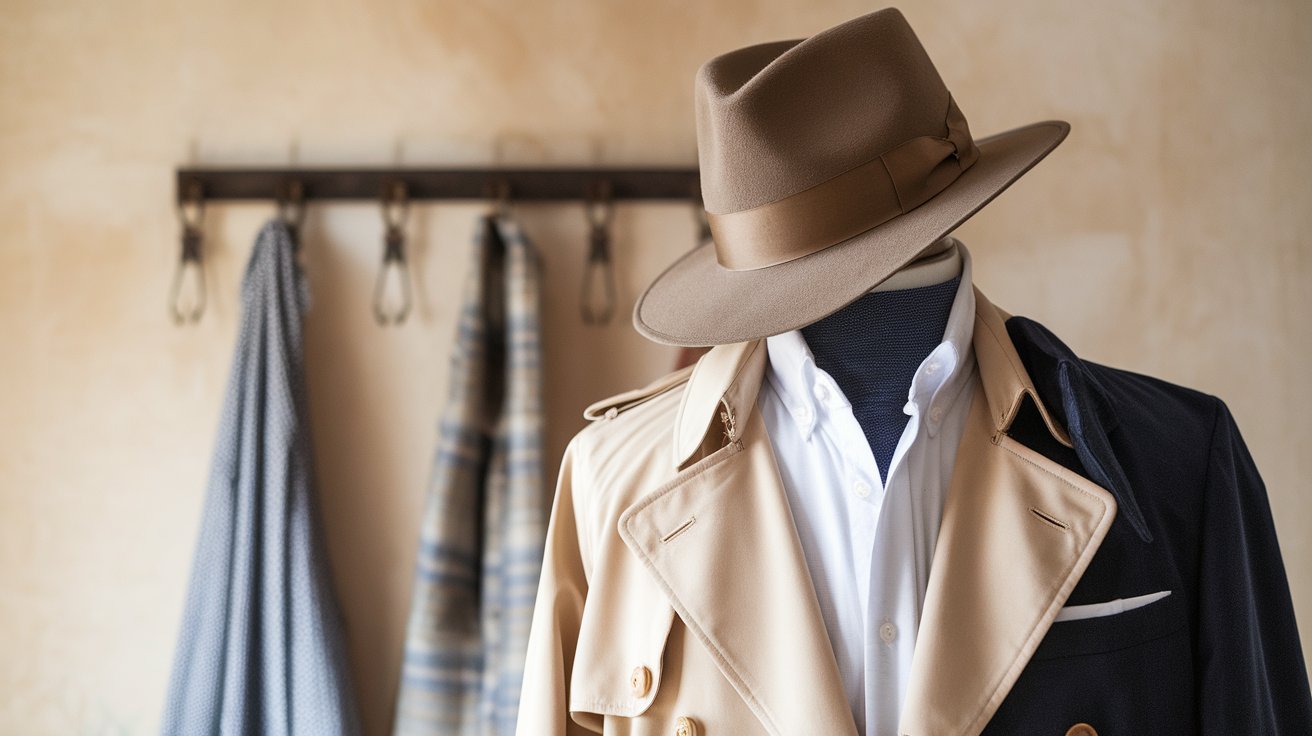
- Classic Trench Coat – Camel or navy, quality construction
- Little Black Dress – Timeless silhouette, quality fabric
- Quality Jeans (2 pairs) – Dark wash, excellent fit, minimal detailing
- Leather Accessories – Structured handbag, simple belt, classic shoes
Essential Pieces for Men:
- Tailored Suits (2-3) – Navy, charcoal, or gray in wool or wool-blend
- Sports Jackets (2) – Versatile separates in complementary colors
- Quality Knitwear – Cashmere or merino crewneck and V-neck sweaters
- Oxford Cloth Button-Downs (5-7) – White, light blue, and subtle patterns
- Chinos and Dress Trousers – Neutral colors, perfect fit
- Quality Denim – Dark wash, classic cut
- Leather Shoes – Oxfords, loafers, and minimalist sneakers
- Outerwear – Wool overcoat, quality raincoat
The Quiet Luxury Color Palette
Stick to a cohesive color scheme that makes mixing and matching effortless:
Primary Neutrals:
- Cream and ivory
- Camel and tan
- Gray (from light to charcoal)
- Navy
- Black
Accent Earth Tones:
- Soft brown
- Olive green
- Muted burgundy
- Dusty blue
Metallic Accents:
- Gold (warm)
- Silver (cool)
Fabric is Everything: Material Matters
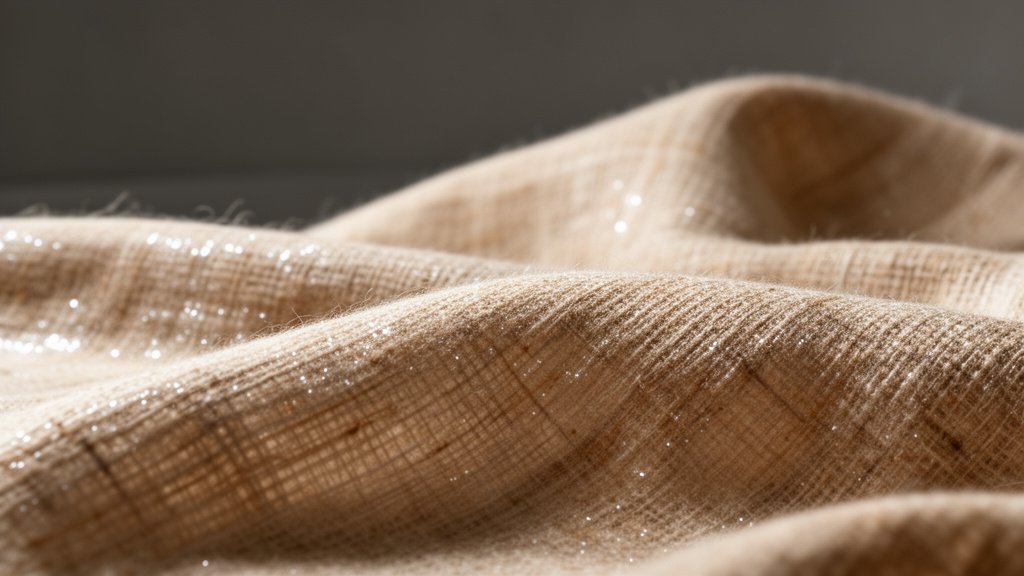
Quality fabrics are non-negotiable in quiet luxury. Learn to recognize:
Natural Fibers:
- Cashmere – Look for high-ply (2-ply minimum) with no pilling. Our wool and cashmere outfit ideas guide has more ways to style these fabrics
- Silk – Should have weight and a subtle sheen, not shine
- Wool – Merino, lambswool, or high-quality wool blends
- Cotton – Egyptian or Sea Island cotton for shirts, Supima for everyday
- Linen – For warm weather, should have a refined texture
- Leather – Full-grain, properly finished, ages beautifully
Quality Indicators:
- Weight and drape
- Consistent texture
- Natural sheen (not artificial shine)
- How it feels against skin
- How it holds its shape
The Fit Revolution: Tailoring is Non-Negotiable
Here’s a secret: A $200 blazer tailored to perfection will always look better than a $2,000 blazer that doesn’t fit. Budget 10-15% of each major purchase for alterations. This same fit-first logic is what separates a genuinely polished business casual outfit from one that just looks expensive on the hanger.
What to tailor:
- Sleeve length on jackets and shirts
- Trouser length and waist
- Jacket shoulders and waist suppression
- Dress and skirt lengths
- Even knitwear can be tailored for a better fit
Finding the right tailor:
- Ask for recommendations from high-end boutiques
- Look for tailors who work with luxury fabrics
- Start with simple alterations before committing to major work
- A good tailor is worth their weight in gold
Shopping Strategies: Invest Wisely
The Cost-Per-Wear Formula:
Purchase Price ÷ Number of Times Worn = Cost Per Wear
A $600 coat worn 100 times = $6 per wear A $60 coat worn 10 times = $6 per wear
But the $600 coat will likely last 10+ years and maintain its appearance, while the $60 coat will show wear after a season.
Smart Investment Approach:
- Start with the basics – Build your foundation pieces first
- Buy one quality piece per month – Better than a shopping spree of mediocre items
- Wait for private sales – Luxury brands have seasonal sales, but quietly
- Consider pre-loved luxury – The RealReal, Vestiaire Collective, and Rebag offer authenticated secondhand luxury
- Focus on cost-per-wear – Not the sticker price
The Quiet Luxury Lifestyle Beyond Fashion
Home and Interiors
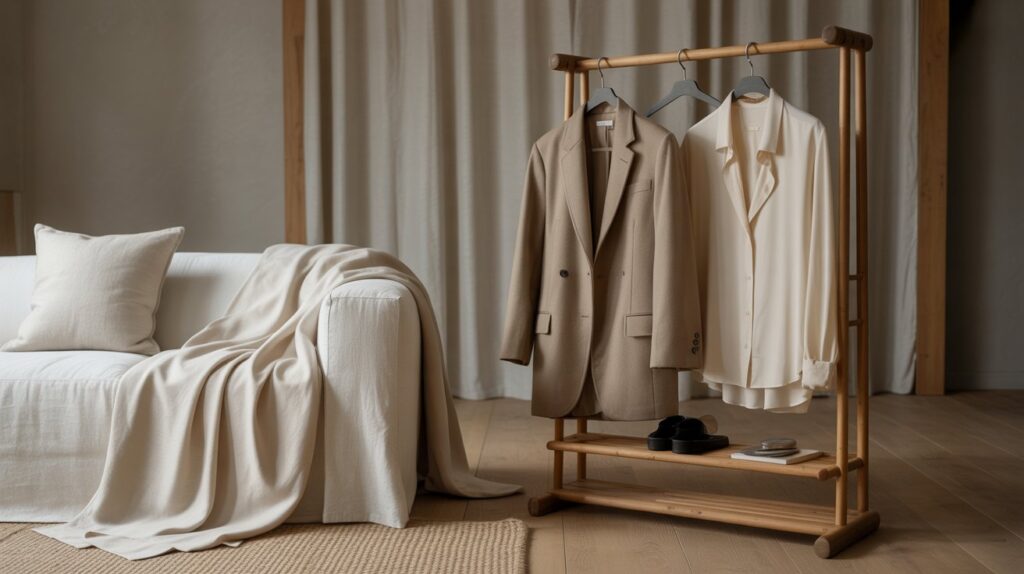
Quiet luxury extends to how you live:
- Neutral palettes with natural materials (wood, stone, linen)
- Quality over quantity in furniture and decor
- Minimal, uncluttered spaces
- Timeless design that won’t date
- Handcrafted or artisan pieces rather than mass-produced
Travel and Experiences
- Boutique hotels over chain luxury
- Cultural immersion over tourist traps
- Private experiences over Instagram-famous locations
- Quality time over packed itineraries
- Sustainable and responsible tourism
Technology and Gadgets
- Minimal tech aesthetic (less RGB, more aluminum)
- Quality headphones, watches, and accessories
- Discrete branding
- Durability and repairability over disposability
Common Mistakes to Avoid
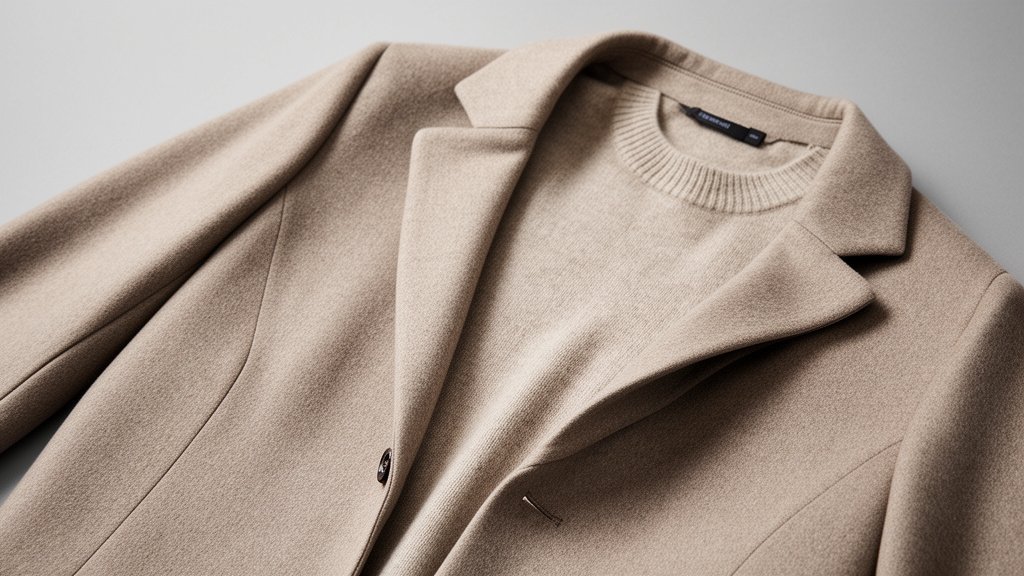
1. Confusing Boring with Understated
Quiet luxury should still have personality. The goal isn’t to dress like you’re attending a business meeting at a cemetery. Thoughtful details—a perfectly draped scarf, an interesting texture, a well-chosen accessory—add character without being flashy.
2. Ignoring Personal Style for the Aesthetic
Don’t sacrifice your personal style completely. If you love color, find ways to incorporate it through quality pieces. If you’re naturally drawn to patterns, choose subtle, sophisticated ones. Quiet luxury should enhance your style, not erase it.
3. Logo-Swapping Instead of True Simplicity
Simply trading your Gucci belt for a Hermès one isn’t quiet luxury—it’s just different luxury. The goal is to move away from using brands as identity markers entirely.
4. Neglecting the Details
Quiet luxury lives in the details: clean shoes, pressed clothes, well-maintained accessories, fresh grooming. A $500 sweater loses its impact if it’s pilled and wrinkled.
5. Fast Fashion “Dupes”
While accessible alternatives exist, trying to fake quiet luxury with ultra-cheap imitations defeats the purpose. Save for fewer, better pieces rather than filling your closet with fast fashion versions.
The Future of Quiet Luxury: What’s Next?
The Sustainable Innovation
The next evolution will integrate environmental consciousness even more deeply. The luxury apparel market is projected to grow at a CAGR of 4.1% through 2030, driven largely by consumers seeking sustainable, high-quality pieces. Expect:
- Innovative eco-materials – Lab-grown silk, mushroom leather, recycled cashmere
- Transparent supply chains – Blockchain tracking from sheep to sweater
- Circular fashion models – Brands offering repair, resale, and recycling
- Carbon-neutral production – Climate consciousness becomes standard
Technology Integration
Quiet luxury will embrace technology subtly:
- Smart fabrics – Temperature regulation, moisture-wicking without looking technical
- Discrete wearables – Health monitoring in jewelry and accessories
- Virtual styling – AI assistants helping build cohesive wardrobes
- Digital authentication – Proving provenance without visible tags
The Democratization Dilemma
As quiet luxury becomes more mainstream, true luxury brands will need to differentiate further:
- Bespoke and made-to-order services expanding
- Limited production runs maintaining exclusivity
- Hyper-personalization – Initials, custom fits, unique details
- Experience-based luxury – Access to events, workshops, and communities
Cultural Shifts
The broader implications of this trend suggest a fundamental shift in consumer values. According to The Business of Fashion’s State of Luxury report, top-spending clients will create 65 to 80 percent of global luxury market growth through 2027, with these consumers increasingly prioritizing discretion and quality over flashy displays of wealth. This cultural evolution includes:
- Moving from having to being – Identity based on values, not possessions
- Privacy as the new luxury – Anonymity becomes aspirational
- Craftsmanship revival – Renewed interest in traditional skills and artisans
- Mindful consumption – The end of mindless shopping and trend-chasing
The Backlash and Contradictions
Is Quiet Luxury Just Another Form of Conspicuous Consumption?
Let’s be honest: there’s inherent contradiction in a “quiet” trend that everyone’s talking about. Some critics argue that quiet luxury is just conspicuous consumption with better PR—the wealthy finding a new way to differentiate themselves that’s harder to imitate.
The criticism has merit: A $10,000 coat is still a $10,000 coat, regardless of whether it has a logo. And the idea that true luxury is “accessible to everyone” through the aesthetic alone feels disingenuous when the real thing remains astronomically expensive.
The Gatekeeping Problem
Quiet luxury’s “IYKYK” culture can feel exclusionary. It creates an in-group of people who can recognize and afford these pieces, and an out-group who can’t. This isn’t democratizing fashion—it’s just changing the admission requirements.
The Sustainability Question
While quality pieces do last longer, let’s not pretend that buying a $500 sweater is an environmental act when you already have sweaters. The most sustainable garment is the one you already own.
Finding the Balance
Despite these contradictions, there’s genuine value in the quiet luxury philosophy when approached thoughtfully:
- Investing in quality does reduce waste over time
- Moving away from trend-driven consumption has merits
- Appreciating craftsmanship supports artisans and traditional skills
- Dressing for yourself rather than others can be liberating
The key is honesty about what you’re doing and why.
Your Quiet Luxury Action Plan: Getting Started Today
Month 1: Assessment and Education
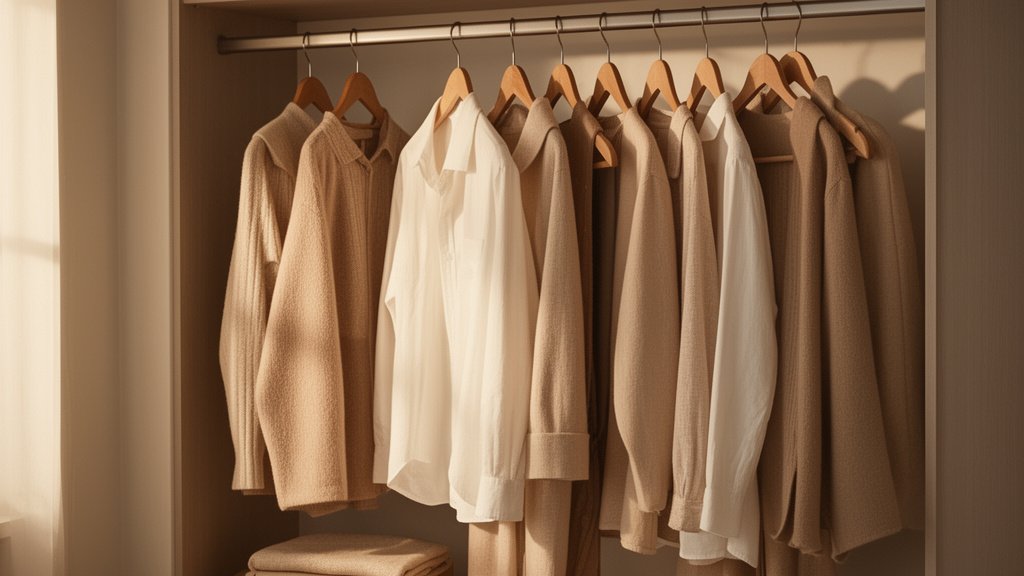
Week 1-2: Wardrobe audit
- Remove items you haven’t worn in a year
- Identify your most-worn pieces (these reveal your true style)
- Note gaps in basics and versatile pieces
Week 3-4: Research and education
- Study brands and their quality indicators
- Learn about fabrics and construction
- Follow quiet luxury inspiration accounts (but don’t get lost in them)
- Create a mood board of your ideal aesthetic
Month 2-3: Foundation Building
Strategic purchases (one per month):
- Month 2: One investment piece (quality coat, blazer, or bag)
- Month 3: Two foundational basics (perfect white shirt, quality denim)
Meanwhile:
- Find a trusted tailor
- Get your existing quality pieces tailored
- Learn basic care (proper washing, storage, minor repairs)
Month 4-6: Refinement
- Add accent pieces that complement your foundation
- Experiment with styling your existing pieces in new ways
- Sell or donate items that don’t fit the new direction
- Continue education about quality and brands
Year 1 Goal
A curated wardrobe of 30-40 high-quality, versatile pieces that you genuinely love and wear regularly. Everything fits perfectly, works together, and makes you feel confident.
The Lasting Appeal of Understated Elegance
The return of quiet luxury isn’t just a fashion trend—it’s a cultural shift that reflects our evolving relationship with consumption, identity, and value.
In a world of constant noise, performance, and consumption for its own sake, there’s something deeply appealing about the quiet confidence of knowing your worth doesn’t depend on others recognizing your brand names.
The truth is, quiet luxury has always been around. It’s how old money has dressed for centuries, how European aristocrats distinguished themselves, and how truly confident people have approached style throughout history.
What’s changed is that more people are discovering its appeal—and rejecting the exhausting performance of conspicuous consumption.
While you’re drawn to quiet luxury for its sustainability, its aesthetic appeal, its psychological benefits, or simply because you’re tired of being a walking billboard, the principles remain valuable: invest in quality, choose timeless over trendy, and dress for yourself rather than for others’ recognition.
The quiet luxury revolution isn’t about how much you spend—it’s about what you value. It’s fashion that whispers rather than shouts, confidence that needs no validation, and style that outlasts the trends. And in a world that never stops talking, there’s something truly revolutionary about that kind of quiet.
Quiet Luxury Cost-Per-Wear Calculator
Use this calculator to determine if an investment piece is worth it based on how often you’ll wear it:
Cost-Per-Wear Calculator
Determine if your investment piece is worth it
Frequently Asked Questions About Quiet Luxury
Isn’t Quiet Luxury Just for Rich People?
While the luxury brands are expensive, the principles apply at any budget: invest in quality basics, choose timeless over trendy, and focus on fit and fabric rather than logos. There are accessible brands offering quiet luxury aesthetics without the astronomical prices.
How Is This Different From Minimalism?
Minimalism is about having less. Quiet luxury is about having better. You can have a full wardrobe that’s quiet luxury, as long as each piece is high-quality and timeless. Minimalism might overlap, but it’s not required.
Won’t I Look Boring?
Only if you dress boring. Quiet luxury is about subtle sophistication, not being bland. Interesting textures, perfect proportions, and thoughtful styling keep things compelling without being flashy.
How Do I Know if Something Is Worth the Price?
Research the brand’s reputation, examine construction details, feel the fabric quality, check reviews, and use the cost-per-wear calculator. If you’re unsure, wait—impulse purchases are rarely worth it.
Can I Mix Fast Fashion With Quiet Luxury Pieces?
Absolutely. Start with investment pieces for items you wear most (coats, blazers, bags, shoes) and mix in more affordable basics. The key is that everything fits well and works together cohesively.