21 Simple Wedding Dresses For Modern Brides
A simple wedding dress puts more pressure on the fabric and the cut, not less. There’s nothing to hide behind if a seam sits slightly off or the fabric catches light the wrong way, which is part of why the plainest-looking gowns are often the hardest to get exactly right.
The styles below lean on silhouette and construction rather than embellishment to do the work. Which fabric holds up in heat, how a seam gets finished, and what a shape does for a particular body type matter more here than they would on a heavily beaded gown.
Classic A-Line Satin Gown
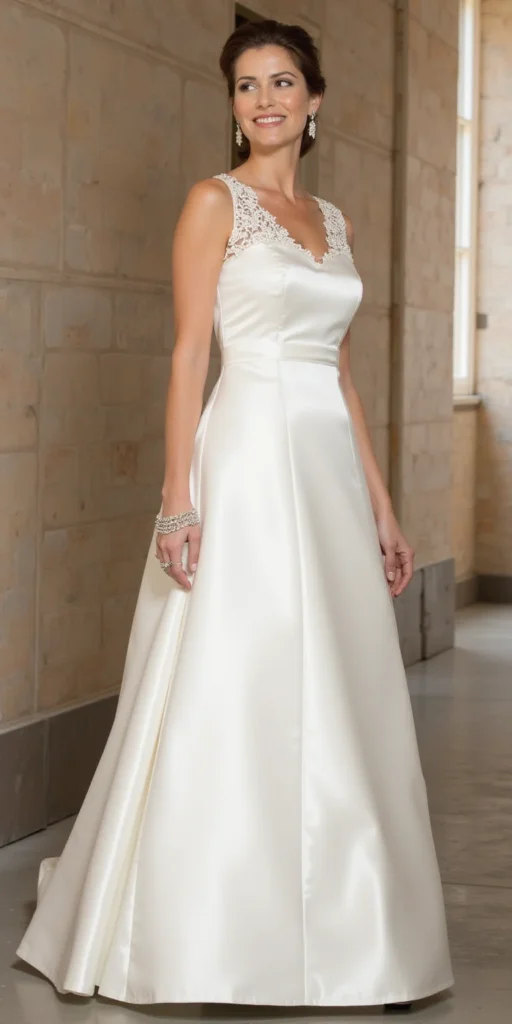
Satin shows every pull and seam line, so the quality of the tailoring matters more here than on a busier gown. A poorly fitted satin dress looks cheap no matter what it cost.
Duchess satin holds its A-line shape without needing much boning underneath; charmeuse-backed satin drapes softer but wrinkles more in transit, which matters if you’re traveling to the venue.
The A-line does most of the flattering work on its own, which means less need for aggressive shapewear underneath than a fitted silhouette would require.


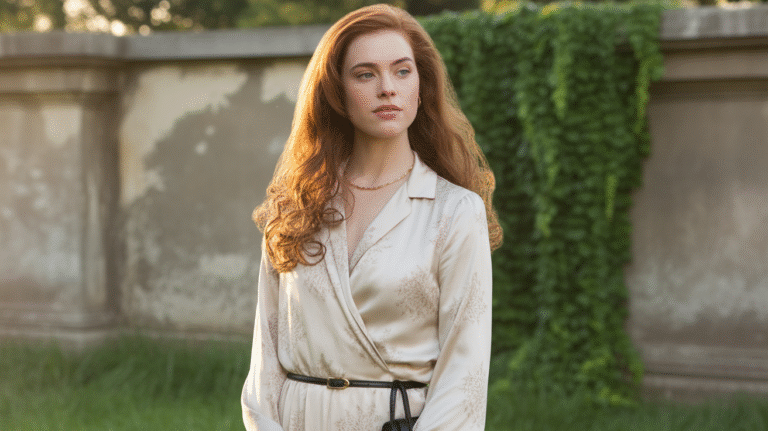
Sleek Slip Dress With Delicate Straps
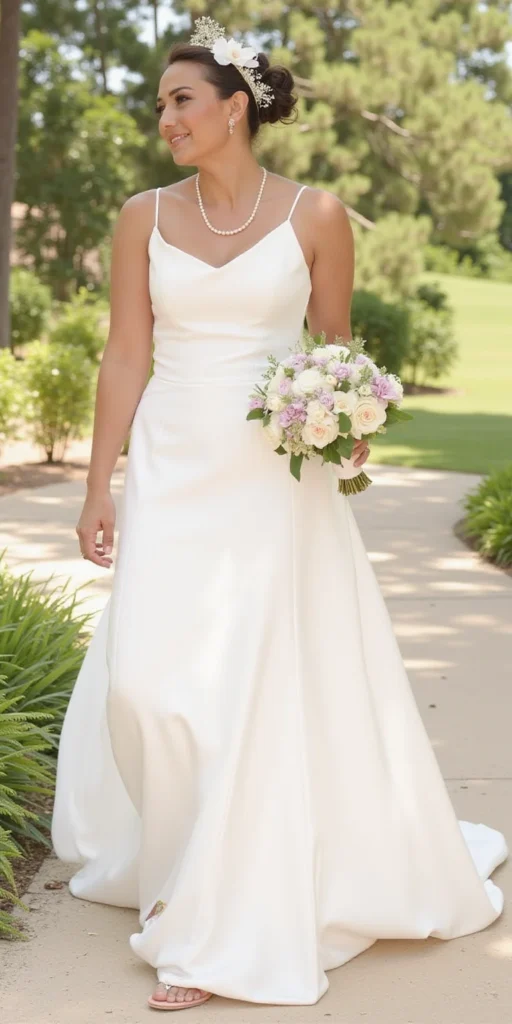
Bias-cut construction means your final fitting should happen as close to the wedding as your schedule allows, since small changes in your body show up on this cut more than they would on a structured gown.
The straps need to be adjustable. A quarter-inch difference in strap length changes where the neckline sits and how much it gapes when you move.
This style suits a body that isn’t expecting major changes before the wedding, since there’s no structure underneath to redirect the eye or correct for shifts in fit.

Off-the-Shoulder Crepe Silhouette
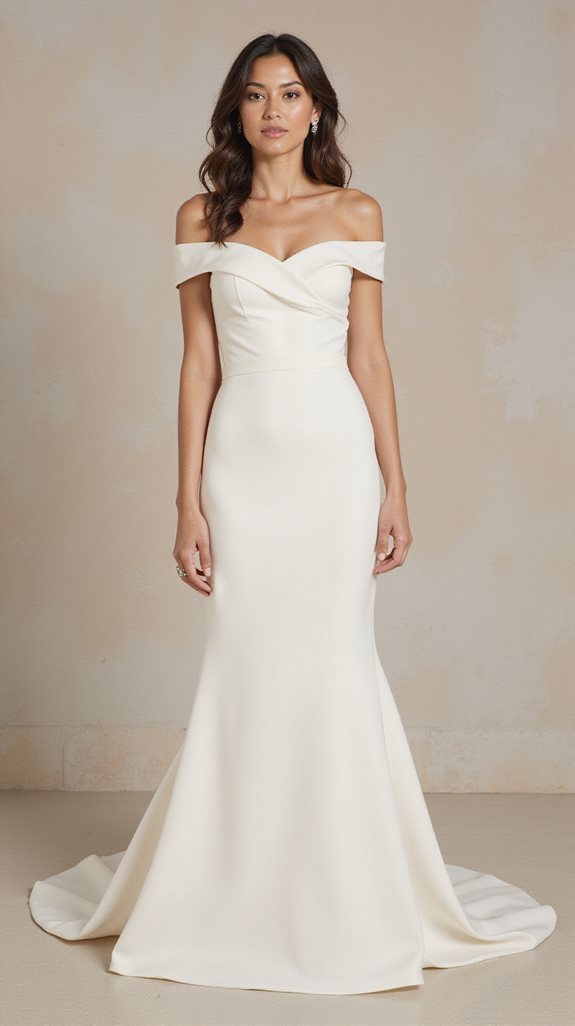
Crepe wrinkles less than satin, which matters if you’re getting dressed somewhere other than the ceremony venue and don’t have time to steam it out.
The neckline needs boning or an underwire built into the bodice to stay put. Off-the-shoulder cuts have nothing holding them up on their own once you start moving and dancing.
Crepe’s matte finish photographs differently under flash than satin’s shine does, worth keeping in mind if you’ve seen this style on satin and are picturing that exact look.


Minimalist Sheath Dress
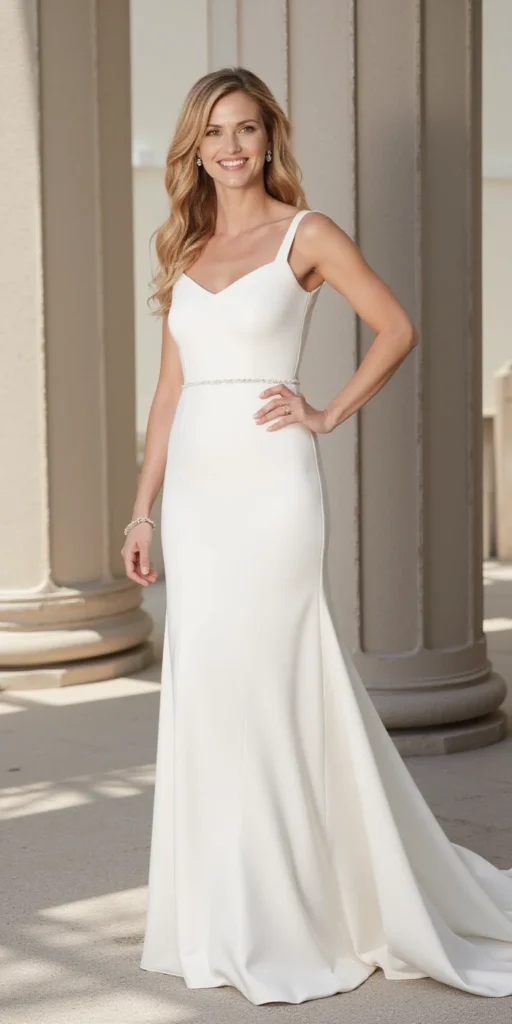
Because the sheath skims the body so closely, any extra fabric bunching at the seams shows immediately. This is the style where a mediocre alteration job is hardest to hide.
Silk crepe drapes with more movement through the skirt; stretch satin holds a cleaner vertical line but gives less as the day goes on.
This cut suits courthouse ceremonies and smaller weddings well, since sitting for long stretches in a fitted sheath is less comfortable than in a fuller skirt.


Elegant V-Neck Column Gown
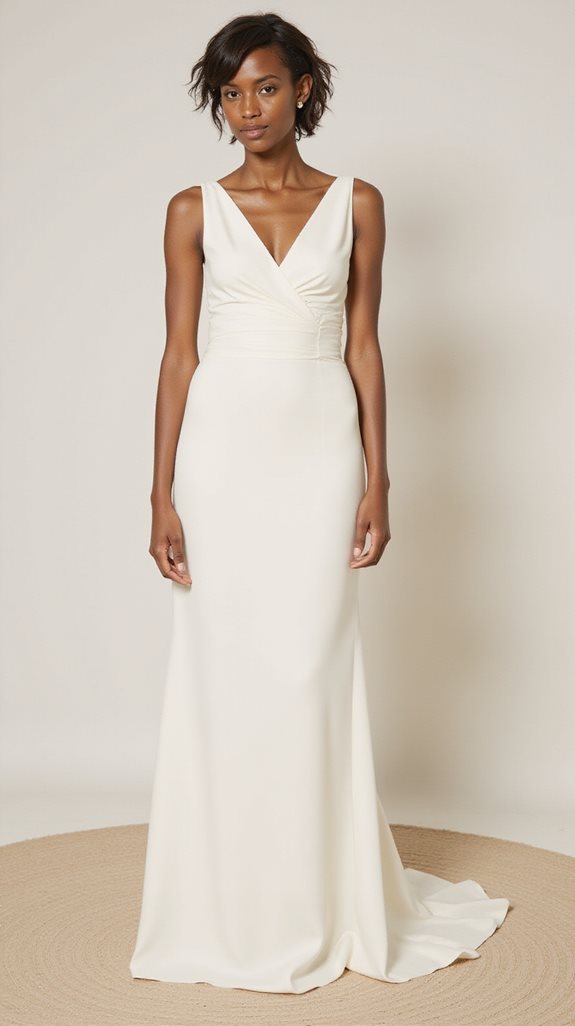
The depth of the V changes what you need underneath. A shallow V works with a regular bra; a deep V often needs cups sewn directly into the bodice instead.
The column silhouette needs even weight distribution through the fabric, or it clings unevenly at the hips instead of falling in a straight line.
This shape elongates the torso without needing a defined waist seam, which is part of why it works on a wider range of body types than a fitted bodice does.


Simple Strapless Ball Gown
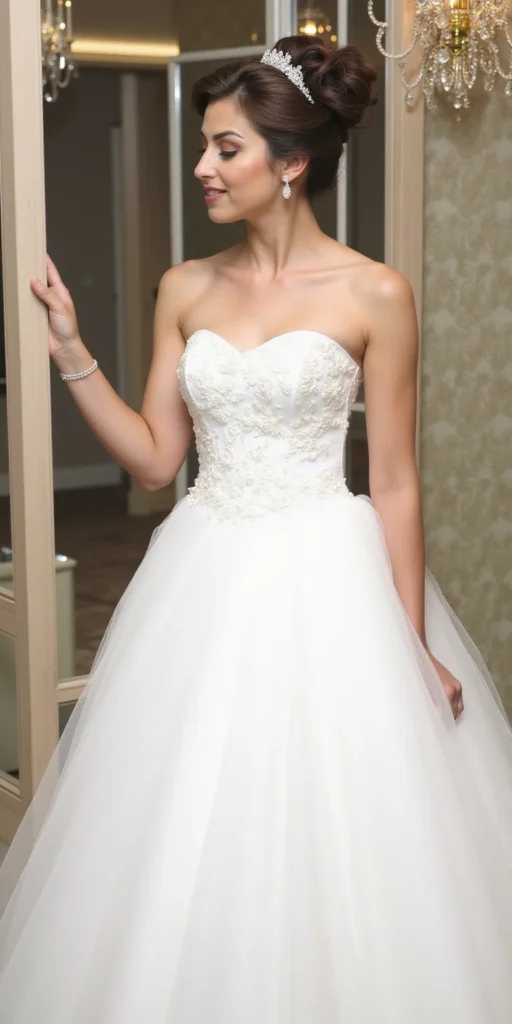
A strapless bodice relies entirely on internal boning to stay up without straps or embellishment to distract from a fit issue. Get fitted standing and sitting both, since the boning needs to hold in both positions.
Tulle gives the fullest, lightest skirt; organza holds a crisper shape with a bit more structure; chiffon falls the softest of the three.
Skip heavy beading here and the gown stays classic instead of dated, which is the main reason this shape has stayed in circulation for decades without much updating.

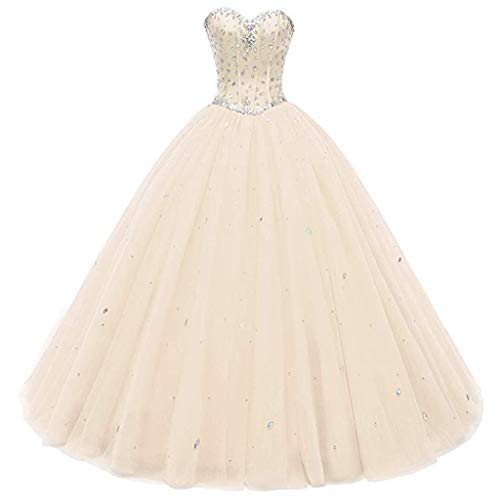
Clean-Line Fit and Flare Design
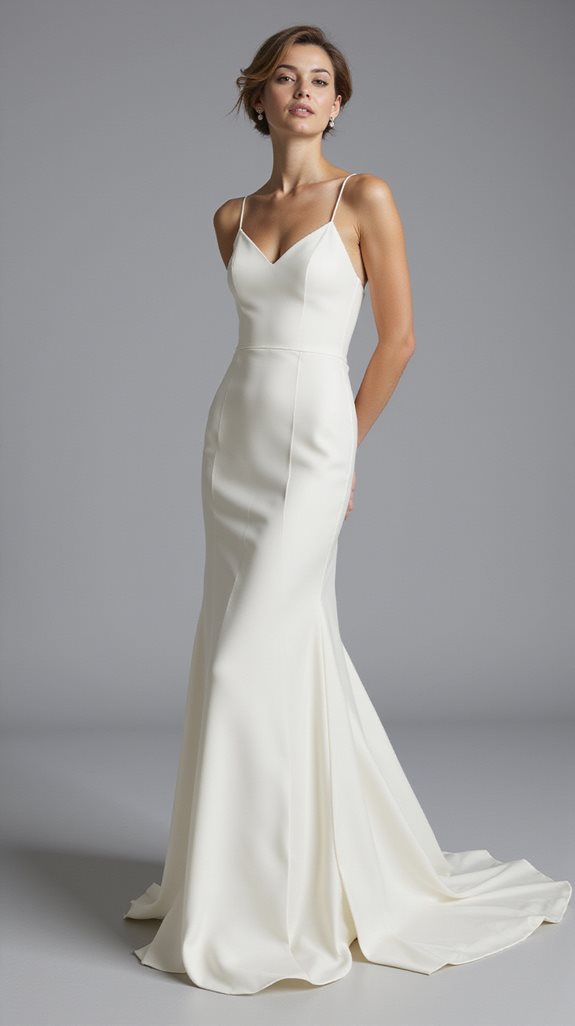
Seam placement, not embellishment, creates the shape here. If you’re having this made custom, ask to see the pattern pieces before committing, since that’s where the actual design decisions live.
This cut suits a torso that benefits from a defined transition at the waist before the skirt flares out, more so than a straight column would.
The flare itself can be cut from the same fabric as the bodice for a seamless look, or from a lighter fabric underneath for extra movement without added bulk.


Backless Silk Charmeuse Dress
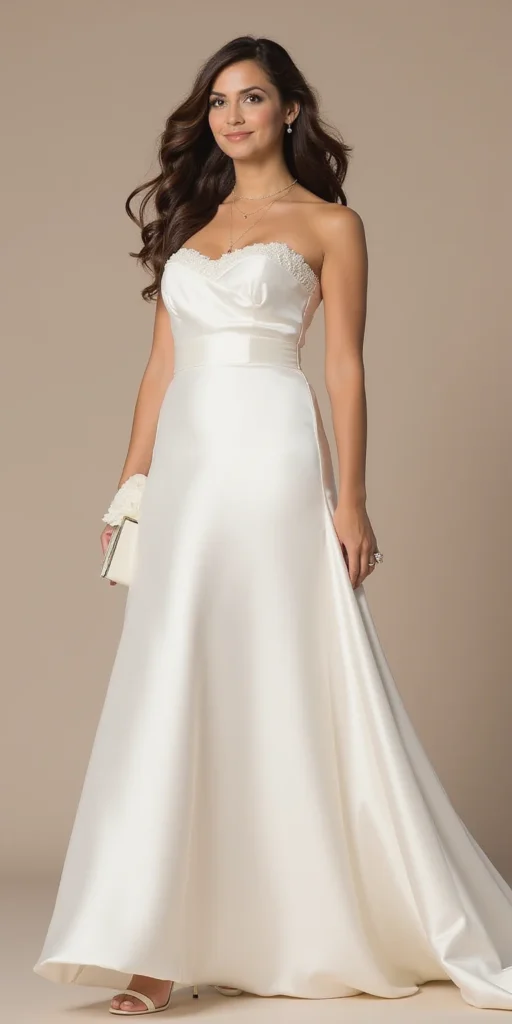
A traditional bra won’t work with an open back like this. Adhesive cups or bridal tape are worth testing well before the wedding rather than for the first time on the day itself.
Silk charmeuse shows sweat and body heat more visibly than crepe does, which is worth factoring in if your wedding falls somewhere warm.
The low back balances against a moderate front neckline, so the overall look stays refined instead of tipping into something more revealing than you intended.


High-Neck Long Sleeve Style
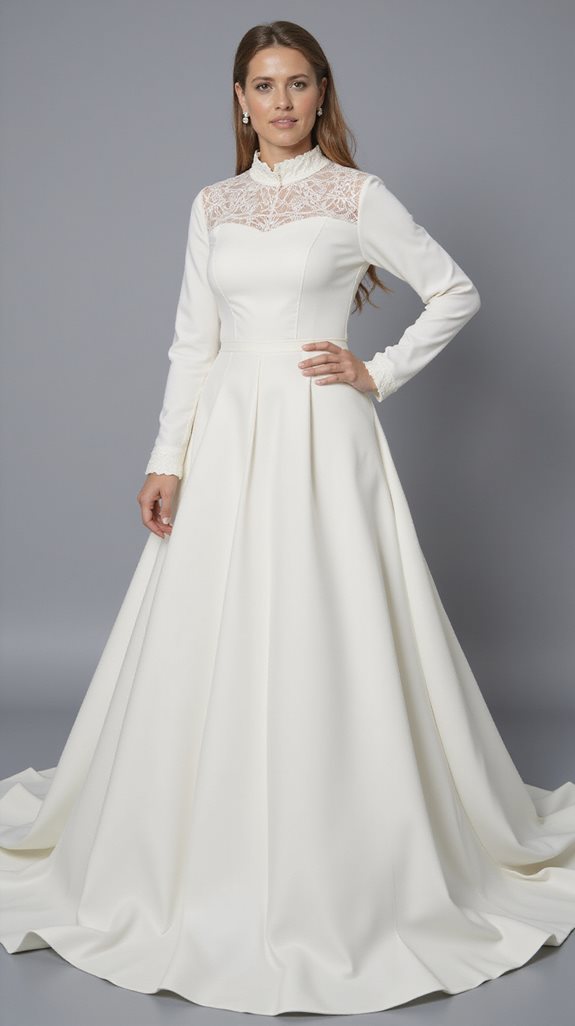
Unlike a lace-heavy long sleeve gown, the simple version relies on plain crepe or jersey with no appliqué to distract from the construction, so any stitching flaw shows.
Full coverage in a light, breathable fabric still feels warm indoors under lighting and body heat from dancing, so this suits a cooler-weather or evening wedding better than a summer afternoon one.
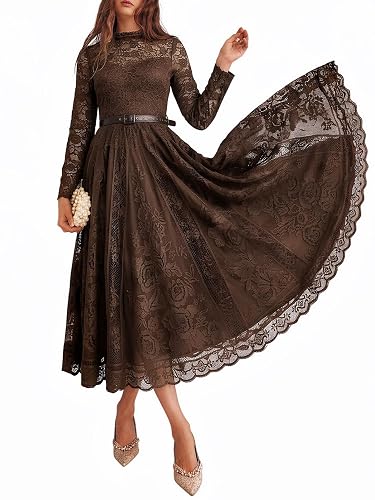
If you want to see this same coverage taken further with lace, beading, or a dramatic cuff, our long sleeve wedding dress guide covers the more embellished end of this shape.
Draped Cowl Neck Gown
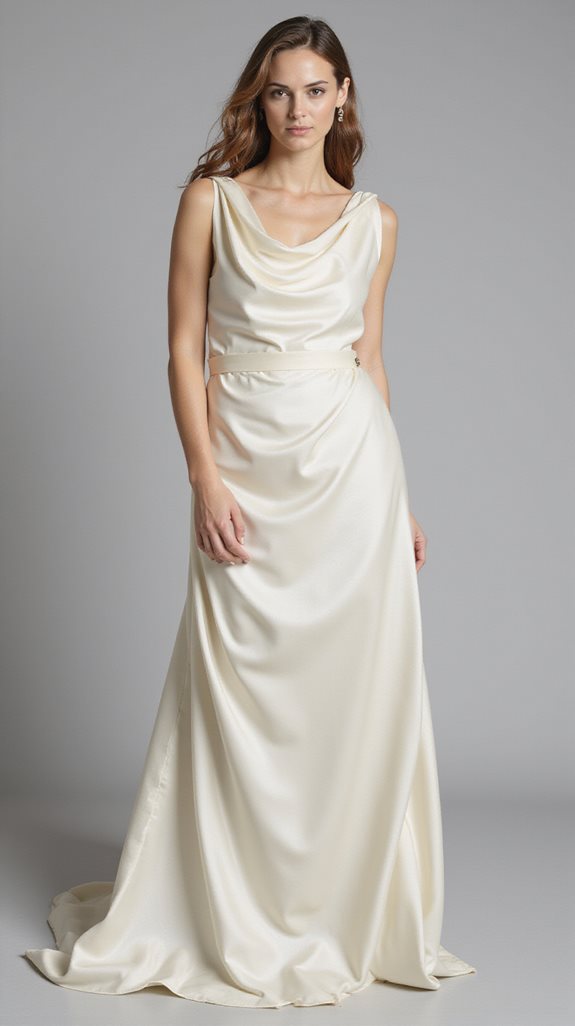
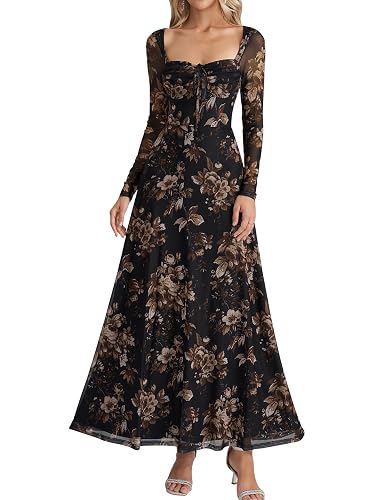
A cowl neck is cut on the bias, which means it needs your body to hold roughly the same shape from your last fitting to the wedding day, or the drape stops falling the way it’s supposed to.
Silk charmeuse or crepe are the two fabrics that fold into a proper cowl. A heavier fabric won’t drape into the soft folds this style depends on.
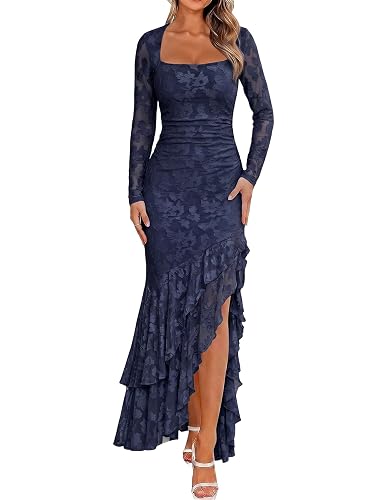
An asymmetrical hem paired with this neckline gives a modern edge without needing any embellishment to feel current.


One-Shoulder Grecian-Inspired Dress
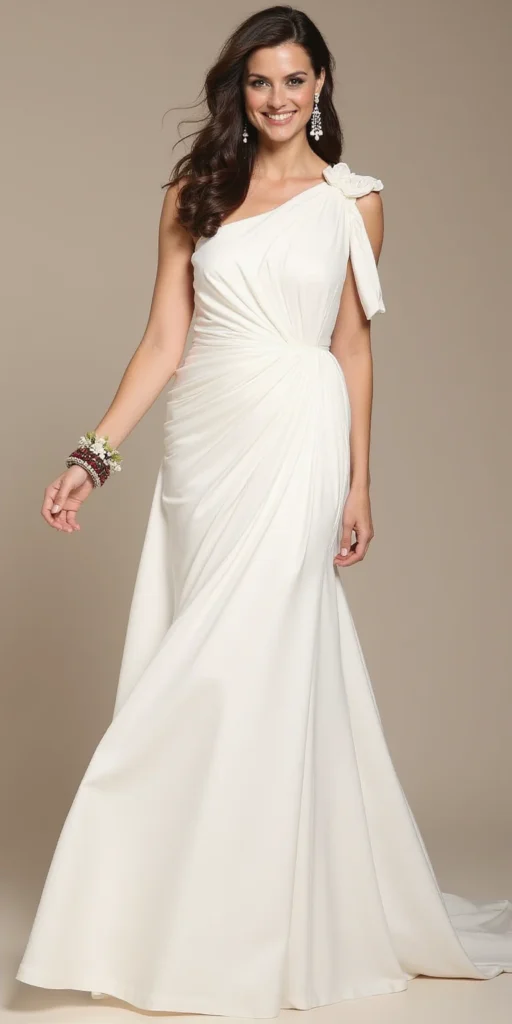
With only one strap doing the work instead of two, the dress needs internal boning on the strapped side to keep it from slipping as the night goes on.
This style suits a smaller bust better than a larger one, since a single strap has more weight to manage than a full bodice with two points of support.
If you’re drawn to this style because you want to step outside a traditional white gown entirely, our black wedding dress collection takes that same instinct even further.


Midi-Length Modern Design
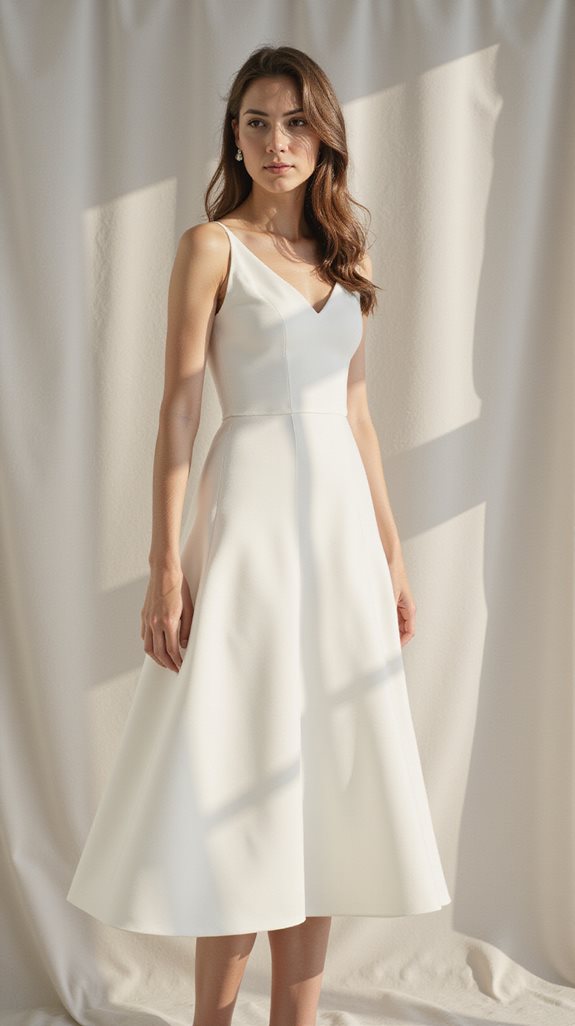
A hemline that falls between the knee and ankle needs less alteration work than a floor-length gown, since there’s simply less fabric to adjust and hem.
This length shows your shoes the entire day, so pick them during your dress shopping rather than after, since the final hem gets measured against them.
Ponte knit and crepe both hold structure at this shorter length without looking stiff, and both suit an outdoor or city hall ceremony where a full train would be impractical.

Empire Waist Flowing Gown
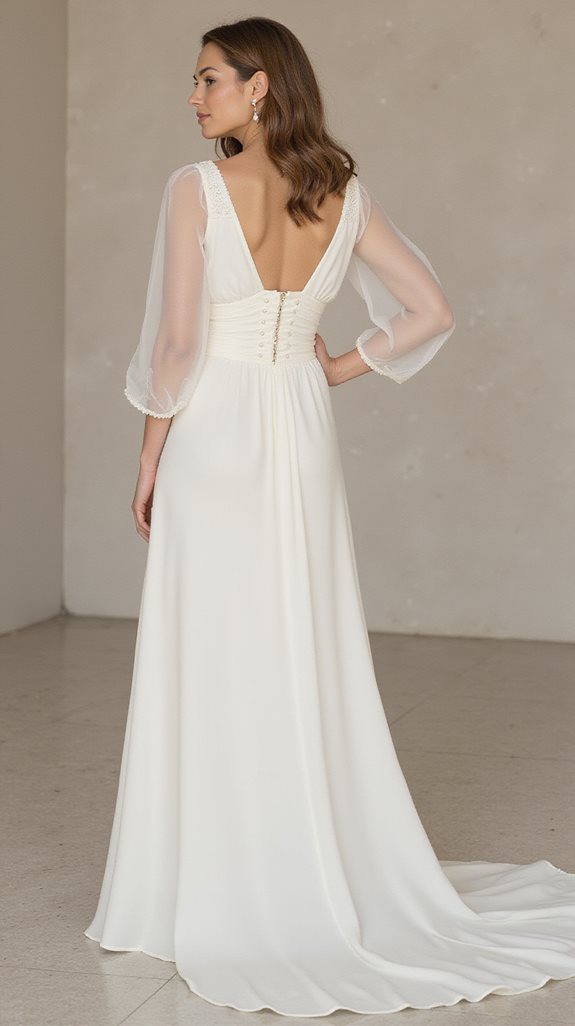
Because the fabric flows from just under the bust, this shape needs less shapewear underneath than a fitted style would, since there’s no clinging fabric to smooth against.
Chiffon or silk georgette move with each step; a heavier crepe flattens the flowing effect the style depends on.
This cut works especially well for an outdoor ceremony, since the loose fit breathes better in heat than a fitted bodice does.


Structured Bodice A-Line
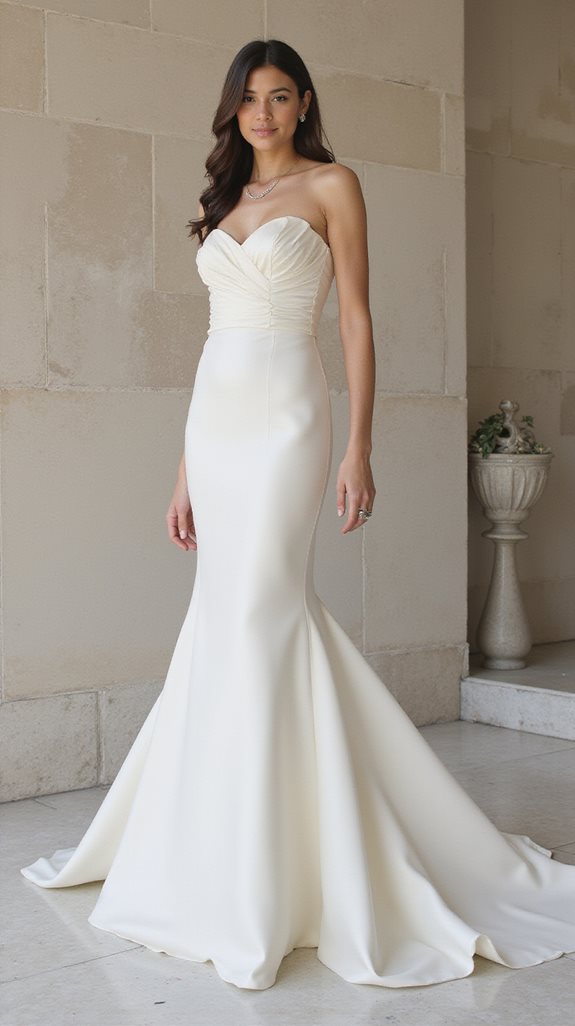
Boning or princess seaming built into the bodice means you likely won’t need a separate corset underneath, but it also means resizing later costs more, since the boning has to be reworked rather than simply taken in.
Mikado silk holds this structure with the least visible effort; heavier brocades or beaded fabrics need more reinforcement in the seams to carry their own weight.
If your body shape is likely to change before the wedding, our plus size wedding dress guide covers silhouettes built with more room for fit adjustments.


Cap Sleeve Chiffon Dress
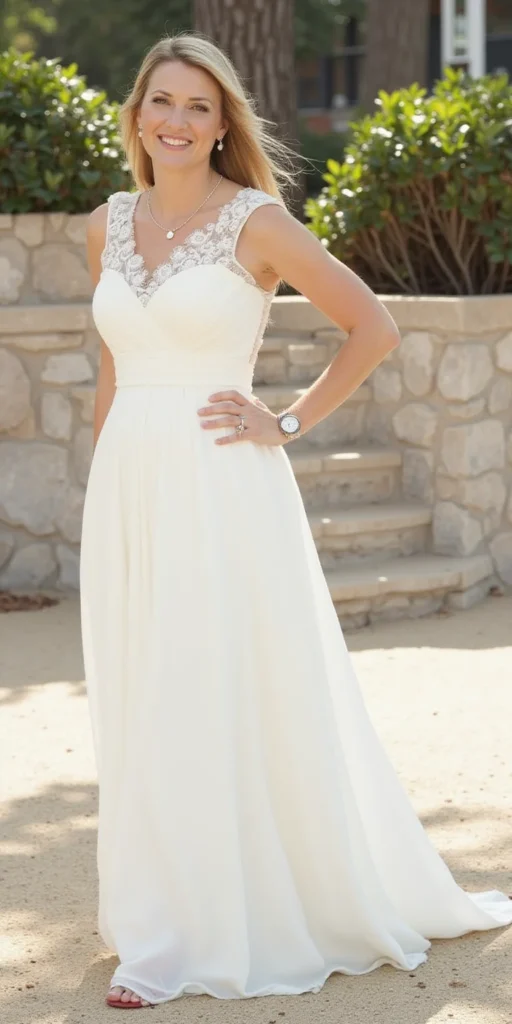
A cap sleeve needs a small support seam sewn into the shoulder, or it droops by the time you’re through the reception.
Chiffon is sheer enough at this weight that a nude slip underneath is necessary, not optional. Budget for that as a separate line item.
The lightweight fabric moves well outdoors, which pairs naturally with the cap sleeve’s understated coverage for a garden or vineyard ceremony.


Halter Neck Minimalist Style
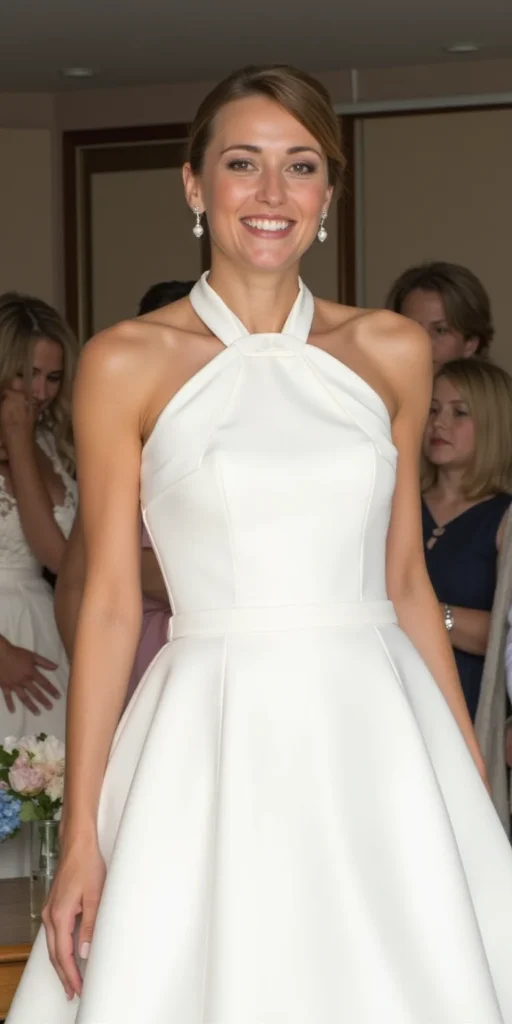
A halter pulls its weight on the back of the neck all day, so ask about a boned inner bodice rather than relying on the halter strap alone to hold the shape.
Unadorned silk crepe or structured satin drapes cleanly on this cut since there’s no sleeve or additional strap to distract from a plain back.
This style suits a strong back, since the design draws attention there with nothing else competing for it.


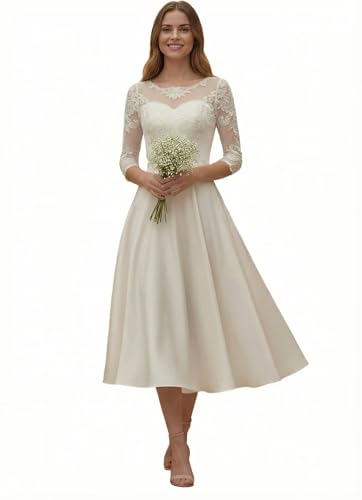
Tea-Length Vintage-Inspired Gown
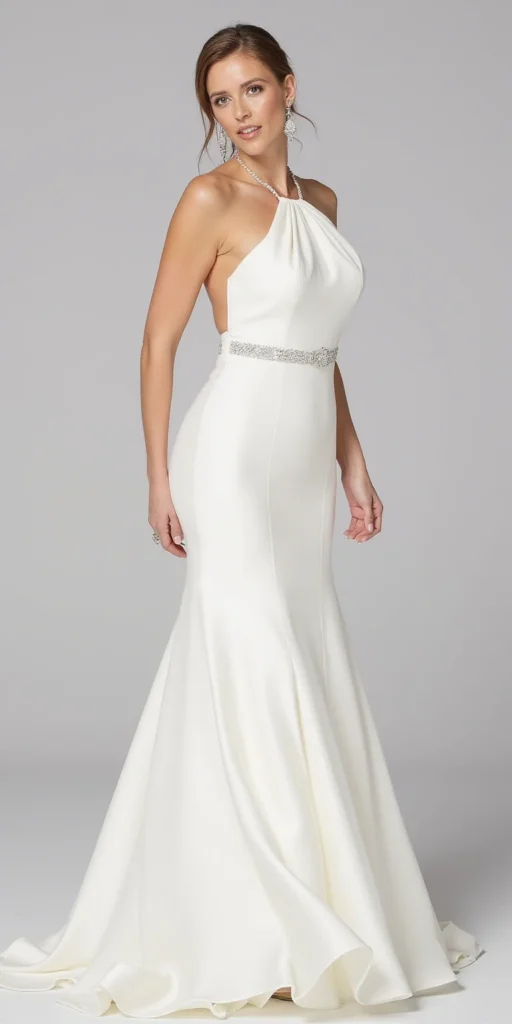
A mid-calf hemline shows your shoes all day, so buy them before the final fitting so the hem gets measured against them.
A structured fabric holds shape better at this shorter length than something soft and flowing, which can look limp once it’s cut above the ankle.
The shorter length also makes dancing easier through the reception, since there’s no train to manage or bustle to worry about.

Wrap-Style Bohemian Dress
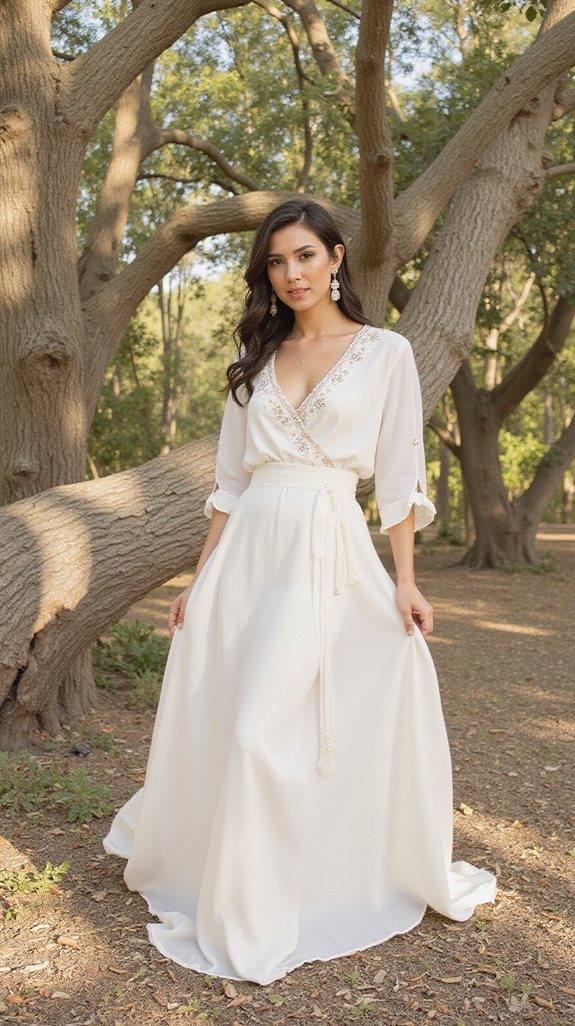
A wrap closure ties on the inside rather than zipping, so practice tying it the same way more than once. The front drapes differently if the tension changes between your rehearsal and the actual day.
Because the wrap adjusts rather than fitting to fixed measurements, it handles small changes in your body better than a fitted seam would.
Chiffon or crepe both move naturally with this shape, and either works for an outdoor or beach ceremony where a heavier fabric would feel out of place.


Square Neckline Simple Silhouette
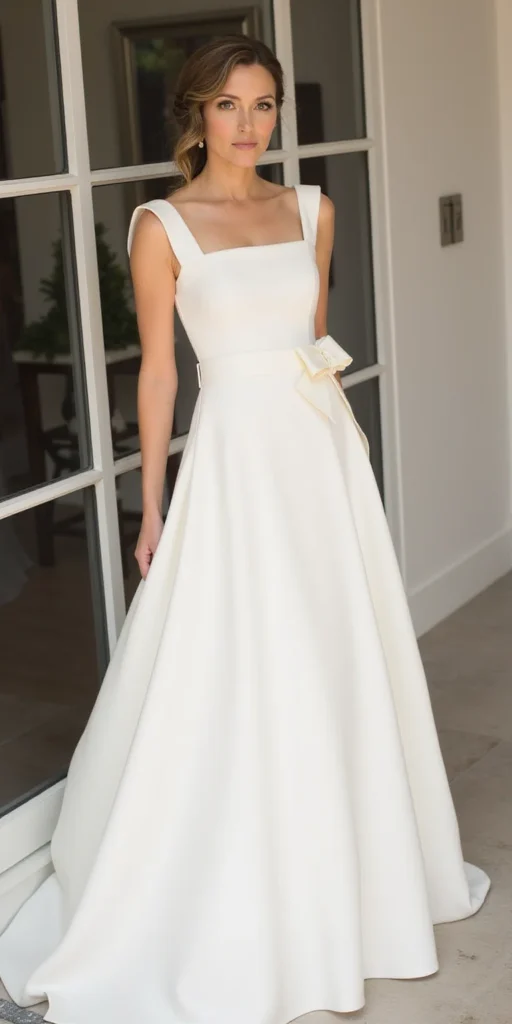
A straight line across the chest is unforgiving of a poor fit. Any gap or pull shows immediately in a way a curved neckline would hide.
Skip extra seaming or beading near the neckline itself, since the geometric shape is the whole point and competing detail just muddies it.
A few covered buttons or a narrow trim along the edge can finish the line without pulling focus away from the shape.


Long Sleeve Crepe Column Dress
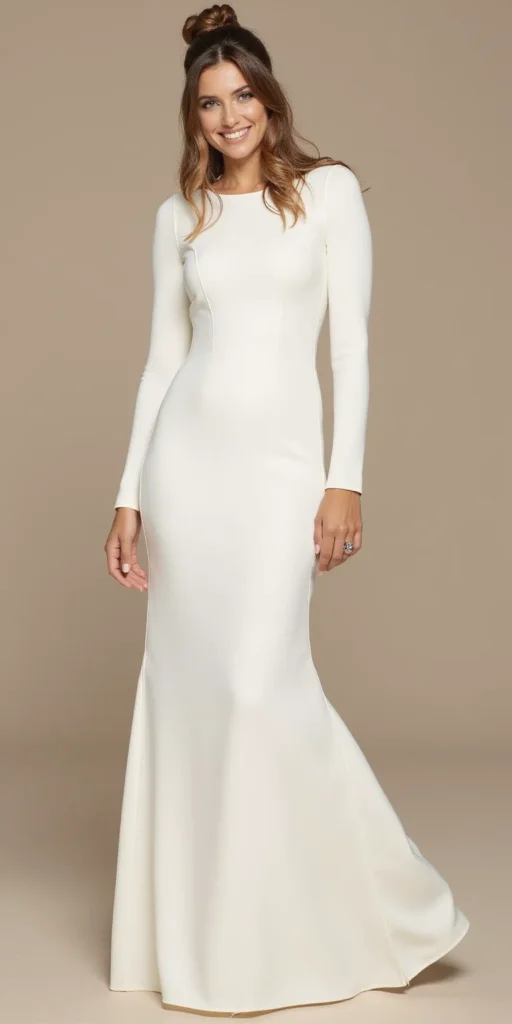
Crepe holds a straight vertical line without pulling tight at the hips the way satin sometimes does on a column cut.
Long sleeves add warmth without adding structure, which is useful if you want coverage but not the added weight of a heavier fabric.
This shape suits courthouse weddings and small evening ceremonies particularly well, since the sleek line reads formal without needing a full skirt.


Asymmetrical Hem Contemporary Design
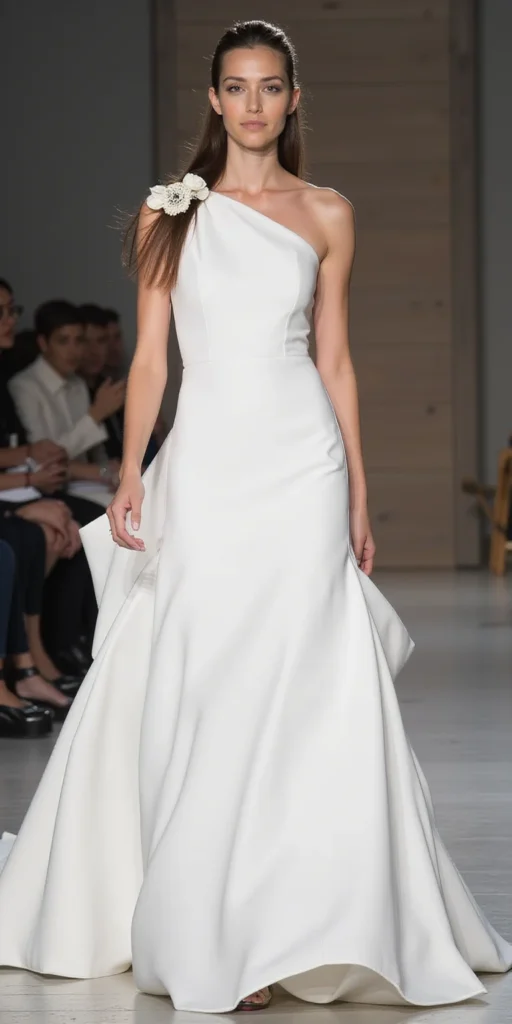
A high-low or diagonal hem needs a different alterations approach than a level one. Mention this to your seamstress upfront, since it changes how much fabric they have to work with when adjusting length.
Flowing chiffon suits a dramatic high-low cut for an outdoor ceremony; structured crepe holds a subtler diagonal line better for an indoor venue.
The uneven hem also means less fabric to manage on the dance floor than a full-length gown, which is worth factoring in if dancing matters to you.


Frequently Asked Questions
What Accessories Work Best With Simple Wedding Dresses?
Pick one statement piece, either earrings or a necklace, not both, since a plain dress makes whatever you add the focal point. Pearl studs feel classic and understated; a crystal comb or vintage-inspired headpiece adds more presence without needing a busier dress to match it.
How Much Should I Budget for a Simple Wedding Dress?
Plan on $300 to $1,500, depending on the designer and fabric grade. Simple doesn’t automatically mean cheaper, since fabric quality carries more of the visual weight when there’s no embellishment to distract from it. Start shopping six to nine months out for the best selection and enough time for alterations.
Can Simple Wedding Dresses Be Altered Easily for Fit?
It depends on the cut. A structured A-line with a defined seam allowance is usually straightforward to take in or let out. A bias-cut slip or sheath is trickier, since there’s less extra fabric built into the seams to work with, and any adjustment can change how the whole dress hangs.
What Undergarments Should I Wear With a Simple Wedding Dress?
Seamless, nude-toned shapewear keeps lines from showing under fitted or sheer fabrics. Backless and halter styles need adhesive cups or bridal tape instead of a traditional bra, and it’s worth testing those ahead of time rather than for the first time on the wedding day.
How Far in Advance Should I Order My Simple Wedding Dress?
Six months is a safe general timeline, though it depends on the style. An off-the-rack simple dress can sometimes move faster than that, while a made-to-measure or custom order needs the full lead time or more, especially for fabrics that need to be sourced specially.
Final Thoughts
Simple doesn’t mean easier to get right. Fabric quality, seam precision, and fit timeline matter more on these styles than on a heavily embellished gown, since there’s nothing else to distract from a flaw in any of them.
Whichever silhouette you land on, budget real time for alterations and get fitted close to the wedding date if the cut is bias or sheath. And if you’re planning the rest of your bridal look, our bridal nail ideas piece covers the detail that finishes it off.