20 Haircuts for Thinning Hair Over 50 for Women
A cut that redistributes weight and defines the ends does more for thinning hair than any product added afterward. Blunt bobs, textured pixies, and chin-length cuts all work by concentrating weight along one line instead of scattering it thin.
Layered bobs and asymmetrical cuts move weight around instead of removing it outright. The pattern of your thinning, crown, temples, or overall, should drive which cut you pick. The breakdown below covers what each cut is actually doing and how to style it after.
The Classic Pixie Cut for Fine, Thinning Hair
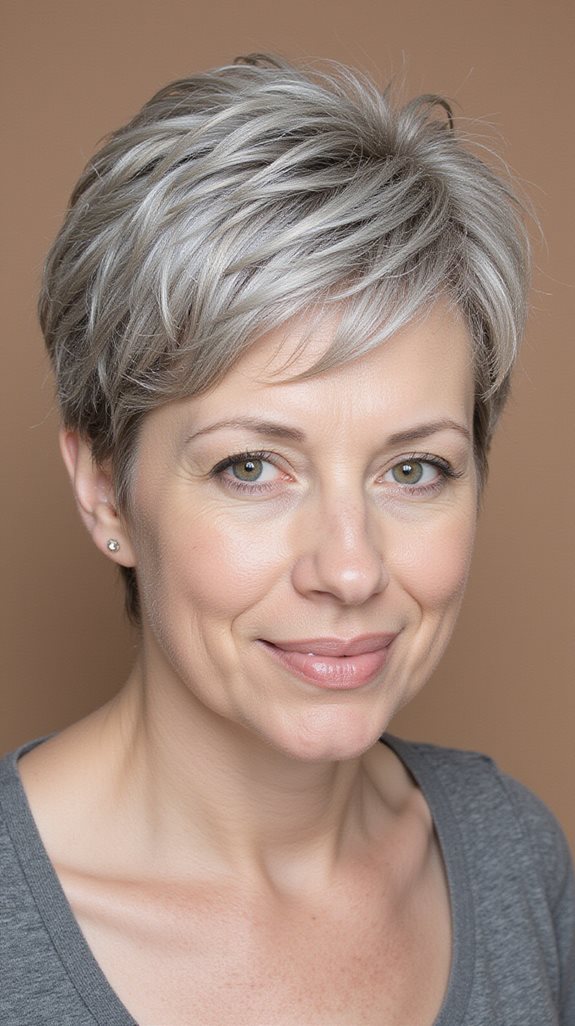
A pixie’s short length removes the weight that pulls fine hair flat, which is most of why it works for thinning hair. Razor or point-cutting through the top builds texture without leaving a flat cap of hair.
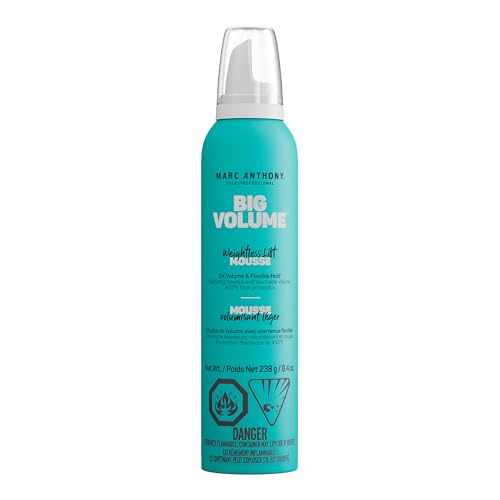
Volumizing mousse on damp hair, then a round brush while blow-drying, lifts the roots. A light-hold pomade defines the ends without dragging them back down. Our edgy pixie cuts for fine hair over 50 covers more variations on this same base.


Textured Pixie Cuts That Add Instant Volume
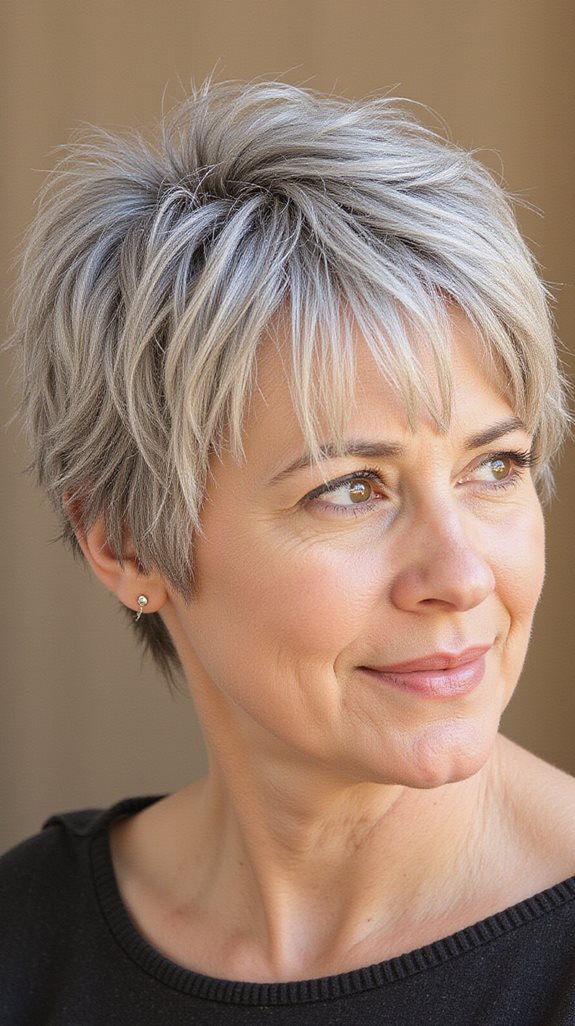
Point-cutting and razor slicing remove weight unevenly across the top, which is what lets hair lift from the scalp instead of sitting flat. Concentrate the layering at the crown and temples, since that’s usually where thinning shows first.
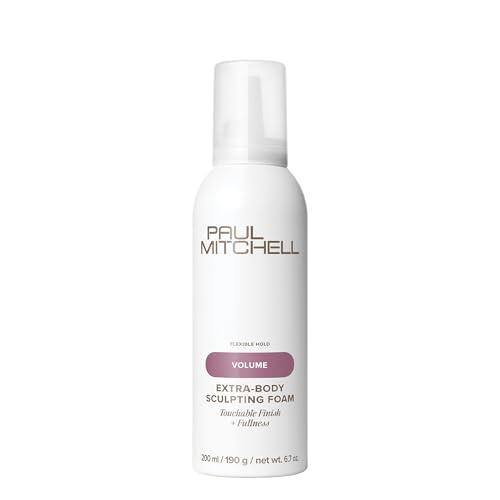
A lightweight volumizing mousse or texturizing spray keeps the layers lifted through the day. Ask your stylist to texturize the interior sections too, not just the surface, or the underlayer stays heavy.

The Blunt Bob Haircut for Thinning Hair Over 50
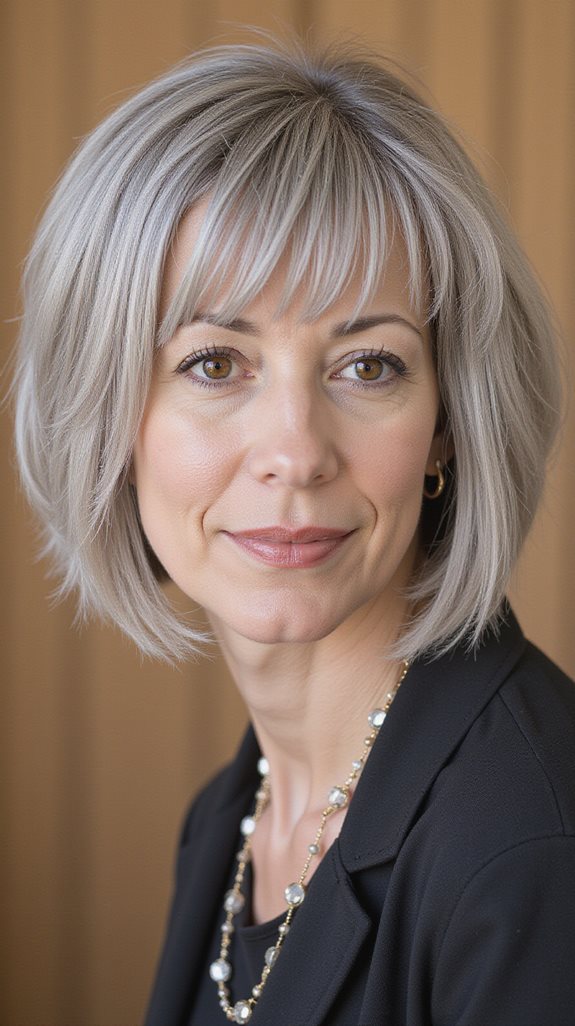
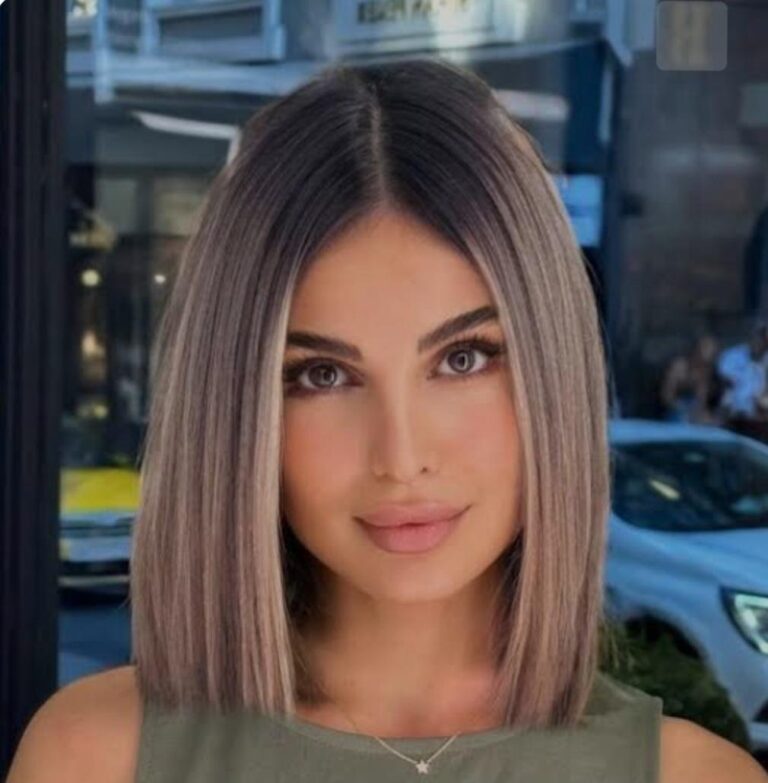
A blunt bob keeps one unbroken line at the ends instead of scattering weight through layers, which concentrates what density the hair has along that single edge. A chin-to-collarbone length balances proportion against volume better than a shorter or longer cut.
A graduation of no more than 15 degrees lets the cut follow the jawline without breaking up that perimeter weight.

Layered Bobs That Make Thin Hair Look Fuller
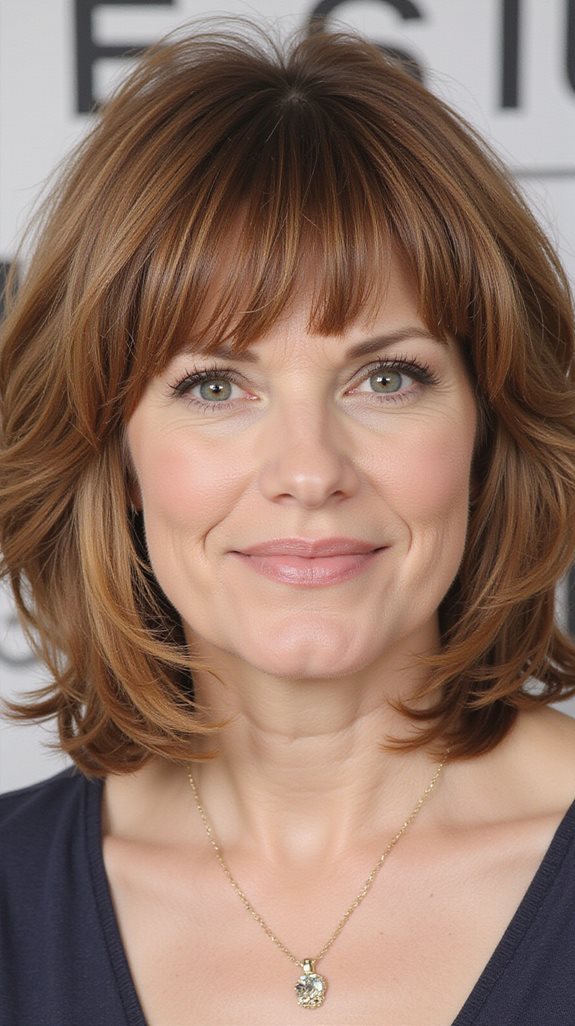
Layered bobs move weight around instead of concentrating it at one edge the way a blunt bob does; your stylist removes bulk from the interior while keeping the perimeter length intact. Interior layers cut between the occipital bone and ears let fine hair lift on its own.
Apply volumizing mousse or texturizing spray before blow-drying the sections upward. Face-framing layers around the cheekbones pull the eye up toward the face rather than down toward the ends. Our stacked bob hairstyles for fine hair use a related layering approach worth comparing.
Why the Chin-Length Bob Works So Well for Thinning Hair
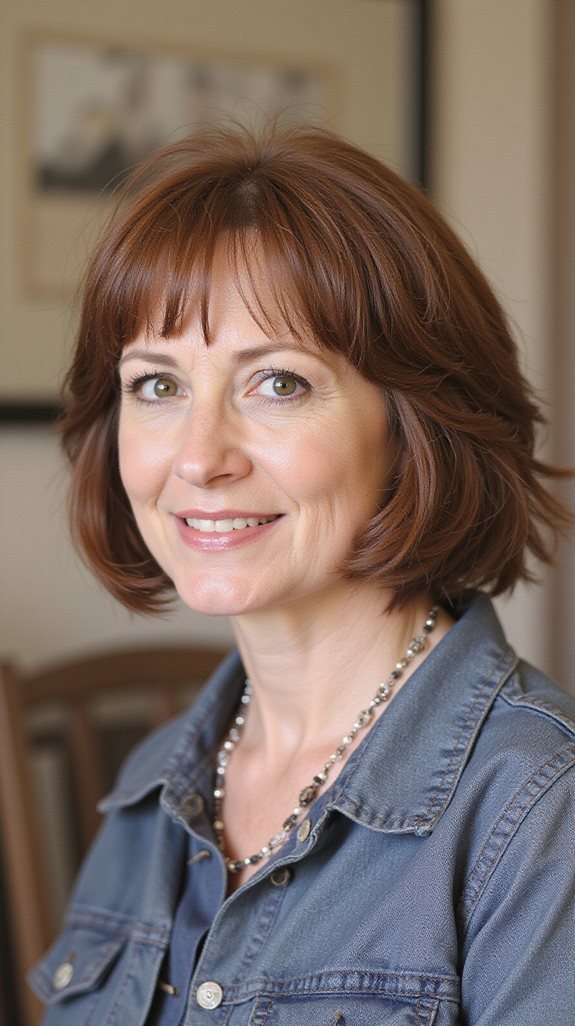
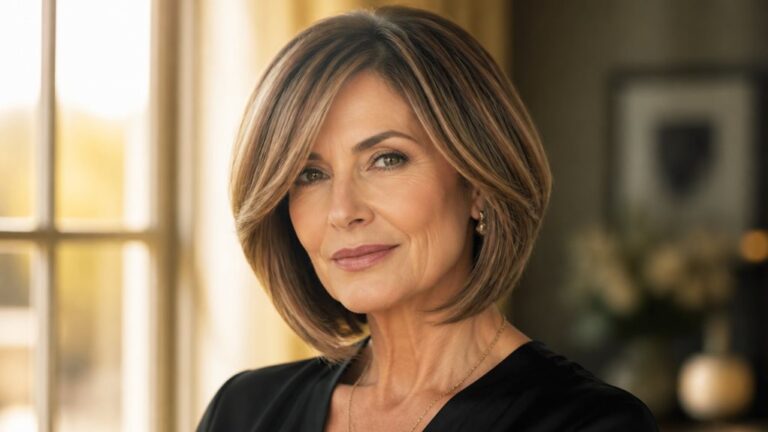
Hair ending right at the jaw rests against the face instead of hanging past it, which is what makes this length flatter thinning hair specifically. Choppy ends break up the perimeter so it doesn’t sit flat and heavy.
Volumizing product at the roots before blow-drying matters more here than the cut itself. Trims every six to eight weeks keep the weight line where it should be; skipping trims lets the perimeter grow heavy again.


The Lob (Long Bob) for Women Over 50 With Thin Hair
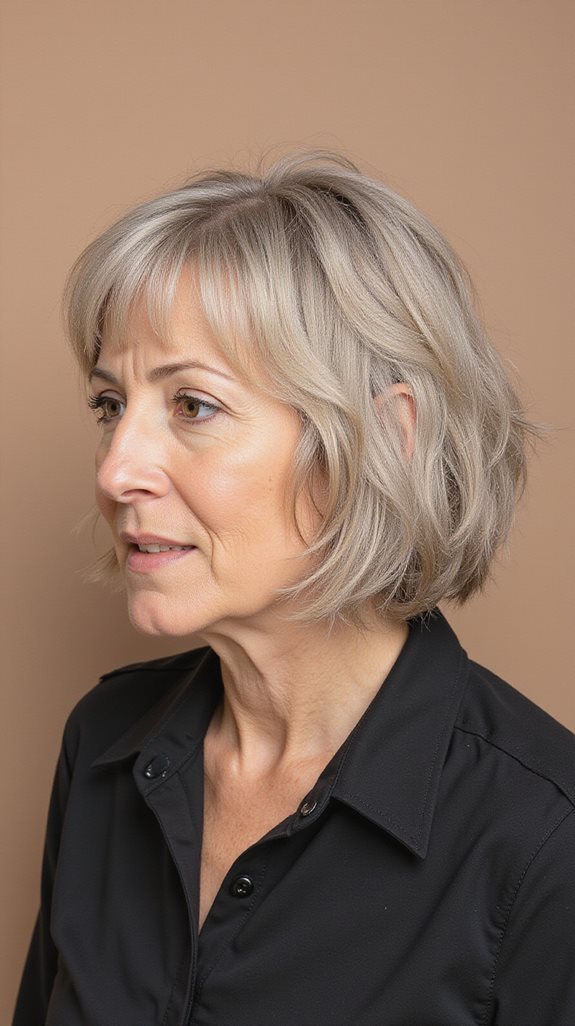
A lob sitting between the collarbone and shoulder spreads weight over a longer perimeter than a chin-length cut does, and blunt ends, not heavy layers, keep that weight where it’s useful. Our bob vs. lob comparison breaks down which length actually suits your hair better.
Volumizing mousse at the roots, then a round brush while blow-drying, lifts fine strands off the scalp. A light-hold finishing spray locks that lift in without adding weight back.


Feathered Layers for Thinning Hair at the Crown
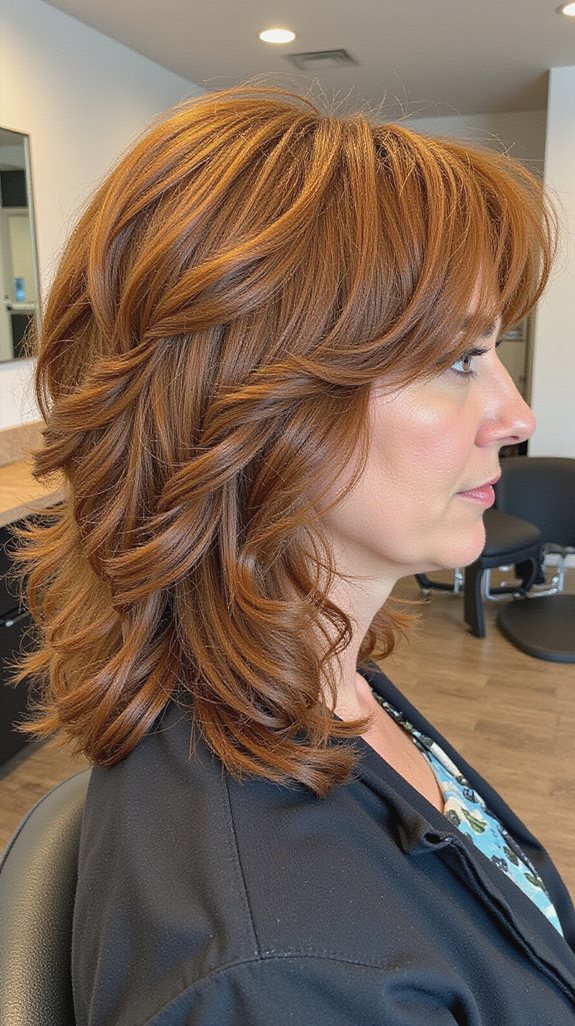
Feathering concentrated at the crown, rather than through the whole head, targets exactly the spot that thins first on most people. Point-cutting builds texture that pushes hair up and out instead of flat.
Keep crown layers between one and three inches, graduating longer toward the perimeter. Feathering only at the crown, not uniformly, preserves the density that’s still there everywhere else.


Soft Shag Cuts That Give Thinning Hair New Life
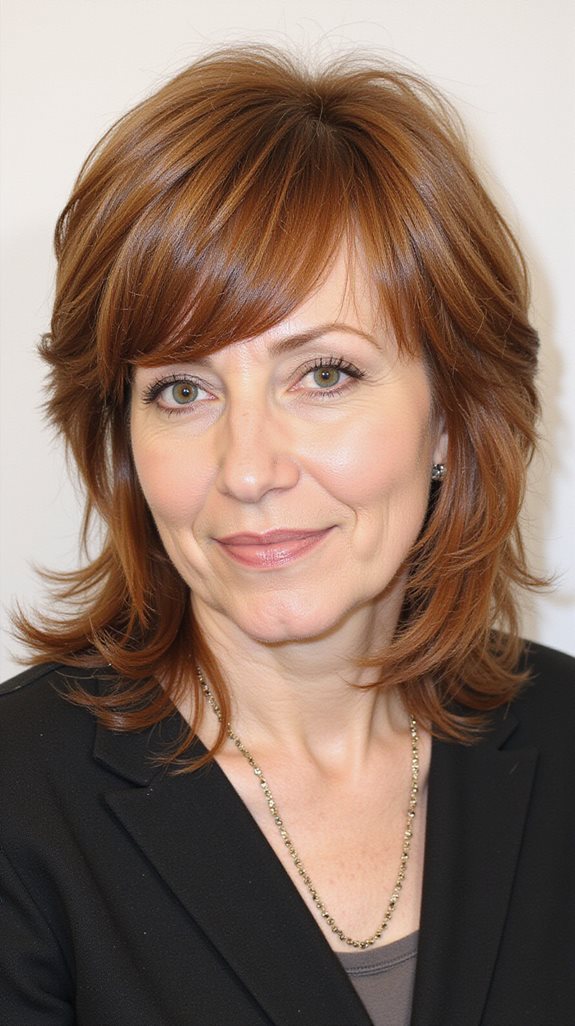
A shag combines curtain bangs, face-framing layers, and a choppy perimeter to spread visual weight across the whole cut instead of leaving it concentrated in one spot. Point-cutting each layer keeps the texture soft rather than choppy in a way that looks unintentional.
Graduation through the nape and crown compensates specifically where thinning is worst. Trim every eight weeks; shag layers grow out and lose their shape faster than a blunt cut does. Our modern shaggy hairstyles for women over 50 has more variations on this cut.

The French Bob for Fine Hair Over 50
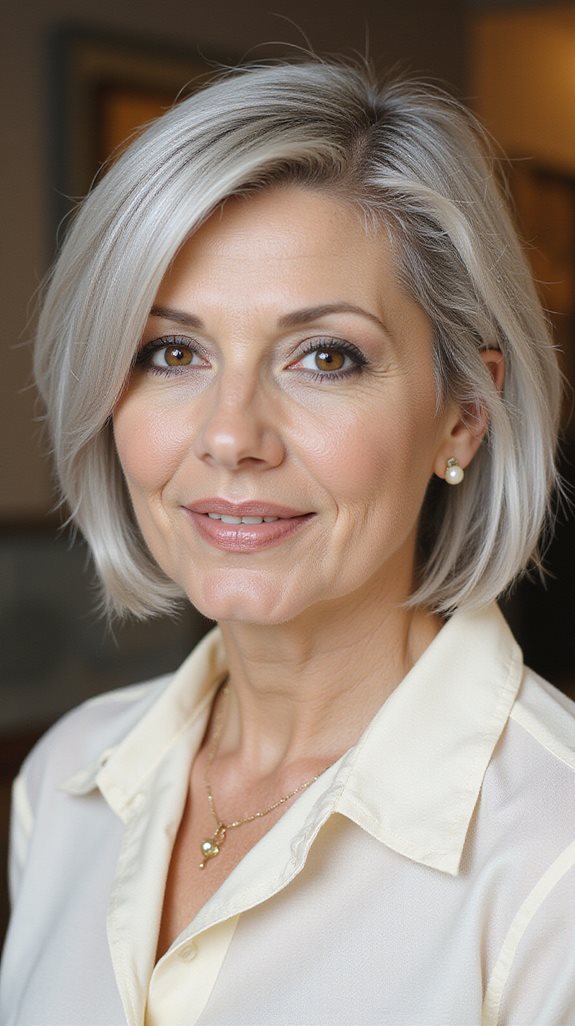
A blunt perimeter and chin-length drop work with fine hair’s natural weight instead of fighting it, which is the whole logic behind a French bob. Minimal layering matters here, since fine strands lose what little volume they have if layers thin them out further.
A root-lifting spray before blow-drying, directed forward with a round brush, adds fullness. Skip heavy texturizing; it breaks up the weight line this cut depends on.


Wispy Bangs That Disguise a Thinning Hairline
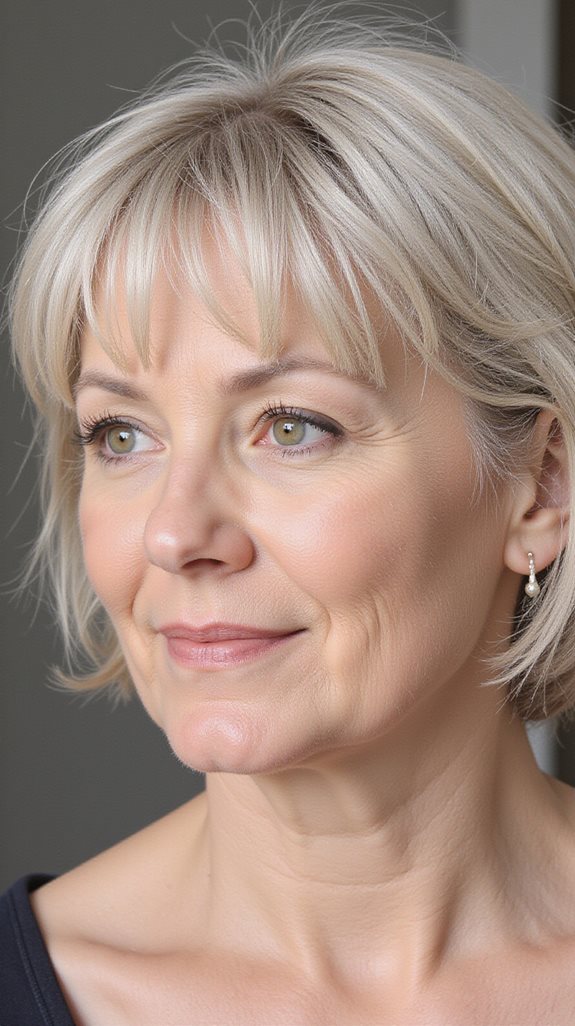
Bangs cut at eyebrow level or just above, point-cut or razor-cut rather than blunt, blend into thinning at the hairline instead of exposing it with a hard edge.
Keep them thin and airy so they don’t add bulk fine hair can’t support. Avoid heavy heat styling on them specifically, since damage along the hairline shows faster than anywhere else. Dry shampoo at the roots before styling adds grip that holds the shape longer.


Side-Swept Styles That Hide Thinning Temples
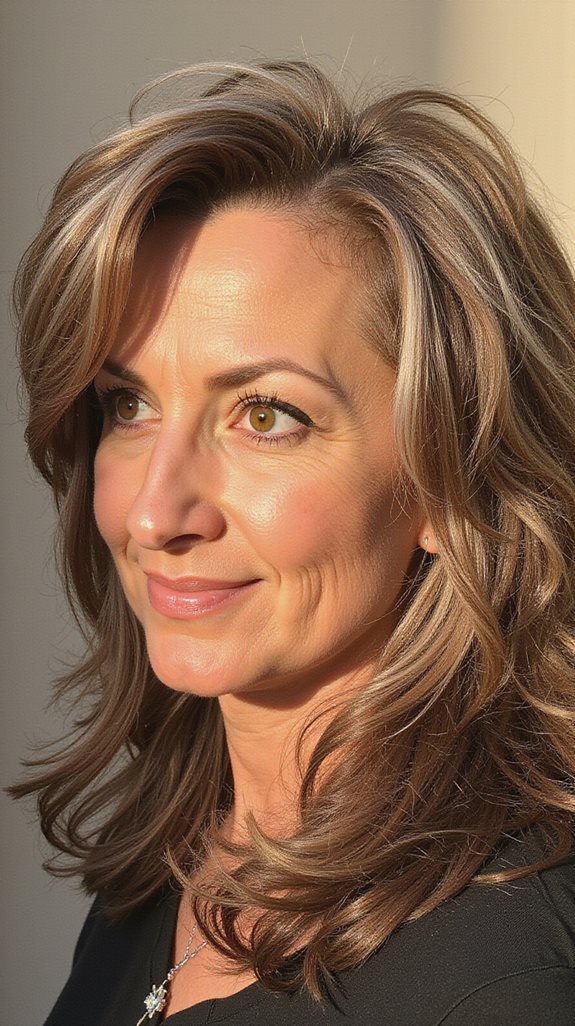
A deep side part with bangs cut at roughly a 45-degree angle covers the temple area with diagonal coverage instead of trying to hide it with volume alone. The longest point of the sweep needs to clear the outer brow corner, or it doesn’t fully cover the temple.
A round brush shapes the directional flow while blow-drying; a light-hold pomade keeps it lying flat against the skin instead of lifting away.


The Rounded Bob for Fuller-Looking Hair
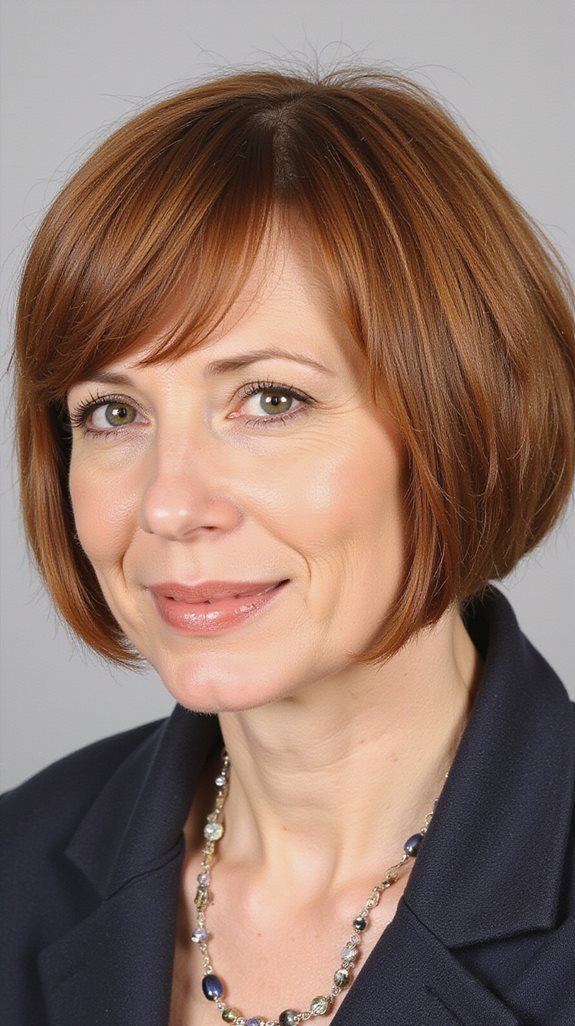
A rounded bob curves the ends inward using point-cutting, which eliminates the flat lines that expose thin spots on a straight-cut bob. It sits between the chin and collarbone.
A round brush while blow-drying reinforces that curve from underneath; volumizing product at the roots adds lift before drying starts. A light-hold mousse at the end holds the shape through the day.

Beachy Waves on a Lob for Women Over 50
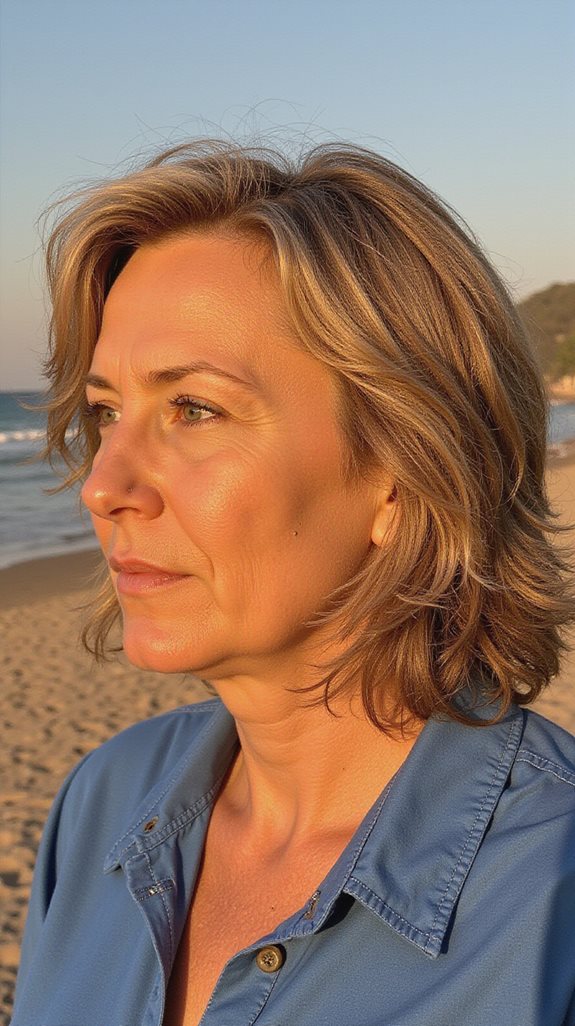
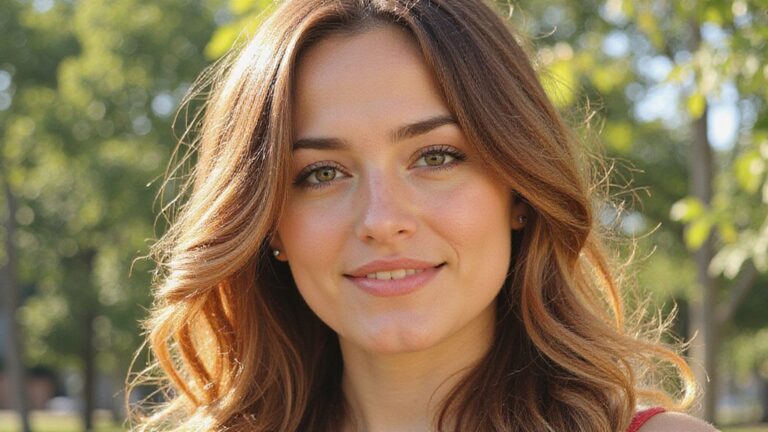
The length between the chin and collarbone gives fine hair enough weight to hold a loose wave without going limp, and the waves themselves add movement a straight cut doesn’t have.
A lightweight sea salt spray on damp hair, diffused on low heat, forms soft bends without stressing fragile strands. Keep the ends blunt; layering here just thins out what weight the wave needs to hold its shape.


How Curtain Bangs Help Thinning Hair Look Thicker
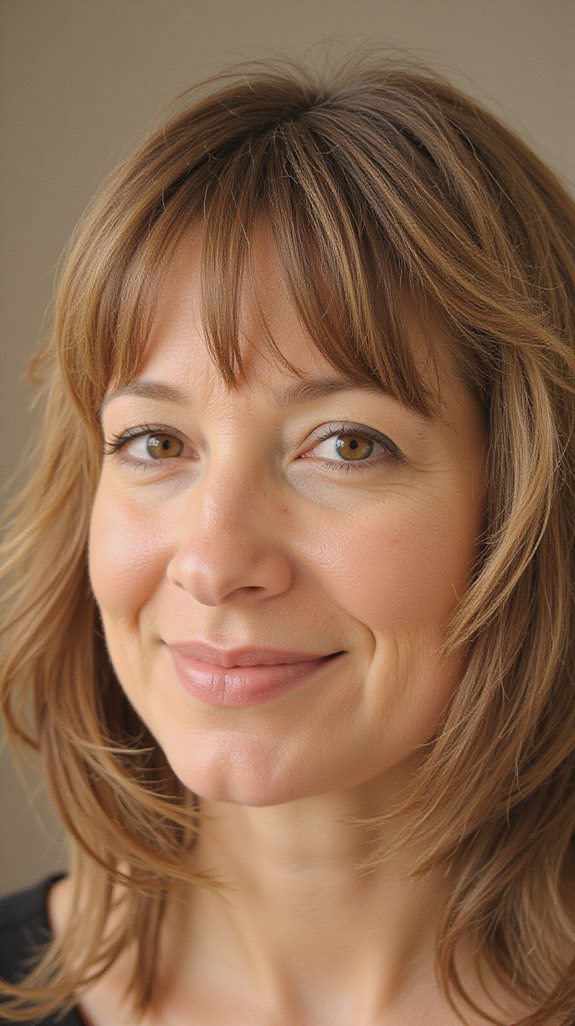
Curtain bangs part down the center and sweep outward in diagonal lines, which draws the eye across the forehead rather than down toward the crown, where thinning usually shows most.
A razor or point-cutting technique removes bulk from the tips while keeping softness near the face. Length grazing the cheekbones blends into longer layers without a hard transition line. Blow-dry them outward with a round brush to set the sweep.

The Asymmetrical Bob for Fine Hair Over 50
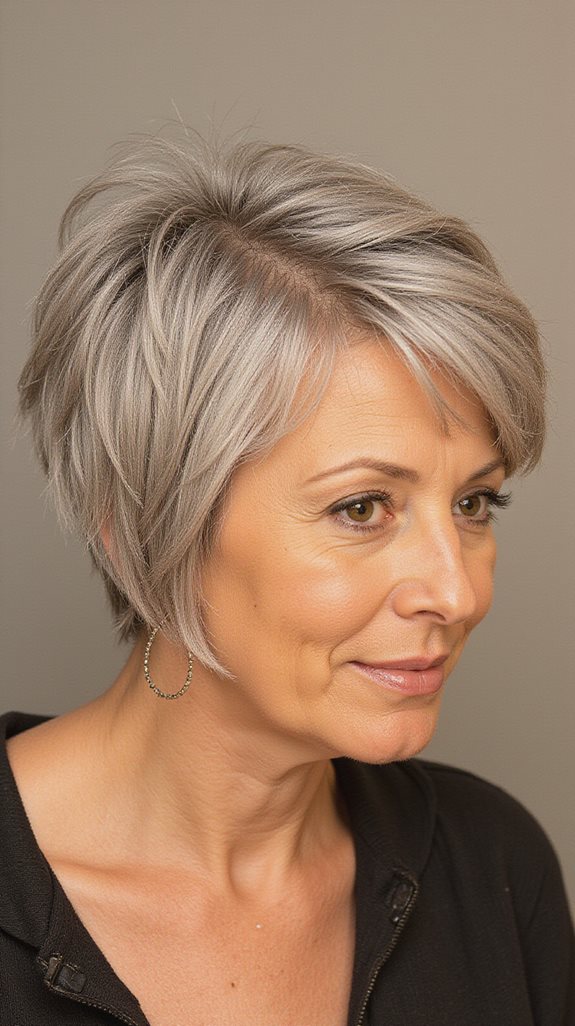
One side cut longer than the other creates a diagonal line across the head that adds visual interest without depending on hair density to do it. The longer side should graze the jaw; the shorter side sits above the ear.
Texturizing through the longer section keeps those ends from looking sparse or flat. This is one of the more forgiving bob variations for fine hair at any length adjustment.


Choppy Layers That Create the Illusion of Volume
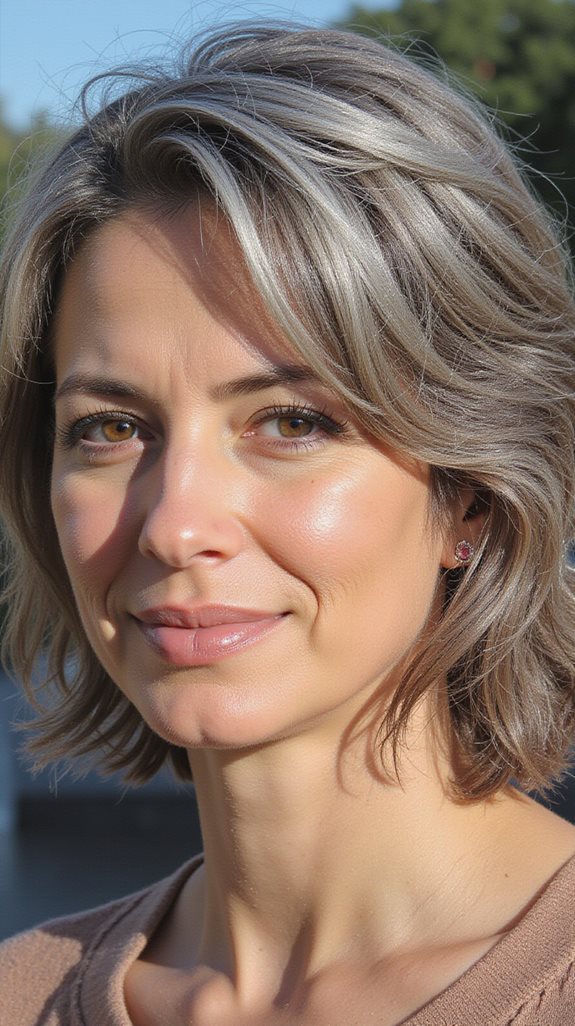
Choppy layers remove bulk at irregular intervals so each section catches light from a different angle instead of one flat surface. Point-cutting and razor work give the ends texture and keep strands from lying flat against the scalp.
Concentrate the choppy layering around the crown and temples specifically, since that’s usually where thinning is worst and where the lift matters most.


Collarbone-Length Cuts That Balance Thin Hair
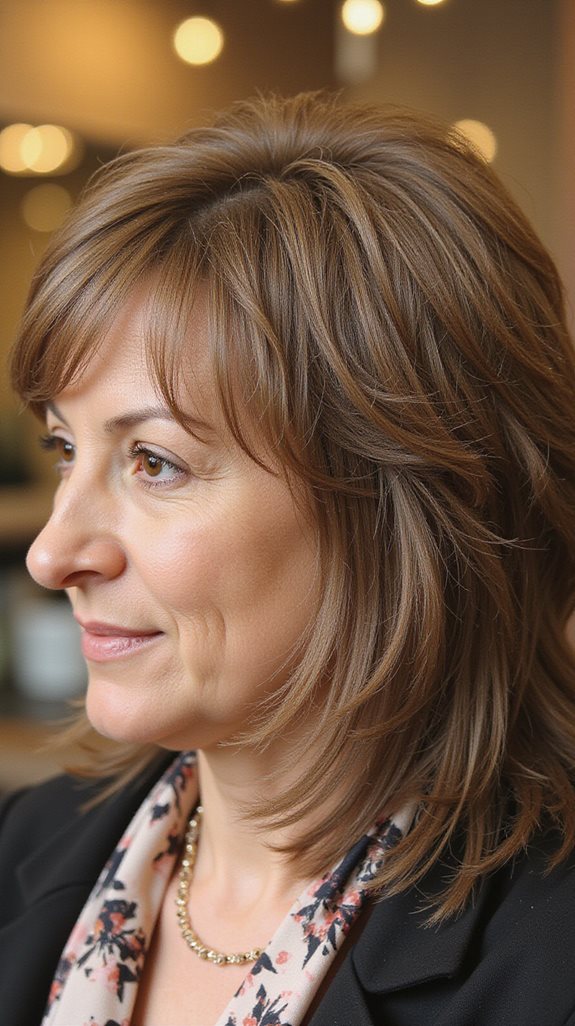
Ending the cut at hair’s natural weight line, around the collarbone, keeps strands from pulling down and going limp the way a longer length can. Your stylist removes bulk from the interior while keeping the perimeter intact to hold that balance.
The midpoint length frames the face without over-extending it, and it reduces how obvious sparseness near the crown looks.
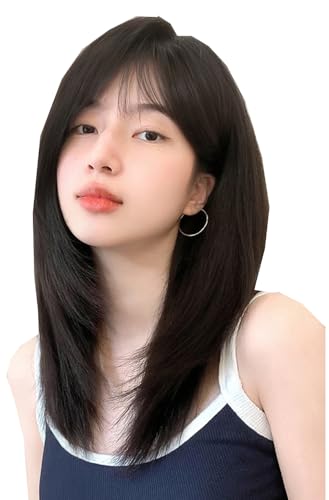


The C-Curl Blowout Bob for Thinning Hair
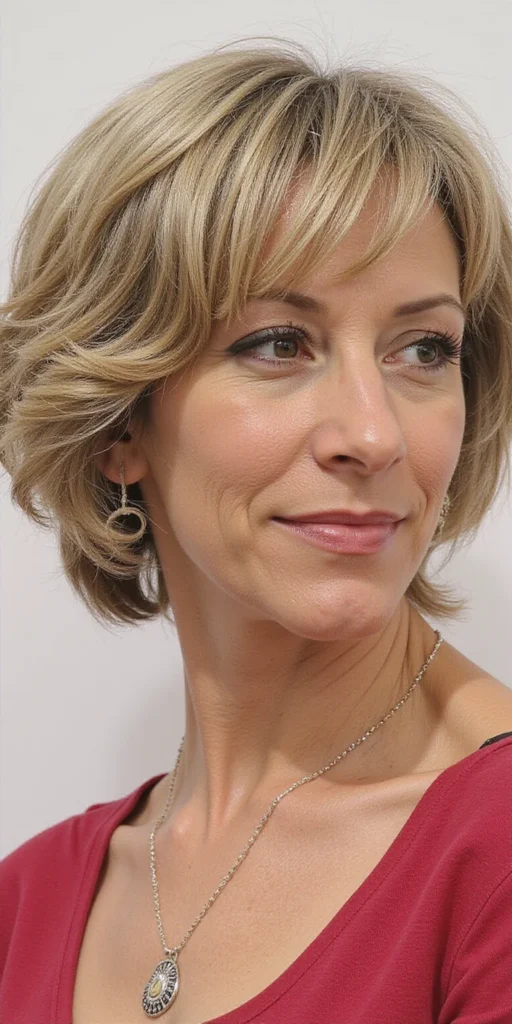
Curling the ends inward with a 1.5-inch barrel builds volume along the perimeter the way a straight blowout can’t. Sectioning the hair into three horizontal layers before curling keeps the result consistent instead of uneven.
A light-hold flexible spray at the end holds the lift and movement without stiffening the curl.


How to Style Thinning Hair Between Haircuts
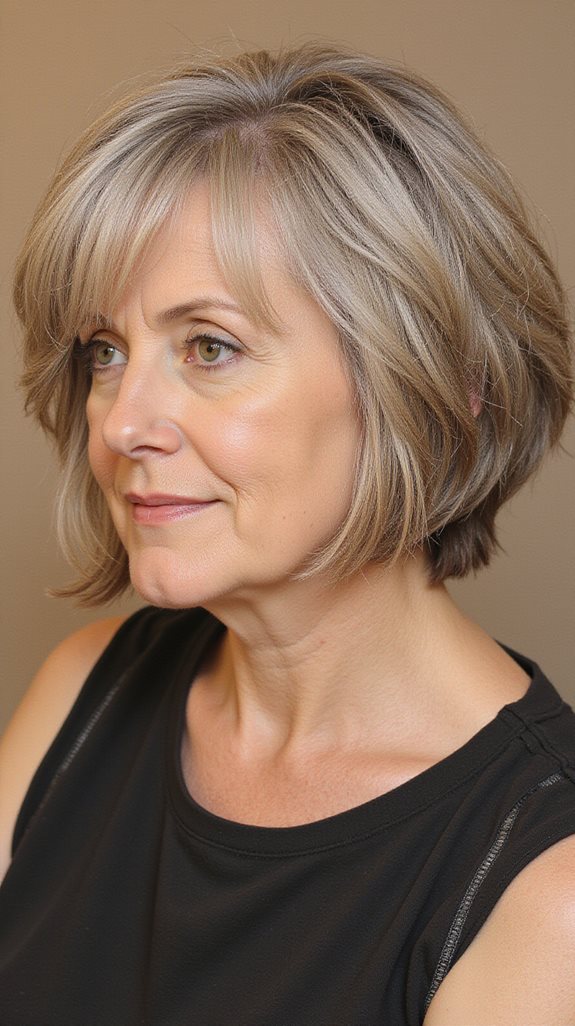
Volumizing mousse or texturizing spray applied at the roots before blow-drying holds the cut’s shape between salon visits. Direct heat upward and away from the scalp rather than straight down, and use dry shampoo to absorb the oil that weighs thinning hair down fastest.
An off-center part reads fuller than a dead-center one, since it doesn’t show a straight line of scalp down the middle. Skip heavy serums and oils near the roots specifically; they flatten volume faster than anywhere else on the hair.

The Best Haircut for Your Specific Thinning Pattern
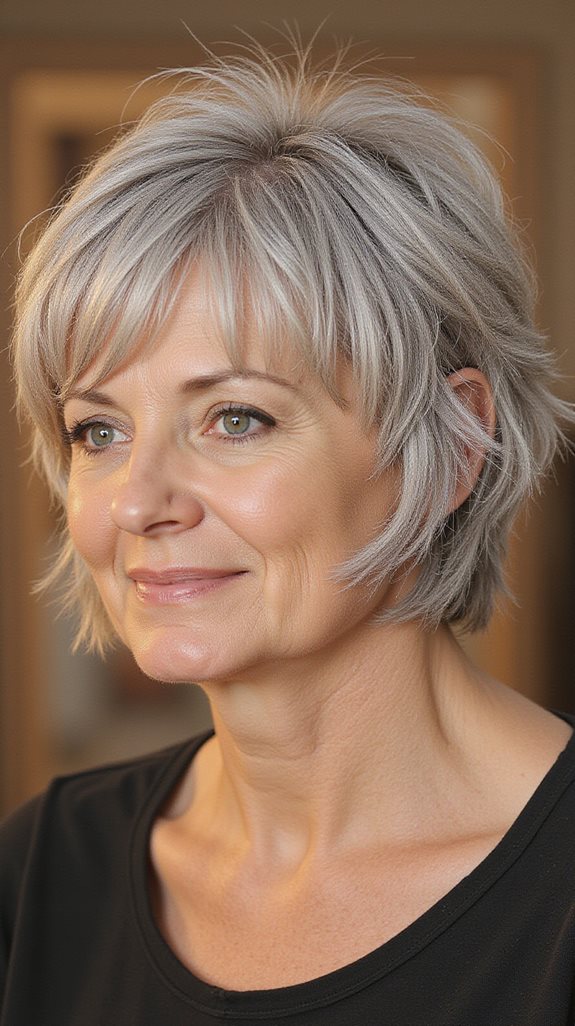
Crown thinning, temple recession, and a widening part each call for a different cut, since they’re different problems even though they all read as “thinning hair.” Tell your stylist exactly where the thinning is worst before any cutting starts.
Bringing a reference photo of where the density loss is most visible gives your stylist something concrete to plan around, rather than guessing from a general description.


Frequently Asked Questions
Can Hair Supplements Help Thinning Hair Grow Back Thicker Over 50?
Hair supplements effectiveness varies, but you can boost thinning strands over 50 with biotin, collagen, and natural remedies like saw palmetto. They won’t fully reverse loss, but they’ll noticeably improve thickness and overall hair density.
Does Coloring Thinning Hair Make It Look Worse or Better?
Coloring can actually improve thinning hair’s appearance when you use the right color techniques. Highlights and lowlights create dimension, adding visual depth to fine hair textures, making your hair look fuller and more voluminous overall.
How Often Should Women Over 50 Wash Thinning Hair?
For thinning hair care, you should follow frequency recommendations of washing every two to three days. This prevents stripping natural oils that provide volume, keeping your thinning strands healthier and fuller-looking.
Are Certain Hair Tools Damaging Thinning Hair in Older Women?
Yes, certain tools damage thinning hair. You should avoid high-temperature heat styling tools, as they weaken fragile strands. Instead, use gentle brushes with soft, flexible bristles to minimize breakage and preserve your hair’s integrity.
Can Scalp Massages Actually Stimulate Growth in Thinning Hair?
Yes, scalp massages can stimulate growth by boosting circulation to follicles. You’ll improve scalp health by applying consistent massage techniques daily, using firm circular motions for four minutes to activate dormant follicles and encourage thicker regrowth.
Finally
Your hair’s thinning pattern determines which cut will suit it best. Whether you’ve chosen a textured pixie, a blunt bob, or a collarbone-length cut, each one manages weight and density in a different way.
Keep trims on a six-to-eight-week schedule, use a volumizing product at the roots, and diffuse instead of air-drying flat. The cut does most of the work; styling in between just maintains it.