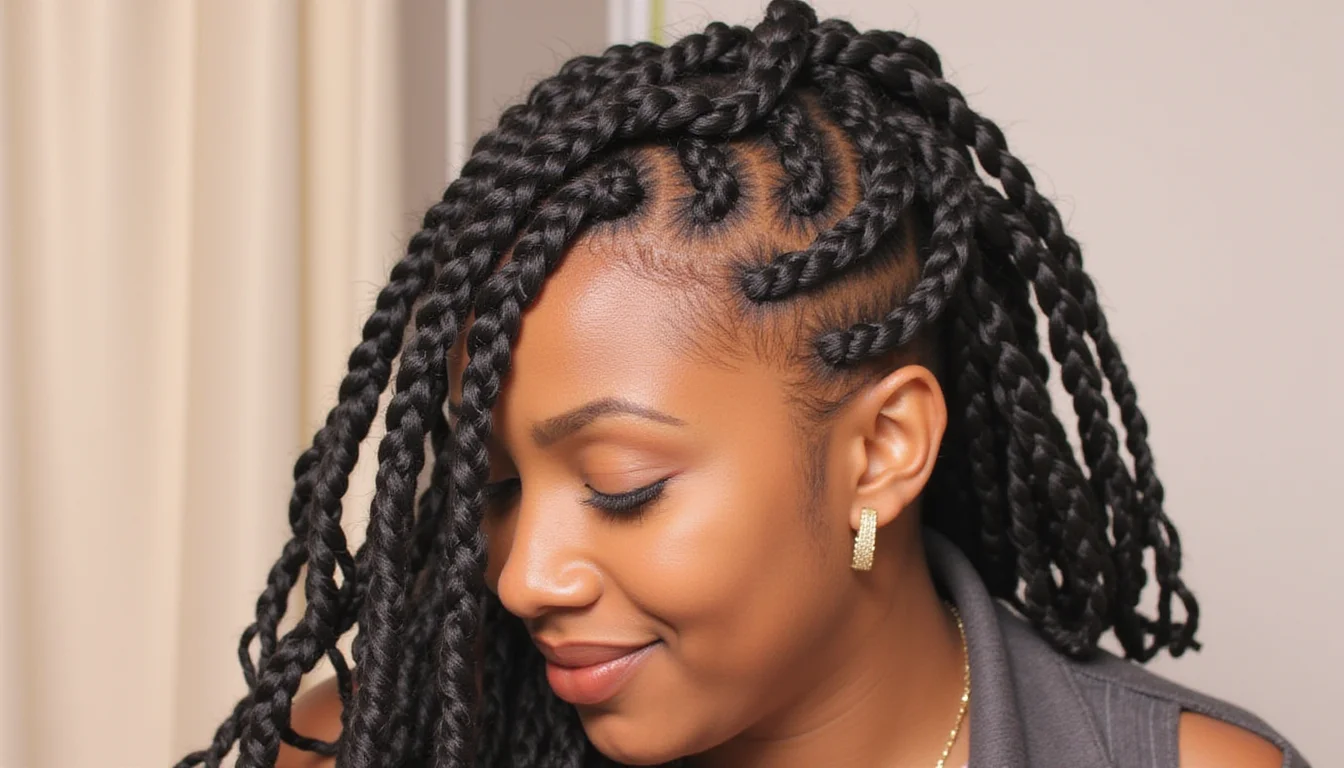
20 African Braids Hairstyles That Are Taking Over Social Media
You’ll discover 20 stunning African braided hairstyles including box braids with uniform square sections, intricate cornrows featuring geometric scalp patterns, and Fulani braids adorned with decorative beads.
Consider Ghana braids using feed-in techniques, sculptural Bantu knots, quick jumbo braids, and tribal patterns that reflect community heritage.
Master French braids as your foundation, then explore Senegalese twists, tree braids, lemonade braids, stitch braids, knotless variations, and goddess braids for comprehensive styling options that’ll transform your approach to protective hair artistry.
Box Braids: Classic Protective Style Foundation
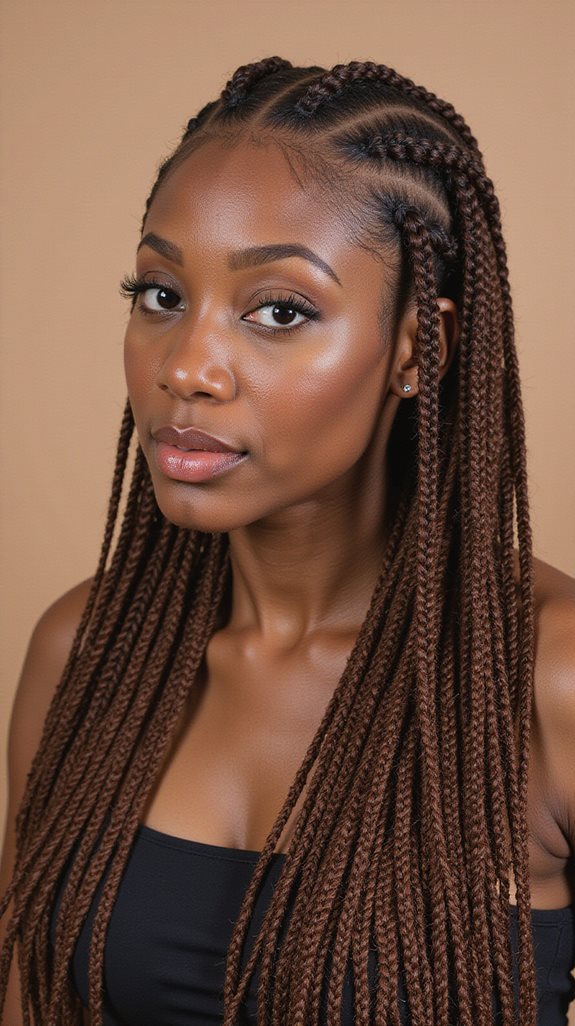
Box braids represent the cornerstone of protective styling, offering a time-tested method that has protected African hair for over 5,000 years.
This classic technique involves creating uniform square-shaped sections through geometric parting, then braiding from root to tip with consistent tension while incorporating extensions for added length and volume.
Proper installation begins with clean, moisturized hair that’s been stretched through blow-drying or overnight braiding.
Essential maintenance includes sealing ends with hot water, applying lightweight oils to prevent frizz, and sleeping with silk scarves to preserve the style for 6-8 weeks.


Cornrows: Ancient Geometric Hair Patterns
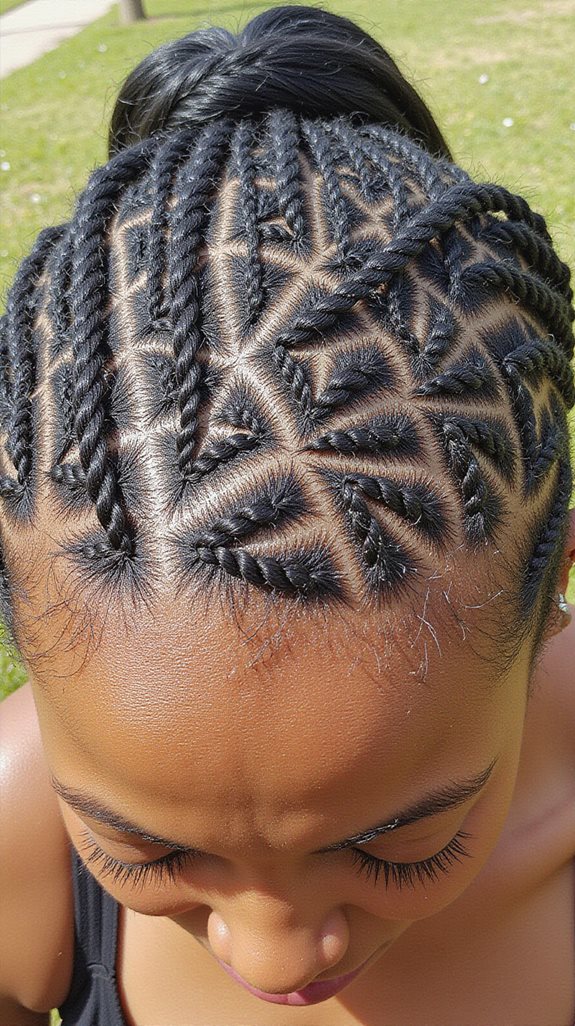
Cornrows create intricate geometric patterns by braiding hair tightly against the scalp in continuous, raised rows that follow predetermined directional paths. This technique involves sectioning hair into precise linear parts, then weaving three strands under-over-under while maintaining consistent tension against the scalp.
The cultural significance spans thousands of years across African civilizations, where patterns indicated social status, tribal affiliation, and spiritual beliefs.
To achieve professional results, start with clean, slightly damp hair and apply leave-in conditioner for manageability. Create your first part using a rat-tail comb, ensuring straight lines, then begin braiding at the hairline while incorporating additional hair with each crossover motion.
The historical roots trace back to ancient Egypt and West Africa, where cornrows served both practical and ceremonial purposes in daily life.


Fulani Braids: Decorative West African Beauty
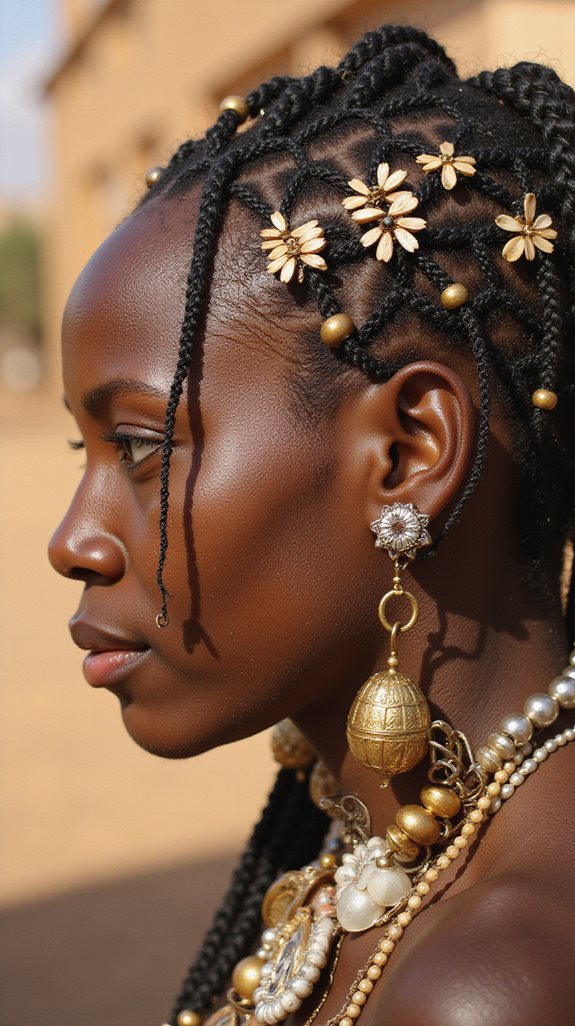
Fulani braids showcase a distinctive West African hairstyling tradition characterized by a signature center part with thin braids flowing backward.
These versatile braiding patterns feature complementary side braids adorned with beads, rings, or cowrie shells that create striking geometric designs.
The cultural significance extends beyond aesthetics, as traditional bead colors and patterns historically indicated age, marital status, and wealth within Fulani communities.
Creating authentic Fulani braids requires precise sectioning with a middle part and one central braid extending from forehead to nape.
The style incorporates 2-4 thinner side braids on each side, strategically placed for both artistic expression and cultural symbolism.
This centuries-old tradition celebrates African heritage while demonstrating the geometric precision and ornamental artistry of the nomadic Fulani people.


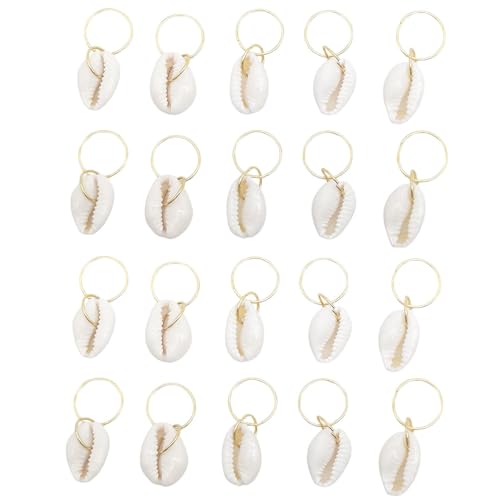
Ghana Braids: Bold Feed-In Cultural Tradition
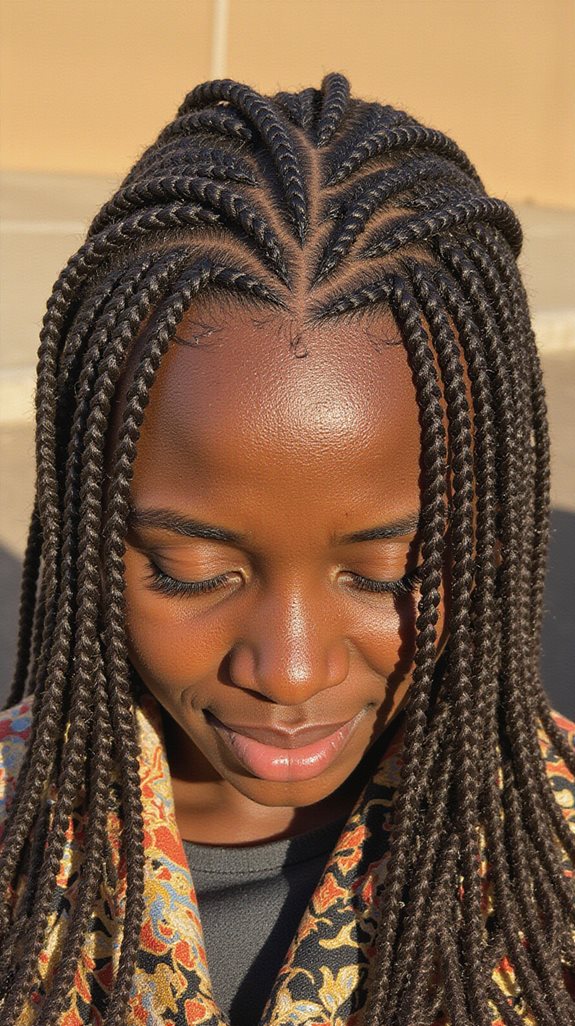
Ghana braids are a sophisticated feed-in braiding technique that creates dramatically thick, sculptural plaits through gradual hair incorporation.
Starting with small cornrows at the hairline, synthetic hair extensions are progressively added while braiding toward the back. This method produces the signature tapered-to-thick appearance that defines Ghana braids.
The cultural significance stems from Ghana’s rich braiding heritage, where intricate patterns communicated social status and tribal identity.
Styling variations include straight-back patterns, curved designs, or geometric shapes.
Optimal results require high-quality Kanekalon hair and proper sectioning for even thickness distribution.


Bantu Knots: Sculptural South African Style
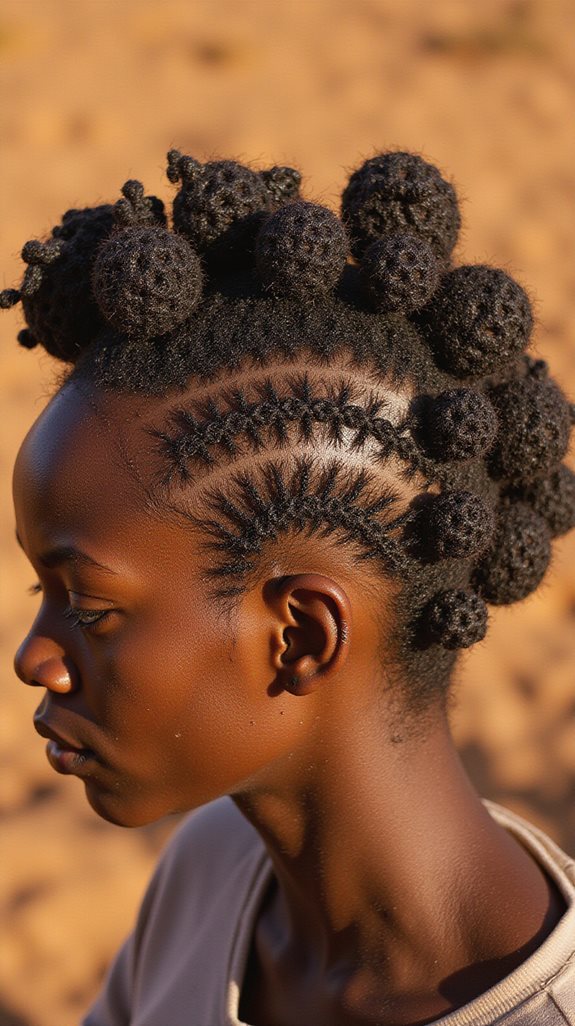
Bantu knots are a traditional Southern African protective hairstyle that transforms hair into sculptural art through strategic sectioning and precise wrapping techniques.
This culturally significant styling method among Bantu-speaking peoples creates compact knots by twisting hair tightly from roots to ends, then wrapping the twisted length around its base.
The technique involves creating clean sections with a rat-tail comb and applying styling cream before twisting.
Popular variations include half-up styles, geometric patterns, and graduated sizes that can be maintained for 24-48 hours.
Unraveling the knots creates defined twist-out curls, offering dual styling benefits from one protective technique.


Senegalese Twists: Rope-Like West African Elegance
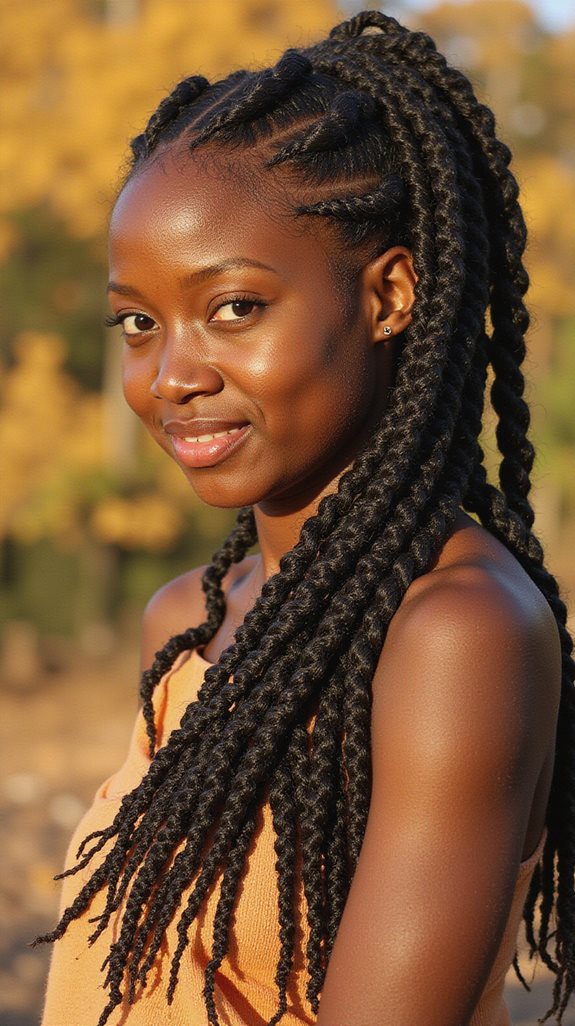
Senegalese twists create flowing, rope-like elegance through a two-strand twisting technique that extends natural hair length. The process involves sectioning synthetic hair into equal portions and wrapping each strand around natural hair in opposing directions.
Beginning at the roots, you maintain consistent tension while rotating strands clockwise and counterclockwise alternately.
The styling technique requires precise finger positioning and steady rhythm to achieve uniform twists throughout the head. Installation typically takes six to eight hours depending on desired thickness and length.
Twist ends are sealed with hot water or rubber bands, and the style lasts four to six weeks with proper nighttime protection.


Havana Twists: Chunky Protective Cuban-Inspired Style
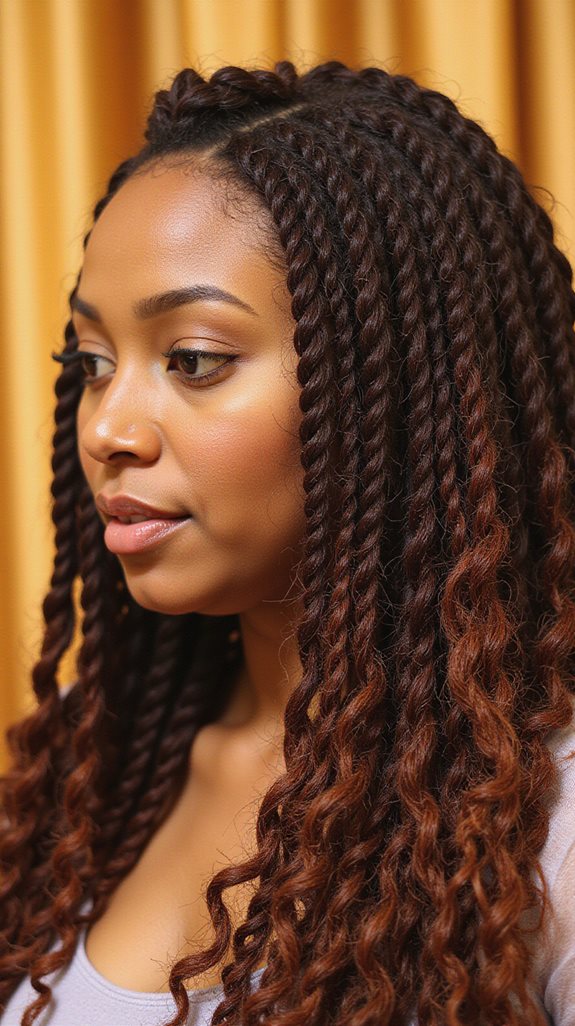
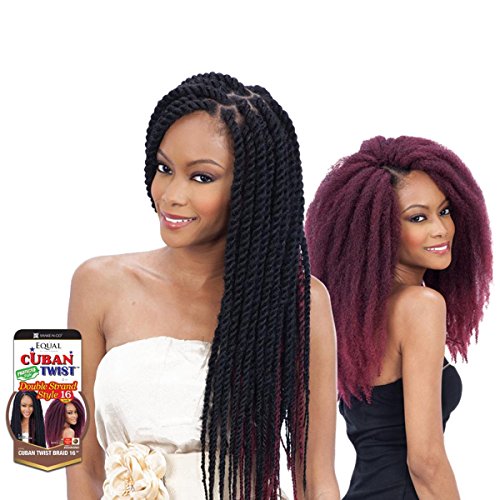
Havana twists deliver bold, chunky texture through a specialized wrapping technique that creates voluminous protective styling with Cuban flair.
This distinctive look involves sectioning hair into medium-sized portions, then wrapping Havana twist hair extensions around each section using a two-strand rotation method. The technique requires maintaining consistent tension while wrapping synthetic hair downward in a rope-like pattern.
Proper maintenance preserves the style’s integrity for six to eight weeks with minimal effort. Sleep with a silk scarf to prevent frizz and avoid excessive manipulation throughout the wear period.
Apply lightweight oil to your scalp weekly to maintain moisture without weighing down the chunky, textured appearance.


Passion Twists: Textured Bohemian Two-Strand Braids
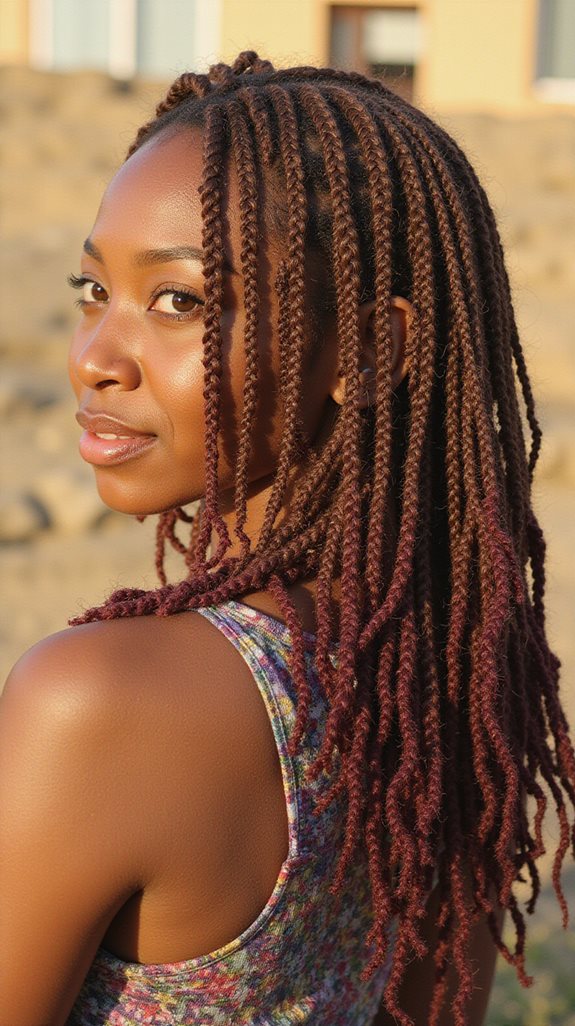
Passion twists create a stunning bohemian look through their signature textured, wavy appearance that beautifully mimics natural curl patterns.
This protective style uses water wave or freetress hair extensions combined with your natural hair for a softer alternative to chunky braided styles. The two-strand twisting technique incorporates consistent tension while maintaining the wavy texture throughout each twist.
Proper maintenance involves sleeping with satin accessories and refreshing twists weekly with lightweight oils like jojoba or argan. Avoiding excessive manipulation and heavy products prevents buildup and preserves the style’s integrity.
With proper care, passion twists typically last six to eight weeks while protecting your natural hair.


Tree Braids: Free-Flowing Movement With Braided Base
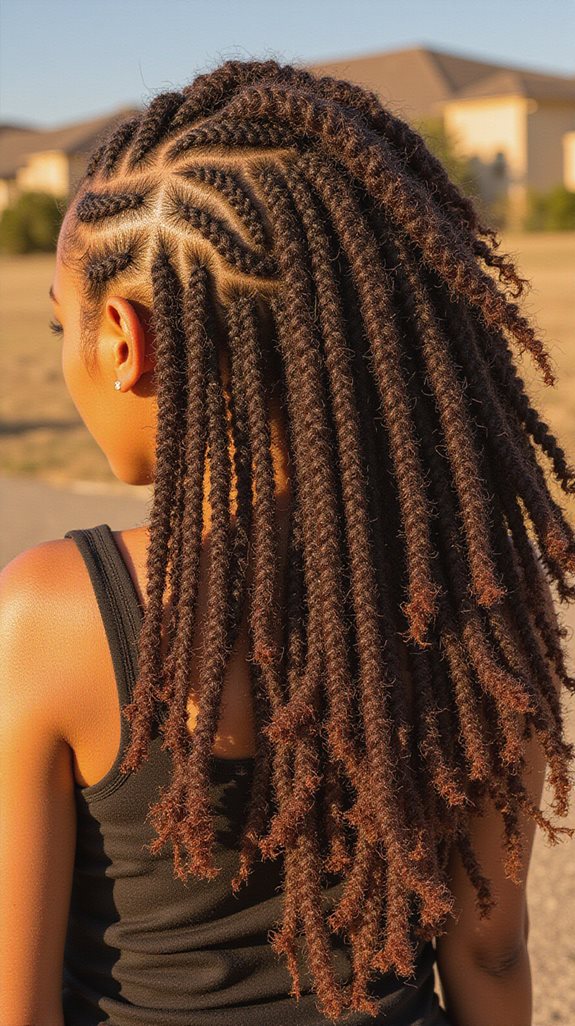
Tree braids offer a unique protective styling method that combines cornrowed foundations with freely flowing hair extensions.
Small cornrows are strategically placed across the scalp with gaps between them, then synthetic or human hair extensions are threaded through using a latch hook tool. This technique allows most of the added hair to move naturally while keeping your real hair protected.
The style provides several benefits including reduced tension on hairline edges compared to tighter protective styles and easier scalp access for washing.
Maintenance requires nightly silk scarf wrapping, weekly moisturizing with leave-in conditioner, and gentle detangling of loose sections to prevent matting.
Tree braids successfully mimic natural hair texture while offering long-lasting protection.


Lemonade Braids: Side-Swept Cornrows With Flair
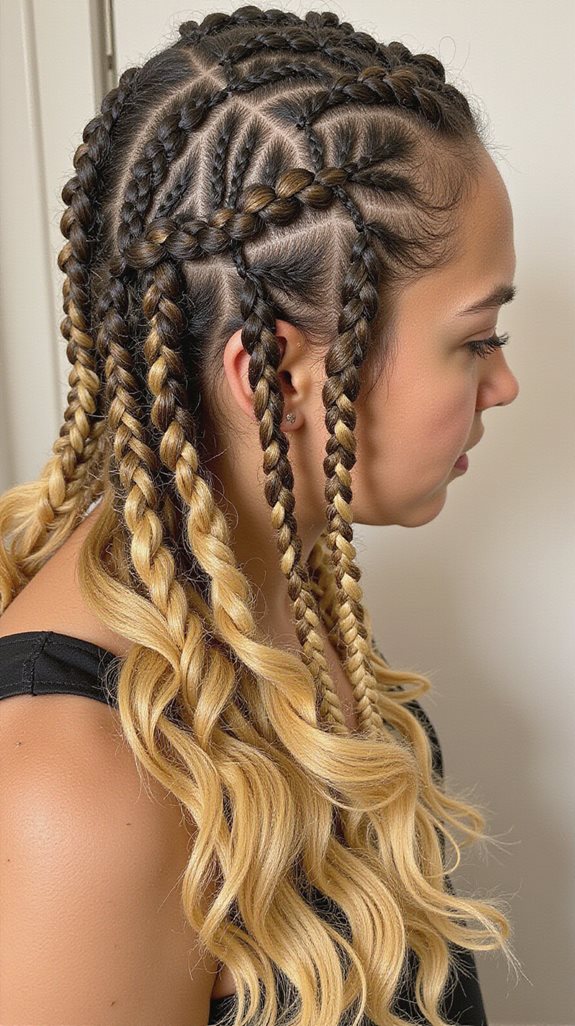
Lemonade braids are a stunning protective hairstyle that gained widespread popularity through Beyoncé’s 2016 visual album “Lemonade.”
This modern twist on traditional African cornrows features braids swept dramatically to one side, creating an asymmetrical cascade that flows elegantly over the shoulder. The style requires sectioning hair into diagonal parts that angle toward your preferred side, with extensions often added for enhanced length and volume.
Proper maintenance is essential for keeping lemonade braids looking fresh and protecting your natural hair underneath. Nightly wrapping with a silk scarf, weekly scalp oiling, and sleeping on satin pillowcases help preserve the style while minimizing friction and breakage.
With consistent care, lemonade braids typically last six to eight weeks before requiring professional removal and reinstallation.


Stitch Braids: Precise Clean-Line Cornrow Patterns
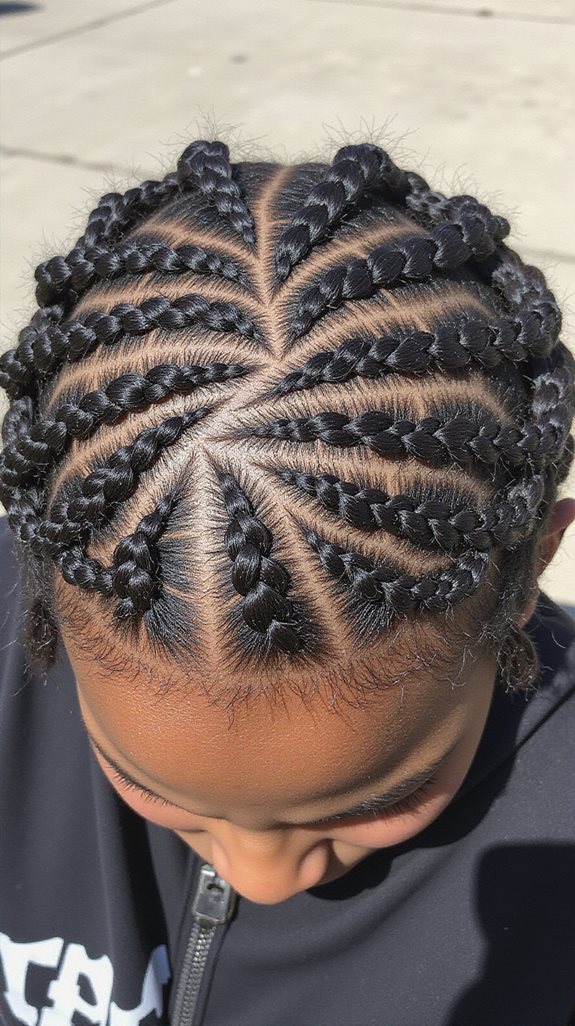
Stitch braids represent the pinnacle of precise cornrow artistry, creating geometric patterns through deliberate sectioning and spacing techniques. The distinctive “stitched” appearance comes from uniform gaps between hair sections, typically spaced at half-inch intervals across the scalp.
Mastering this technique requires consistent tension and sharp sectioning with a rat-tail comb.
Proper maintenance ensures stitch braids retain their clean lines and geometric appeal for six to eight weeks. Sleeping with silk scarves protects the edges while lightweight scalp oils applied every three days maintain healthy growth.
Weekly edge touch-ups with control gel keep the precise pattern looking fresh and defined.


Zigzag Braids: Creative Parting Pattern Cornrows
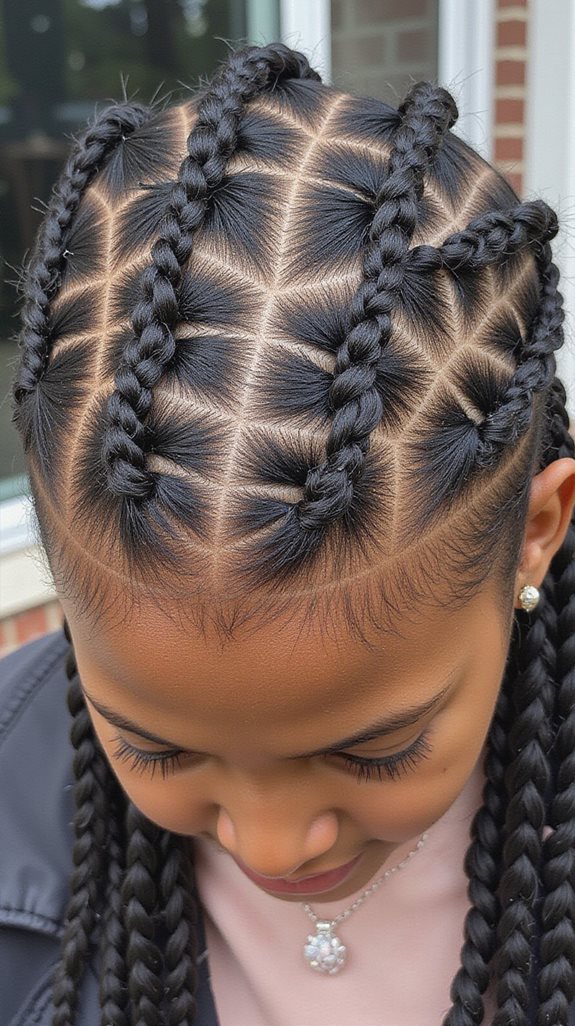
Zigzag braids offer a striking alternative to traditional straight-line cornrows by incorporating angular parting patterns that create eye-catching geometric designs. This technique uses sharp diagonal lines that alternate direction every few inches, transforming the scalp into a canvas of dynamic visual movement.
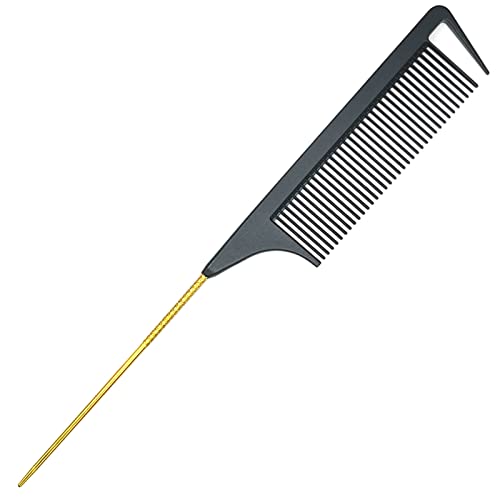
The systematic approach begins at the hairline and works toward the crown, maintaining consistent angles throughout. Proper execution requires precise sectioning with a rattail comb and light tension during braiding to preserve the geometric patterns’ sharp definition.
Standard three-strand cornrow technique follows the predetermined zigzag parting lines exactly, with finger placement kept close to the scalp for maximum control. Completing each row before moving to the next section ensures uniform spacing and prevents overlapping that could compromise the design’s visual impact.


Knotless Braids: Gentler Box Braid Alternative
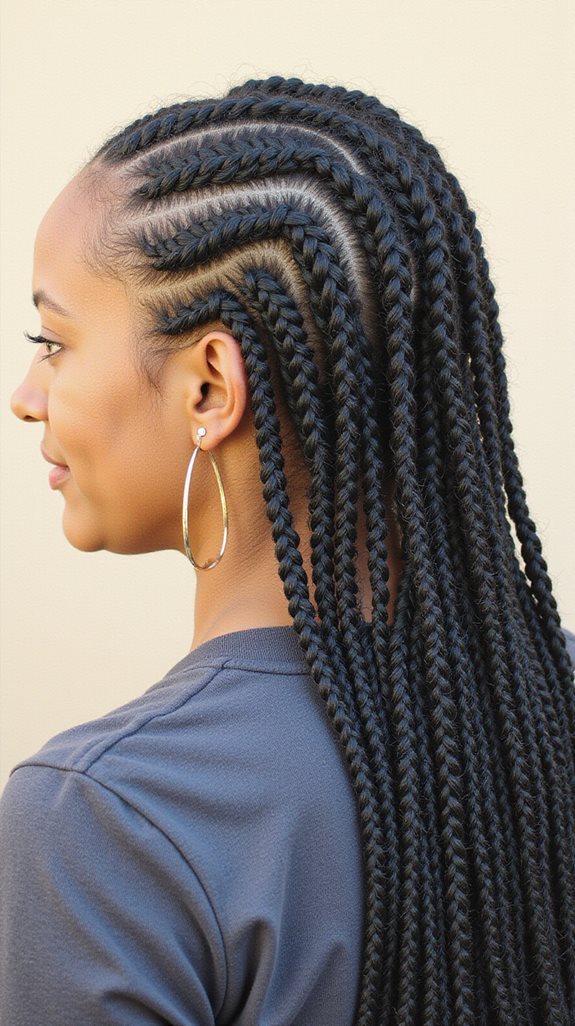
Knotless braids offer a gentler alternative to traditional box braids by eliminating the tight knots that typically create tension at the hair roots. This technique involves gradually feeding synthetic hair into natural strands while braiding downward from the hairline.
The method significantly reduces scalp stress and prevents breakage in vulnerable root areas.
The knotless approach provides increased comfort during installation and allows for extended wear time with minimal scalp irritation.
Proper maintenance includes weekly scalp cleansing with diluted shampoo and bi-weekly application of lightweight oils.
Braids should be removed after six to eight weeks to maintain natural hair health and prevent matting.


Micro Braids: Delicate Fine Hair Protection
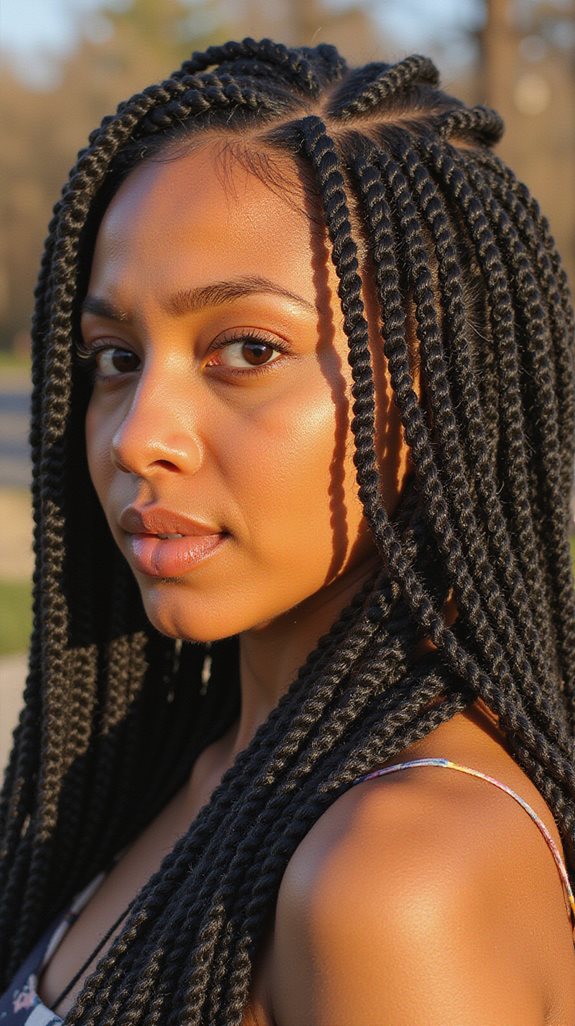
Micro braids offer an intricate protective styling technique specifically designed for delicate and fine-textured hair. This method involves creating pencil-thin braids using 1/8-inch sections with minimal tension to prevent breakage and damage.
The precise sectioning and gentle application make micro braids ideal for fragile hair that requires careful handling.
The protective benefits of micro braids extend beyond simple styling, offering 6-8 weeks of wear while promoting hair growth retention.
Daily manipulation is significantly reduced, leading to less tangles and improved moisture retention compared to loose hair.
Proper maintenance requires weekly scalp cleansing with diluted shampoo and lightweight oil application to maintain scalp health throughout the styling period.


Feed-In Braids: Gradual Natural Hair Addition
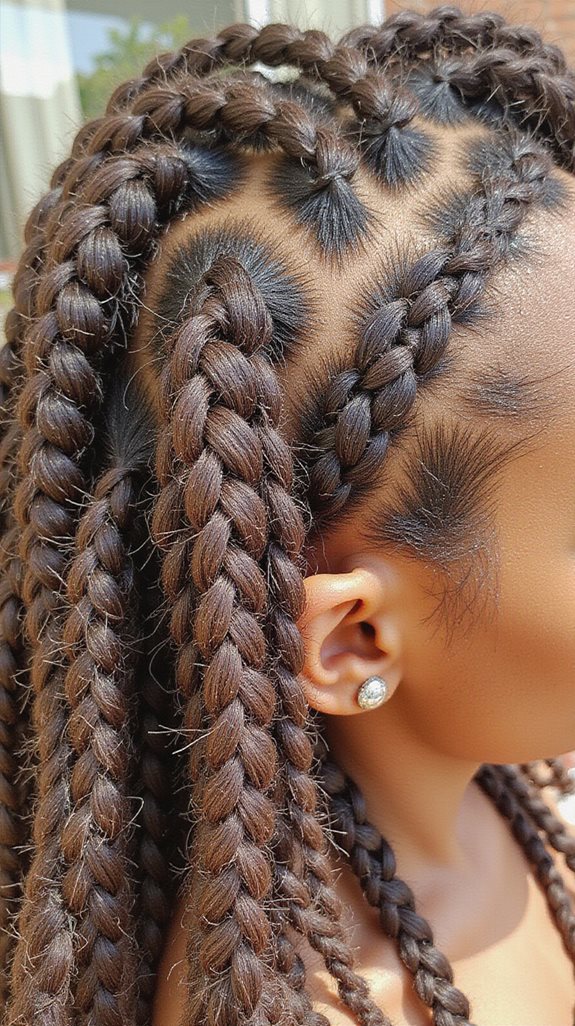
Feed-in braids offer a protective styling technique that creates natural-looking results by gradually incorporating extensions into your hair. This method begins with your natural hair at the roots and slowly adds extension pieces as you braid downward. The gradual addition prevents bulky, heavy roots that can damage your hairline.
The key to successful feed-in braids lies in maintaining consistent tension and adding small amounts of hair incrementally. Start with clean sections and begin each braid using only your natural hair for the first few crosses.
Continue adding extension hair every few braiding motions to create smooth, tapered braids that provide length and volume without stress.


Goddess Braids: Oversized Crown Statement Styles
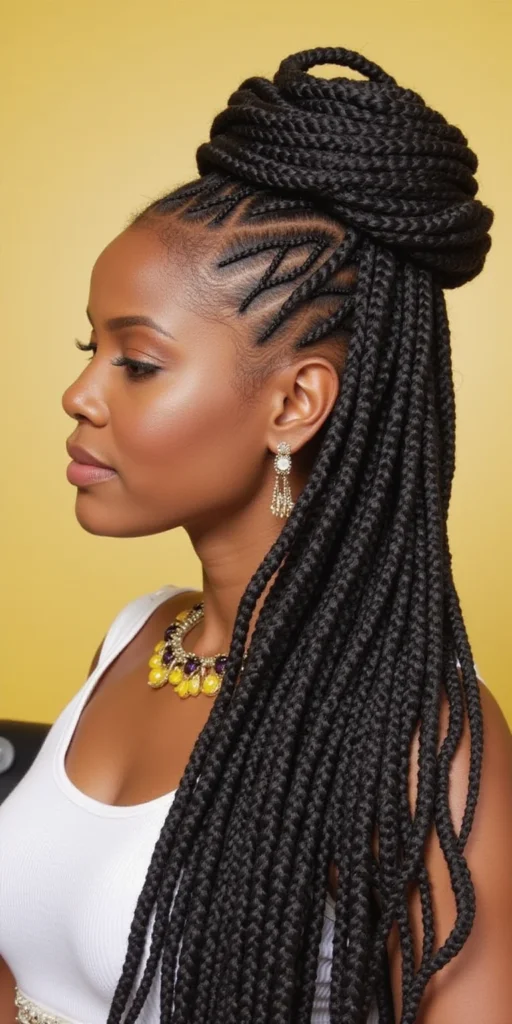
Goddess braids create bold, oversized statements that transform your hair into a regal crown-like display. These chunky, voluminous plaits incorporate substantial amounts of extension hair from the root, producing dramatic thickness that sits prominently across the scalp.
The technique involves sectioning hair into large geometric parts and adding generous synthetic hair before braiding tightly with three-strand methods.
The styling possibilities range from elegant updos to cascading side-swept arrangements that showcase the braids’ impressive volume. Most goddess braid styles feature two to eight thick plaits, depending on desired coverage and personal preference.
Golden cuffs, decorative beads, and metallic rings positioned along each braid enhance the majestic appearance with authentic finishing touches.


Jumbo Braids: Quick Large-Scale Protective Styles
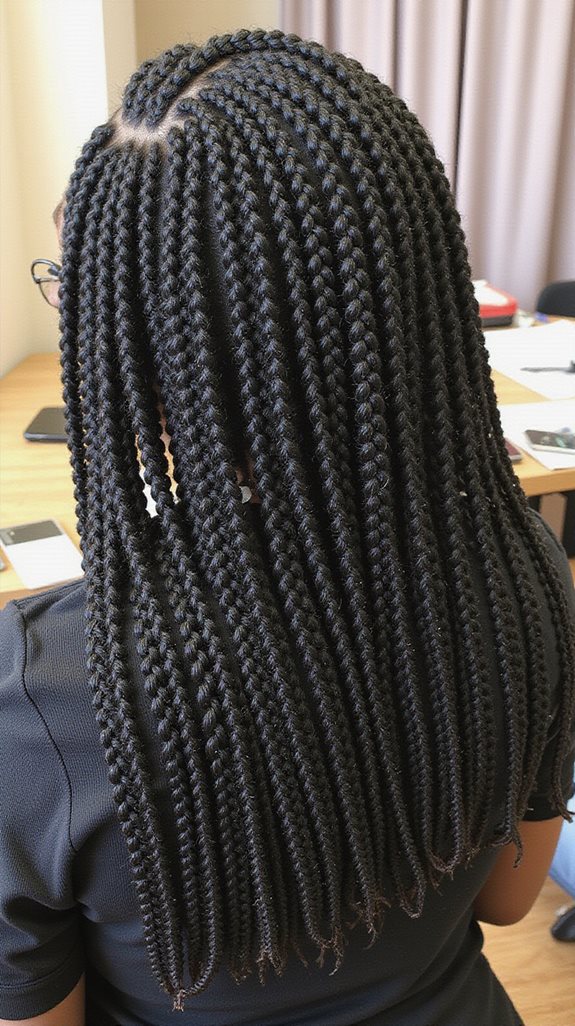
Jumbo braids offer an efficient protective styling solution that combines speed with stunning results. These large-scale braids use 2-3 inch sections to create full coverage in just 2-4 hours. The key to success lies in proper preparation with clean, detangled hair and systematic sectioning.
Installation involves the feed-in method with synthetic extensions, gradually building thickness while maintaining gentle tension.
Proper maintenance includes nightly satin protection, weekly scalp moisturizing, and removal after 6-8 weeks maximum. This protective style works beautifully with box braid, twist, or cornrow variations.
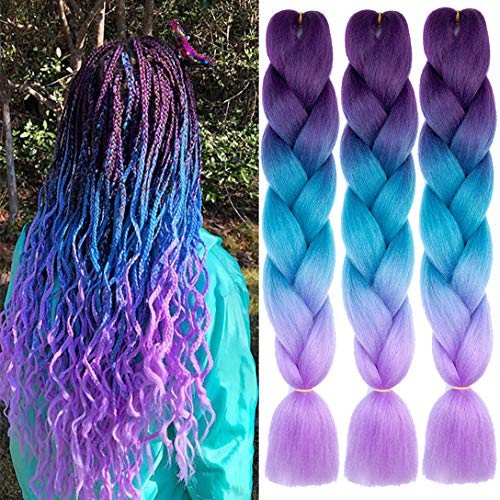

Tribal Braids: Community-Inspired Pattern Artistry
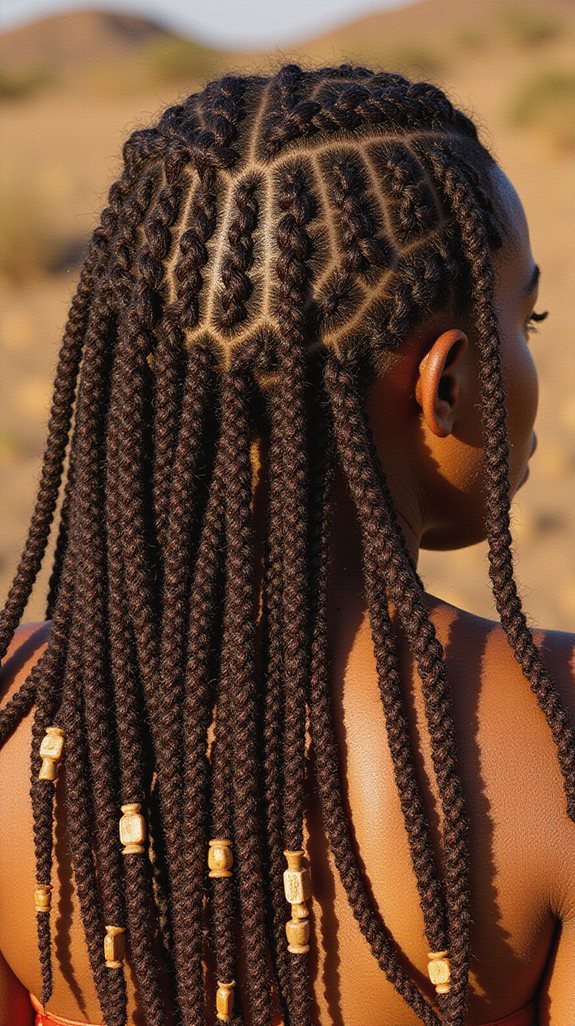
Tribal braids represent a sophisticated form of hair artistry that weaves cultural heritage into geometric patterns.
These intricate designs go beyond basic braiding techniques, incorporating specific shapes like triangles and diamonds that carry deep ancestral meaning. Each pattern tells a story through carefully planned sections that reflect community identity and traditional symbolism.
Creating authentic tribal braids requires precise sectioning and gradual extension integration using feed-in techniques. The geometric patterns demand consistent tension throughout the braiding process to maintain their cultural integrity.
Zigzag motifs represent life’s journey while circular designs symbolize unity, making these braids both visually striking and culturally significant.


French Braids: Versatile Three-Strand Foundation
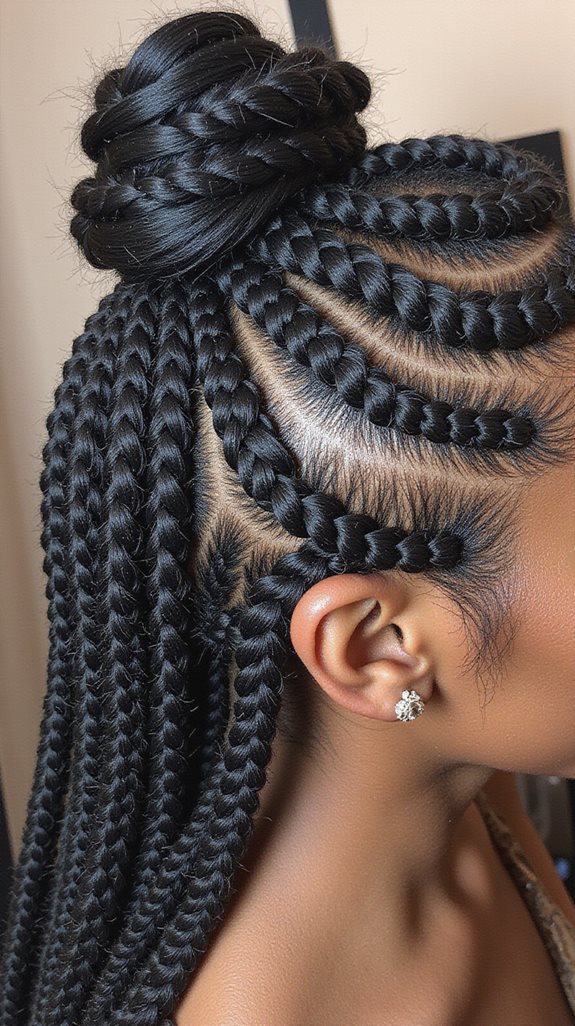
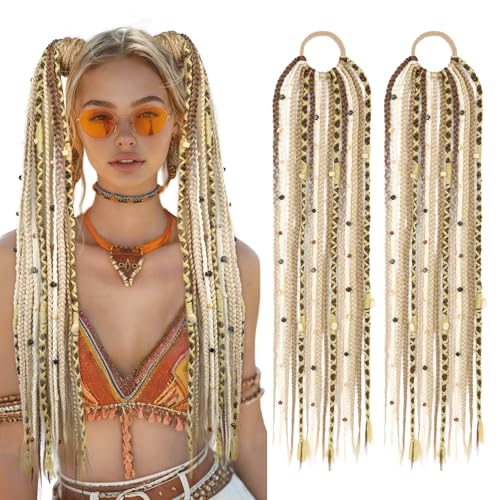
French braids serve as the essential foundation for countless hairstyling techniques, particularly within African hair traditions. This versatile three-strand method begins with sectioning hair at the crown and systematically incorporating additional strands as you progress down the length.
The technique creates a distinctive interwoven pattern that elevates simple plaits into sophisticated styles. Mastering consistent tension and strand incorporation allows for numerous variations including Dutch braids and fishtail adaptations.
Multiple parallel French braids can be combined to create intricate patterns suitable for special occasions or everyday wear. The technique provides the structural base needed for more complex African-inspired braiding designs.


Braided Style Longevity And Care Tips
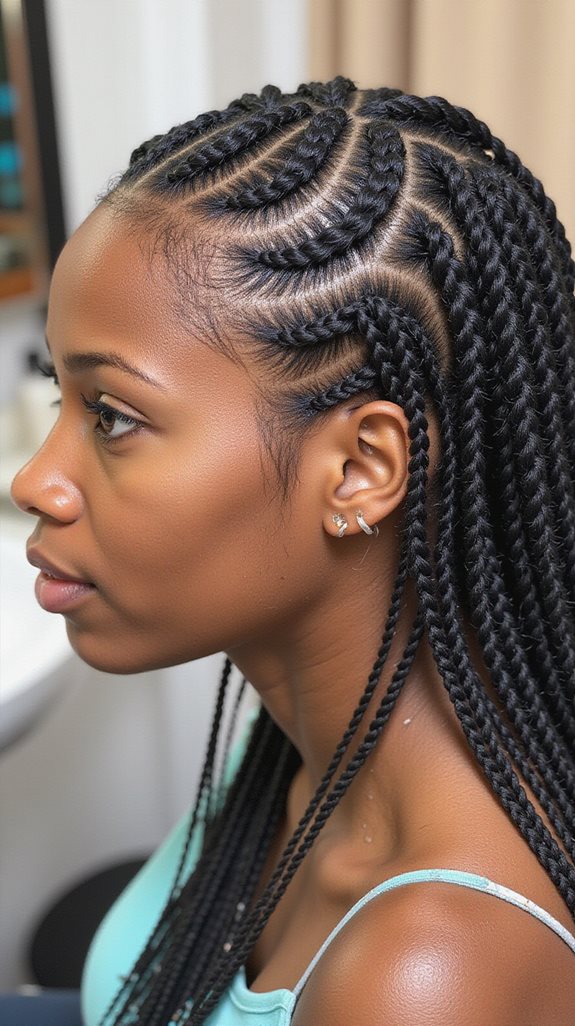
Maintaining braided hairstyles requires consistent care routines to preserve their protective benefits and extend their lifespan.
Wrap your braids nightly with silk or satin materials to reduce friction damage, and apply lightweight oils to your scalp twice weekly. Sleep on satin pillowcases instead of cotton to prevent tension and frizz formation.
Proper cleansing involves using diluted shampoo in a spray bottle every ten days to avoid loosening braid tension. Avoid heavy styling products that create buildup, and touch up loose edges with edge control as needed.
Schedule professional maintenance appointments every four to six weeks to ensure optimal hair protection and style longevity.

Frequently Asked Questions
How Much Do African Braided Hairstyles Typically Cost at Salons?
You’ll pay $150-$400 for salon pricing depending on braid complexity and length. Schedule consultations first, then budget for braided maintenance every 6-8 weeks. Choose experienced stylists who specialize in protective styling techniques.
Can I Sleep Comfortably With Braided Hairstyles Without Damaging Them?
You can sleep comfortably by adjusting sleeping positions and implementing proper braid protection. Use a silk pillowcase, wrap hair in a satin scarf, and sleep on your back to minimize friction and preserve braid integrity.
What Hair Products Work Best for Maintaining Moisture in Braids?
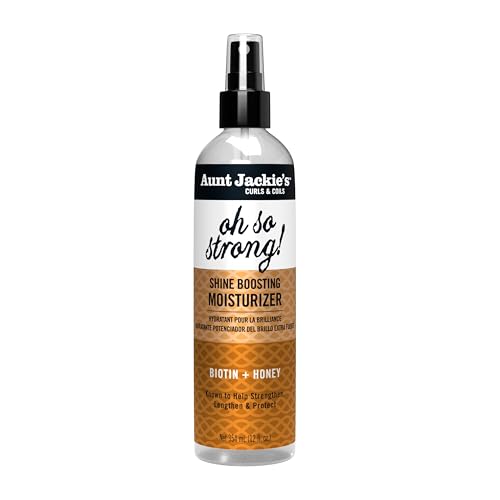
You’ll need leave-in conditioners, lightweight oils like jojoba or argan, and water-based sprays for optimal moisture retention. Apply these product recommendations systematically: spray roots first, then distribute oil through mid-lengths, focusing on ends.
How Long Does It Take to Install Different Types of Braids?
Braid installation time varies by technique: box braids take 4-8 hours, cornrows require 2-4 hours, and micro braids need 6-12 hours. You’ll spend more time on intricate braid techniques with smaller sections.
Are Braided Hairstyles Suitable for All Hair Types and Textures?
You’ll find braided hairstyles work across most hair types, though texture compatibility varies. Assess your hair’s porosity, density, and curl pattern first. Fine hair needs lighter braiding techniques, while coarse textures handle tighter styles better.
Finally
You’ll maximize your braided style’s lifespan by maintaining proper scalp hygiene with diluted shampoo applications. Sleep with a satin pillowcase or bonnet to minimize friction-induced frizz.
Apply lightweight oils to your scalp weekly, avoiding heavy product buildup on the braids themselves. Don’t exceed the recommended 6-8 week wear period to prevent hair breakage. When removing braids, work systematically from ends to roots using detangling spray to preserve your natural hair’s integrity.