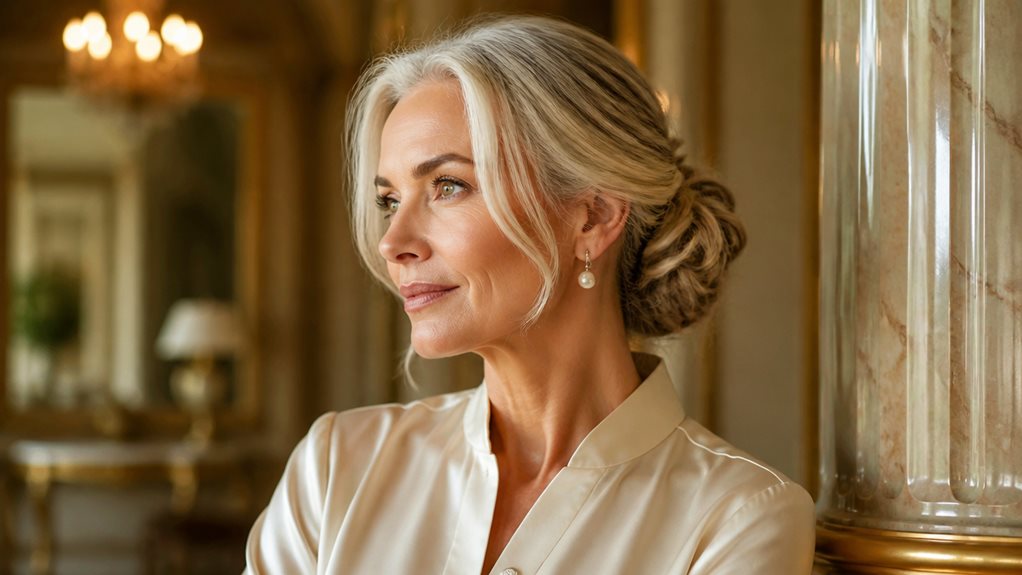
Quiet Luxury Hair: 23 Old Money Styles for Women Over 50
Old money hairstyles for women over 50 aren’t about spending more. They come from cuts and color built on precise technique, chosen to look deliberate rather than trend-chasing.
Restraint is the common thread. A blunt line cut clean, a color that grows out gracefully, a finish that works with the hair’s natural texture instead of fighting it.
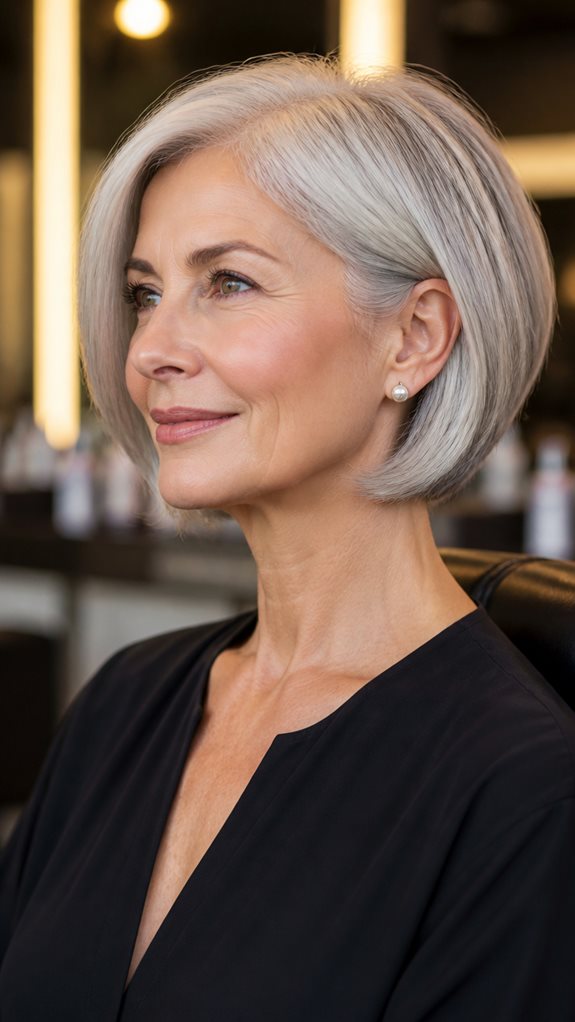
The Sleek Silver Bob That Never Goes Out of Style
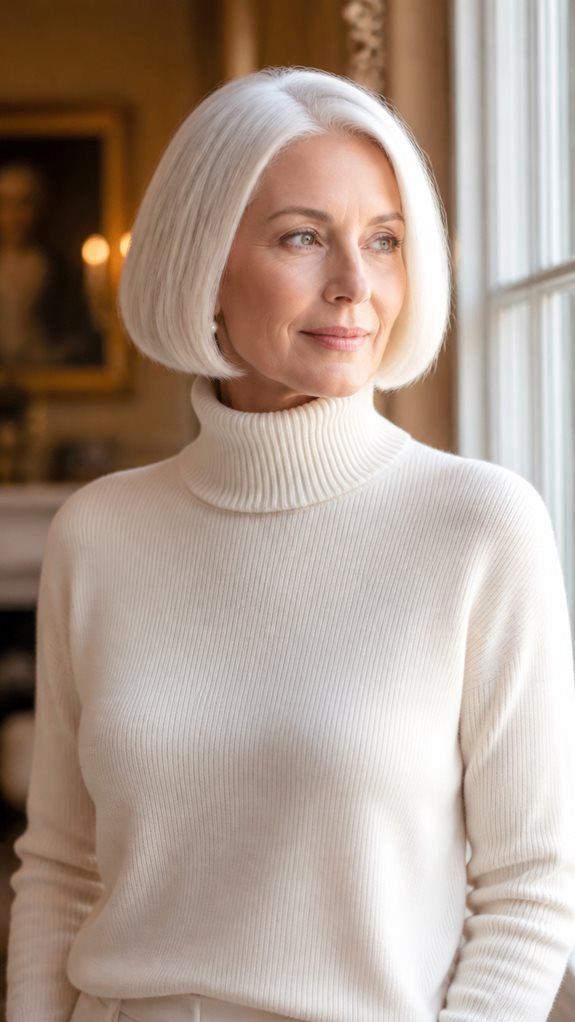
A precise blunt cut that falls just below the jaw carries the whole style. There’s no shattered ends or heavy layering to manage, just one clean line that lets the silver tone do the work.
The cut frames the face because it matches the jawline’s exact width. A smoothing serum worked through damp hair keeps the ends from splaying out as they dry.
Request a dry cut finish at your next trim, where the stylist shapes the final line on already-styled hair rather than wet. It catches pieces that spring differently once dry, and that’s what keeps the line precise.


Soft Blunt Bob With a Center Part
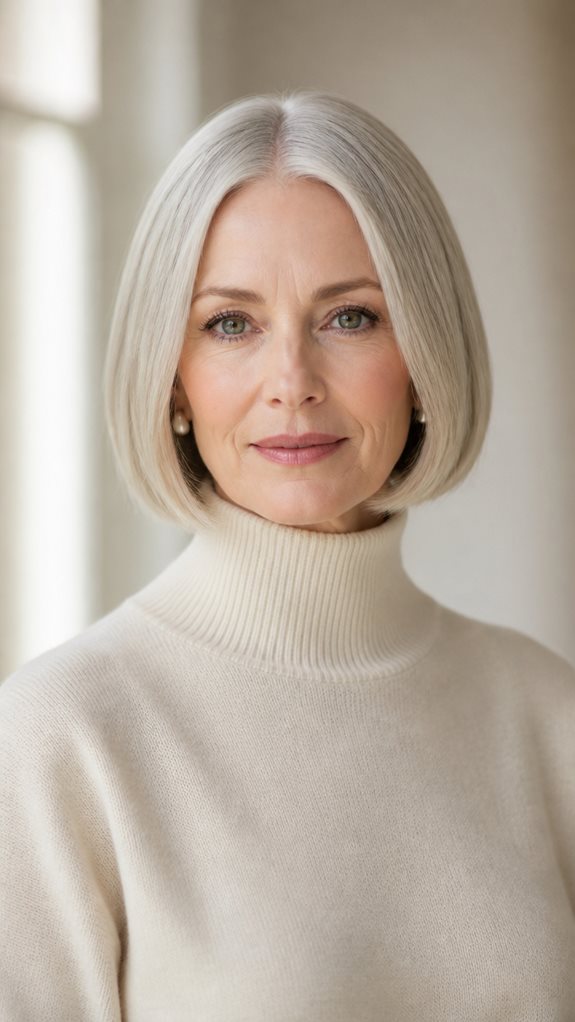
A fine-tooth comb drawn straight back from the hairline to the crown gives you the exact center split this cut depends on. A rough parting by hand rarely lands even.
The blunt edge is cut straight across rather than tapered, which pairs with the centered part to give the whole style symmetry on both sides of the face.
Book trims every six to eight weeks to keep the line sharp before it softens at the edges. A light smoothing serum adds movement without pulling the shape flat against the head.


The Chin-Length Bob With Subtle Highlights
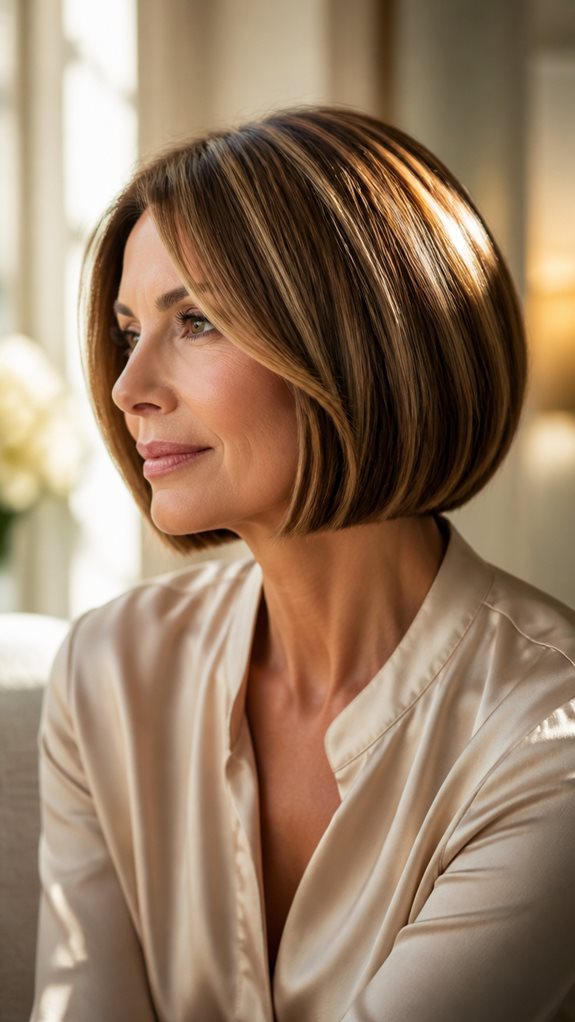
This bob sits right at the jaw, the length that does the most to soften a defined jawline without adding visible weight below it.
Have your colorist keep hand-painted highlights within two shades of your natural base. The brush places lighter pieces exactly where light hits the face, skipping the strand-by-strand pattern a foil application leaves behind.
Because the color stays close to the base shade, the grow-out is gradual, with no hard line at the root showing up after a few months.

Classic French Twist for Timeless Sophistication
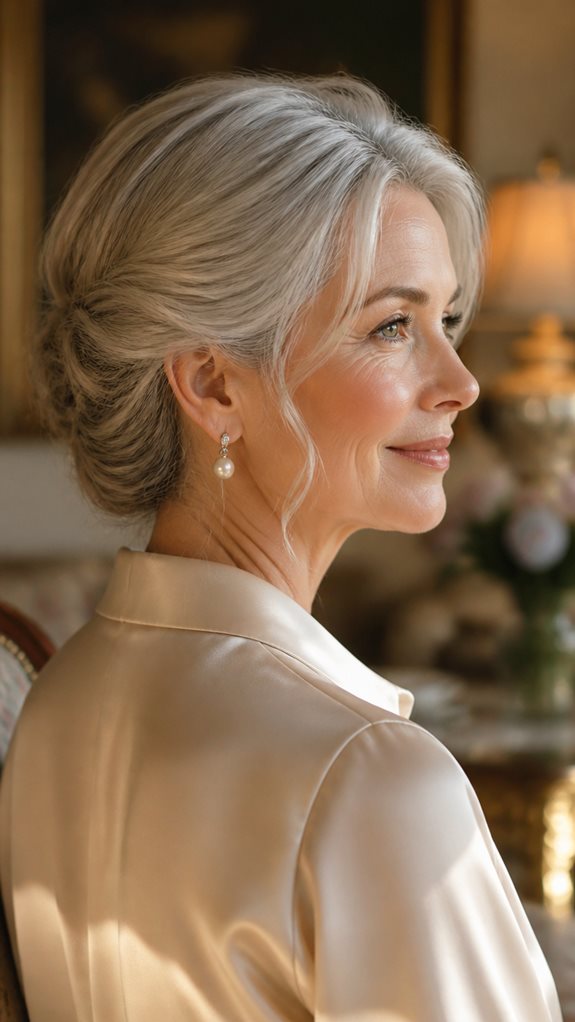
Gather the hair at the nape, twist it upward as one section, then fold the loose ends in and pin along the seam. The fold holds the shape; the pins just stop it unwinding.
Bobby pins angled downward through the twist grip more hair than pins pushed straight in. That matters most for finer hair, which slips out of a loose pin easily.
The twist lifts hair off the neck and elongates it. A single gold pin or pearl clip at the base finishes the look.


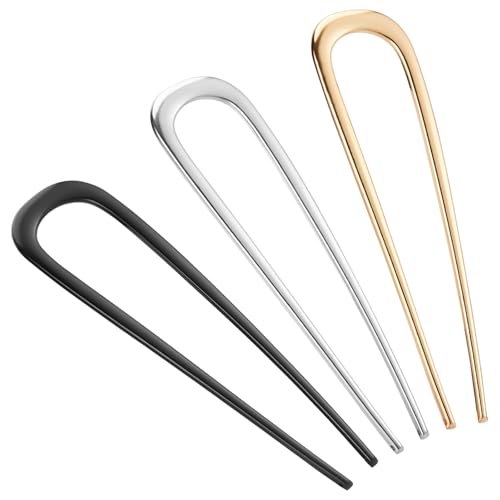
Swept-Back Chignon With Face-Framing Layers
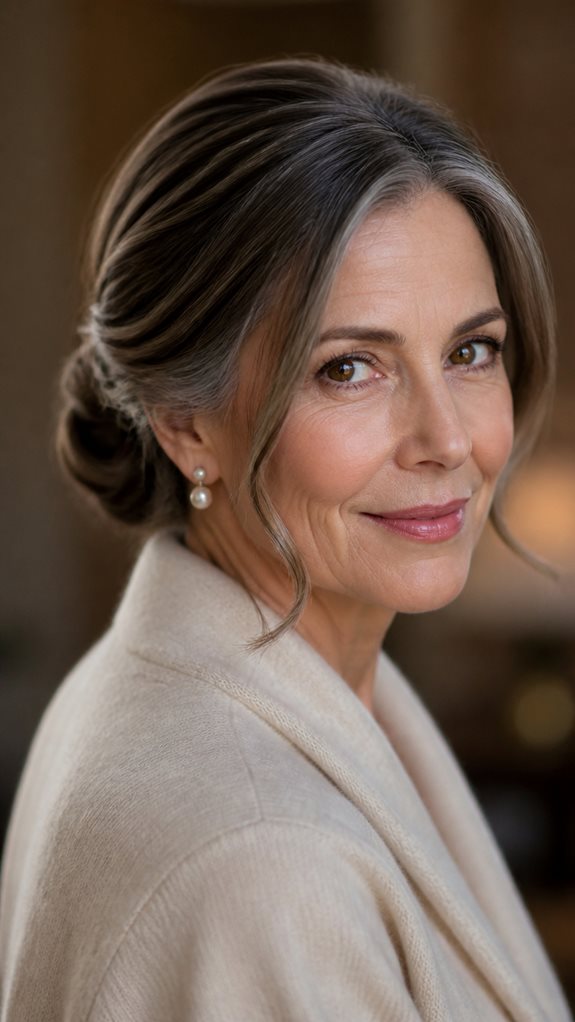
Face-framing layers cut around the cheekbones soften the structured knot at the nape, so the look doesn’t sit too severe.
This pairing holds on fine, thick, and naturally wavy textures alike. A chignon is just a low, gathered knot, so it doesn’t depend on any one hair type to keep its shape.
Finish with a pearl-tipped pin or slim gold barrette placed just above the knot. It’s enough on its own.


The Low Bun With a Refined, Controlled Finish
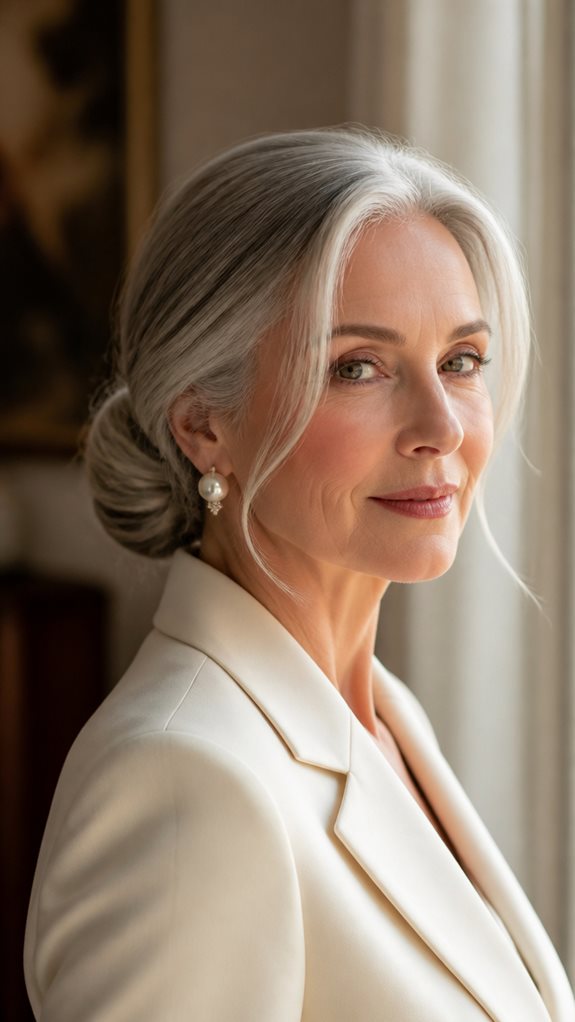
This bun sits low at the nape, flatter and quieter than a ballerina-style bun worn higher on the head.
A slight off-center placement keeps it from looking rigid. Two or three pins hold it fine; a dozen makes the shape look overworked.
Pull a few soft pieces loose near the temples before pinning the rest. Left completely smooth, this style can look stiff, and those loose pieces are what keep it looking considered.


Elegant Pixie Cut With Textured Crown
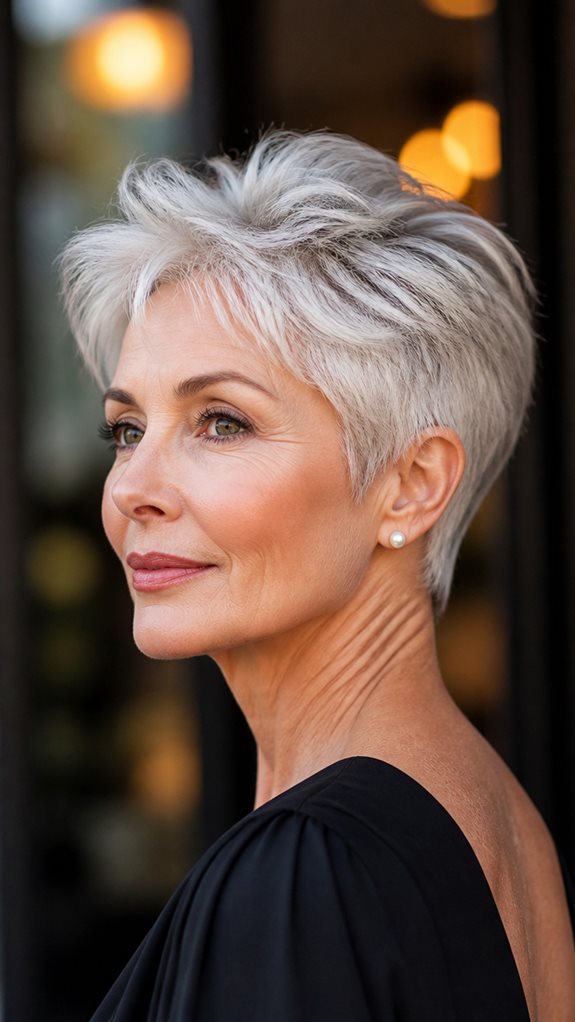
Point-cutting through the crown breaks up what would otherwise be one blunt length. That’s where this pixie gets its texture without looking undone.
A volumizing mousse at the roots or a fine-mist texturizing spray lifts the crown. A heavier wax flattens that texture and kills the shape.
Book trims every four to six weeks to keep the shape from growing shaggy at the neckline. For more takes on this short, textured base, the modern pixie cuts for older women collection has you covered.


The Short Silver Crop With Side-Swept Fringe
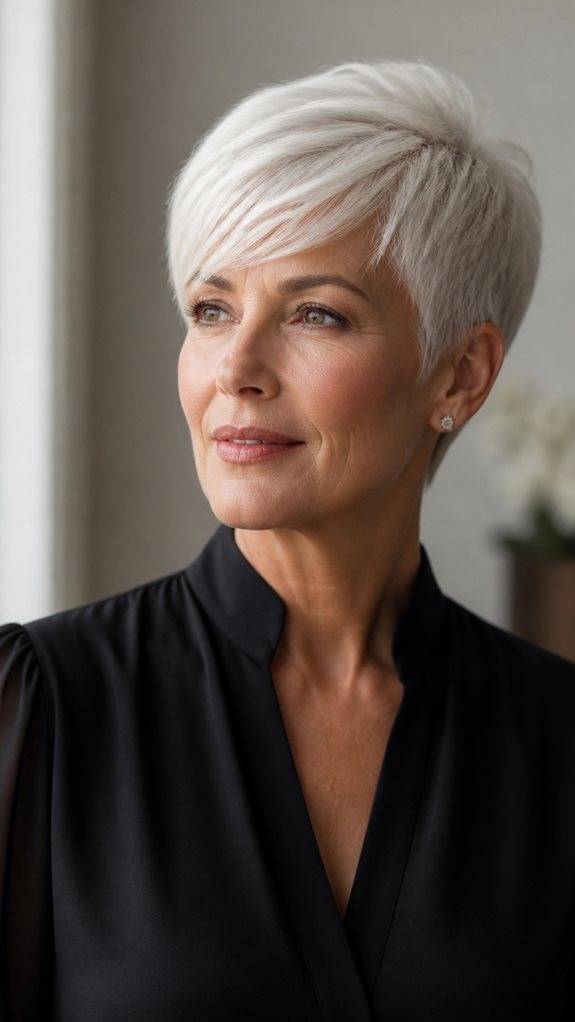
Cropped length builds structure on its own. A side-swept fringe angled across the forehead softens whatever facial feature it falls near.
Have your stylist cut textured layers through the crown specifically. A solid, untextured crown on hair this short tends to sit flat.
A light pomade worked through with fingertips covers the daily styling. The structure comes from the cutting, which is why it stays low-maintenance.


Layered Lob for Women With Fine Hair
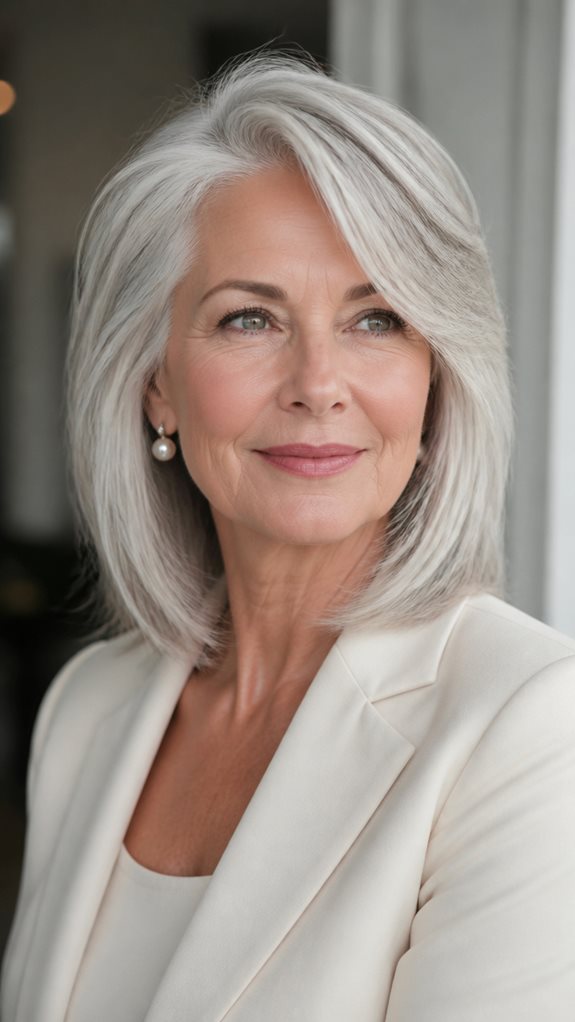
This lob sits at collarbone length, with layers starting from the mid-shaft down rather than through the whole length. Each section gets room to lift so it doesn’t fall flat.
Removing bulk near the roots and adding it back through the ends is the trick for fine hair. Thick ends look like fuller strands next to thin ones cut all one weight.
A lightweight volumizing spray at the roots, followed by a round-brush blowout, holds that lift through the day.
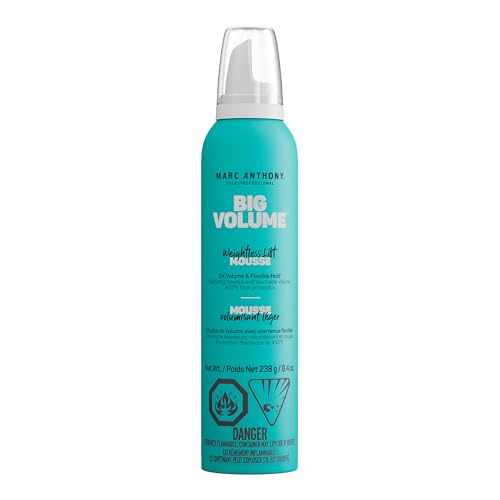

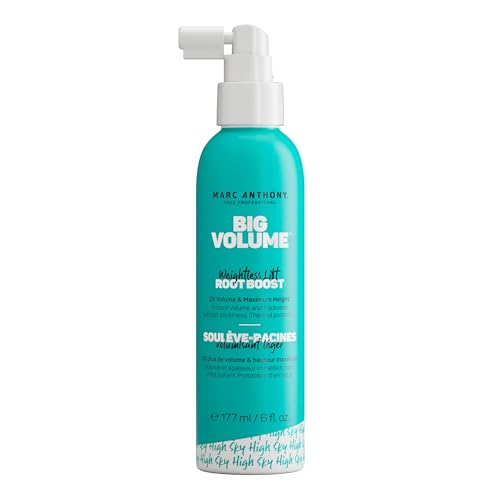
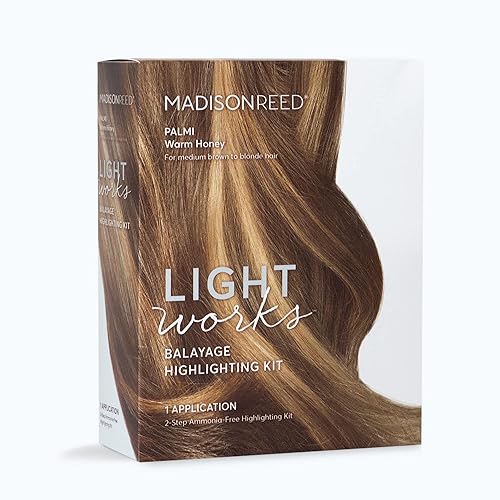
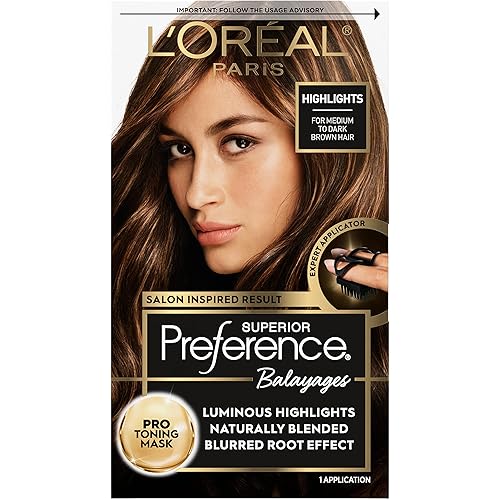
The Textured Lob With Soft Balayage Tones
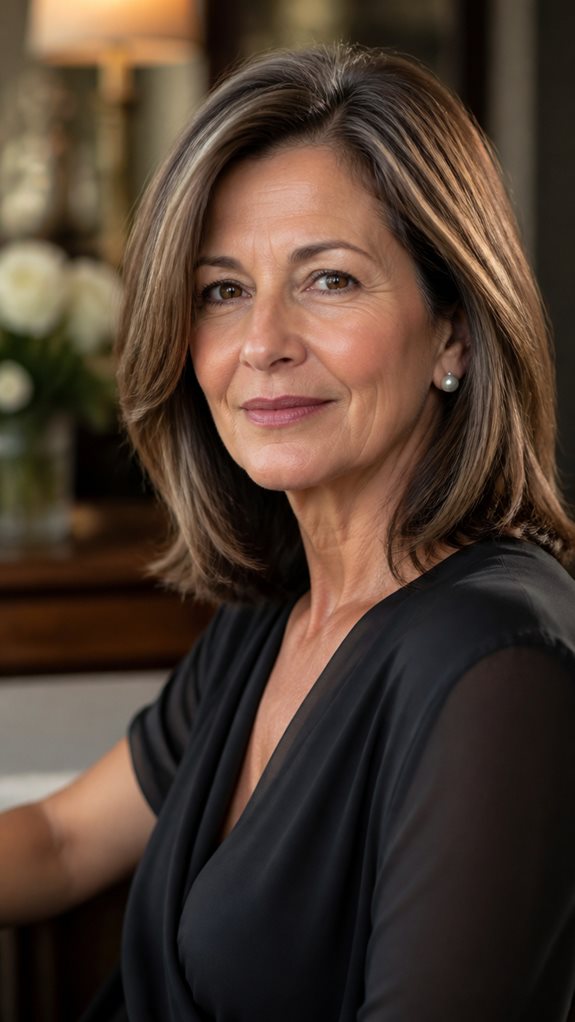
Balayage is hand-painted rather than foiled, which gives this lob softer, grown-in color without the harder lines a foil highlight leaves behind.
Caramel or honey tones placed mid-shaft to ends add dimension without the heavier look of all-over processed color.
The lob’s length gives the color room to move, and balayage grows out softly enough that there’s no stark root line to manage between salon visits.

Blunt Lob With a Sleek Straight Finish
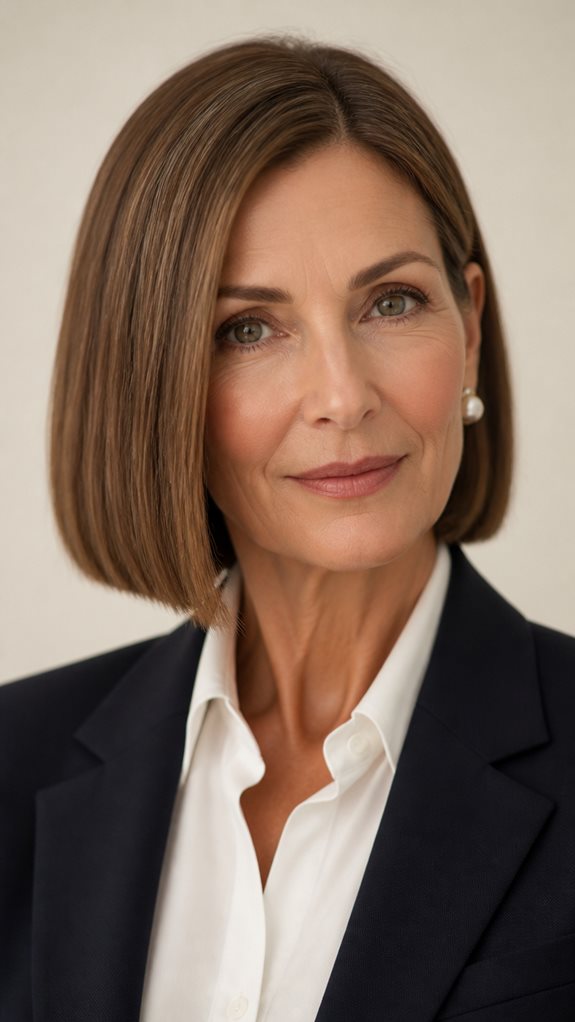
Cut straight across at collarbone length with no layering underneath, this lob relies entirely on a clean, even hemline for its shape.
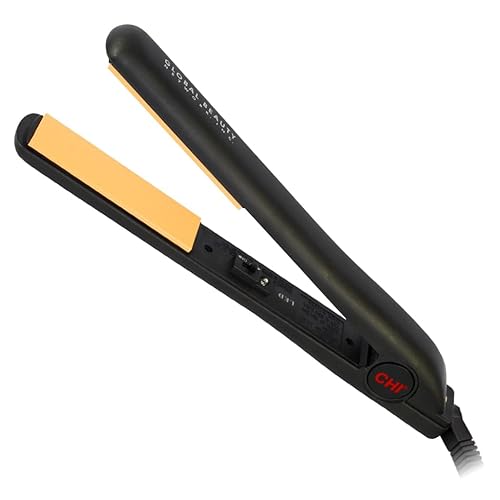
Apply a heat protectant before the flat iron every time. Skip it and repeated straightening on a line this precise dries the ends out fast, and a ragged hemline follows.
Work in small sections, no more than an inch wide, and run the iron through slowly for a mirror-smooth finish without doubling back over the same piece.


Sculpted Waves That Channel Old Hollywood Glamour
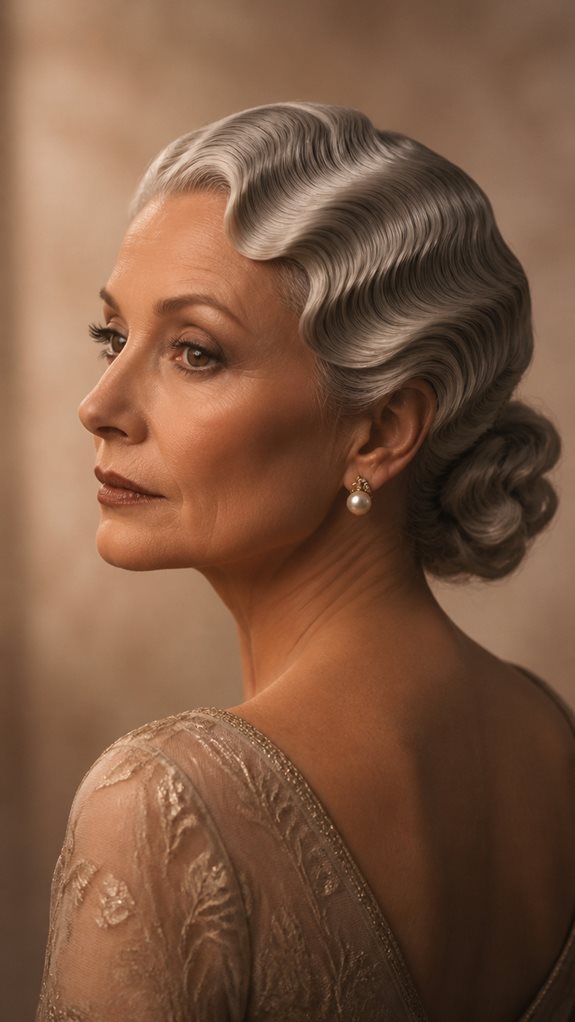
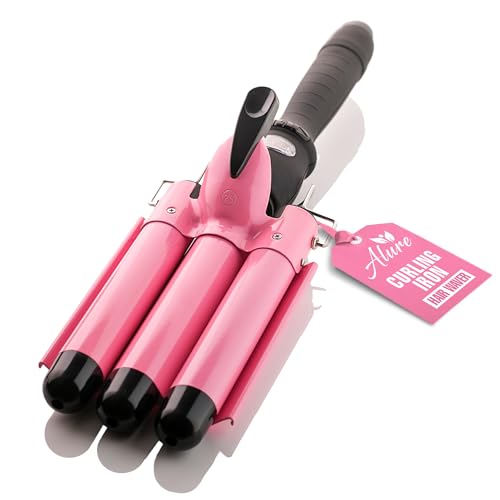
Wrap a large-barrel curling iron in the same direction, section by section, to set deep, structured waves rather than the looser, mixed-direction curls most modern styling goes for.
Brush the curls out gently with a paddle brush once they’ve cooled fully. Brushing while hot collapses the wave; cooled hair loosens into a smoother pattern instead.
Reach for a light-hold spray over a stiff-hold one. The waves keep moving naturally when you turn your head instead of freezing in place.


Soft Loose Waves for a Relaxed, Refined Look
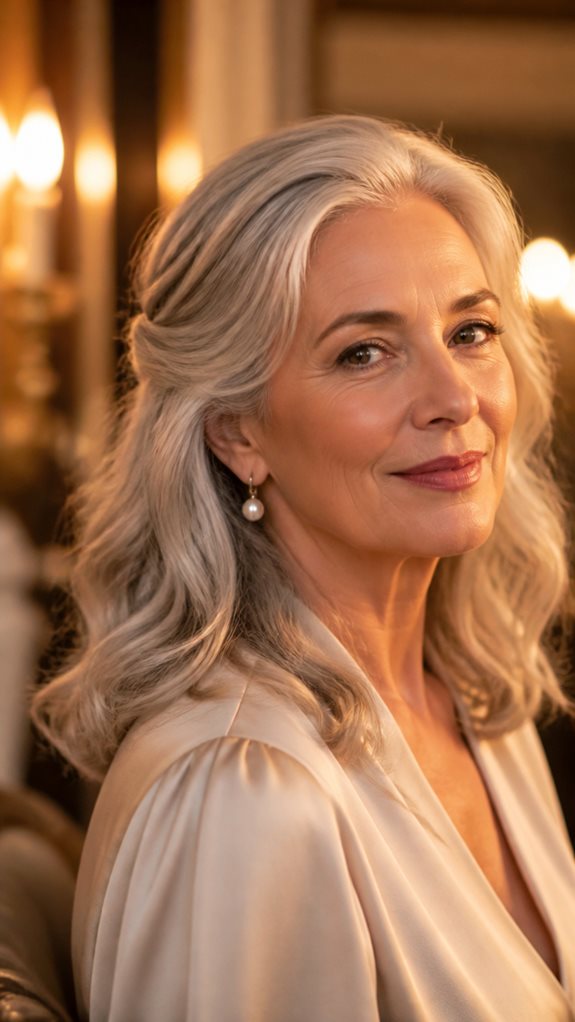
This version also wraps the hair around a large-barrel iron, but releases it before it fully sets. Letting go early keeps the curl loose, where the sculpted-wave technique’s full set gives it a firmer shape.
Alternate the direction each section wraps. Curling every piece the same way makes a set look uniform; switching directions makes it look natural.
A light-hold mist keeps the waves intact through the day without stripping their movement the way a stronger hold would.


The Half-Up Twist for Casual Elegance
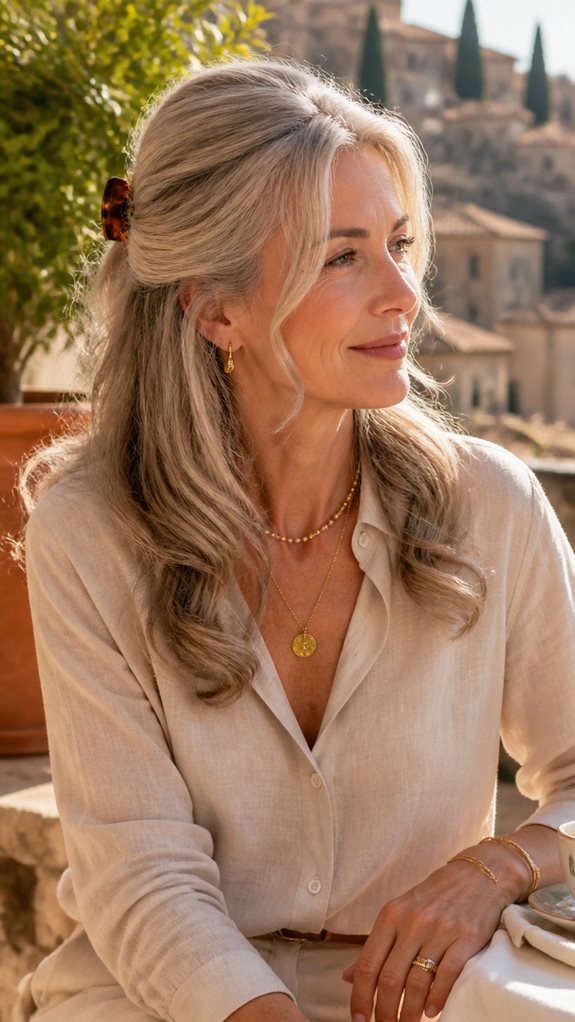
Take just the crown section, about two inches wide, twist it once away from the face, and pin it flat against the back of the head. Leave everything else down.
Keep the twist loose rather than pulled tight, so the rest of the hair falls naturally underneath it instead of looking stretched.
Pearl earrings and structured tailoring finish the look, though the twist does most of the work on its own. It takes under a minute and needs no heat tools.


Parted Low Ponytail With Polished Smoothness
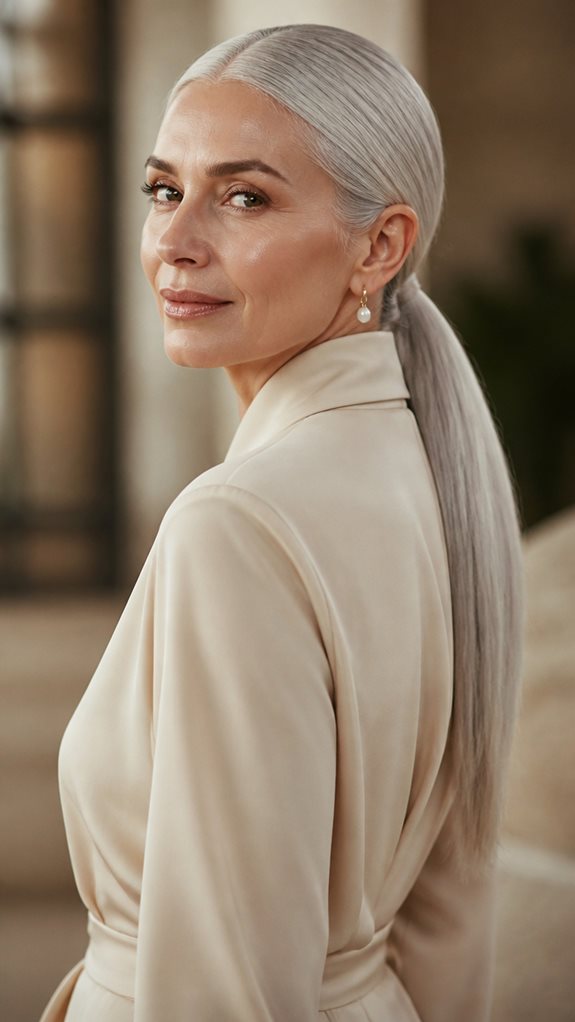
Start with a fine-tooth comb to set a clean, precise part before gathering anything. A crooked part shows the whole time the ponytail is up.
A smoothing serum applied before you gather the hair low at the nape keeps flyaways down without a separate pass of hairspray afterward.
Wrap a small section of hair around the elastic to hide it, then pin a sleek tortoiseshell clip or thin gold barrette just above the base for a finished edge.


Naturally Silver Styles That Look Intentional, Not Accidental
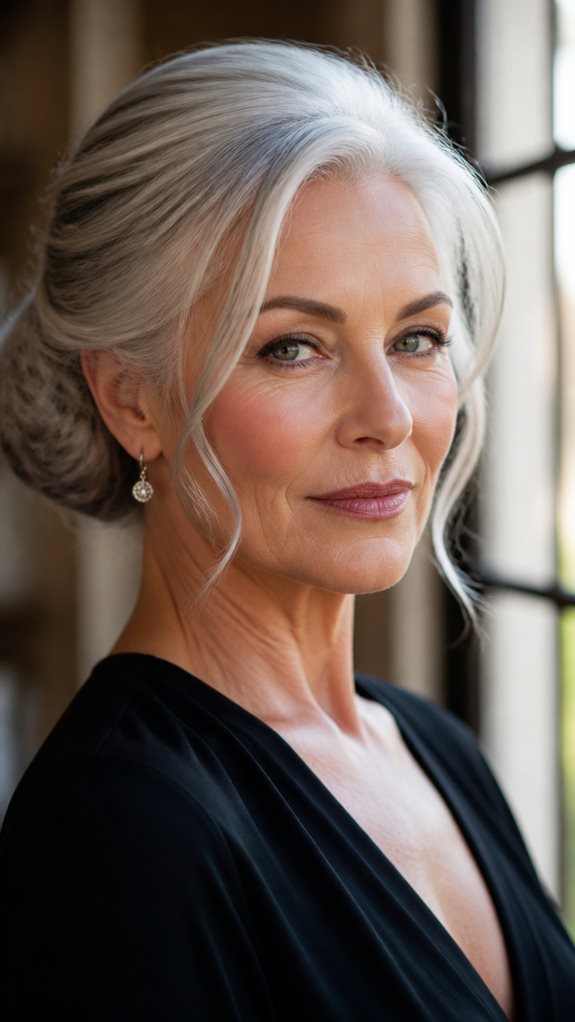
A purple or blue-toning shampoo used once a week keeps natural silver from pulling yellow or brassy between salon visits. That’s usually the biggest tell between silver that looks planned and silver that looks neglected.
Deep condition every two weeks. Gray hair runs drier and coarser than pigmented hair, so it needs the extra moisture more.
A skilled colorist can blend patchy transition areas, where gray meets your original color, into one cohesive tone with no visible line between the two. There’s more on working with that exact transition in the salt and pepper hairstyles guide.


How to Style Gray Hair So It Looks Expensive
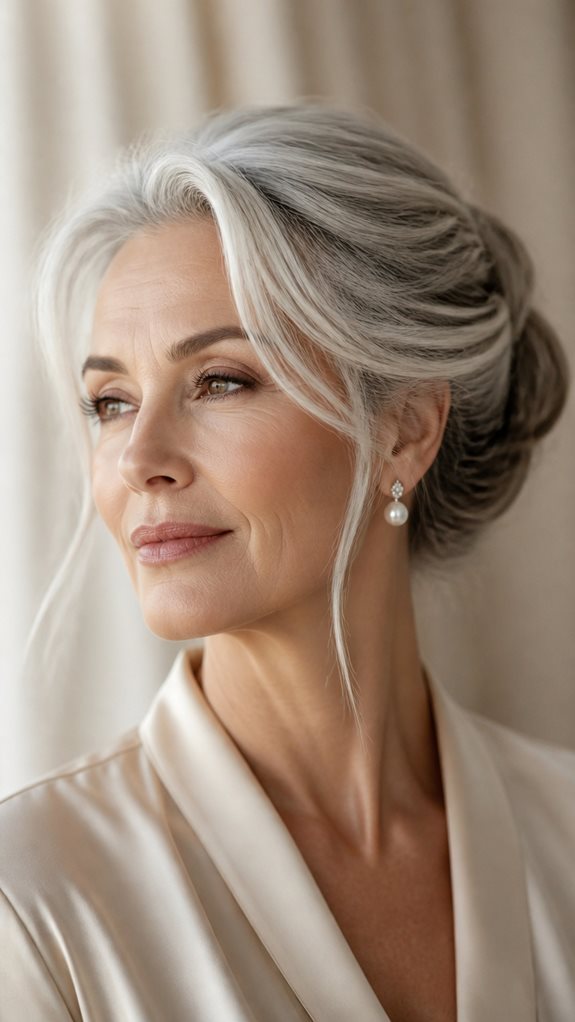
Brush from scalp to ends with a boar-bristle brush before styling. It distributes natural oils and does more for gray hair’s shine than any serum applied afterward.
Choose flexible-hold products over stiff-hold gels. Gray hair keeps its natural movement instead of getting set into one fixed shape.
Blow-dry with a round brush at the roots to build soft volume at the crown while keeping the ends smooth and controlled. That combination comes across as genuinely healthy hair, not just a fresh blowout.


The Best Cuts for Thinning Hair Over 50
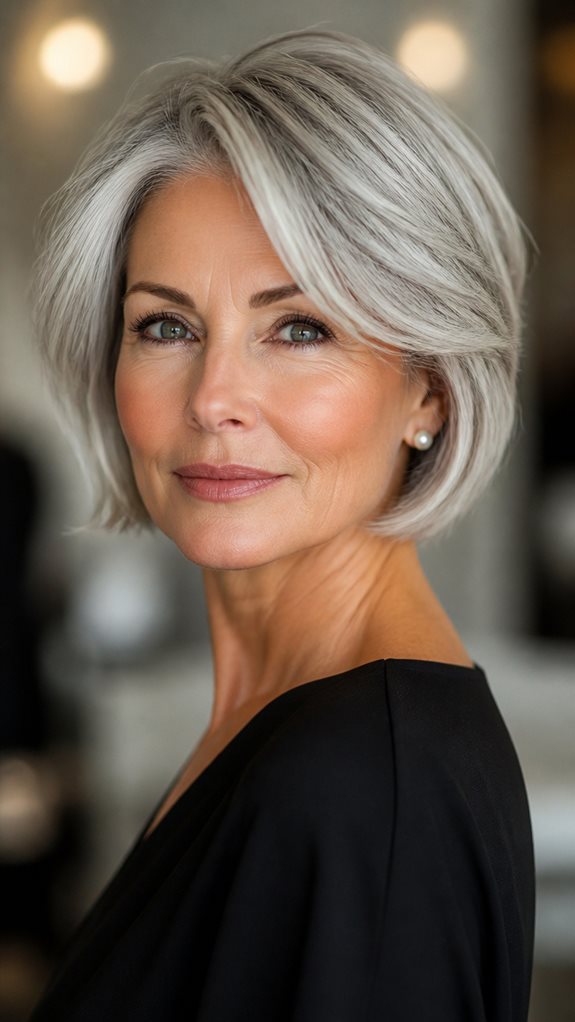
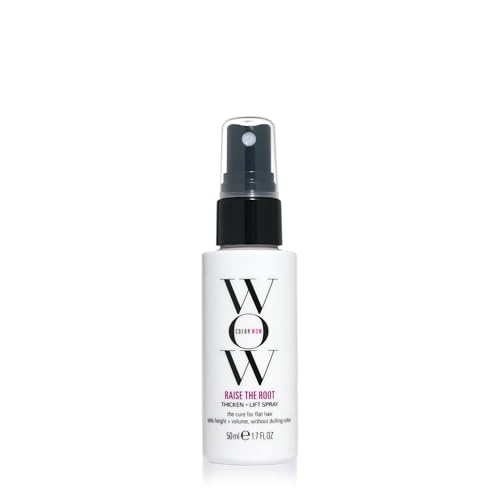
Apply a root-lifting spray directly at the scalp, then blow-dry with the head tipped upside down. This builds volume from the base up in a way finishing products can’t replicate once the hair’s already dried flat.
Distribute mousse through damp hair before diffusing to lock in that lift from the start. Adding volume back into hair that’s already dried flat almost never works as well.
A cut with shorter layers through the crown gives thinning hair less length to weigh itself down with. If thinning hair is the main concern, the haircuts for thinning hair over 50 guide breaks down more cuts built around it.

Long Layers That Move Naturally After 50
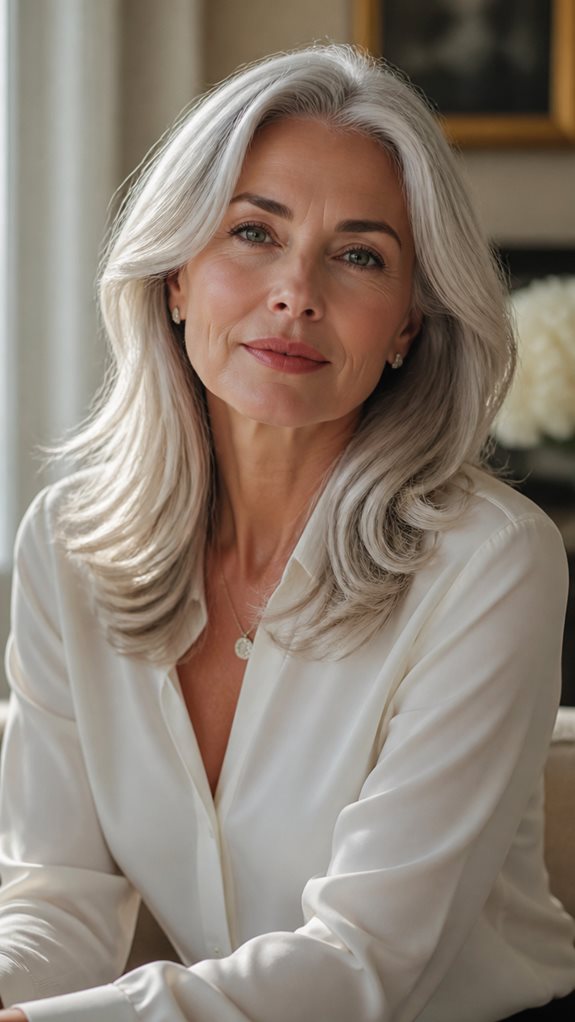
Long layers cut starting well below the chin keep the length you’ve grown while softening whatever’s happening around the face.
A round-brush blowout, rolling the ends under, covers the styling this length needs.
This length adapts as hair texture shifts with age, unlike a blunt bob or lob. There’s enough layering built in to handle new waves or coarseness without a full recut.

Face-Framing Highlights That Mimic a Natural Sun-Kissed Finish
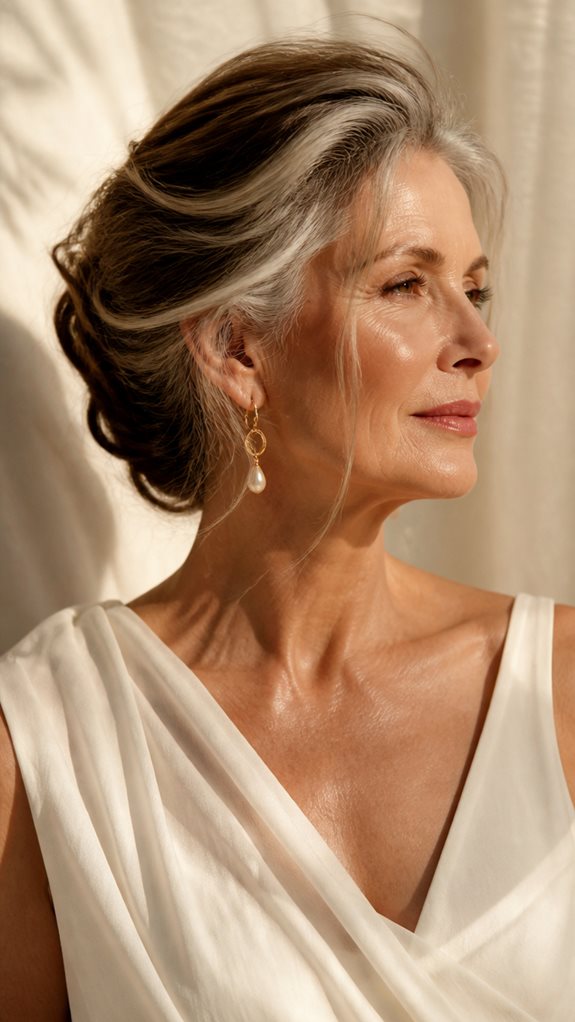
Placed around the cheekbones, jawline, and hairline near the eyes, these highlights land exactly where natural sunlight would hit first.
Hand-painted warm honey or buttery blonde tones at the hairline blend into most skin undertones without the contrast a cooler blonde would create.
A colorist can restore this kind of dimension even on hair that’s lost natural lightening from years indoors. The technique doesn’t need any existing sun damage to build from.


What Makes a Hairstyle Look Old Money?
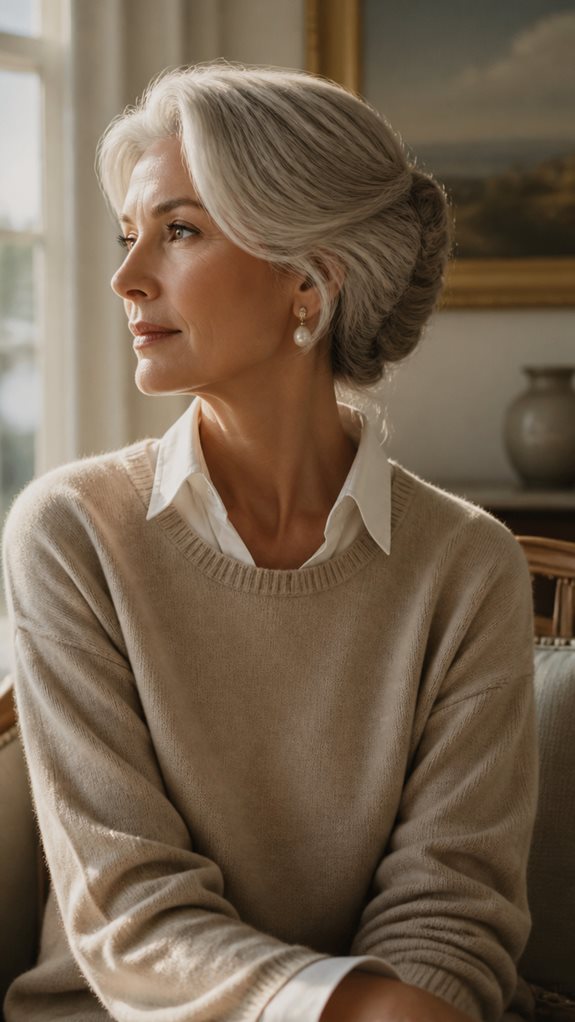
Restraint matters more than any specific cut here. A clean line, a color that grows out gracefully, and a finish that isn’t overworked all look considered rather than styled for the occasion.
Regular maintenance matters as much as the initial cut or color. A great blowout on a shape that hasn’t been trimmed in four months still looks unkempt underneath.
Work with your natural texture instead of fighting it with heat or product every day. That’s what lets a style hold up over years rather than looking dated after one season.


The Role of Hair Color in an Old Money Aesthetic
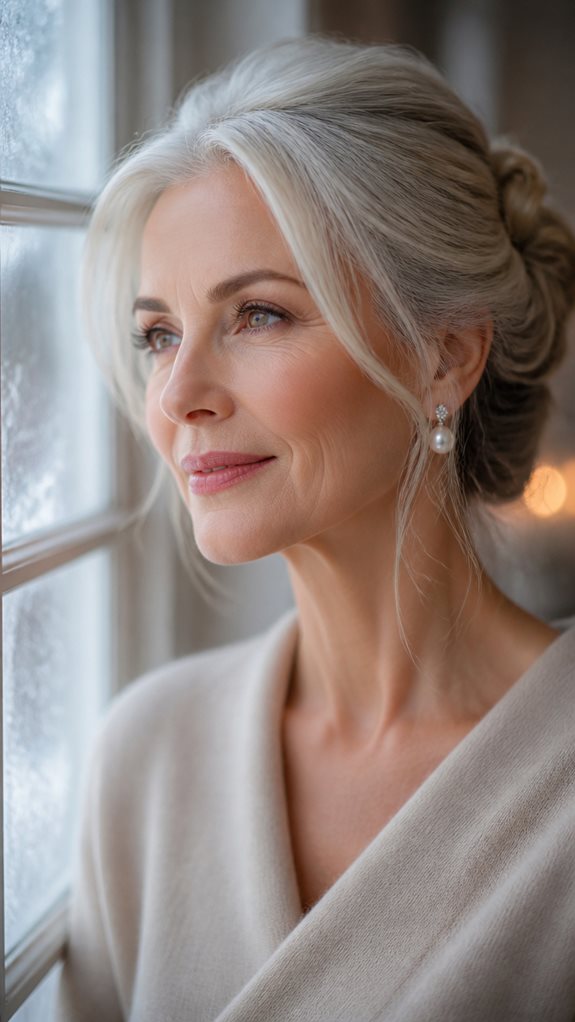
Cool champagne blondes, ash browns, and silvery whites favor soft dimension over high contrast. A subtle tonal shift grows out cleaner than a dramatic one.
Balayage and toning glazes both aim at the same goal: no harsh line where the color meets your natural root. A glaze adds a thin layer of tone over the whole head to unify any unevenness between appointments.
Talk to your colorist about working with your existing graying pattern instead of covering it fully. Blended color tends to look more expensive than solid, single-process color. The gray hair color ideas collection has more on these blending techniques.


Salon Techniques That Make Any Cut Look More Expensive
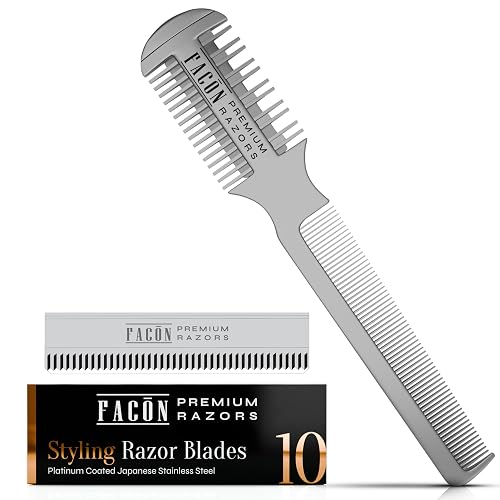
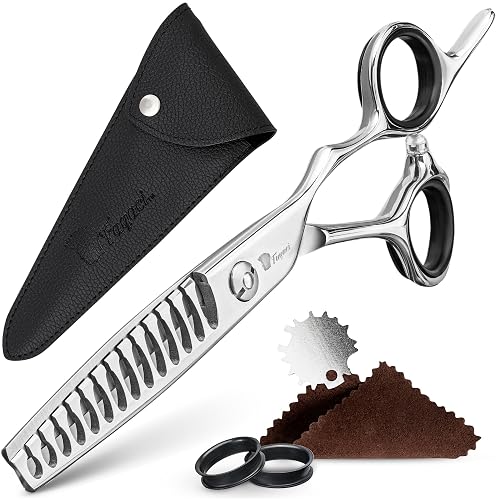
Point-cutting or razor finishing after the main cut removes bulk from the ends while keeping natural movement. A basic scissor cut often skips this step entirely.
A glaze applied after color seals the cuticle flat. That sealing step produces the glass-like shine, more than the color underneath it.
A proper tension blowout with a round brush, section by section, holds its shape for days longer than a rushed one. The tension is what smooths the cuticle as the hair dries.
Book trims every eight weeks to keep that finished look consistent, not just visible for the first few days after a salon visit.


Frequently Asked Questions
Can Old Money Hairstyles Work for Naturally Curly or Wavy Hair Textures?
Yes. Curly and wavy hair holds up well in low chignons, structured updos, or set waves that lean into the texture rather than straightening it out first.
How Often Should Women Over 50 Trim Their Hair to Maintain Shape?
Every six to eight weeks for most cuts, closer to four to six weeks for shorter shapes like a pixie or short crop, where growth shows up faster.
Are There Old Money Hairstyles That Work Without Professional Salon Visits?
The chignon, low bun, and half-up twist all work at home with basic pins and a comb. The blunt bob and lob depend on precision cutting, so those need a stylist to hold their shape.
What Hair Accessories Complement Old Money Hairstyles Without Looking Overdone?
Stick to one accent: a tortoiseshell clip, a slim gold barrette, or a silk scarf draped loosely around a chignon. Layering several pieces at once tips a style into looking overdone.
Do Old Money Hairstyles Require Specific Hair Thicknesses or Densities to Work?
No. Fine hair leans on volumizing techniques like root sprays and layering, while thicker hair leans on smoothing serums and precise blunt lines. The cuts adapt to the texture, not the other way around.
Final Thoughts
None of these styles need a bigger budget, just a cut and color chosen with intention and kept up on schedule. A clean line and a color that grows out gracefully do more than any single product.
Bring a reference photo to your next appointment and ask your stylist which specific technique gets you there, whether that’s a hand-painted balayage or a dry-cut bob. Pick one that suits your face and your routine, then stick with the maintenance schedule that keeps it looking sharp.