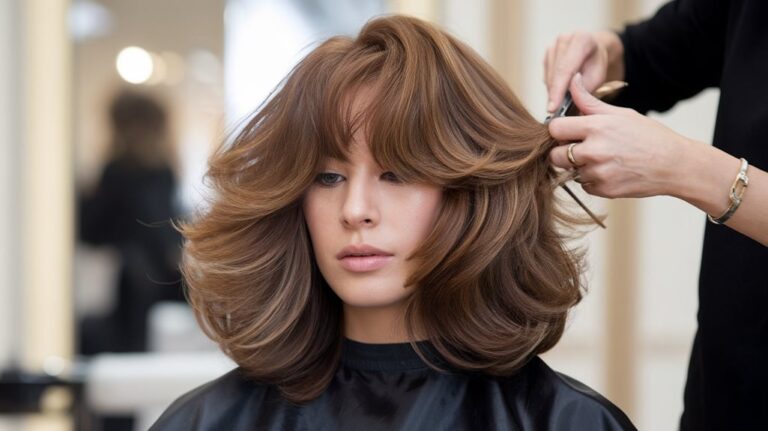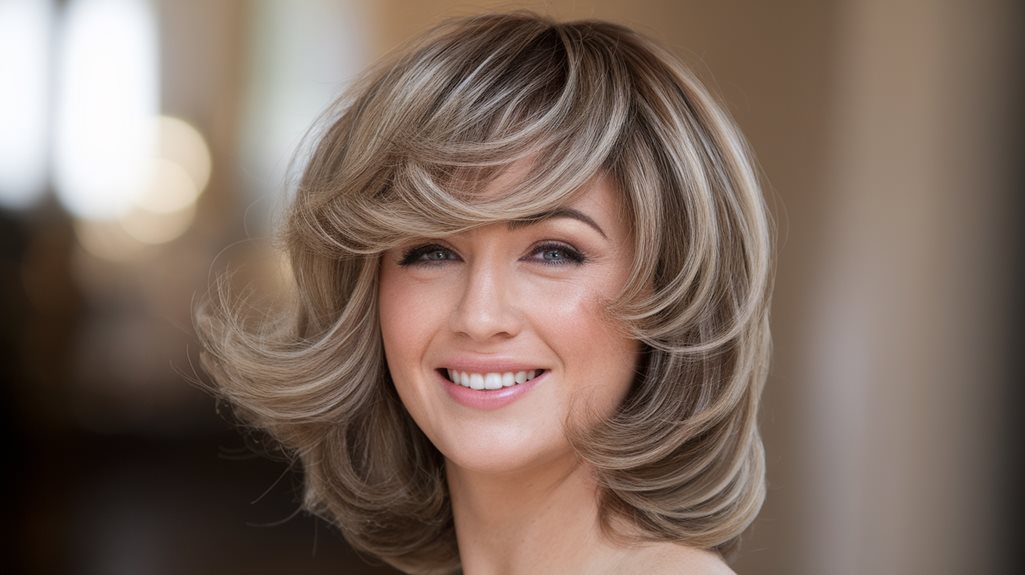
Face-Framing Magic: 23 Medium Haircuts for Round Faces
A round face works best with cuts that add length or break up width, layers starting at the cheekbone, an angled fringe, a deep part, rather than anything that adds volume evenly all over. That’s the throughline across the 23 cuts below, even though the styles themselves vary a lot.
Where a section names a specific technique, that’s the detail that actually matters for a round face, more than the general style name does.
Layered Lob With Side Bangs
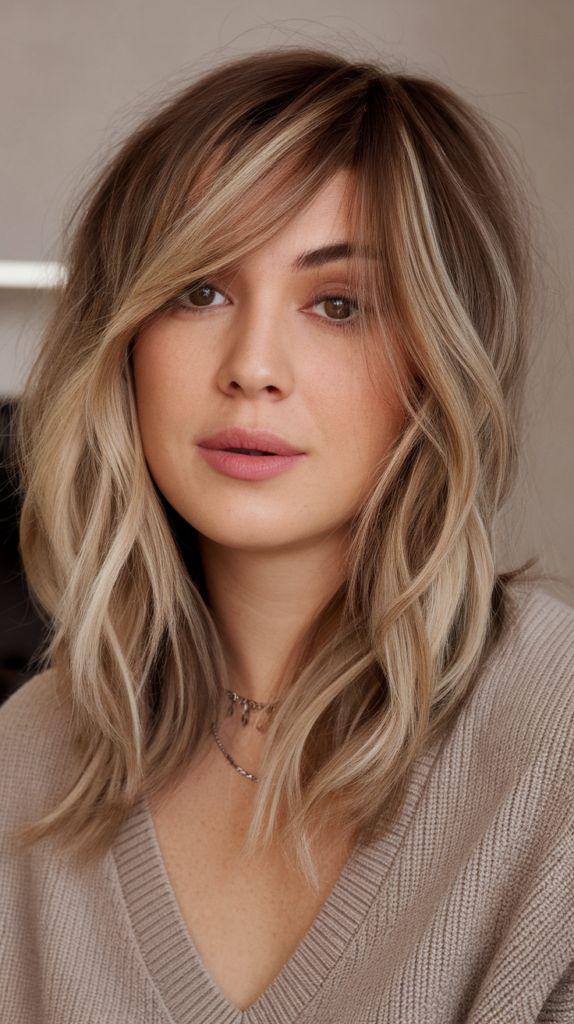
Side-swept bangs cut on an angle, not straight across, are what create the diagonal line that actually breaks up a round face’s width; a fringe cut straight across just adds another horizontal line. Layers cut starting around the chin keep the length while still adding movement a solid, un-layered lob doesn’t have.
A round brush pointed down while blow-drying keeps the bangs swept to the side instead of falling back to center. Our face-shape hairstyle guide covers more cuts sorted by shape, not just this one.
Sleek Lob With Long Side-Swept Fringe
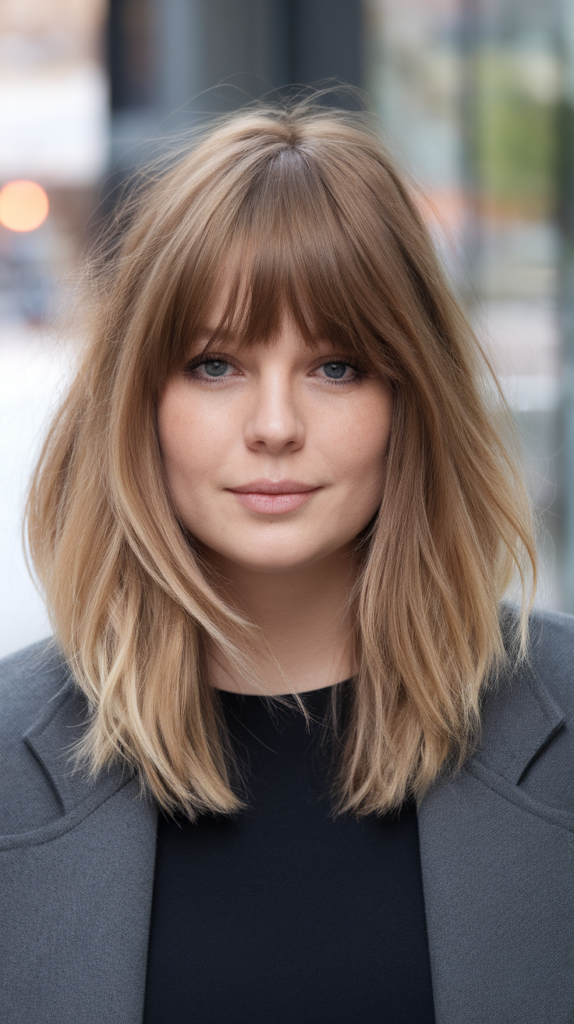
This fringe is cut long enough to sweep to one side rather than sitting straight across the forehead, the actual detail creating the diagonal line, not a soft blunt curtain part. A flat iron used in small, one-inch sections gets this level of sleekness better than a blow dryer alone.
Length at the fringe matters here: cut too short, it can’t sweep and just falls forward instead.
Blunt Bob With Micro Fringe
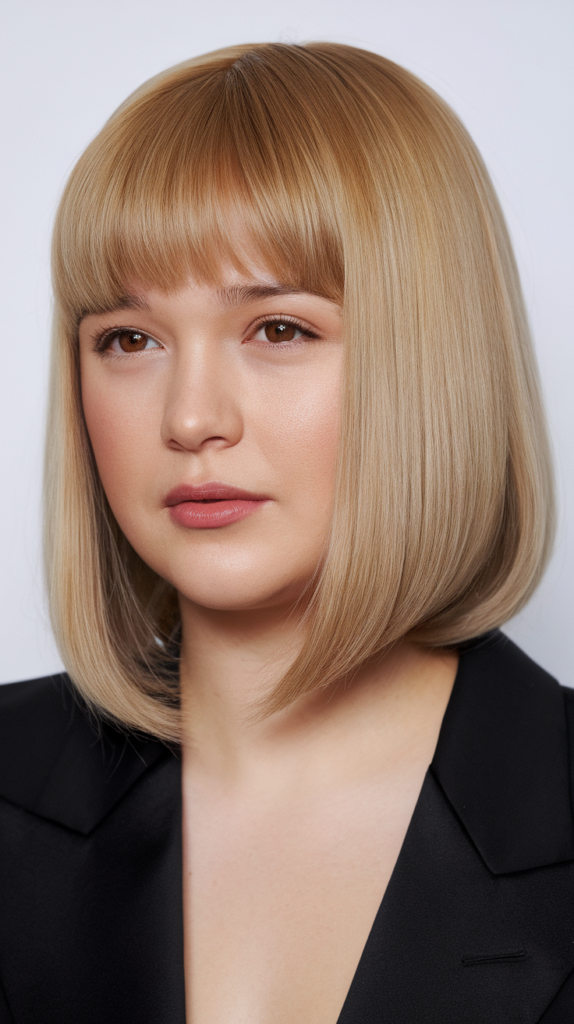
This is a short, geometric micro-fringe, cut straight across just above the brow, not a middle-parted style; the blunt line is the whole point of this cut, not something to soften. A precision cut with shears, not a razor, is what keeps this fringe’s edge crisp.
Trims every two to three weeks keep a fringe this short from growing into the eyes faster than the rest of the cut.
Wavy Bob With Face-Framing Layers
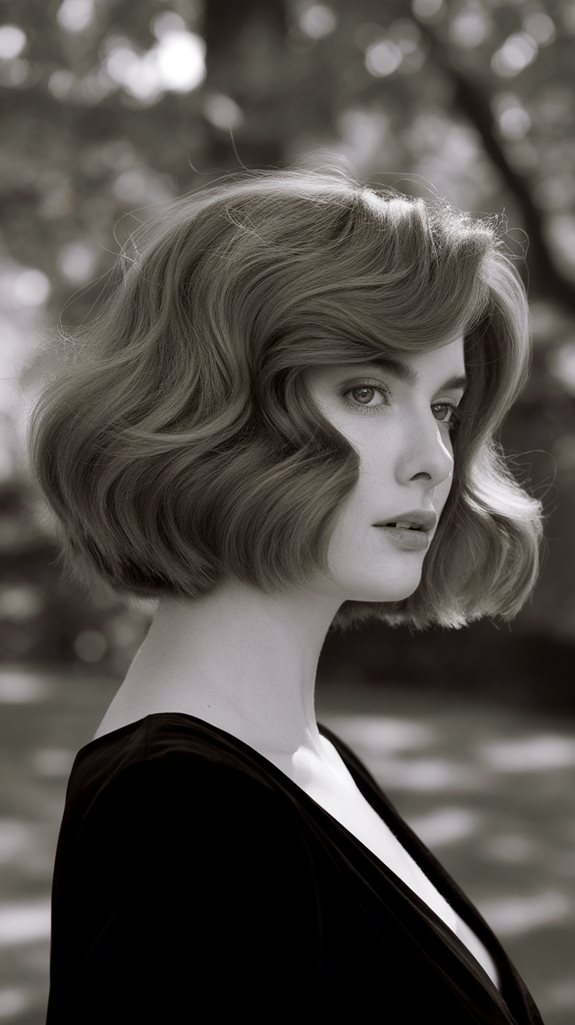
Layers that start at the cheekbone, not higher, actually frame the face without adding bulk at the crown, which is where a round face already carries visual width. A texturizing spray on damp hair before waving holds the wave’s shape through a full day better than product applied after styling.
A 1-inch barrel gives a looser wave that suits a bob’s shorter length better than a smaller barrel, which can look overly curled on hair this length.
Asymmetrical Lob With Subtle Highlights
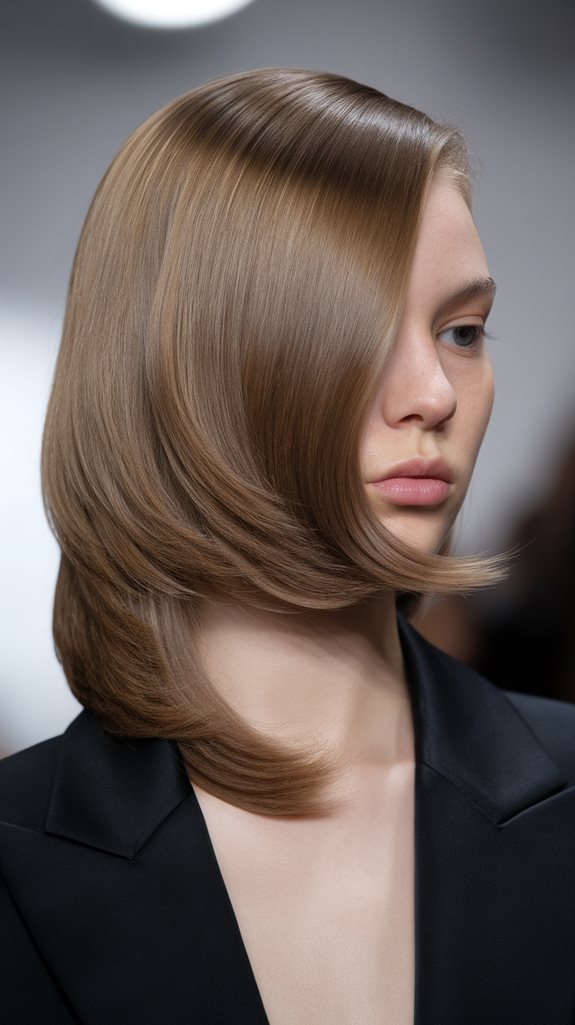
The length difference side to side needs to be noticeable at a glance, at least an inch, or the asymmetry looks like an uneven cut rather than a deliberate one. Highlights placed only at the face-framing pieces, not throughout, keep the color from competing with the cut’s own asymmetric line.
Styling both sides the same way undercuts the point of an asymmetrical cut; the longer side should get more texture or curl to stand out.
Curly Shoulder-Length Cut
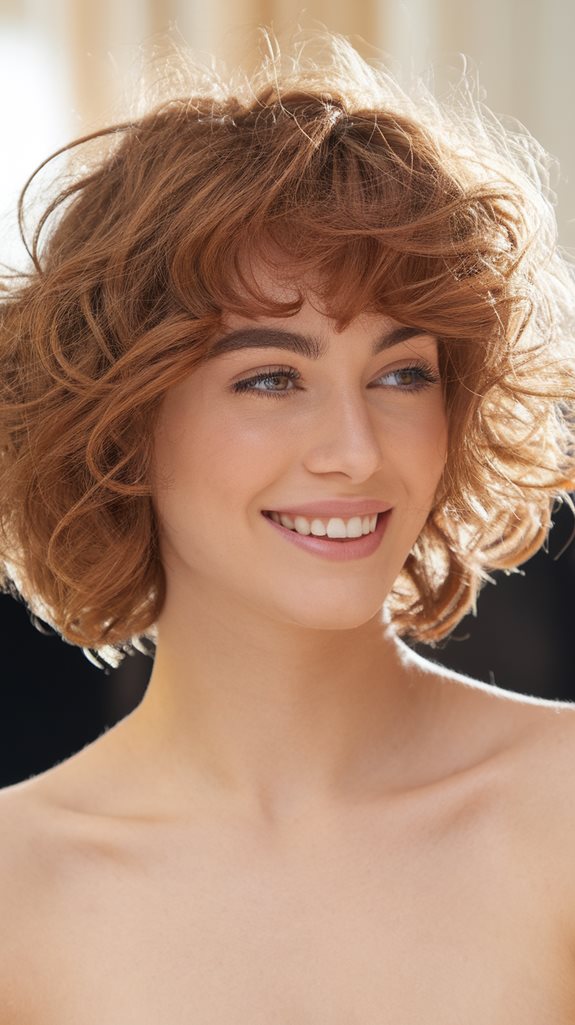
Curls need layers cut dry, not wet, since curl pattern shrinks significantly once it dries and a stylist cutting on wet hair alone can misjudge the final length. A leave-in conditioner on soaking-wet hair, before any other product, actually controls frizz on this texture.
A diffuser on low heat and speed dries curls without disrupting the clump pattern the way a regular blow dryer would.
Blunt Lob With Soft Waves
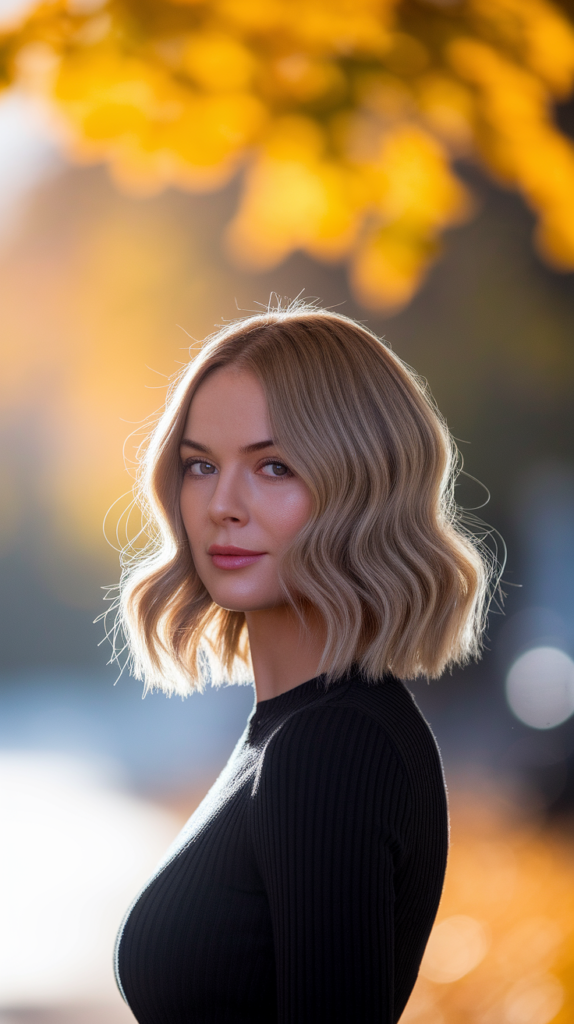
Blunt ends hold weight at the bottom, which keeps this cut from looking wispy despite the added waves through the mid-lengths. A center or slightly off-center part matters more here than on a layered cut, since there’s no layering to disguise an off-balance part.
A curling wand on alternating sections, not one uniform direction, gives a more natural-looking wave than curling every piece the same way.
Layered Cut With Wispy Bangs
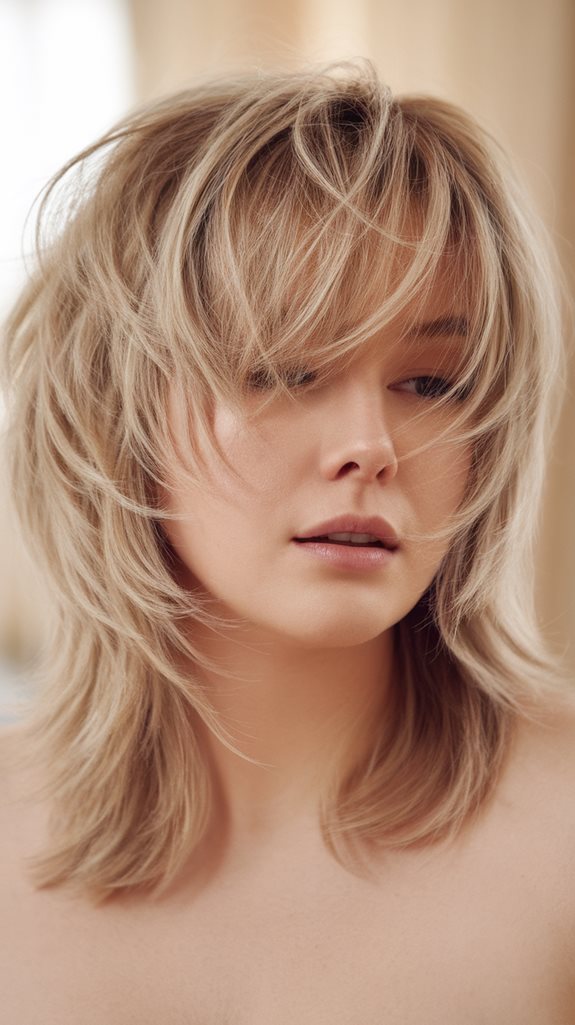
Wispy bangs are cut with a razor, not shears, which gives them their thin, piece-y texture instead of a solid blunt line. These bangs work with a layered cut specifically because the layers underneath already have movement to match; on a blunt cut, wispy bangs can look disconnected from the rest of the hair.
Our curtain bang haircuts for medium hair guide covers more bang styles and how they pair with different base cuts.
A-Line Bob With Volume
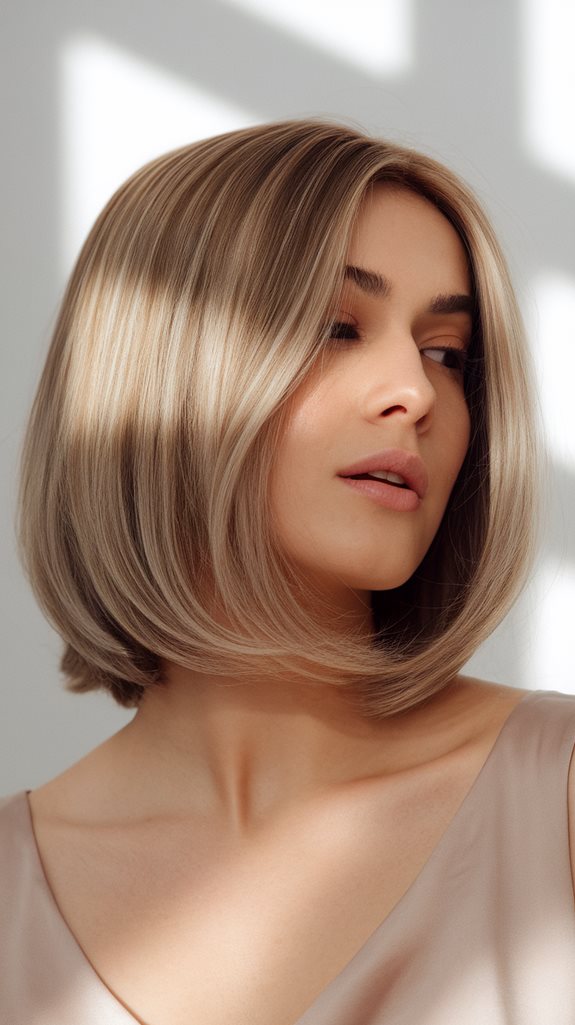
The length gap between the shorter back and longer front is what defines an A-line specifically, usually one to three inches; less than that just looks like a regular bob. Root volume needs to be built while the hair is still damp, with mousse, not added after it’s already dry.
A round brush lifting straight up at the roots while blow-drying is what creates the volume; brushing the hair down and back flattens the same effect.
Medium Shag With Feathered Ends For Round Face
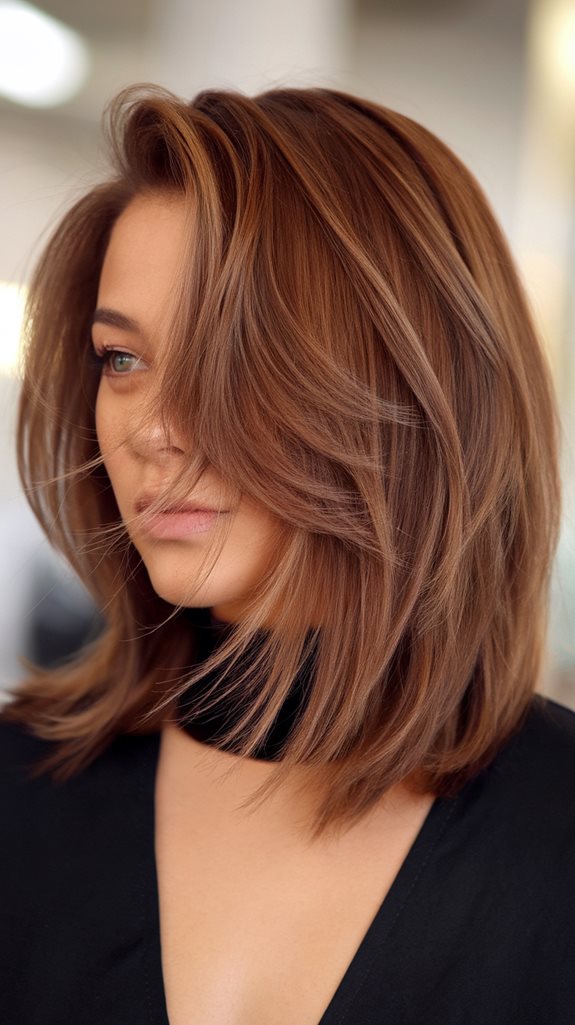
Feathered ends are cut with the shears angled into the hair, not straight across, which creates the tapered, wispy tip instead of a blunt one. Layers starting at the cheekbone, the same idea as face-framing layers elsewhere on this list, keep a shag from looking like generic long layers.
A texturizing cream scrunched into damp hair, then air-dried or diffused, keeps the shag’s separation without making it look greasy.
Side-Swept Lob With Balayage For Roundish Face
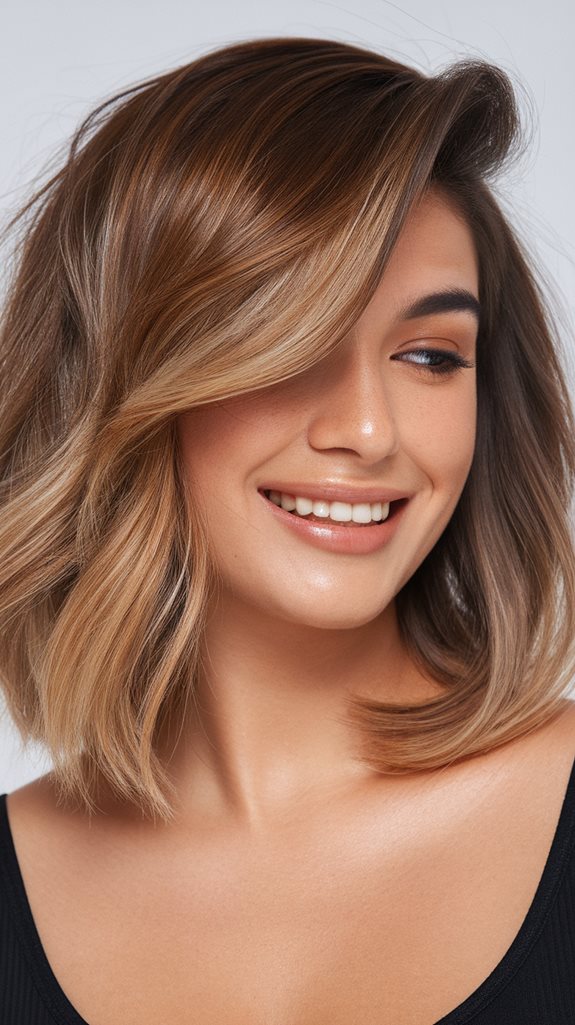
Balayage painted higher on the face-framing pieces than through the rest of the hair creates the brightness that draws the eye toward those pieces specifically, not just anywhere the color happens to land. A deep side part actually gives this style room to sweep; a shallow part doesn’t create enough length difference to matter.
Switching the part to the opposite side occasionally prevents a visible thinning line from forming at the part itself over time.
Inverted Bob For Round Face With Choppy Layers
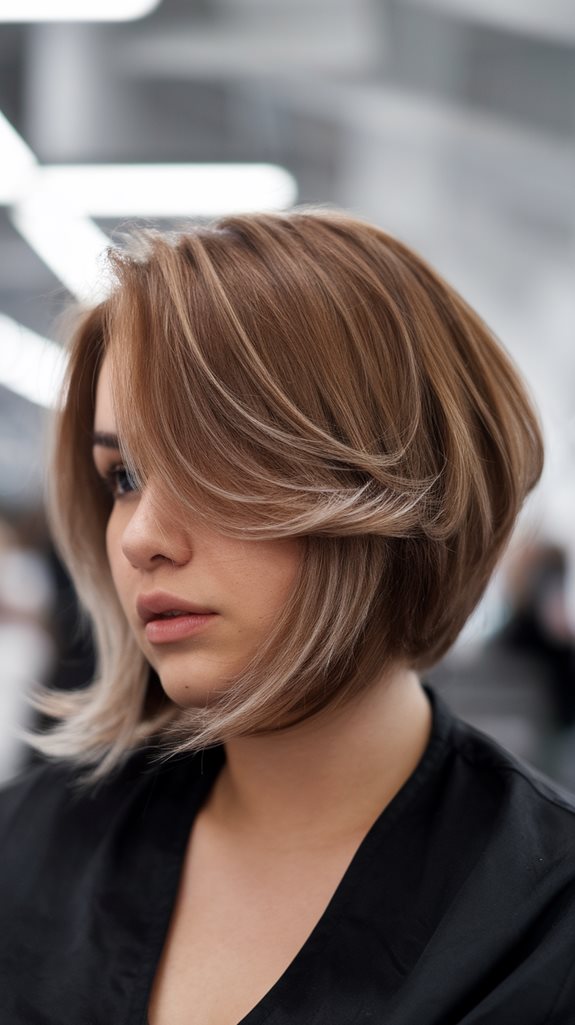
The back is cut shorter and stacked, while the front is left longer, the actual structural definition of inverted, not just uneven layering. Choppy layers are point-cut into the ends with shears, creating jagged, textured tips rather than a smooth taper.
A mousse worked through damp hair before blow-drying holds the choppy texture better than a product applied to already-dry hair.
Tousled Waves With Long Bangs
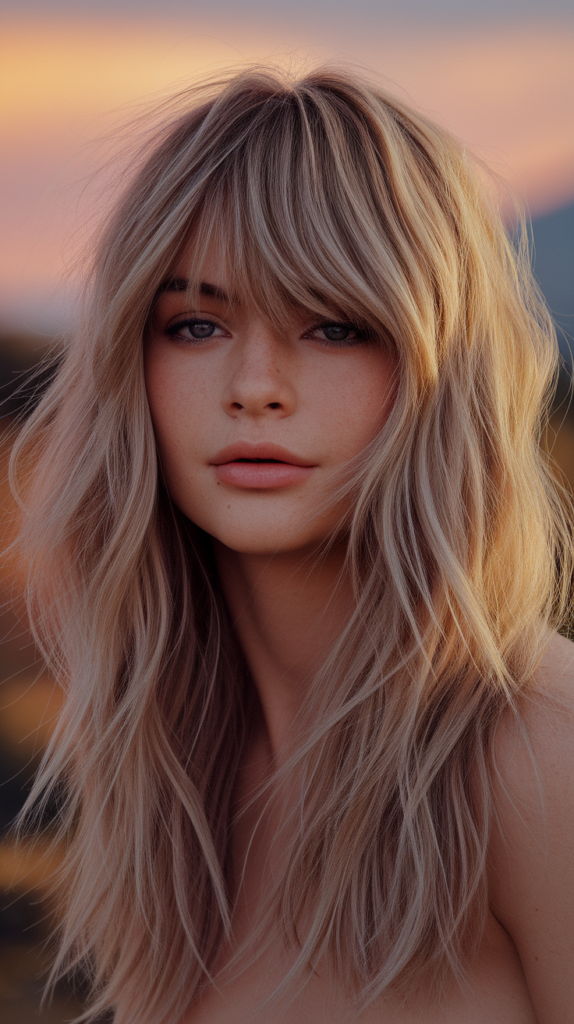
Bangs this long need enough length to tuck behind the ear as a styling option, or they end up the only variable in the whole look with no flexibility. Waves set with a wand on alternating sections, not one direction, read more like natural texture than a uniform curl pattern would.
A lightweight mousse on damp hair, scrunched rather than combed through, holds tousled texture without weighing it down.
Medium-Length Cut With Deep Side Part
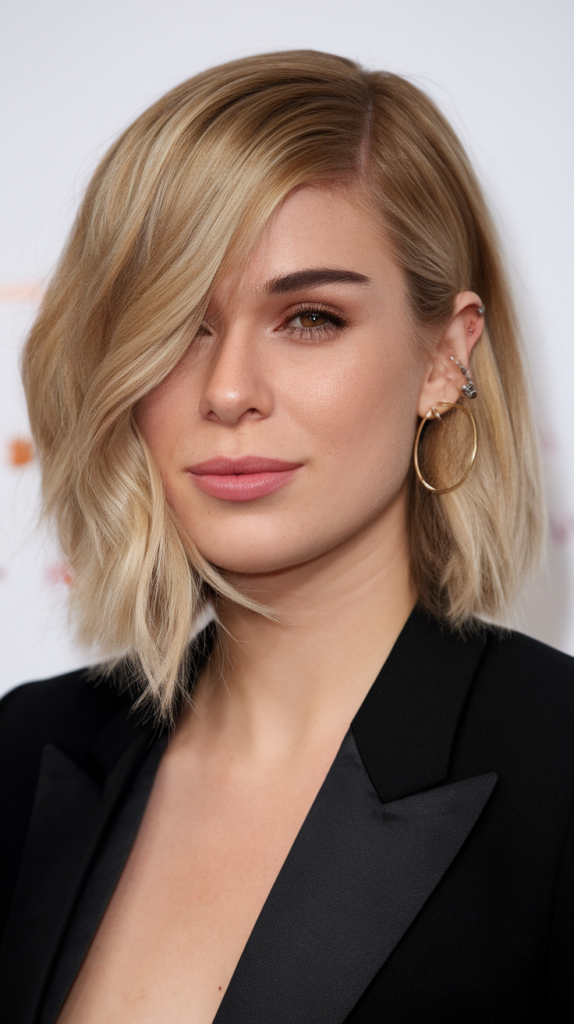
A part counts as “deep” when it sits closer to the outer corner of the eyebrow than the center of the forehead; anything less doesn’t create enough of a length difference between the two sides to matter. Layers cut to follow that part line, not in a straight horizontal pattern, keep the asymmetry consistent through the whole head.
Switching the part occasionally, even by an inch, prevents the roots from developing a permanent flat line where the part usually sits.
Shoulder-Length Cut With Beachy Waves
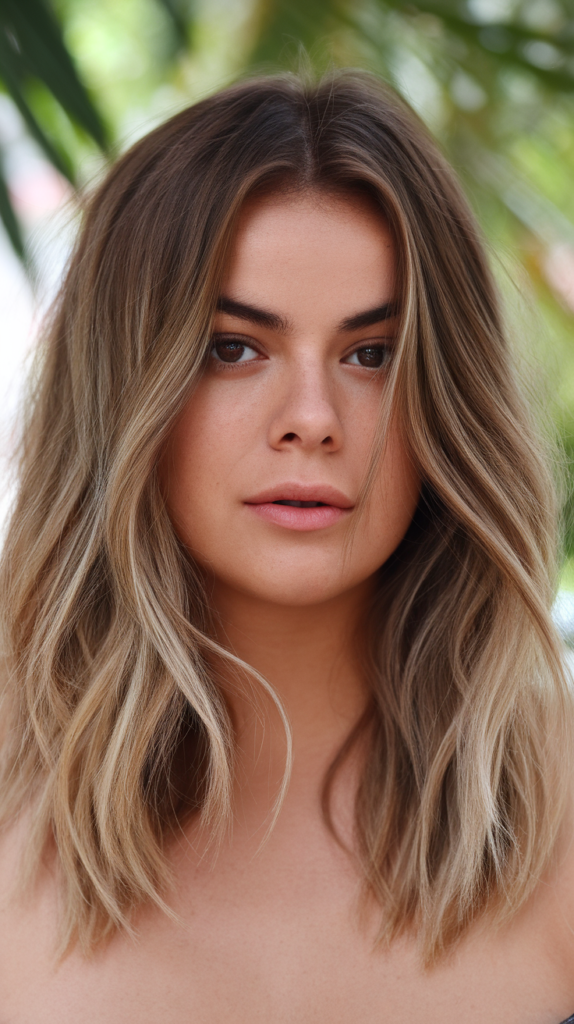
A sea salt spray applied to damp, not dry, hair actually changes the texture as it dries, where the same product on already-dry hair just sits on top without doing much. Loose waves set on a larger barrel, an inch and a half or more, read more like natural texture than a tighter curl would on this length.
Scrunching the ends upward while diffusing builds the tousled shape instead of just drying the hair flat.
Graduated Bob With Layers
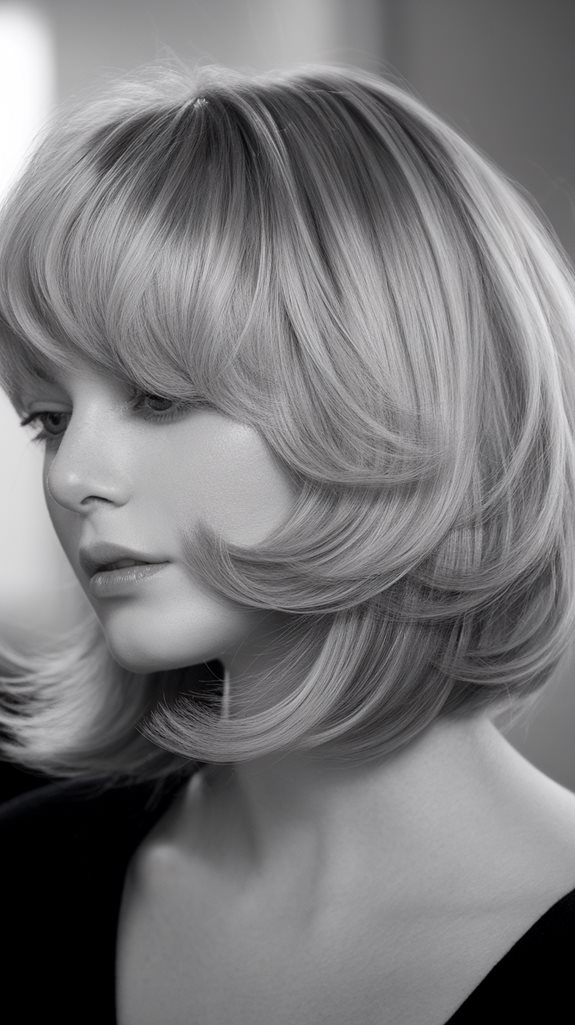
Graduation stacks the back layers on top of each other, which builds the rounded volume at the back of the head, distinct from an inverted bob’s straight diagonal line. The front pieces stay longer and softer specifically to balance that back volume, not just for a stylistic taper.
A round brush at the crown while blow-drying emphasizes the stacked volume; brushing straight down flattens the graduation’s whole point.
Layered Lob With Ombre Highlights
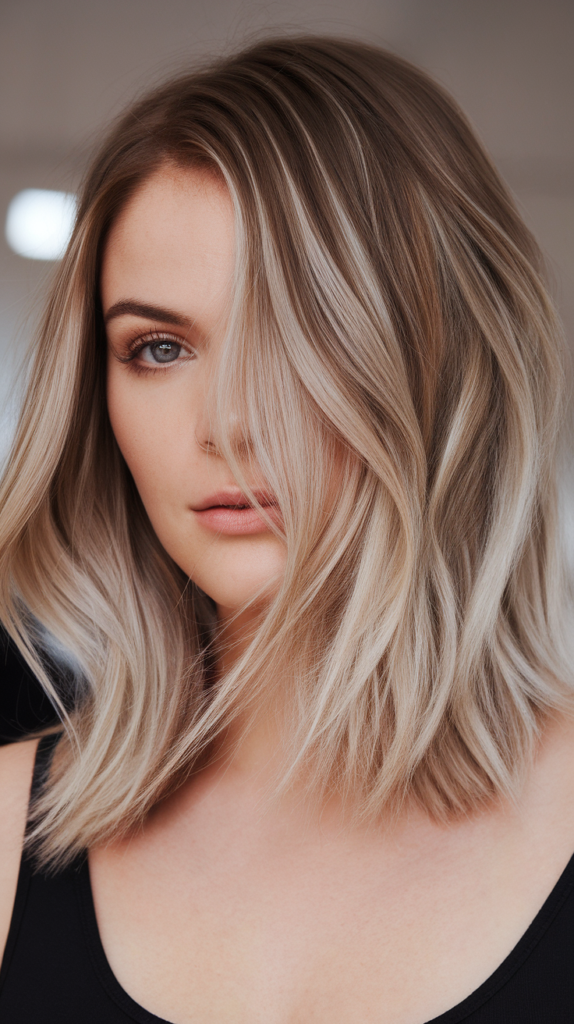
Ombre is a gradual color shift from root to end, distinct from balayage’s hand-painted, more randomly placed lightness; the difference matters if you’re asking a colorist for one versus the other. Layers cut through the mid-lengths, not just at the ends, let the color transition actually show through the hair’s movement instead of sitting flat.
A glossing treatment every six to eight weeks keeps the lighter ends from looking brassy as they grow further from the root color.
Modern Shag With Textured Bangs
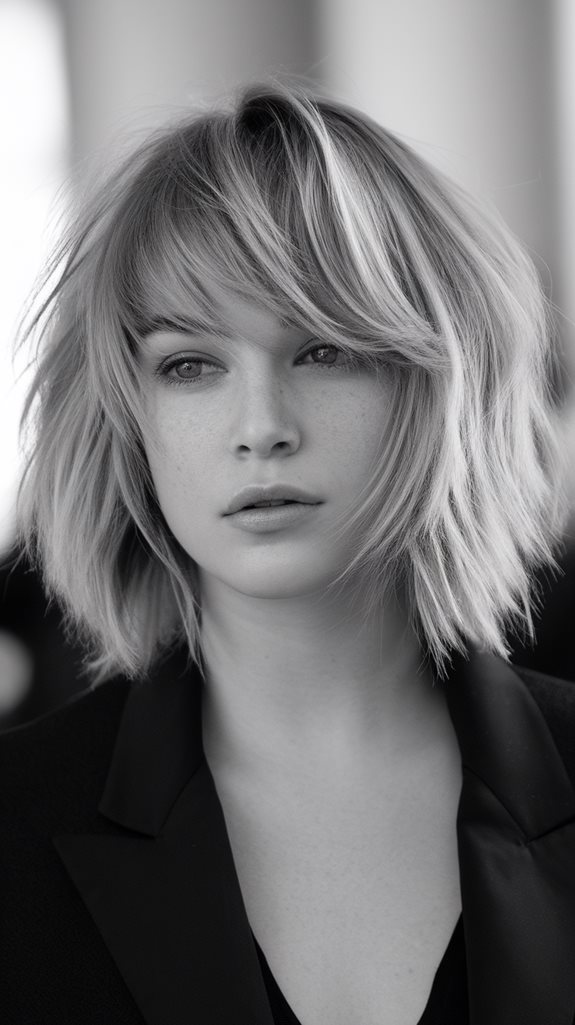
Textured bangs are point-cut with shears into the ends, creating a broken, uneven edge instead of one straight line, which separates them from a blunt fringe. This cut’s heaviest layering usually starts at the crown, not the ends, which is what gives a shag its characteristic lift at the root.
A texturizing spray worked through dry hair, not damp, is what actually roughens the texture at this stage, after the shape is already set.
Shoulder-Length Cut With Volume Boost
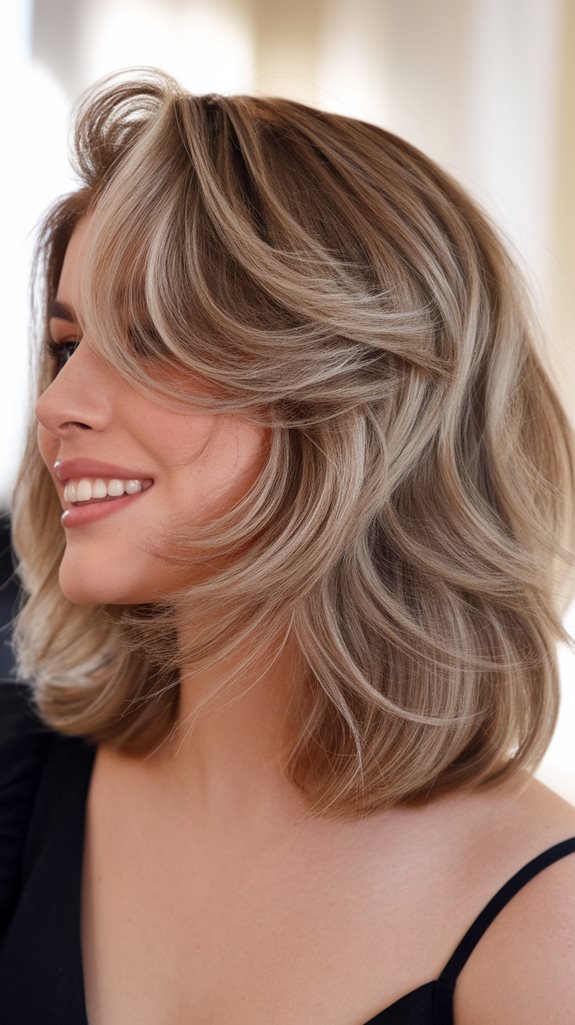
Volume at the root has to be built while the hair is damp with a mousse, then locked in with heat; a volumizing spray applied to already-dry hair adds texture but not real lift. Layers cut through the crown specifically, not just at the ends, give the hair somewhere to go when it’s lifted at the root.
Our thick-hair haircut guide covers more root-volume techniques for different hair densities.
Wavy Lob With Blunt Ends
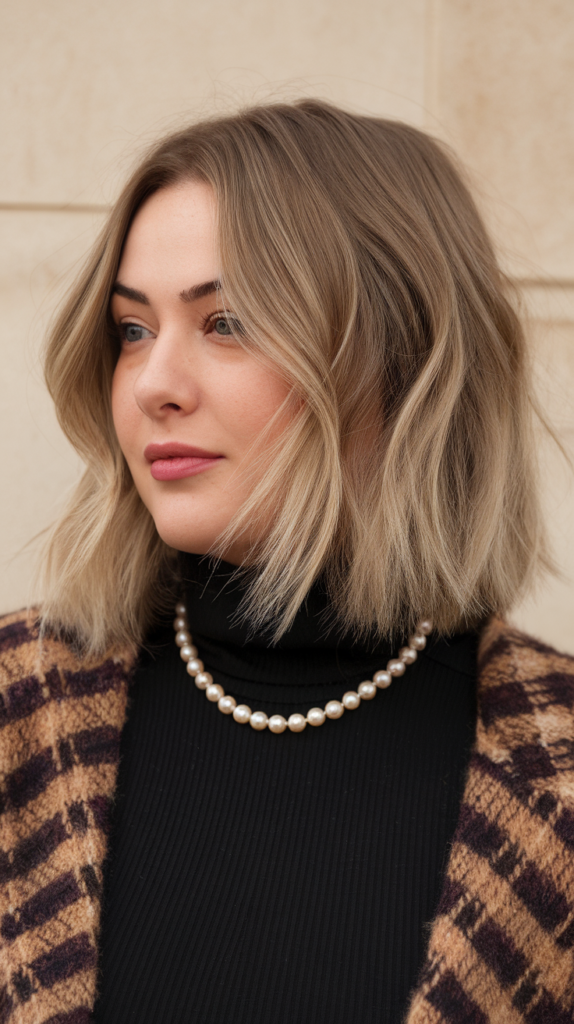
Blunt ends on a wavy cut work because the weight at the bottom keeps the wave from looking wispy or thin, the same idea as the blunt lob earlier in this list, just with more wave through the mid-lengths. A center part reads more symmetrical; a side part adds asymmetry and a bit more visual volume on one side.
This cut moves between office-ready when smoothed and evening-ready when the waves are left looser, without needing a different cut for each.
Choppy Bob With Side Fringe
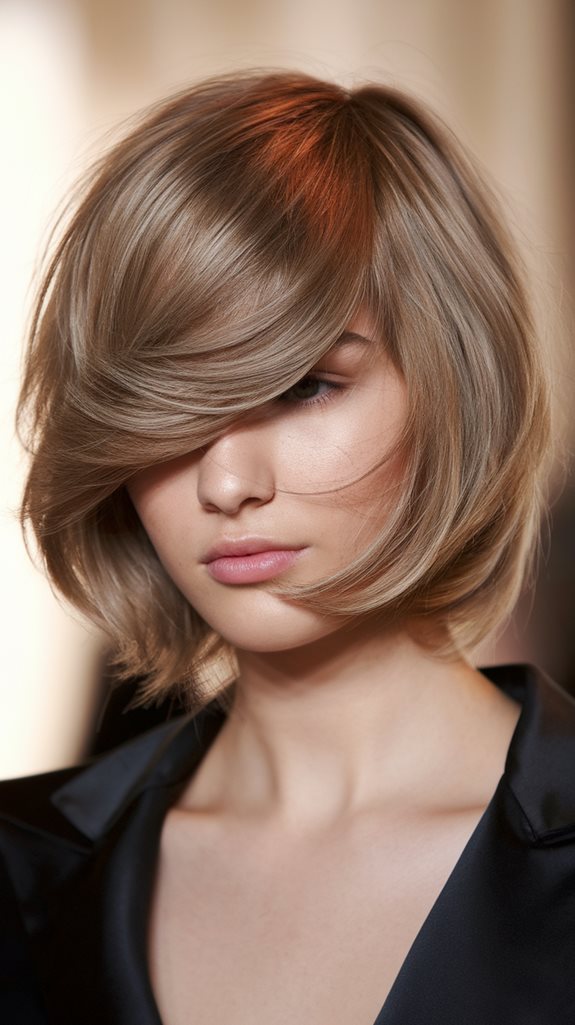
Choppy layers are point-cut into the ends, the same razor or shears technique used elsewhere on this list, creating jagged pieces instead of one clean line. A side fringe this length needs to be long enough to tuck behind the ear on days it’s not being styled forward.
Our bob hairstyle ideas cover more variations on this cut for different hair textures.
Medium Cut With Flipped Ends
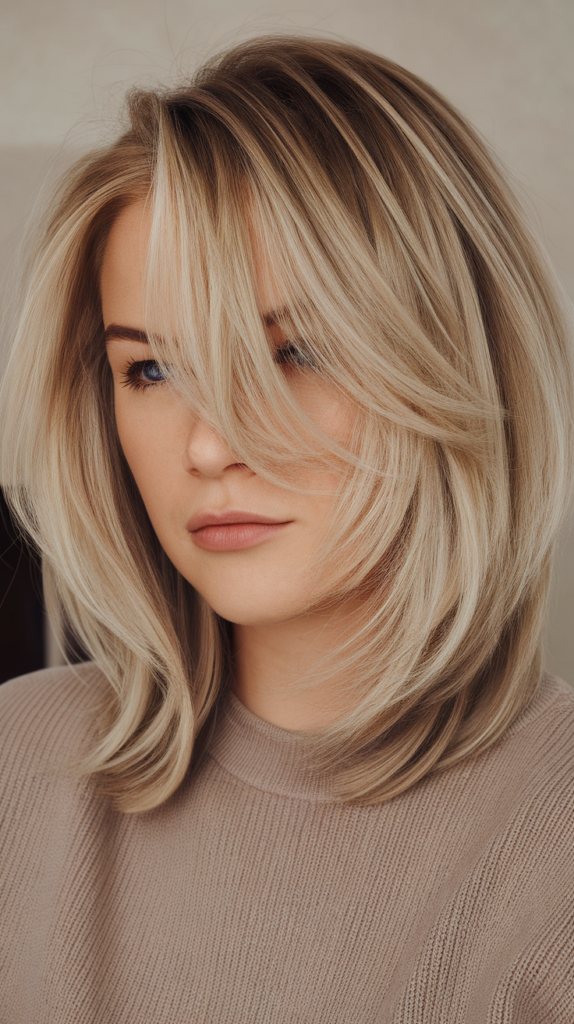
Flipped ends are created by rolling the round brush outward, away from the face, while blow-drying, the opposite motion from curling ends under. This only works on hair with some layering already cut in; on a completely blunt cut, the ends don’t have the movement needed to flip outward.
A light-hold hairspray, applied while the ends are still slightly warm from the dryer, sets the flip without stiffening the rest of the hair.
Long Bob With Tapered Layers
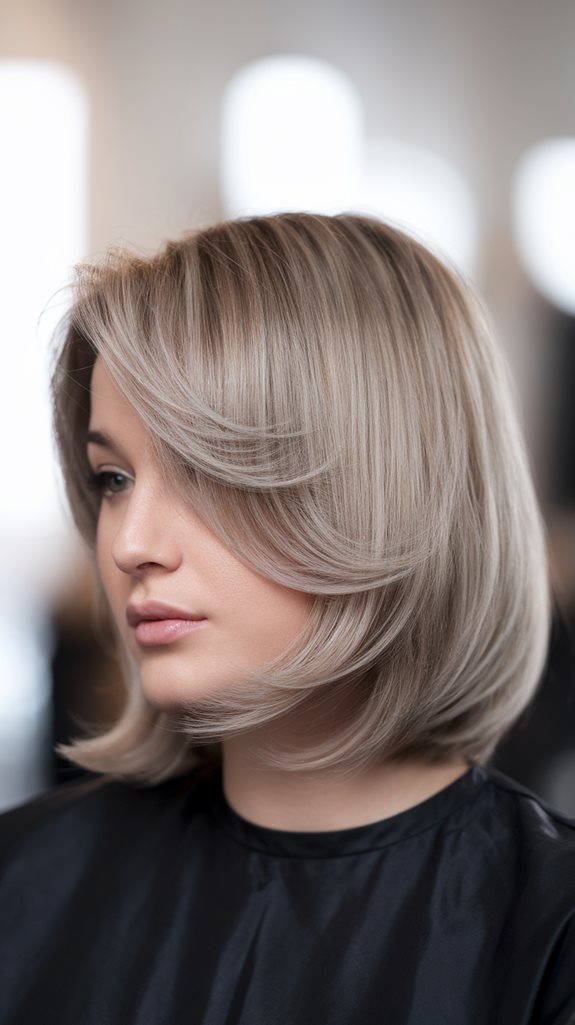
Tapered layers are cut to gradually thin out toward the ends rather than staying one consistent thickness, which keeps a longer bob from looking like one heavy block of hair. This length holds a wave nearly as well as it holds straight styling, since the layered ends already have some built-in movement.
A texturizing spray on the ends, not the roots, is enough to add a tousled finish without needing a full re-style.