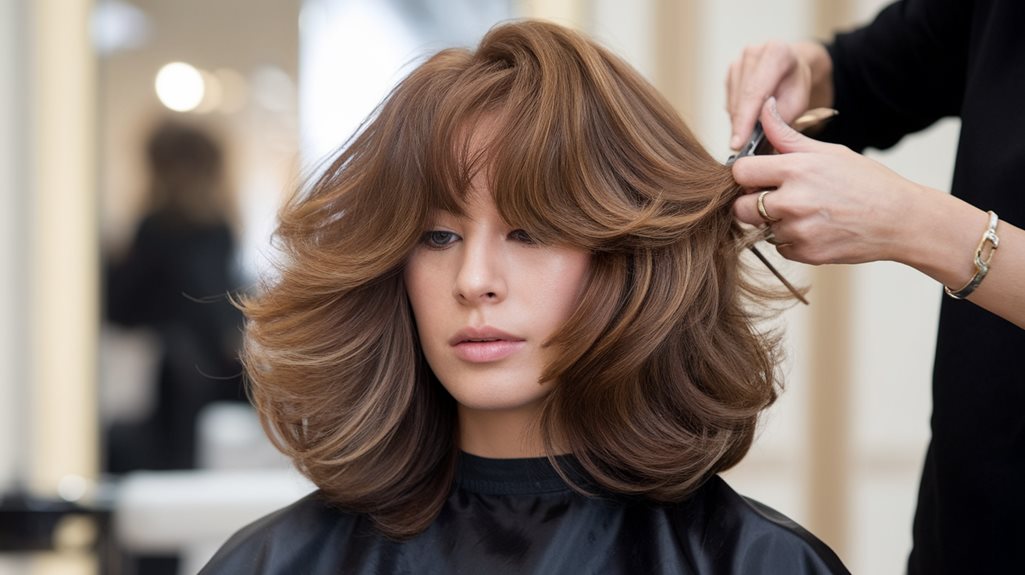
Tame The Volume – 22 Medium Haircuts For Thick Hair
Thick hair needs weight removed strategically, not just cut shorter. The right medium-length cut takes bulk out at specific points, the interior layers, the ends, the crown, rather than all over, which is what actually makes hair lighter without making it look thin.
The cuts below each solve a different version of the same problem. Some rely on layering technique, some on length alone, and a few use color placement instead of scissors to change how the hair reads.
Layered Lob
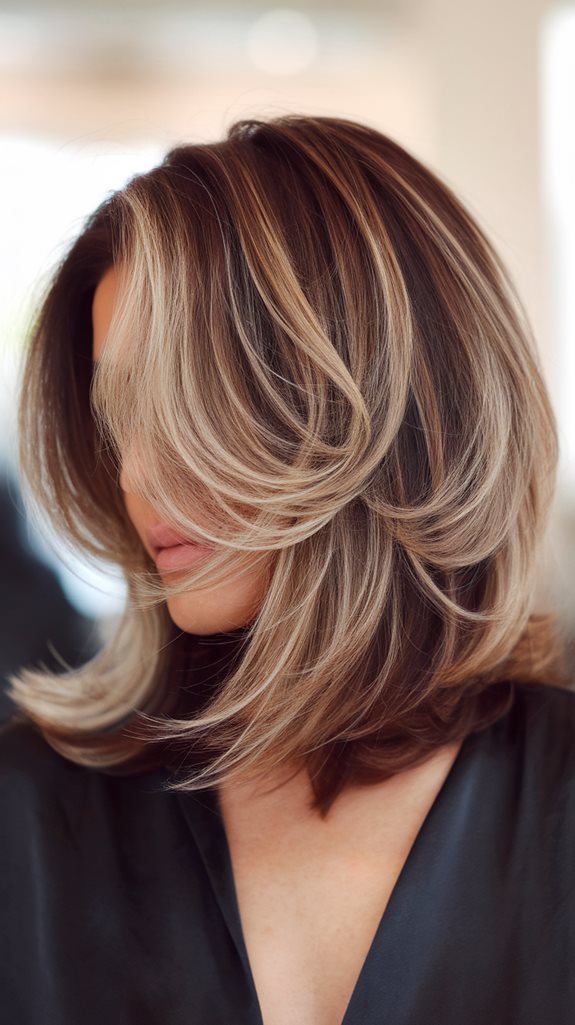
A lob works on thick hair because the layers are cut into the interior, not just the ends, which removes weight from underneath without shortening the visible length. Ask for the shortest layer to land around the cheekbone, not higher, or the cut can look choppy instead of shaped.
This length also plays well with color: balayage or face-framing highlights show through the layers instead of getting buried in solid thickness. Our bob vs. lob breakdown covers how to pick between the two lengths.
Textured Shag
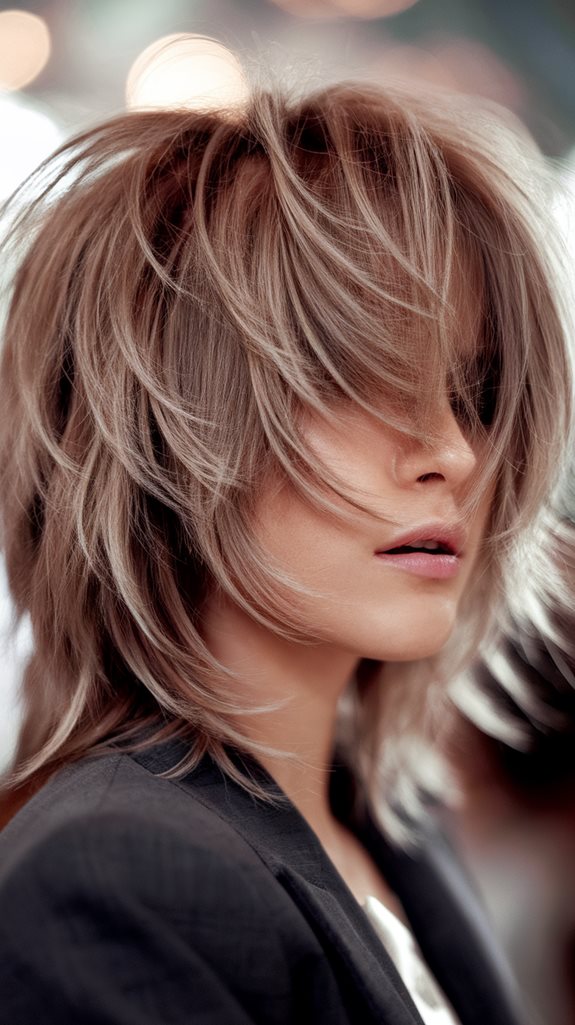
A shag’s heavy layering starts high, often at the crown, which is what breaks up thick hair’s density from root to end instead of just at the tips. Choppy, razor-cut ends read intentional on this cut; a blunt finish would fight the whole point of the layers.
Air-drying with a texturizing cream works better here than a round brush, since the cut is built for movement, not sleekness. A diffuser on low heat keeps natural wave or curl from turning into frizz.
Blunt Cut
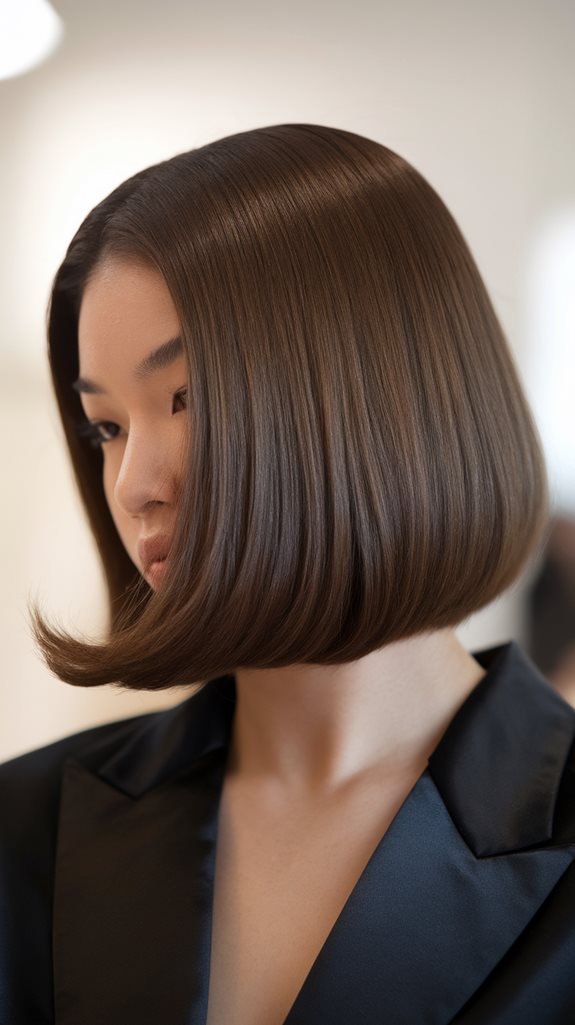
A blunt cut on thick hair only works if the ends are cut with shears, not a razor, since razor-cut ends thin out the line a blunt cut depends on. The weight left at the bottom is what makes thick hair look fuller here, the opposite goal of most other cuts on this list.
Chin-length or just past the collarbone are the two lengths that hold a blunt line best on thick hair; anything longer starts to lose shape under its own weight. Regular trims, every six to eight weeks, keep the edge from softening into a taper.
Angled Bob
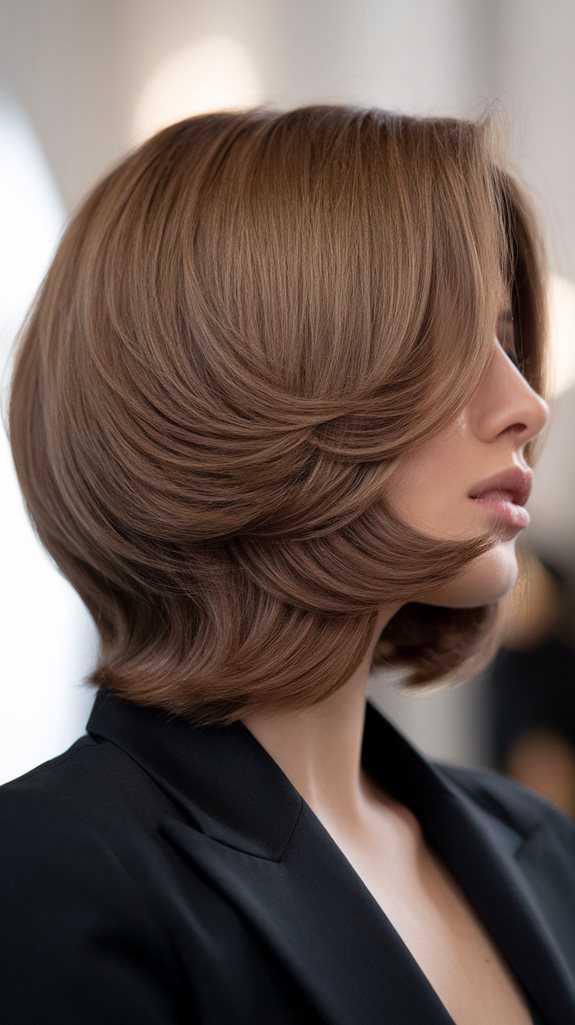
The angle on this bob comes from cutting the front sections progressively longer than the back, not from styling; a round brush can enhance the line but can’t create it if the cut itself is level. This structure removes bulk at the back of the head, the area that reads heaviest on thick hair.
A round brush pointed down and back while blow-drying follows the angle instead of fighting it. Our guide to choosing a cut for your face shape covers which angle works best for different jawlines.
Shoulder-Length Waves
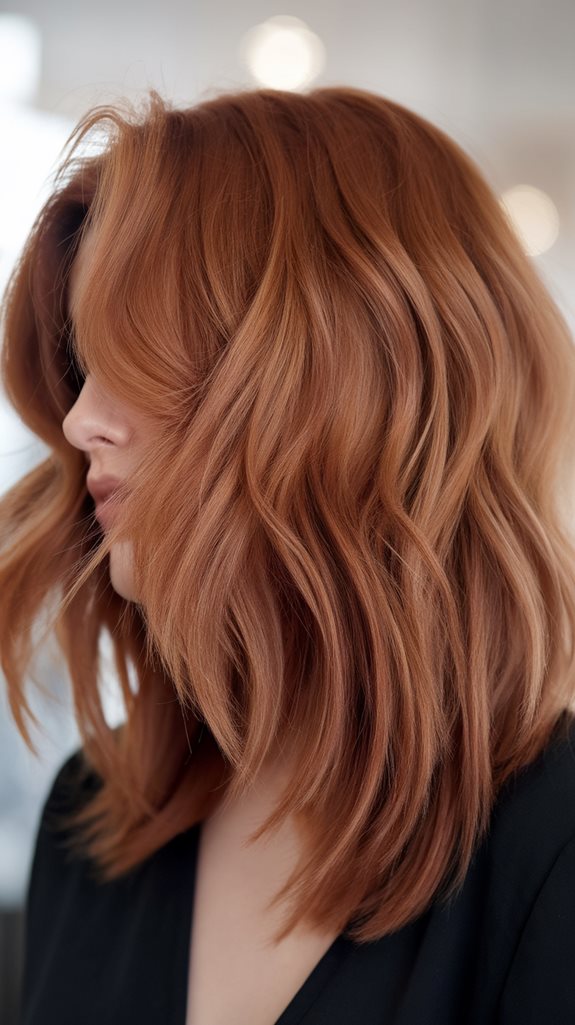
Waves on thick hair hold longer than they do on fine hair, so a lighter-hold product, mousse instead of gel, actually works better here without weighing the wave down. Layering the interior first is what lets a curling wand create movement instead of just adding heat to a solid mass.
A 1 to 1.5-inch barrel gives a looser wave that suits this length better than a smaller barrel would. Light-hold hairspray, applied while the wave is still slightly warm, sets the shape without stiffening it.
Curly Bob
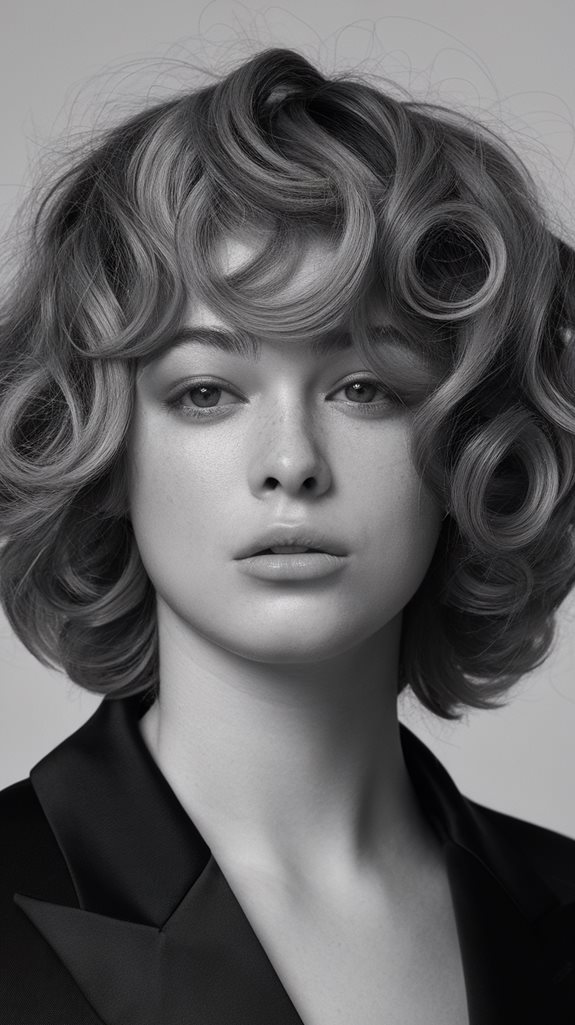
Curls need the same reduction in bulk that straight thick hair does, but through diffusing, not just cutting, since curl clumps shrink and need room to spring without getting crowded by neighboring curls. A leave-in conditioner applied to soaking-wet hair, before any styling product, is what actually controls frizz on this texture.
Trims every eight to ten weeks keep the shape from growing into a triangle. A diffuser on low heat and low speed dries curls without disturbing the clump pattern the way a regular blow dryer would.
Soft Layers
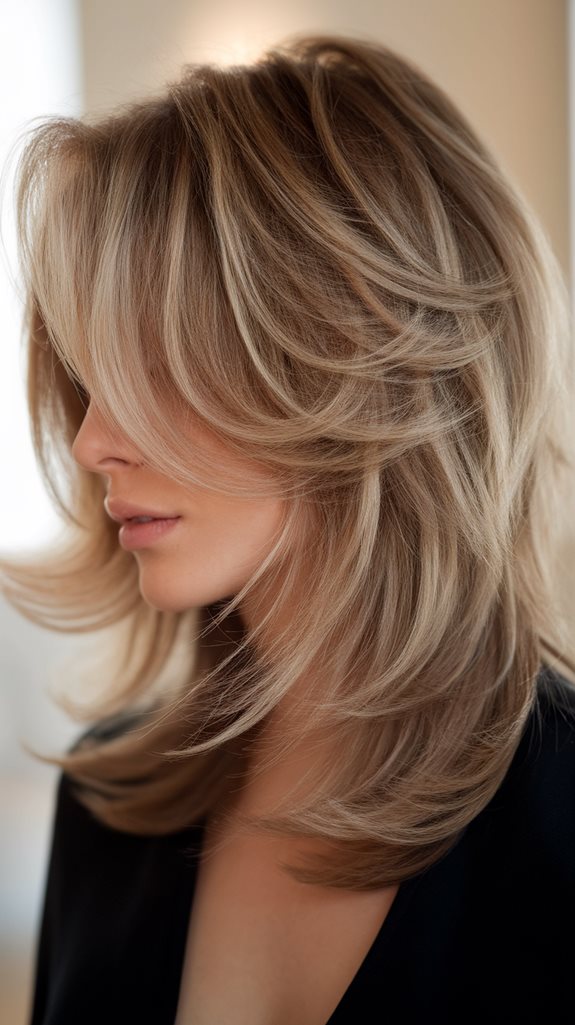
Soft layers are cut with less contrast between lengths than a shag, so the effect is thinner-feeling hair rather than obviously different pieces. The layers should start below the chin on thick hair, not higher, since starting too high can add unwanted width at the jaw.
This cut takes to both a flat iron and a curling wand equally well, since the layers are subtle enough not to fight either finish. Fewer products are needed here than on a shag; the point is ease, not texture.
Long Bob With Bangs
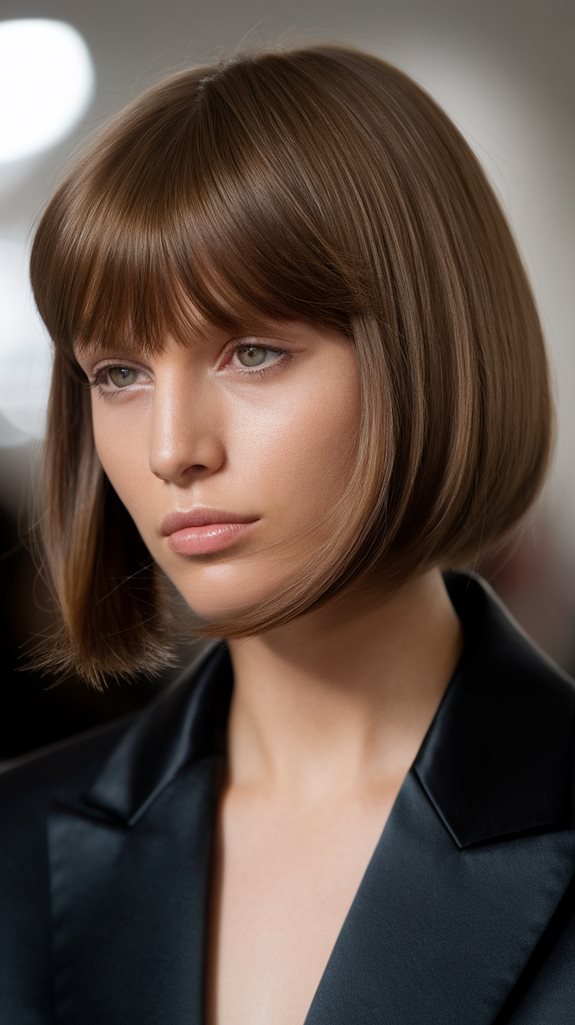
Full, blunt bangs on a long bob take the most weight off the front of thick hair, more than side-swept bangs do, since the whole fringe is a defined section rather than blended into the rest of the cut. Wispy, side-swept bangs are the lower-commitment option if you’re not ready for a hard line across the forehead.
This length works both straight and wavy because the bob itself, not the styling, is doing the shaping. Bangs need a trim every three to four weeks to stay out of the eyes, faster than the rest of the cut.
Choppy Ends
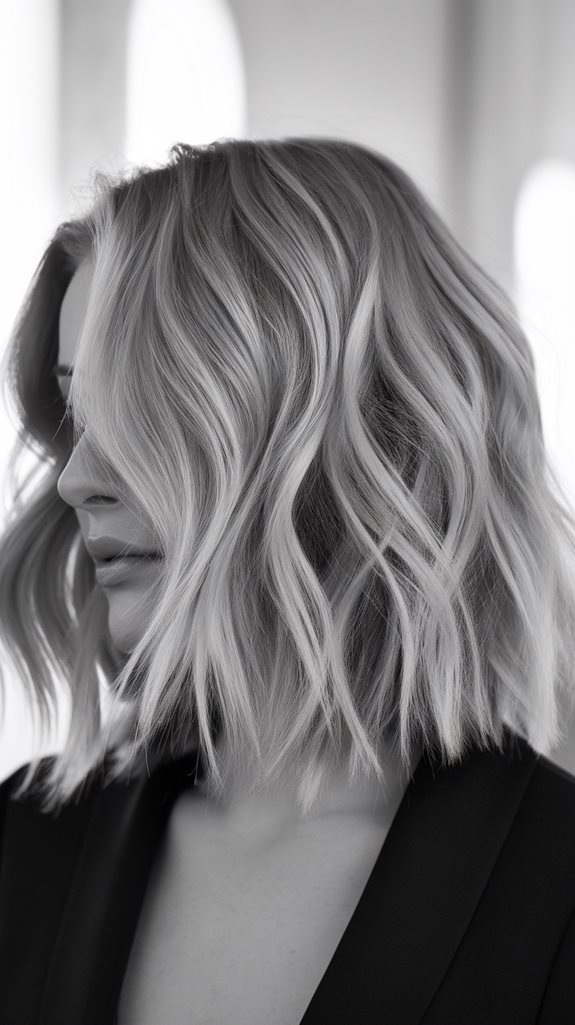
A stylist creates choppy ends with point-cutting, cutting into the hair vertically instead of straight across, which is what breaks up a solid blunt line into something textured. This only works well on hair with enough thickness to hold the jagged shape; on fine hair the same cut just looks thin.
A texturizing spray worked through damp hair, then air-dried or diffused, keeps the ends looking deliberate rather than unfinished. This cut needs the least upkeep of any style on this list since imperfection is the point.
A-Line Bob
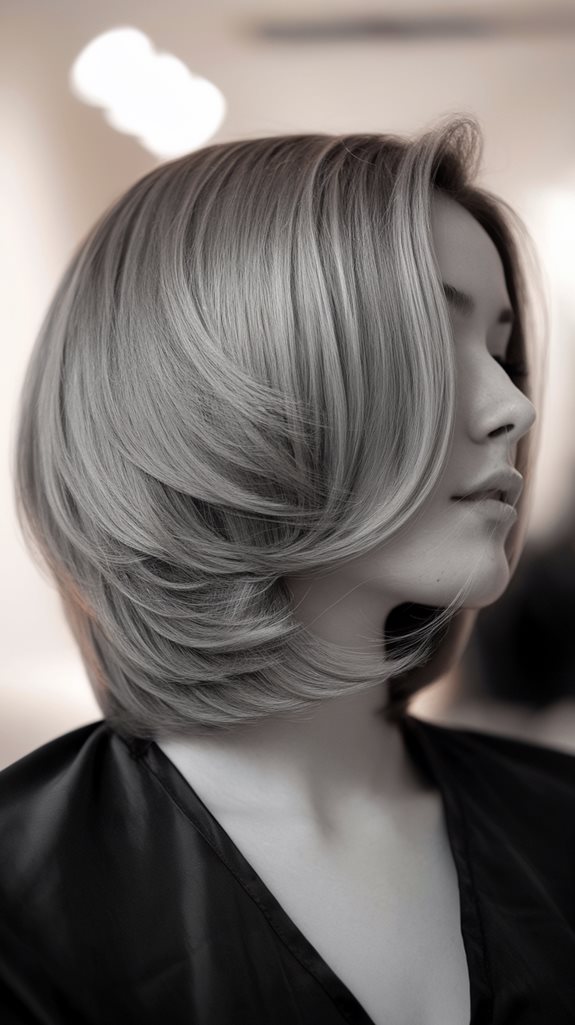
The A-line’s defining feature is the length gap between front and back, usually one to three inches, a bigger difference than an angled bob and a smaller one than an inverted bob. A dramatic angle removes more weight at the back of the head; a subtle one keeps more length overall.
A middle part works with this cut’s symmetry; a side part interrupts the A-line’s clean silhouette more than people expect. Side-swept bangs are the easiest way to update it without changing the base cut.
Feathered Layers
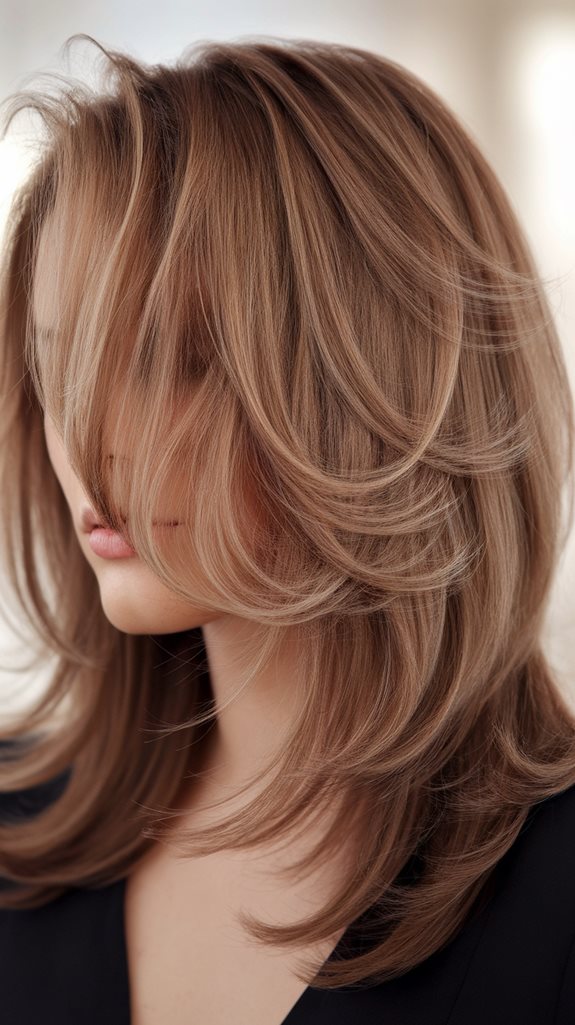
Feathering blends layers so gradually that there’s no visible line between lengths, which separates it from a standard layered cut; the transition, not the layer length itself, is the technique. This works best on thick hair because there’s enough hair to blend without gaps showing through.
A round brush pulling hair up and back while blow-drying emphasizes the feathering; flat-ironing tends to smooth it out instead. This cut holds a wave nearly as well as it holds straight styling, since the layered ends move regardless of finish.
Face-Framing Highlights
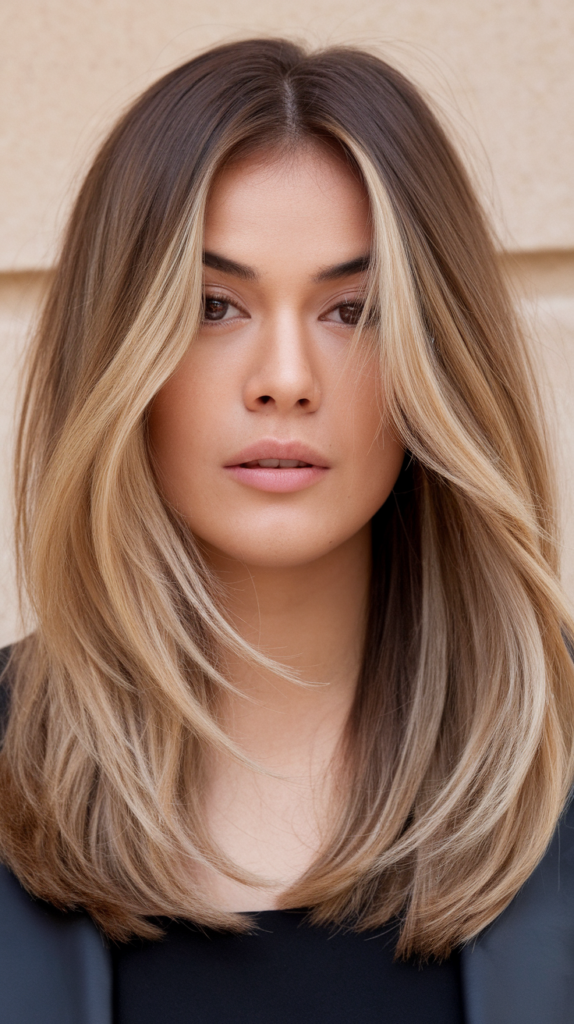
Highlights work as a face-framing accent when they’re placed within about two inches of the hairline, not scattered evenly through the whole head; that concentration is what creates the effect. Cool-toned highlights suit cooler skin undertones better than warm gold does, and the reverse is also true.
Curling the face-framing pieces specifically, even if the rest of the hair stays straight, shows off the placement more than uniform styling would. Our face-framing haircuts for round faces guide covers which cut shapes pair best with this coloring technique.
Side-Swept Bangs
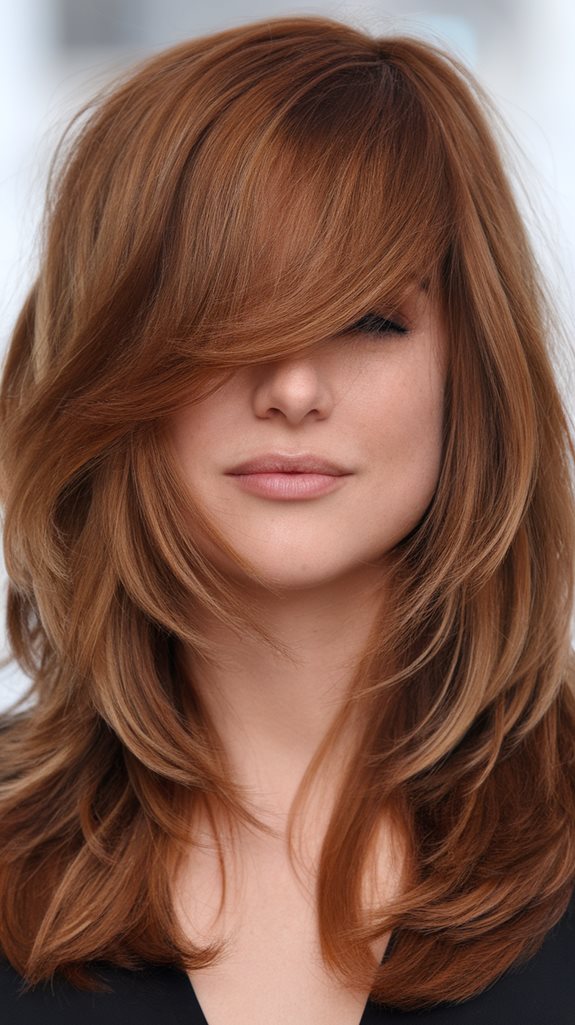
The angle of a side part determines how these bangs fall; a deep side part gives them more length to sweep, while a subtle part keeps them shorter and closer to a curtain style. They need enough length to tuck behind the ear as an option, or they end up in the eyes with no styling alternative.
A round brush and blow dryer, pulling the bangs across rather than straight down, sets the sweep before it air-dries into a different shape. Trims every four weeks keep the length from outgrowing the sweep entirely.
Inverted Bob
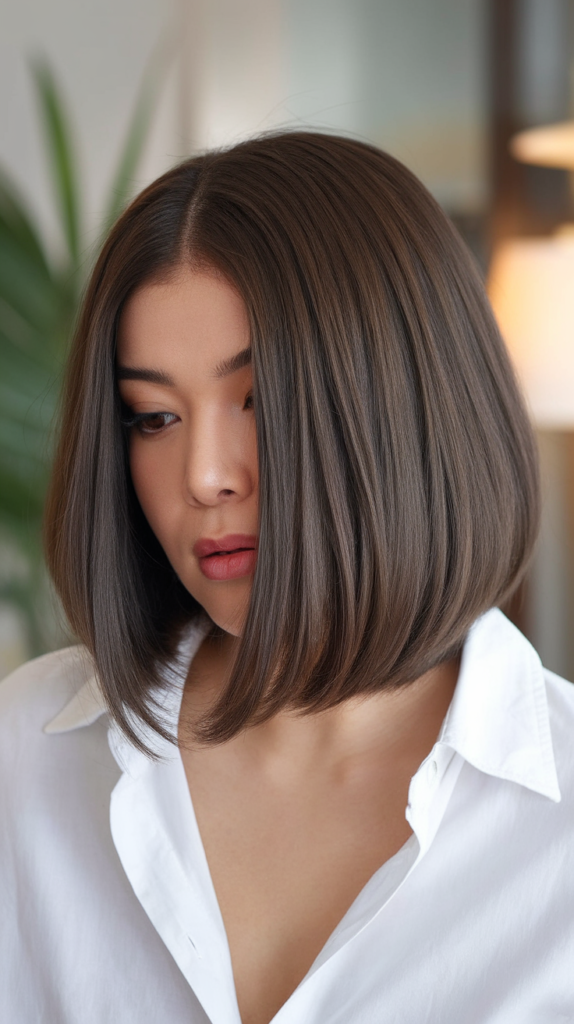
An inverted bob’s back layers are cut shorter and stacked, not just angled, which is what creates the visible step at the nape that separates it from an A-line or angled bob. This stacking is the part of the cut that actually removes bulk at the back of thick hair; the longer front pieces keep length up top.
A round brush adds lift at the stacked crown; a flat iron smooths the front pieces into the sleek finish this cut is usually styled for. This shape needs a trim before the back layers grow out and lose their stack, generally every six weeks.
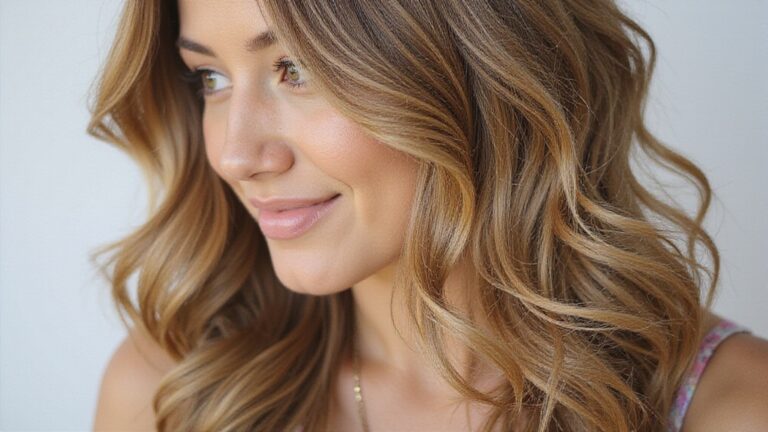
Wavy Lob
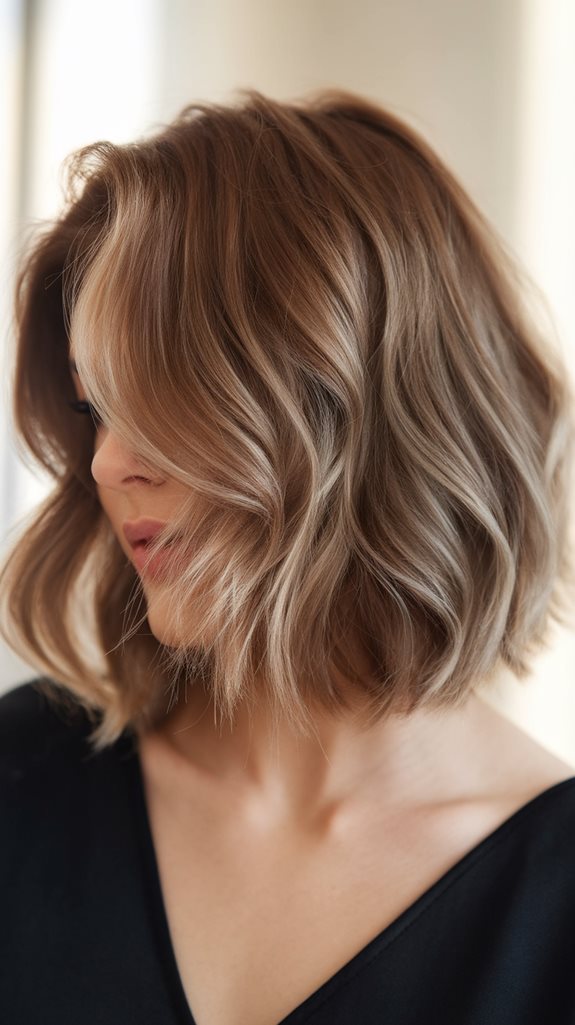
This lob’s waves work with thick hair’s natural tendency to hold shape, so a texturizing spray on damp hair before air-drying often gets close to the look without heat at all. A curling iron, when used, works better on alternating sections in opposite directions than one uniform curl pattern would.
This cut needs the least daily maintenance of the wavy styles here, since the length and the layering do most of the shaping on their own.
Razor Cut
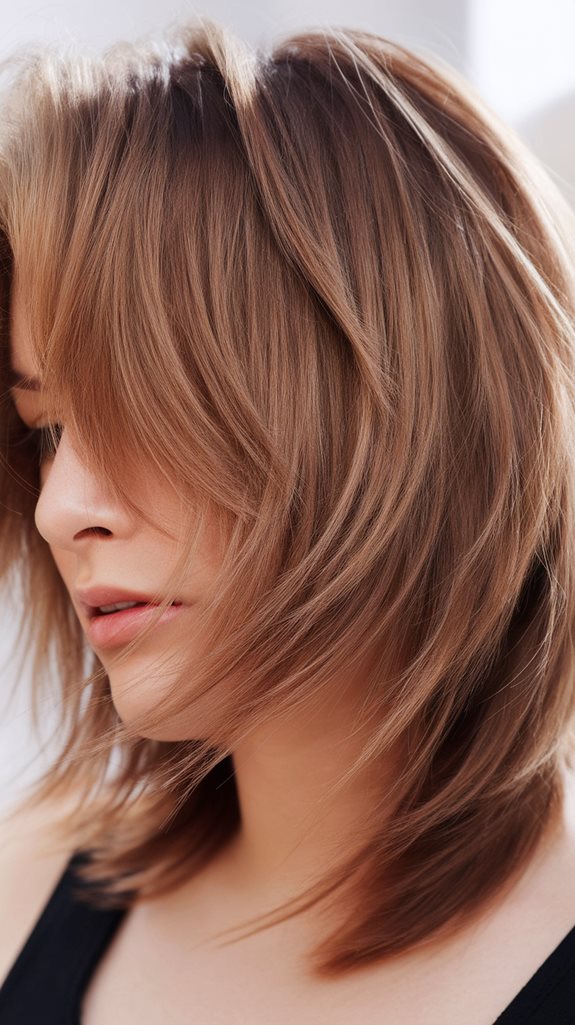
A razor, instead of shears, cuts each strand at an angle rather than straight across, which removes bulk while keeping length; shears alone can’t create the same soft taper at the ends. This technique works best on hair coarse enough to hold the texture; on finer hair it can thin the ends too much.
Styling stays simple since the ends already carry movement built in. Trims every six to eight weeks maintain the taper before the ends grow blunt again.
Asymmetrical Bob
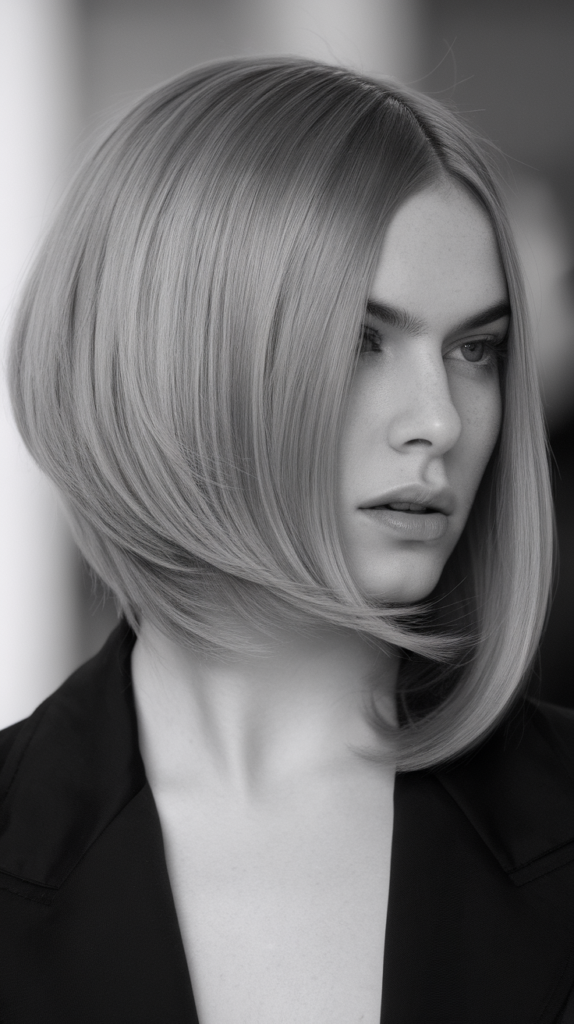
The length difference side to side, usually noticeable at a glance rather than subtle, is what separates this from a standard angled bob; ask specifically for a longer and shorter side rather than an even angle front to back. This asymmetry draws the eye diagonally, which can visually balance a rounder face shape.
A round brush styled toward the longer side emphasizes the asymmetry; styling both sides identically undercuts the point of the cut. Trims matter more here than on a symmetrical bob, since uneven growth shows faster.
Tousled Waves
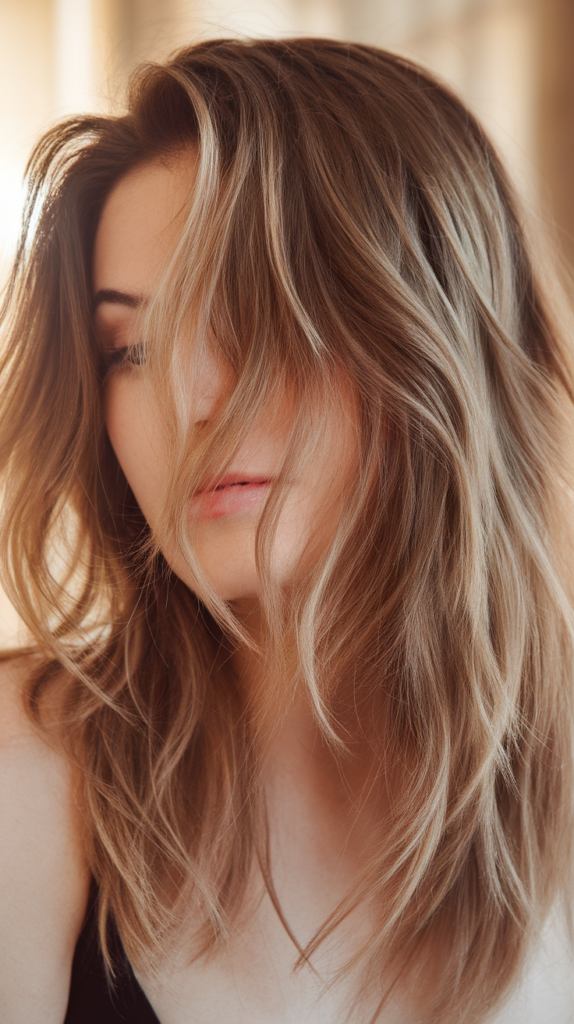
Salt spray works on damp, not dry, hair, since it needs moisture to create texture as the hair dries; sprayed onto already-dry hair it just sits on top without doing much. Scrunching upward while diffusing, rather than pulling down, builds the tousled shape instead of just drying the hair flat.
This style intentionally skips a brush at any point in the process. A curling wand on alternating sections adds definition where the natural wave pattern is uneven.
Sleek Straight Cut
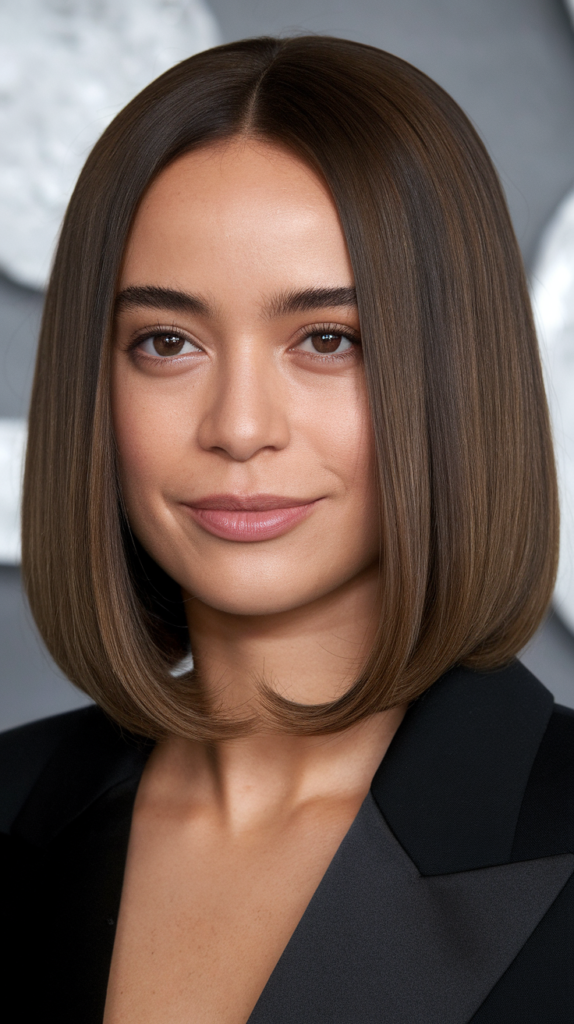
This cut relies on bluntly cut ends at one even length, the opposite approach from a layered style, since the uniform weight is what lets thick hair fall flat and heavy instead of splitting into pieces. A flat iron in small sections, half an inch or so, gets smoother results than trying to iron large chunks at once.
Heat protectant matters more here than on textured cuts, since this style depends on repeated direct heat contact to stay sleek. Trims every six weeks keep the blunt line from softening into a slight taper.
Graduated Bob
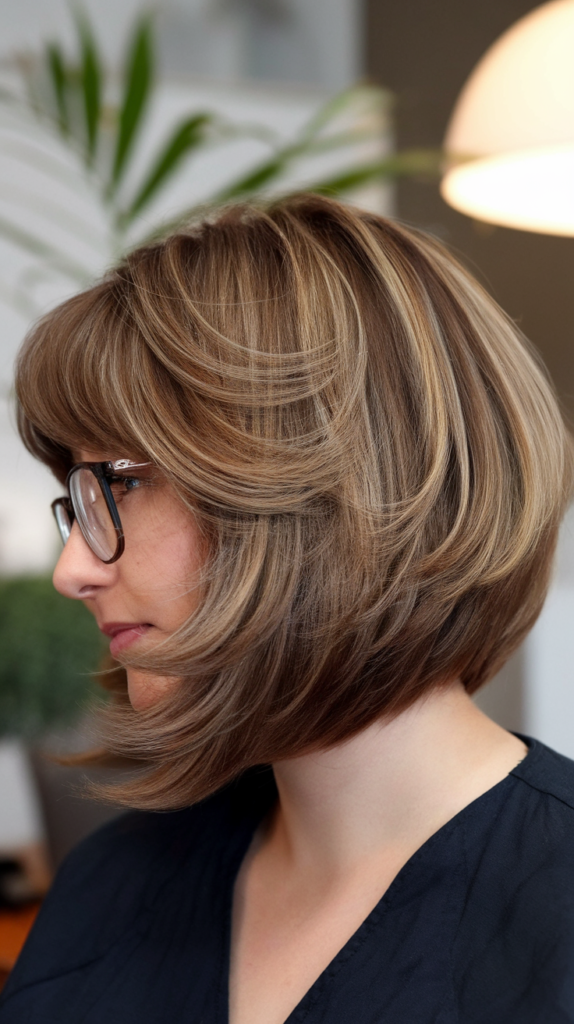
Graduation stacks the back layers on top of each other, similar to an inverted bob but with a rounder, less angular shape overall; the back builds volume while the front tapers into longer, softer pieces. This structure gives thick hair a rounded silhouette instead of a flat one at the back of the head.
A round brush at the crown emphasizes the stacked volume; styling the front pieces straight down keeps the taper visible. Mousse worked through damp hair before blow-drying holds the graduated shape better than a spray applied after styling.
Wispy Layers
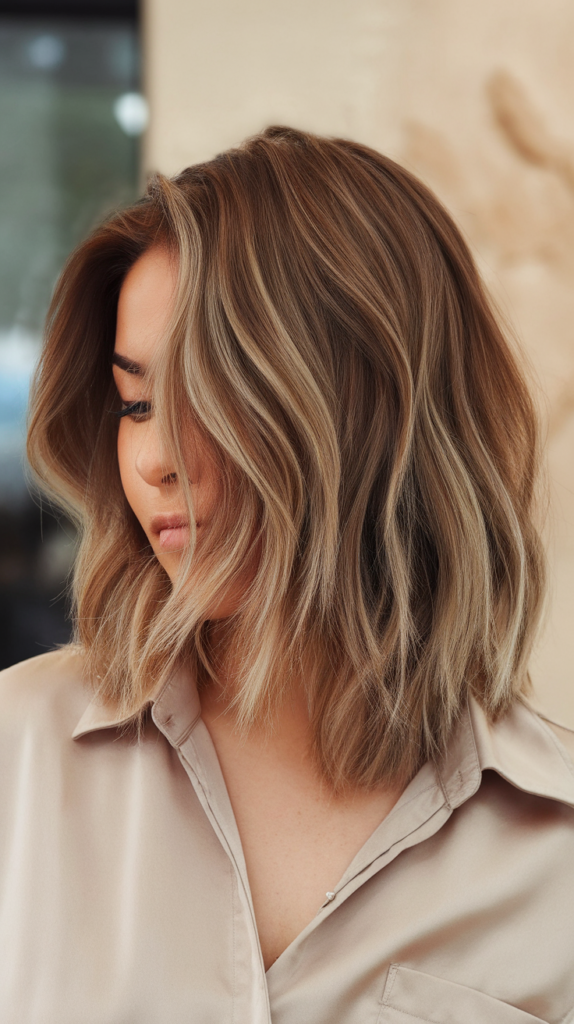
Wispy layers are cut finer and thinner than standard layers, closer to feathering but with more visible separation at the ends, which creates the airy look instead of just shorter layers stacked the same way. This technique removes more visible bulk than soft layers do, without cutting the interior as aggressively as a shag.
These ends respond well to a light texturizing cream scrunched in while damp; too much product weighs down the wispy effect entirely. This cut needs regular trims to keep the feathered ends from growing out into one solid layer again.
Curtain Bangs
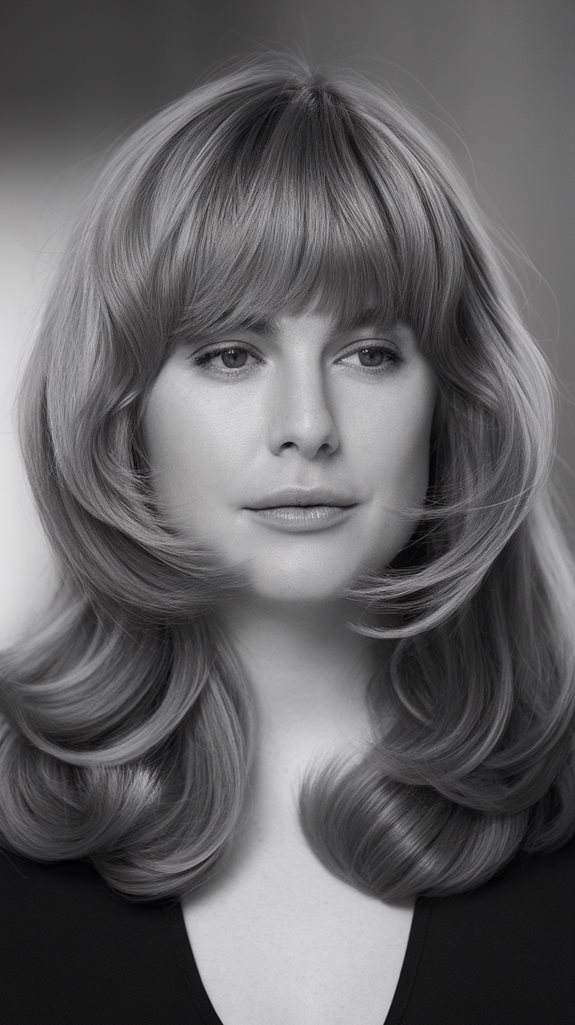
Curtain bangs are cut longest at the center part and shortest near the temple, the opposite length pattern from blunt bangs, which is what lets them blend into the rest of the hair as they grow out instead of needing a hard cutoff trim. A center part is what the cut is built around; pushing curtain bangs to a deep side part fights their shape.
A round brush pulling the bangs outward and back, away from the face, sets the curtain shape before air-drying flattens it. Our curtain bang haircuts for medium hair guide has more variations on this length and layering combination.