Wool and Cashmere Care: Washing, Storing, and Preventing Pilling
A cashmere sweater can last fifteen years or fall apart after three washes, and the difference almost never comes down to the sweater itself. It comes down to how it’s washed, dried, and stored between wears.
Wool and cashmere behave differently from cotton or synthetic knits, and treating them the same way is what causes most of the shrinking, pilling, and moth damage people blame on “bad quality.” Here’s the actual care routine, backed by the people who regulate and study textiles for a living.
Wool & Cashmere Care in 5 Steps
Read the Label
Wash Gently
Dry Flat
Manage Pilling
Store Smart
Read the Care Label First
Every garment sold in the U.S. is legally required to carry a care label, and it isn’t a suggestion. The Federal Trade Commission’s Care Labeling Rule requires manufacturers to disclose a reliable washing and drying method, and to include a warning if a common cleaning method would damage the item.
That means if a wool or cashmere label says “dry clean only,” there’s a legal reason behind it, usually a dye, lining, or blend that won’t survive water. If it says “hand wash cold,” the label is telling you machine washing carries real risk. Check it before you do anything else, since the steps below are for wool and cashmere that are labeled as washable.
Wool vs Cashmere: Key Care Differences
Wool and cashmere are often lumped together in care advice, but they’re not identical, and treating them the same way skips a few details that matter.
Standard wool, like a heavier sweater or a wool coat lining, comes from sheep and has a coarser fiber structure. It tolerates a bit more handling and holds up better to regular machine washing on a wool cycle. Cashmere comes from the softer undercoat of cashmere goats, and its fibers are finer and shorter, which is exactly why it’s warmer for its weight but also more prone to pilling and stretching.
In practice, that means cashmere deserves the more cautious end of every instruction in this guide: cooler water, gentler detergent, shorter soak times, and more patience while drying. Wool blends with synthetic fibers are generally the most forgiving of the three, since the synthetic content adds strength the natural fibers don’t have on their own.
If a label doesn’t specify further, treat a 100% cashmere piece with the most careful version of every step, and reserve any shortcuts for wool blends instead.
How to Hand Wash Wool and Cashmere
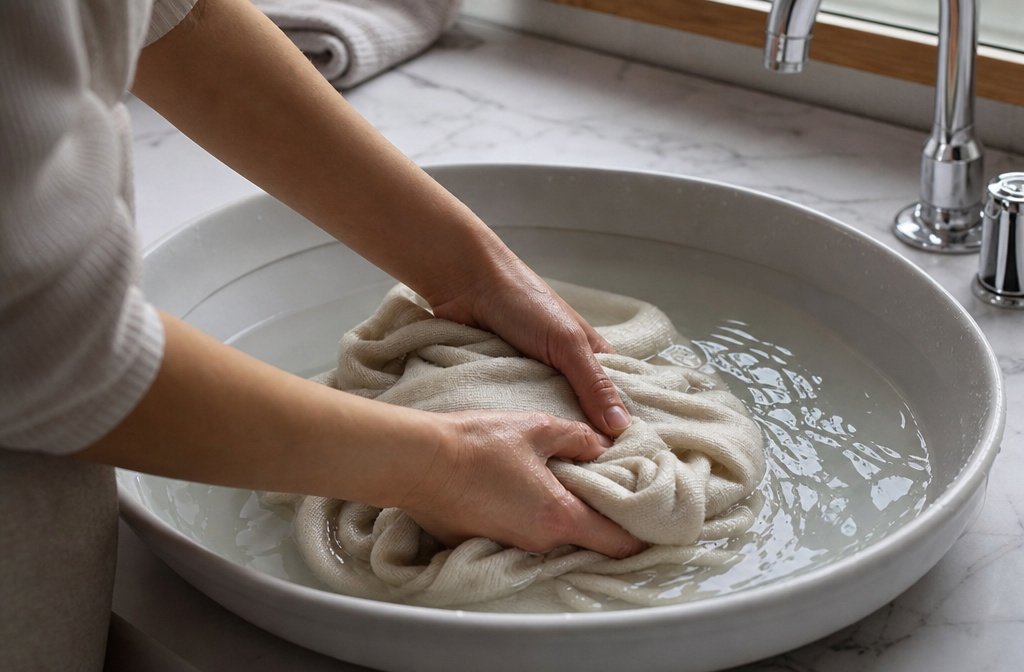
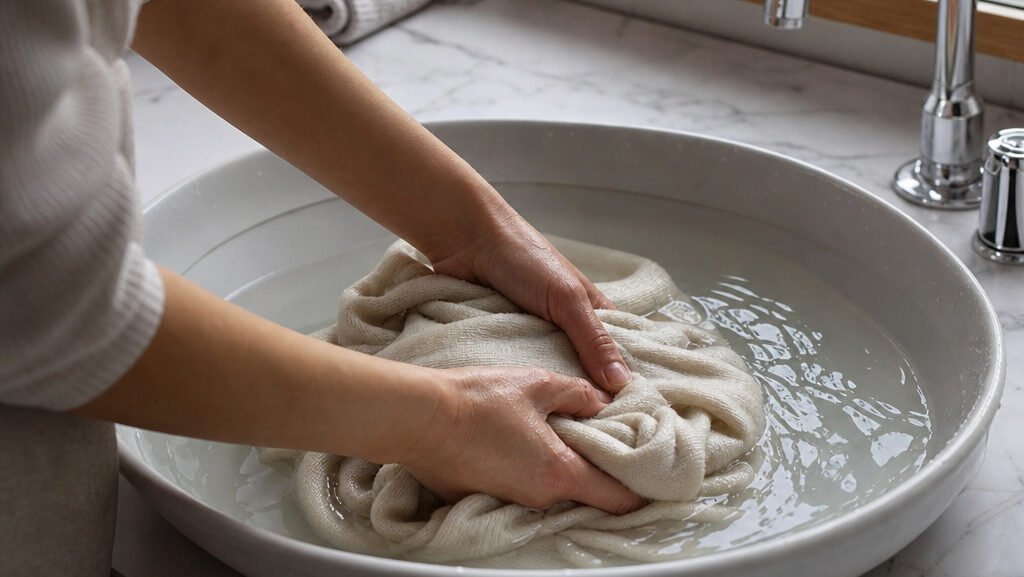
Hand washing is the gentlest option for washable wool and cashmere, and it’s what most manufacturers recommend when the label allows washing at all.
- Fill a basin with lukewarm, not hot, water and add a small amount of a wool-specific detergent.
- Submerge the garment and swirl it gently. Never rub, twist, or scrub the fabric against itself.
- Let it soak for 10 to 15 minutes, no longer than 30.
- Drain the basin and refill with clean water to rinse, repeating until the water runs clear of soap.
- Press, never wring, the water out. Twisting the fibers is one of the fastest ways to distort the shape permanently.
Skip the fabric softener. It leaves a coating on the fibers that actually dulls cashmere’s natural softness instead of enhancing it.
Machine Washing: When It’s Actually Safe
If the label allows it, a washing machine can work, but only with real precautions. Place the garment inside a mesh laundry bag to limit friction against the drum and other clothes, and select the wool or delicate cycle with cold water.
Use about two teaspoons of a wool-safe detergent, never regular laundry detergent, which is formulated for tougher, more abrasion-resistant fibers than wool or cashmere. Wash it alone or with one or two similar garments at most, since crowding the machine increases friction and the risk of pilling.
Drying Without Ruining the Shape
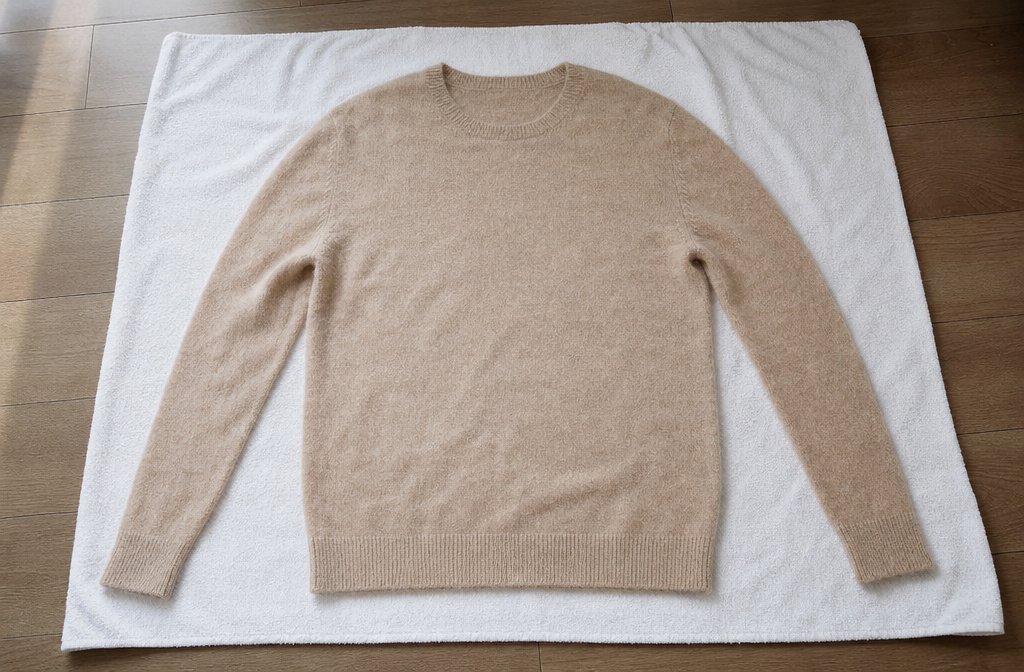
Never put wool or cashmere in the dryer unless the label explicitly says it’s safe. Heat is what causes felting and shrinkage, and once wool fibers felt together, there’s no reversing it.
Lay the garment flat on a clean, dry towel. Gently reshape it to its original dimensions while it’s still damp, easing the shoulders, sleeves, and hem back into place. Roll the towel up with the sweater inside to absorb excess water, then unroll it and lay it flat again on a dry surface until fully dry, which usually takes a full day.
Keep it away from direct sunlight and heating vents while it dries. Both can fade color and dry the fibers out unevenly.
What Actually Causes Pilling
Pilling isn’t a sign of cheap fabric on its own, it’s a mechanical result of friction. Loose fiber ends rub against each other, tangle, and knot into small balls on the surface. Textile research published in the Journal of Engineered Fibers and Fabrics attributes pilling to a combination of fiber properties, yarn construction, and the amount of abrasion a garment sees during normal wear.
Longer fibers pill less because they have fewer loose ends exposed on the surface. That’s part of why cheaper cashmere, often made from shorter fibers, pills faster than a well-made sweater even under identical care.
Friction sources most people don’t think about: a seatbelt, a crossbody bag strap, the inside of a coat sleeve, or another rougher garment worn underneath. Anywhere fabric rubs repeatedly against something else is where pills tend to form first, which is why underarms, sleeve cuffs, and the lower back where a bag sits are almost always the first places to show wear.
Preventing Pilling Before It Starts
A few habits make a measurable difference over a garment’s lifetime.
Do This
- Rest sweaters for a day between wears to let fibers recover
- Turn garments inside out before washing
- Wash in a mesh bag if using a machine
- Layer smoother fabrics underneath to reduce rubbing
- Hand wash whenever the label allows it
Avoid This
- Wearing the same sweater two days in a row
- Carrying bags with rough straps directly over knitwear
- Washing with rougher fabrics like denim or towels
- Wringing or twisting wet fabric
- Ignoring the first few pills instead of removing them early
How to Remove Pills You Already Have
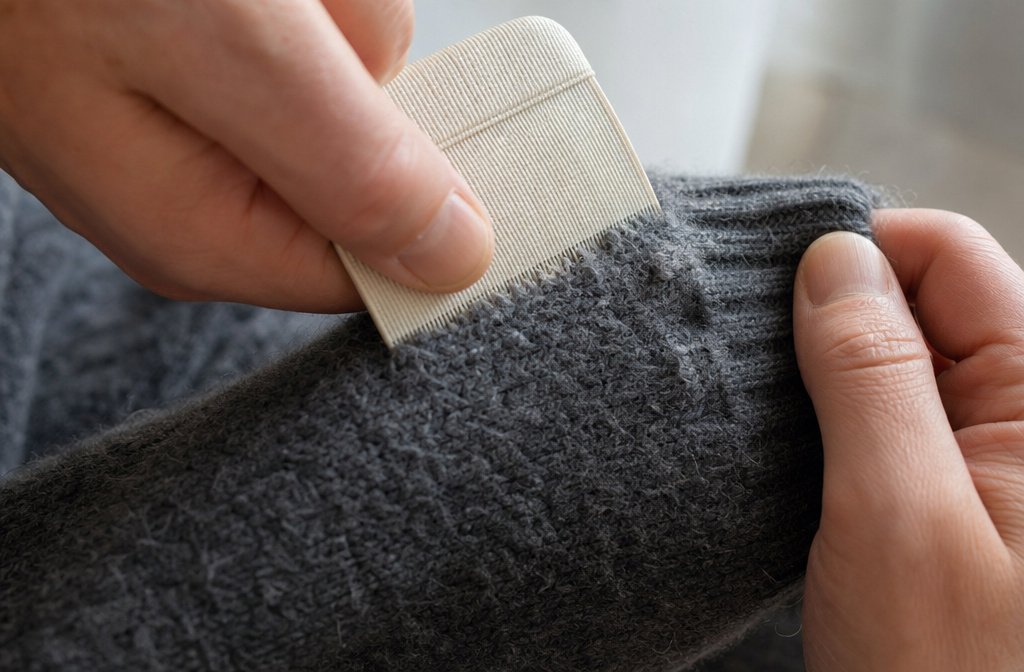
A dedicated cashmere or fabric comb is the safest tool for removing existing pills. Lay the garment flat and run the comb lightly over the surface in one direction, letting the fine teeth catch the pills without pulling at the base fabric. Combing on a flat, firm surface rather than while the garment is on a hanger gives you more control and reduces the chance of snagging a thread.
An electric fabric shaver works faster for heavier pilling, but test it on an inconspicuous area first, like the inside hem, since some shavers can be too aggressive on very fine cashmere. Whichever tool you use, work in short, light passes rather than pressing hard in one spot.
Storing Wool and Cashmere Between Seasons
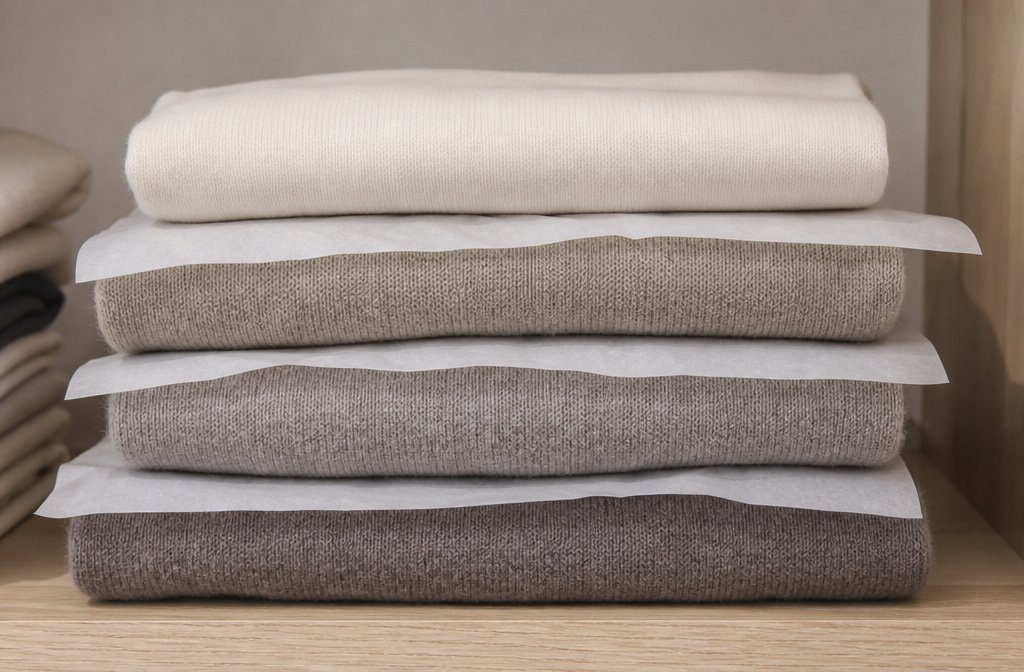
Fold, don’t hang. Woolmark’s official storage guidance recommends folding wool garments rather than hanging them, since hangers stretch the shoulders and neckline out of shape over time.
Always wash or dry clean a garment before putting it away for the season. Body oils, food residue, and even invisible traces of sweat are what attract moths in the first place, a perfectly clean sweater is far less appealing to them than a worn one.
Store folded garments in a breathable cotton bag rather than sealed plastic, and slip a sheet of acid-free tissue paper between layers to stop delicate fibers from tangling together over months in storage.
Moth Prevention That Actually Works
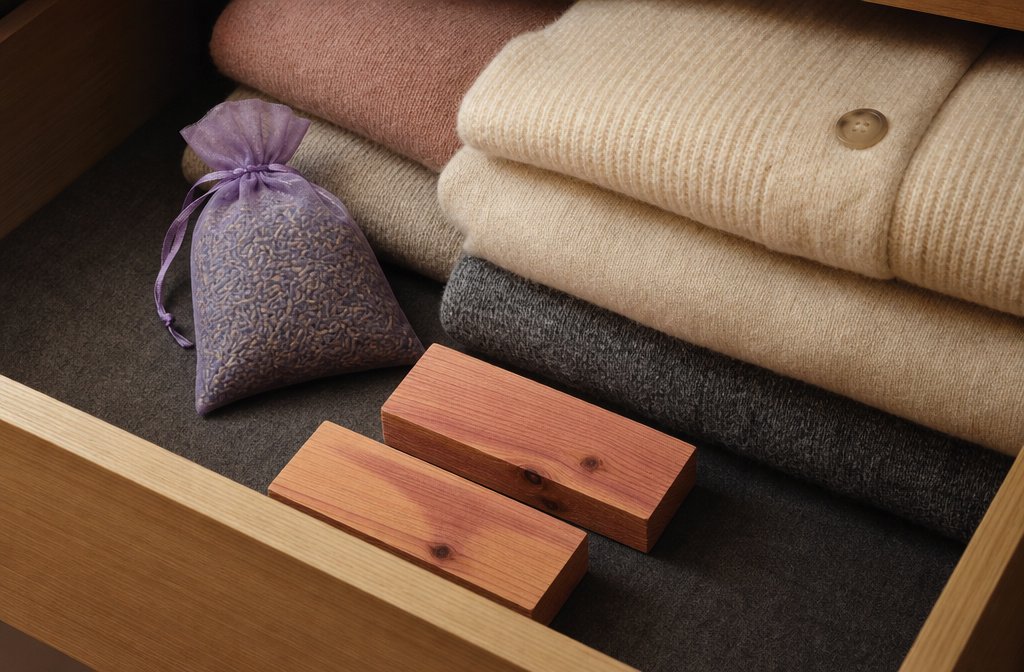
Cedar blocks and sachets filled with lavender, rosemary, or cloves work as a genuine deterrent, moths avoid the scent, though neither kills existing larvae. Refresh cedar blocks every few months by lightly sanding the surface, since the scent fades as the wood ages.
Check stored garments periodically rather than sealing them away and forgetting about them for a full season. Catching a moth problem in month one is a lot easier to fix than finding it in month six, after several sweaters have holes.
Quick Reference: Care at a Glance
Here’s the short version, laid out so you can scan it before your next wash day.
Washing
Drying
Pilling
Storage
Moth prevention
Care label
Identifying Quality Before You Buy
Better-quality cashmere pills less and lasts longer under the same care, so it’s worth checking a few things before you buy, especially since price alone is not always a reliable signal of what you are actually getting.
Cashmere is graded A, B, or C based on fiber diameter. Grade A fibers measure under 16.5 microns and tend to be the softest and most durable. Ply refers to how many strands are twisted into the yarn, and 2-ply is generally the sweet spot for balancing warmth, weight, and durability, since 1-ply cashmere is thinner and more prone to developing holes.
A simple hands-on test: stretch a section of the knit gently, then let go. High-quality wool and cashmere spring back to their original shape. If the fabric stays stretched out, the fibers are likely shorter and lower grade, and the garment will probably pill faster no matter how carefully you wash it.
Investing in fewer, higher-quality pieces pairs well with a broader shift toward buying less but better. If that approach appeals to you, building a more conscious wardrobe covers the reasoning in more depth.
A Seasonal Care Routine
Most wool and cashmere damage happens at the transition points, packing garments away in spring and pulling them back out in fall. A simple routine at each end prevents most of it.
Before packing away for the season
Fold and layer with tissue paper
Add cedar or lavender, then check in periodically
When you unpack for the new season
Common Mistakes That Shorten a Garment’s Life
- Using regular laundry detergent. It’s formulated for tougher fibers and can strip the natural lanolin that keeps wool soft.
- Hanging wet sweaters. Wet wool is heavier and stretches out of shape almost immediately under its own weight.
- Storing in sealed plastic. Trapped moisture encourages mildew, and plastic doesn’t let the fibers breathe.
- Skipping the pre-storage wash. This is the single biggest reason moths find their way into a closet in the first place.
- Ignoring small holes. A tiny hole left unrepaired tends to grow with each wear and wash.
Building a small, well-cared-for collection of wool and cashmere pieces works especially well alongside a capsule wardrobe approach, since fewer pieces worn on rotation naturally means less friction and wear on any single garment. For styling ideas that get the most wear out of these pieces, these wool and cashmere outfit ideas are a good place to start.
Frequently Asked Questions
Can I put cashmere in the washing machine?
Only if the care label allows it. When it does, use a mesh bag, cold water, a wool-safe detergent, and the gentlest cycle available. Hand washing is still the safer default.
Is pilling a sign of bad quality cashmere?
Not always. Pilling comes from friction and fiber length, so even good cashmere can pill under rough conditions like a scratchy bag strap. That said, lower-grade cashmere with shorter fibers does tend to pill faster overall.
How often should wool sweaters actually be washed?
Far less often than most people assume. Airing a sweater out overnight after wearing it removes most odors, and washing after every three to five wears is usually enough unless there’s a visible stain or spill.
Does dry cleaning damage cashmere over time?
Occasional dry cleaning is generally safe, but the solvents used can dry out fibers with very frequent use, so it works best as an occasional option rather than a default. If a garment is labeled as both hand washable and dry clean safe, alternating between the two methods is a reasonable middle ground.
What’s the fastest way to check if a sweater is real cashmere?
Check the fiber content label first, it’s legally required to be accurate. Beyond that, real cashmere feels notably soft and lofty rather than slick, and a gentle stretch test should show the fabric springing back rather than staying stretched.
Can mothballs replace cedar and lavender for storage?
Mothballs work, but they contain chemicals that leave a strong, lingering odor and require careful handling around children and pets. Cedar and natural sachets are a gentler option that most people find easier to live with, even if they need refreshing more often.
Should I remove pills before or after washing?
After. Washing can loosen additional fibers and create a few new pills, so it’s more efficient to wash first, let the garment dry completely, then comb off pills in one pass.
Can I spot clean instead of washing the whole garment?
Yes, for small, fresh stains. Dab, don’t rub, the spot with a damp cloth and a tiny amount of wool-safe detergent, working from the outside of the stain inward so it doesn’t spread. A full wash is still the better option for anything oily or set-in.
Why did my sweater shrink even though I followed the care label?
Usually a temperature or agitation issue rather than a labeling failure, water that feels lukewarm to the hand can still be warmer than the fiber tolerates, and even gentle machine cycles involve more movement than hand washing. If a piece has shrunk once, hand washing going forward gives you far more control over both variables.
Final Thoughts
Wool and cashmere are more forgiving than their reputation suggests, most damage comes from a handful of avoidable habits rather than the fabric itself being fragile. Lukewarm water, flat drying, gentle folding, and a bit of cedar between seasons cover almost everything, and none of it requires special equipment beyond a basin, a towel, and a comb you likely already own or can pick up cheaply.
Start with whatever piece you reach for most, check its label, and build the routine from there. A little consistency now is what turns a sweater into something that lasts a decade instead of a single winter, and it costs nothing beyond a few extra minutes on wash day.