How Gen Z Is Redefining Workplace Style
It’s Monday morning, and a 24-year-old walks into the office in a cropped blazer, wide-leg trousers, and chunky platform sneakers.
The outfit, pulled from TikTok saves and thrift finds, earns compliments from her team and a meeting invite from HR by lunch. That gap between what looks good online and what flies at work is where a lot of young professionals are getting stuck right now.
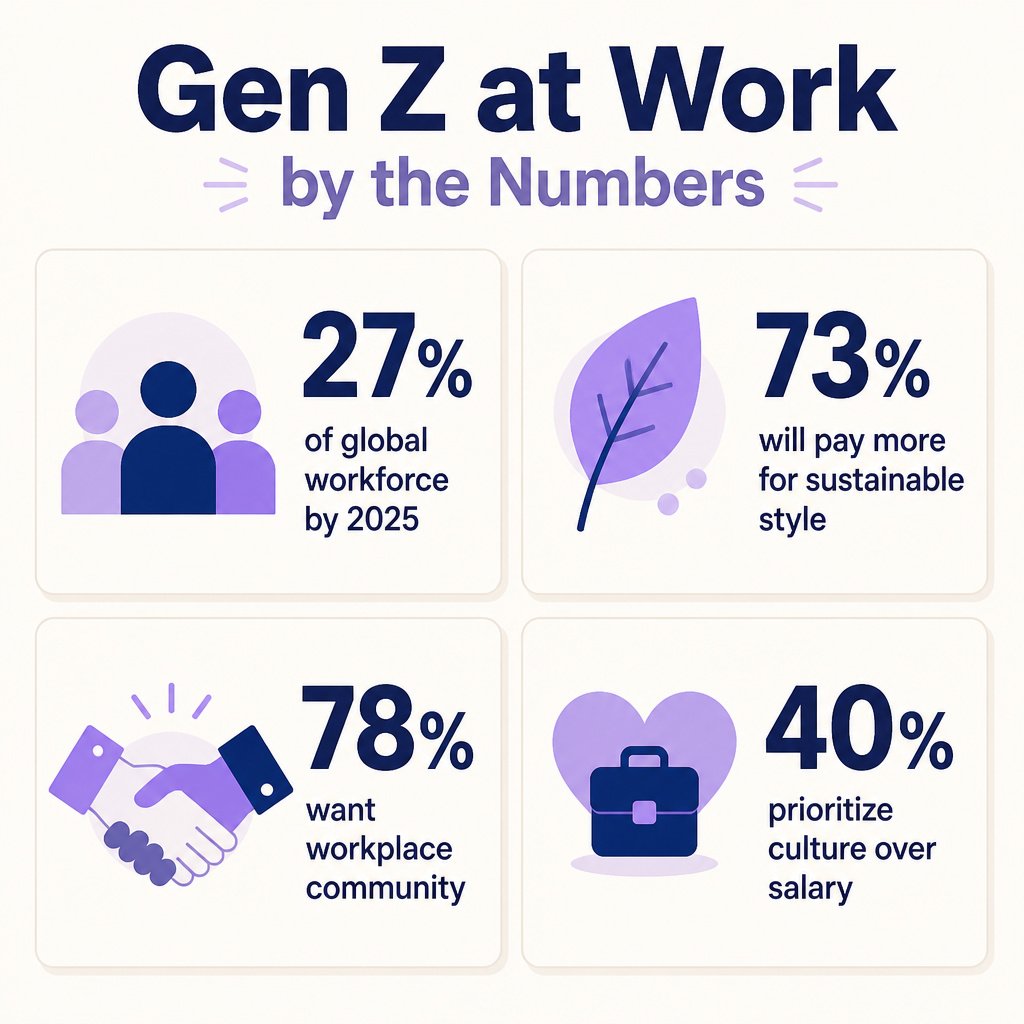
Gen Z is projected to make up 27% of the global workforce by the end of 2025, and they’re changing what “dress professionally” means as they arrive. Some are getting dress-coded for it. Others are quietly pushing offices toward more inclusive, sustainable, and personal wardrobes.
The shift is already happening. The open question is what it means for the future of work.
Understanding the Gen Z workplace fashion shift

Who is Gen Z, and what makes them different?
Born between 1997 and 2012, Gen Z is the first generation that never knew a world without smartphones, social media, or instant access to global trends. That constant connection shaped how they dress in ways that set them apart from Millennials.
Millennials leaned business casual, aiming to look polished and put-together. Gen Z prioritizes different things:
- Authenticity over conformity. They treat personal style as part of their professional identity, not something to switch off at the door.
- Comfort without compromise. The pandemic normalized comfortable clothes, and they’re not giving that back.
- Values-driven choices, the same instinct behind building a more conscious wardrobe. 73% of Gen Z consumers say they’ll pay more for sustainable products.
- Digital influence. Instagram, TikTok, and Pinterest shape their fashion decisions more than any office handbook.
The missing internship factor
Here’s a piece that gets overlooked: most Gen Z professionals never had a traditional in-person internship. Their first taste of office culture came over Zoom, where the dress code stopped at the waist.
They missed the quiet learning that happens on an office floor, watching mid-level colleagues and picking up the unwritten rules about what works and what doesn’t.
That gap created what some call the “Gen Z dress code learning curve,” where young workers learn by trial and error what earlier generations absorbed by watching.
Research from the National Association of Colleges and Employers found that Gen Z brings goals and values that can improve the workforce, but they need guidance on traditional workplace norms.
The viral trends reshaping office wear
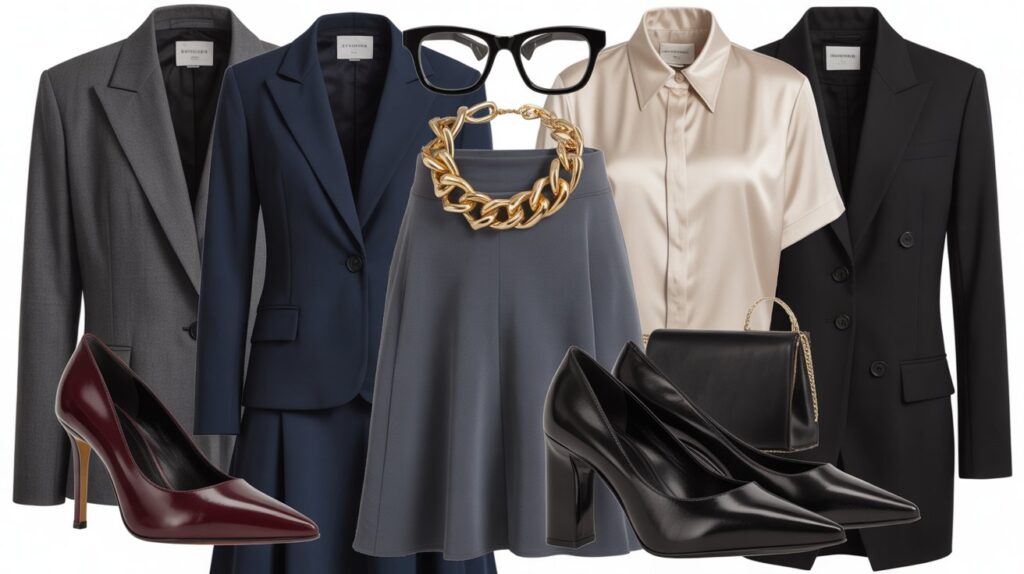
Social media has spawned a whole vocabulary of workplace aesthetics, each with its own following and its own read on what counts as professional.
Office siren: sensual meets corporate
With over 33,700 posts on Instagram, the “office siren” look is one of the most argued-over workplace trends. Think form-fitting pencil skirts, sheer blouses layered with intent, sharp makeup, and stiletto heels. It’s a deliberately sexy spin on corporate wear that channels 1990s power dressing.
Retailers jumped on it fast. ASOS, Urban Outfitters, Boohoo, and Cider all built dedicated “office siren” shopping sections, and Aritzia ran an Instagram campaign asking followers to tag their favourite office siren.
The problem is the gap between the feed and the floor. What works for an influencer shooting in a sunlit apartment often violates the dress code in a traditional office, as plenty of HR staff and workplace stylists have pointed out.
Corpcore: traditional with a twist
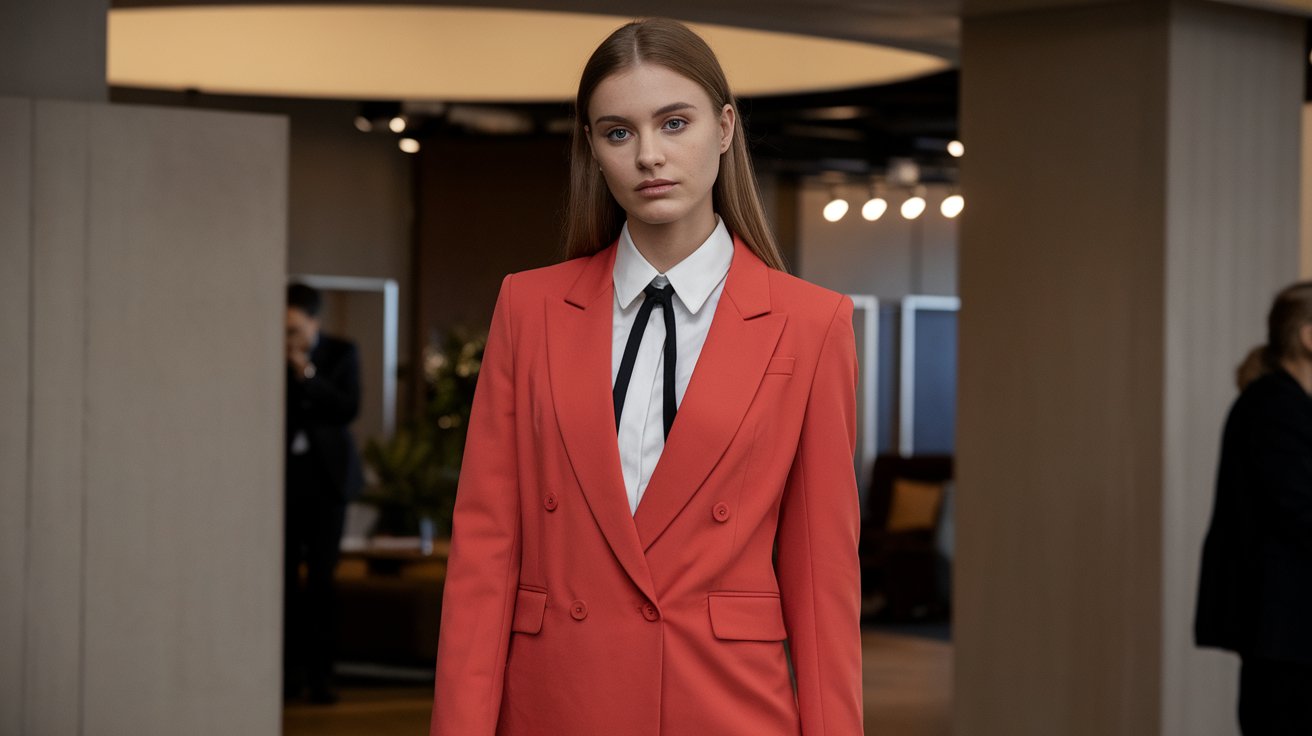
Corpcore rebels more quietly. It keeps the office staples, blazers, dress pants, button-downs, then reworks them with sharp tailoring, odd accessories, and unexpected pairings. An oversized blazer cinched with a statement belt, dress pants with chunky sneakers, a pinstripe suit loaded with bold jewelry.
It reads more office-friendly than office siren while still leaving room for personal style. Everlane and PrettyLittleThing have both built corpcore collections that sit between traditional and trendy.
Corporate goth and other subcultures
Beyond the big trends, Gen Z has carried several aesthetic subcultures into the office:
- Corporate goth: all-black outfits with edgy details, platform boots, and dark accessories.
- Coastal grandmother: relaxed, neutral-toned pieces in good-quality fabrics.
- Dark academia: vintage-leaning pieces, tweed, and a bookish mood.
- Clean girl: minimalist, neutral pieces built around sleek, simple lines.
The social-media influence problem
These trends spark creativity, but they also cause confusion. A TikTok user named Sunny Lena built a 24-video series breaking down “office outfit inspiration” from an HR angle, and the results are telling. Plenty of influencer outfits with millions of views would earn an instant dress-code violation in a normal office.
The root issue: many creators making “workwear content” don’t work a 9-to-5 office job. They’re shooting aspirational looks, not clocking in under a real dress code. For a young professional looking for guidance, that’s a wide gap between inspiration and reality.
There’s a harder truth worth naming too: some Gen Z workers are making genuine mistakes with office attire. Understanding those missteps helps both the young workers and the managers guiding them.
Common dress code violations
Based on interviews with HR staff, workplace stylists, and staffing experts, these are the most frequent slip-ups:
- Crop tops and midriff-baring outfits. Even styled with high-waisted pants, they rarely pass in a traditional office.
- Athletic-wear confusion. There’s a thin line between polished athleisure, which some offices accept, and actual gym clothes, which almost none do.
- Running sneakers. Some sneakers work, but visible running shoes look too casual.
- Overly revealing clothing. Sheer fabrics without a layer underneath, very short skirts, plunging necklines.
- Radical appearance changes. Getting hired with one look, then a dramatic hair or style change without reading the room first.
Real stories from the workplace
Kiera Bohan, a young professional, posted an outfit-of-the-day TikTok from her office in a white cropped sweater, green canvas pants, and chunky sneakers. Her caption: “Recorded this OOTD at work and then got in trouble for having my midriff showing. Now looking back, my outfit was not cute enough to risk it.”
She isn’t alone. Across social media, young professionals keep sharing the same arc: wear the TikTok-inspired outfit, then field an awkward conversation with a manager.
The entitlement question
Some experts see an attitude problem underneath it. “Some [Gen Z workers] have this attitude of ‘the employer owes me,’ ‘I am owed this because I’m working,'” says Marina Santo. “Sometimes they feel entitled to dress a certain way because of their attitude towards the workplace.”
Harsh as that sounds, it points to a real tension. Gen Z shows up with strong convictions about self-expression, and when those meet traditional corporate expectations, friction follows.
Why some sources fail Gen Z
Beyond TikTok, Gen Z pulls style cues from sources that don’t map onto a normal office:
- Reality TV. Shows like “Selling Sunset” put real estate agents in glamorous, sometimes revealing outfits that suit their industry but wouldn’t fly in most corporate settings.
- Movie and TV portrayals. Fictional workplaces usually pick aesthetics over realism.
- Fashion brands. Plenty of “workwear” marketing is shot for the photo, not the office.
Myka Meier, a modern etiquette coach, puts it this way: “Twenty years ago, workers had a way easier time getting helpful workwear advice. But today, contemporary TV shows and movies that feature corporate professionals have muddied the waters even more.”
What Gen Z gets right
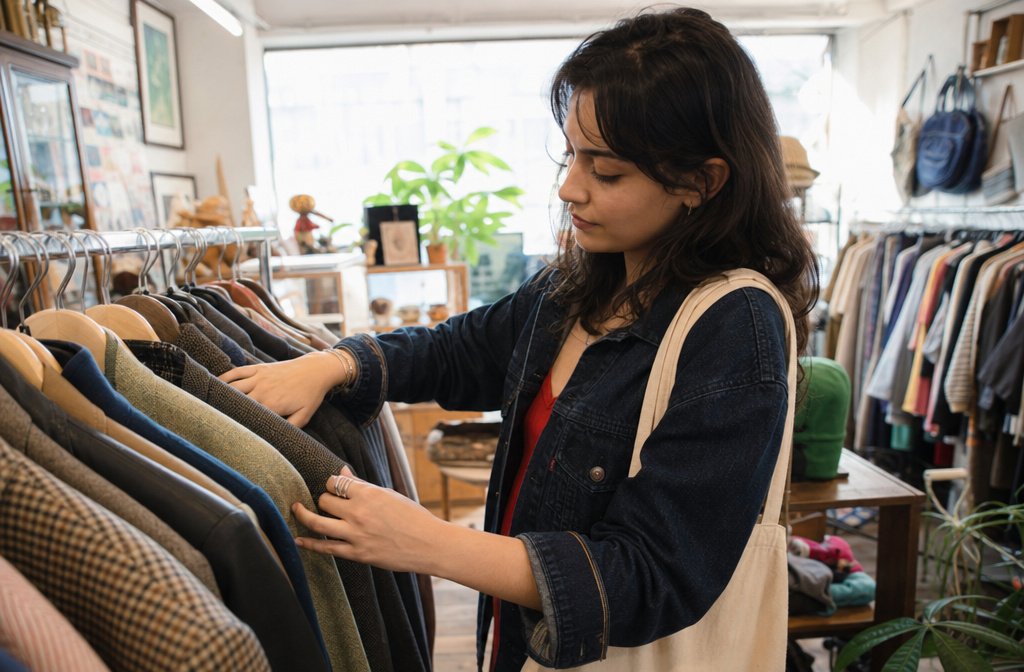
The story turns here. Alongside the missteps, Gen Z is driving real changes that make office culture more inclusive, more sustainable, and more honest.
Sustainability: fashion with a conscience
Gen Z backs its environmental talk with spending habits. In work fashion, that shows up as:
- Thrifting and secondhand shopping, building work wardrobes from vintage and consignment stores.
- Capsule wardrobes, fewer higher-quality pieces that mix and match easily.
- Upcycling and alterations, giving older pieces a second life.
- Ethical brands, choosing companies with transparent supply chains and fair labor.
That approach pushes back on the fast-fashion habit of earlier generations. Instead of cheap trend pieces that last a season, Gen Z is building work wardrobes that hold up and match their values.
Kyndal Midkiff, a recent law school graduate, lives the capsule idea: “I actually just bought the same pair of pants in four different colors. Once you find something good, you better buy it in every color before it’s gone.”
Gender-neutral fashion: breaking the binary
Maybe Gen Z’s biggest mark on workplace fashion is gender-neutral dressing. They’re questioning the binary rulebook and pushing for policies that let everyone dress in a way that fits their identity.
That shows up in a few ways:
- More unisex workwear collections from major retailers.
- Wider acceptance of suits and traditionally “masculine” pieces on all body types.
- Pushback on rules like mandatory heels, skirts, or makeup tied to gender.
- Inclusive sizing that accounts for a range of bodies.
This is less about fashion than about building offices where people can show up as themselves and still look professional.
Versatility: wardrobe as lifestyle
Gen Z blurs the line between work and personal wardrobes on purpose. They buy pieces that carry from the office to evening plans, since their lives don’t split neatly into work and not-work.
As one Gen Z professional puts it: “I hate buying ‘work’ clothes, so my going out clothes are my work clothes that I’m forced to seem professional.”
It reflects a wider view of work-life that favors one consistent identity over separate ones for separate rooms.
Cultural expression and diversity
Gen Z treats clothing as a real form of cultural expression, bringing heritage, beliefs, and identity into the office. That includes:
- Cultural and religious attire worn openly in professional settings.
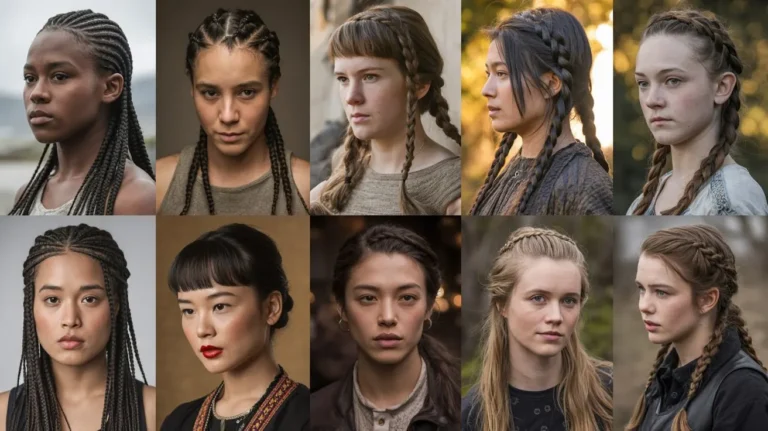
- Natural hairstyles that earlier generations felt pressure to change.
- Visible tattoos and piercings that carry personal meaning.
- Color and pattern that break the neutral-only corporate palette.
What’s actually appropriate, industry by industry

The hardest part is that there’s no single answer to “what should I wear to work?” The right level of formality swings with industry, company size, location, and role.
Industry breakdown
Research from McKinsey & Company shows Gen Z’s approach to office attire shifts a lot by industry, so it pays to know your sector’s norms, especially the line between business casual and smart casual.
| Industry | Typical Dress Code | What Works | What Doesn’t | Gen Z Influence |
|---|---|---|---|---|
| Tech/Startups | Casual to Business Casual | Jeans, sneakers, hoodies, branded t-shirts, athleisure | Formal suits (often too dressy), anything uncomfortable | Strong – tech matches Gen Z’s casual approach |
| Finance/Banking | Business Formal to Business Casual | Suits, blazers, dress pants, button-downs, closed-toe shoes | Sneakers, denim, visible tattoos, casual fabrics | Moderate – some banks relaxing codes, others traditional |
| Law | Business Formal | Conservative suits, modest necklines, traditional colors, closed-toe shoes | Anything revealing, casual fabrics, bright colors | Low – law remains most traditional, especially in court |
| Creative/Advertising | Business Casual to Trendy | Unique pieces, bold colors, statement accessories, designer sneakers | Anything too conservative or boring, overly corporate looks | Very strong – creative fields encourage experimentation |
| Healthcare | Scrubs or Business Casual | Clean, comfortable, practical pieces, appropriate layering | Anything that compromises hygiene or patient comfort | Moderate – focus on practicality over trends |
| Retail/Service | Depends on Brand | Brand-aligned pieces, clean presentation, comfortable shoes | Anything contradicting brand image | Strong – many retail brands adopting Gen Z aesthetics |
| Education | Business Casual | Professional but practical, conservative necklines, comfortable shoes | Anything too revealing or casual, club wear | Moderate – varies by institution and age group taught |
| Non-Profit/Government | Business Casual to Business Formal | Conservative pieces, neutral colors, modest styling | Anything too trendy or flashy, designer logos | Low to moderate – emphasis on practicality and modesty |
Reading your office culture
Past the industry baseline, every company has its own unwritten code. Here’s how to read it.
Watch the right people:
- Look at mid-level employees. They’ve found the sweet spot between entry-level caution and executive privilege.
- Notice what leadership wears. Even casual offices often expect more polish as you move up.
- Pay attention to client-facing roles. They usually set the bar for “most professional.”
- Check the Friday vibe. Casual Friday, if it exists, shows the floor of what’s acceptable.
When you’re unsure:
- Dress one level more formal on your first day.
- Ask your hiring manager or HR directly.
- Look at company social media for real workplace photos.
- Ask a current employee for a quick coffee chat.
How to dress for success
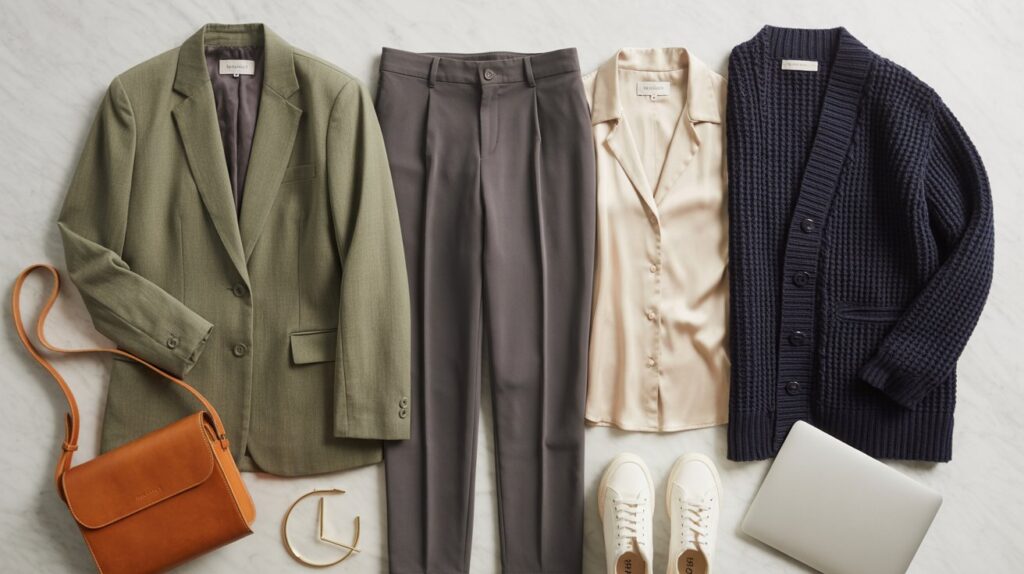
Now the practical part: how can Gen Z professionals, and anyone else, get modern workplace fashion right?
The golden rule: dress for your audience
“The main advice I give Gen Z is that you have to dress for the brand and industry you’re working for,” says Myka Meier. “If you work for a trendy marketing firm in New York City, then you probably can wear leggings and have navy blue nail polish. But if you work for a corporate bank, then that doesn’t work.”
That rule beats every trend and every piece of social-media advice. Your outfit should signal that you understand and respect the place you work.
Building a modern work wardrobe: the capsule approach
The capsule wardrobe approach fits Gen Z well. It lines up with sustainability values and delivers the versatile, mix-and-match pieces they want.
Your core pieces, roughly 10 to 15 items:
- Two well-fitting blazers, one neutral (navy or black) and one with personality (colored, patterned, or an unusual cut).
- Three pairs of tailored trousers in neutral colors that dress up or down.
- Two professional skirts or dresses in styles that suit your body and office.
- Five tops, a mix of button-downs, blouses, and good basics.
- Professional shoes that balance comfort and style, like leather sneakers, loafers, and modest heels.
- Layering pieces, cardigans, light sweaters, or jackets for temperature swings.
The Gen Z upgrade:
- Choose sustainable fabrics when you can, like organic cotton, recycled materials, or quality secondhand.
- Invest in versatile pieces that carry into your evenings.
- Add personality through accessories, jewelry, scarves, bags, or unusual shoes.
- Consider gender-neutral options that work across contexts.
Practical styling tips from the experts
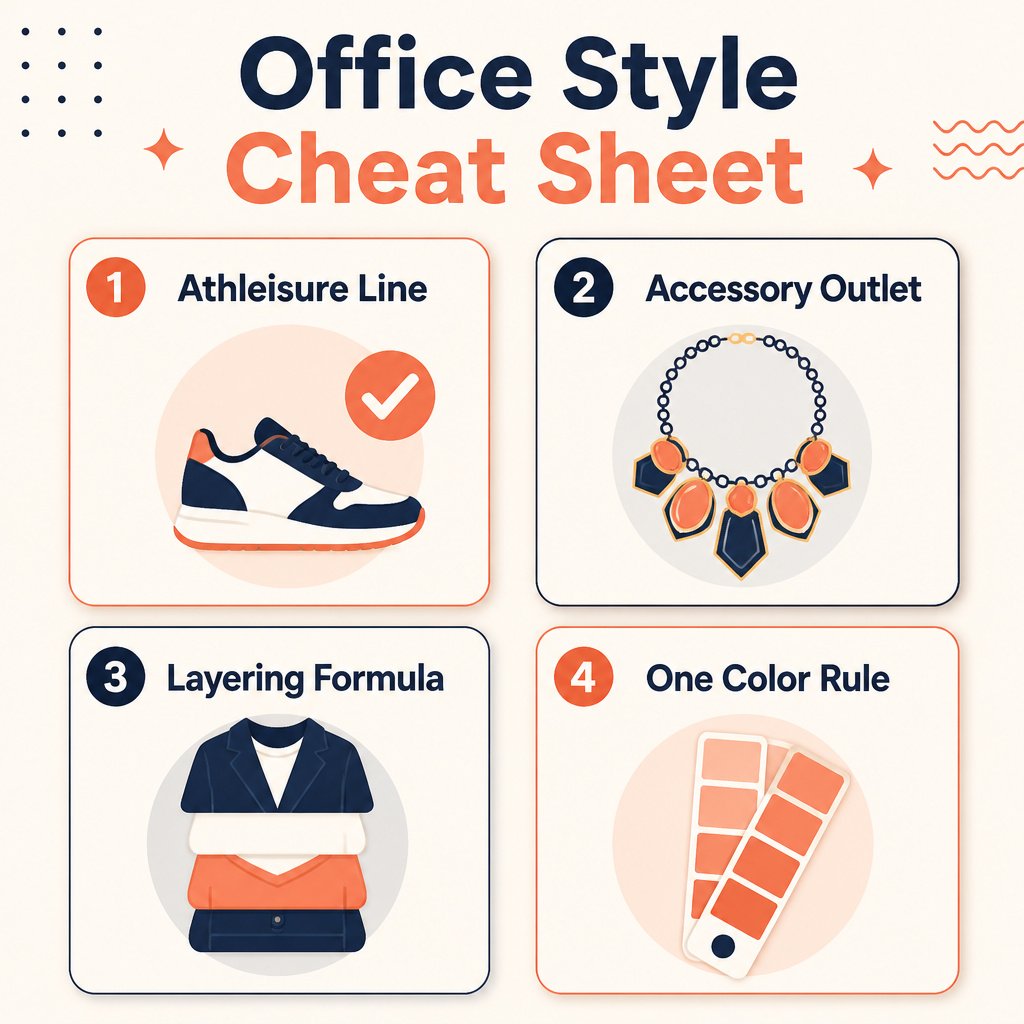
On athleisure, Myka Meier draws a line: well-made joggers in quality fabrics, sleek leather sneakers, and structured pieces with an athletic influence work. Actual gym clothes, running shoes with visible athletic branding, and anything you’d sweat in do not.
When your office runs conservative, accessories become your outlet:
- Bold statement jewelry.
- Colorful or patterned scarves.
- Interesting bags.
- Unusual but appropriate shoes.
- A watch or another piece that means something to you.
Layering stretches a few base pieces into several looks. A button-down can be tucked into high-waisted pants under a blazer for the most formal version, worn open over a camisole for a mid-level look, or left untucked with the sleeves rolled for the most casual.
On color, neutrals like black, navy, gray, and white stay the workplace base, but Gen Z is adding color that lands. The trick is restraint: one bold color per outfit, patterns in accessories or a single piece rather than head to toe, and a read on how much color your company actually welcomes.
The first-day strategy
Treat your first day as a scouting mission:
- Dress one level more formal than you think the code calls for.
- Take mental notes on what everyone around you wears.
- Ask a real question: “I want to make sure I’m dressing appropriately. Any tips?”
- Adjust gradually as you learn the culture.
- Save the bold choices until you’ve established yourself.
As one Gen Z professional explained: “I remember showing up on my first day working in tech, wearing dress pants and a collared shirt buttoned all the way up. And I realized that that’s not the reality anymore. The reality is, however, that there is a uniform and there is a standard to which people dress. It’s not based on a level of formality. It’s based on a level of identifying with a given group.”
Questions to ask about any outfit
Fashion coach Myka Meier suggests running through a quick gut check:
- Can you move freely? If reaching the bottom file drawer is a struggle, it’s probably not work-appropriate.
- Does anything make noise? Faux leather swishing or jangling jewelry can distract.
- Would you be comfortable in a surprise meeting with senior leadership or clients?
- Does the outfit represent you while respecting your workplace?
- Could you wear it for a full day without discomfort or a wardrobe malfunction?
For employers: adapting your dress code
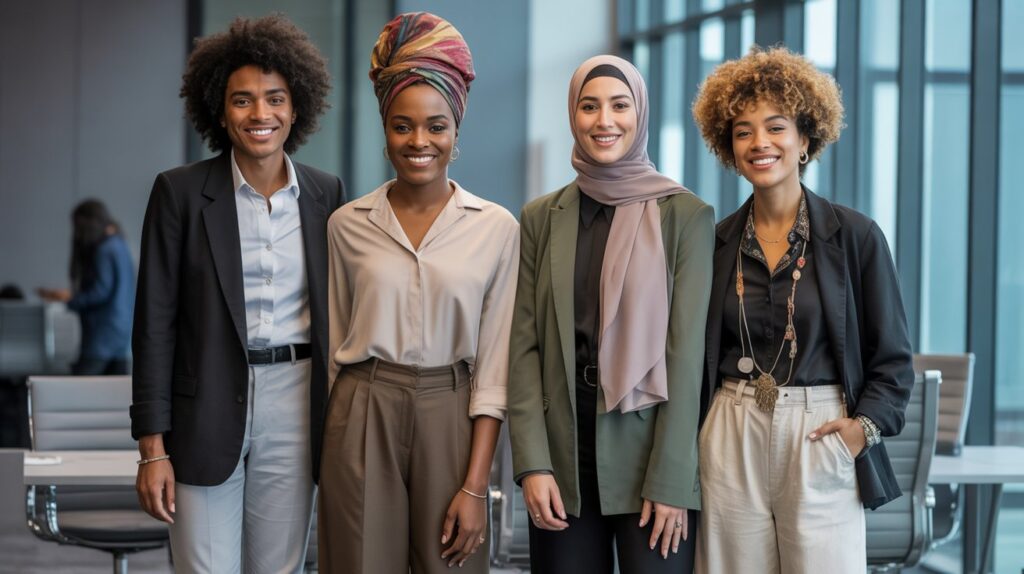
If you manage people or run HR, Gen Z’s approach probably raises questions. How do you hold a professional standard while making room for authenticity and self-expression?
The business case for flexible dress codes
Before writing off Gen Z’s preferences, weigh the upside of a modern code. Per research from Top Employers Institute, 78% of Gen Z see the workplace as a place to build community and belonging, which makes inclusive policies matter for engagement.
Better recruitment and retention. Gen Z workers are 40% more likely to prioritize company culture over salary. A rigid, dated code signals inflexibility elsewhere, while a modern one helps attract young talent.
Higher morale and productivity. When people feel comfortable and confident in what they wear, engagement rises, and comfort-driven attire tracks with better output in roles that aren’t client-facing.
Stronger diversity and inclusion. Codes that make room for different cultural expressions, gender identities, and personal styles build more inclusive teams, and diverse teams tend to outperform homogeneous ones.
Better employer branding. Companies known for progressive policies, including modern dress codes, earn stronger reputations and recruit more easily.
Writing a modern dress code policy
The aim is guidelines that keep a professional standard while allowing self-expression. A workable framework:
Start with principles, not rules. Instead of “Women must wear skirts or dresses with hosiery,” try “Dress in a way that’s professional for client interactions and comfortable for your daily work.”
Define your standard:
- Business professional, for client meetings, presentations, and external events.
- Business casual, for typical office days.
- Casual, for behind-the-scenes or creative work days.
Provide visual examples. A digital lookbook with photos of real employees in appropriate outfits helps far more than written rules.
Address specific situations:
- Client meetings versus internal work days.
- Seasonal variation, summer versus winter.
- Remote days with video calls.
- Special events or casual Fridays.
Be inclusive:
- Use gender-neutral language.
- Accommodate religious and cultural dress.
- Show a range of body types in your examples.
- Handle grooming standards carefully to avoid discrimination.
Focus on function. Tie requirements to the job: “closed-toe, non-slip shoes for safety” in a warehouse, lab, or kitchen; “professional attire appropriate for client meetings” in sales or consulting; “clean, casual clothing that lets you work comfortably” in tech or creative roles.
Handling dress code violations with Gen Z
When a Gen Z employee’s outfit crosses a line, how you raise it matters. They may genuinely not see the issue, so treat it as coaching, not a reprimand.
The coaching conversation:
- Be specific. “The crop top shows midriff, which violates our dress code,” not “That’s inappropriate.”
- Explain the context. Help them understand why the rule exists.
- Offer solutions. “A longer top or a cardigan would make this work-appropriate.”
- Be consistent. Apply the standard equally to everyone.
- Show appreciation. “I appreciate your creativity, let’s channel it within our guidelines.”
Avoid:
- Public callouts that humiliate.
- Vague comments about “professionalism.”
- Dated reasoning like “that’s just how we’ve always done it.”
- Double standards based on gender, body type, or personal relationships.
Companies getting it right
Several companies have modernized their codes while keeping a professional standard.
Goldman Sachs moved from strict business formal to a flexible code that lets employees dress for their day and their client interactions.
IBM dropped its formal dress code entirely in 2016, shifting to a trust-based system built on good judgment.
Microsoft has long run casual, on the view that comfort and creativity go together in tech.
PwC gives clear guidance for different occasions, client meetings versus office days versus casual Fridays, with visual examples that make the expectation obvious.
What’s coming next for professional dress

Looking ahead, a few forces are shaping the next round of workplace fashion.
Hybrid work’s lasting impact
Hybrid schedules, splitting time between home and office, have permanently changed dress expectations. A few patterns stand out:
- The “Zoom top,” a polished top paired with comfortable bottoms for video calls.
- Transition pieces that work as well at home as in the office.
- Fewer, higher-quality pieces, since you’re not in full business attire daily.
- More experimentation below the waist, where the camera doesn’t reach.
Technology and smart clothing
The near future may bring:
- Temperature-regulating fabrics for always-cold or always-hot offices.
- Antimicrobial materials that stay fresh longer.
- Adaptive clothing that adjusts fit and style through the day.
- Sustainable tech, like fabric made from recycled ocean plastic or lab-grown materials.
The continued push for inclusivity
Expect workplace fashion to keep getting more:
- Size-inclusive, with extended sizing as standard rather than exception.
- Culturally diverse, with wider acceptance of traditional dress.
- Accessibility-focused, with adaptive clothing for people with disabilities.
- Gender-expansive, moving past binary categories.
Sustainability as standard
Gen Z’s commitment to sustainability will keep changing corporate fashion, through:
- Rental and subscription services for workwear.
- Company-sponsored clothing swaps.
- Corporate partnerships with sustainable brands.
- Repair and alteration services offered as employee benefits.
The rise of individualized dress codes
Instead of one-size-fits-all policies, forward-thinking companies will offer:
- Role-based guidelines, with different standards for different positions.
- Room for reasonable individual expression.
- Explicit inclusion of diverse dress traditions.
- Clear explanation of why each standard exists.
Quick reference: a 30-second dress code decoder
Need a fast answer? Here’s the short version.
Almost always appropriate
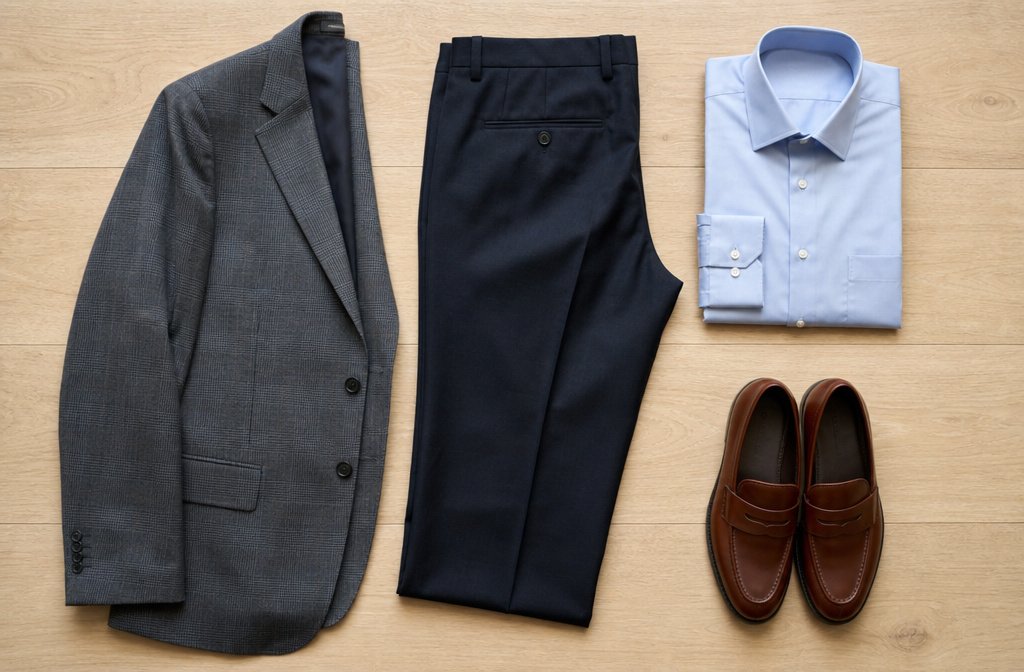
- Well-fitting blazers
- Tailored pants or trousers
- Button-down shirts
- Modest dresses and skirts (knee-length or longer)
- Closed-toe shoes (loafers, flats, modest heels, quality leather sneakers)
- Minimal, professional jewelry
- Neutral colors (black, navy, gray, white)
Depends on your office
- Jeans (quality dark wash is more accepted)
- Sneakers (leather or cleaner styles are safer)
- Visible tattoos (increasingly accepted, but it varies)
- Bold colors and patterns (more accepted in creative fields)
- Open-toe shoes (some offices yes, some no)
- Trendy pieces (test the waters gradually)
Rarely appropriate
- Crop tops or midriff-baring clothing
- Athletic wear (gym clothes, running shoes with athletic branding)
- Revealing clothing (very short skirts, low necklines, see-through fabrics)
- Clothing with offensive graphics or language
- Pajama-like clothing
- Flip-flops or beach sandals
- Excessive perfume or cologne
The smart strategy
- Observe your office for one to two weeks before making bold choices.
- Dress more formally for important meetings, presentations, and first days.
- Build relationships before pushing boundaries.
- When in doubt, go slightly more formal.
- Express personality through accessories first, then expand.
Finding your professional fashion identity

Gen Z redefining professional dress codes isn’t really about clothing. It’s a generation questioning dated norms while learning to work inside systems that predate them.
Yes, some are making mistakes, pulled along by the wrong sources and short on mentorship. They’re also driving real gains: sustainability, inclusivity, and honest self-expression at work.
Success comes down to balance. For young workers, that means respecting the culture they’ve joined while pushing thoughtfully for change, and reading “dress for your audience” as strategy rather than selling out. For employers, it means recognizing that a code built for a different era may not serve the business anymore, and evolving without dropping the professionalism clients expect.
If you want a starting point, assess your office culture honestly, build a versatile capsule wardrobe, and remember that professionalism rests on competence and respect as much as on what you wear. The people who do best across any generation are the ones who can read their audience and still dress like themselves.
Style Navigator
Gen Z Is Redefining Professional Dress Codes
Discover Your Workplace Style Identity
Gen Z is transforming how we think about professional attire. From sneakers in boardrooms to sustainable fashion choices, workplace dress codes are evolving. Take this quiz to discover where you stand in the new era of professional fashion!