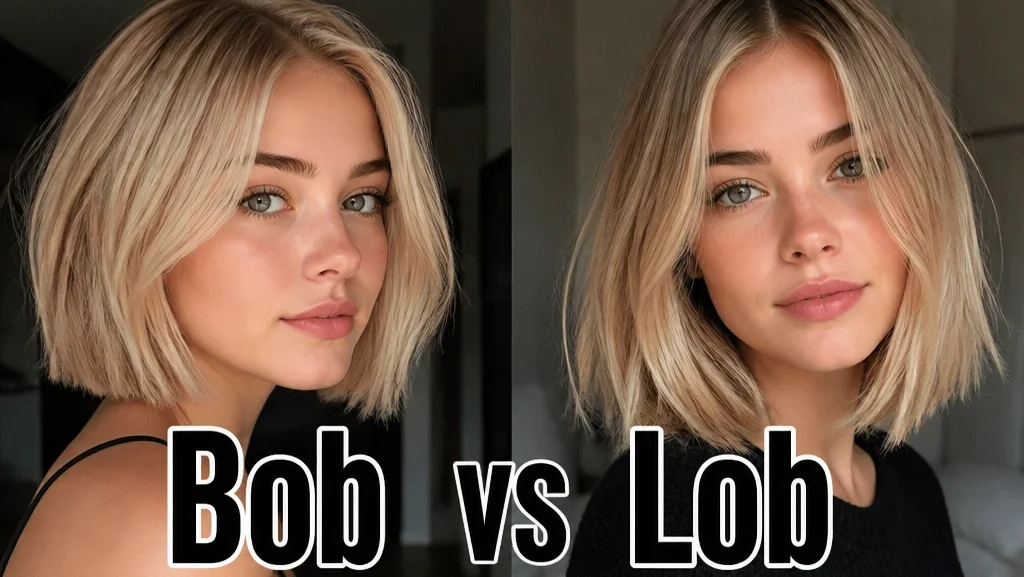
Bob vs Lob: Which Length Suits You
Every few years the short-hair conversation lands on the same fork in the road. Do you commit to a true bob, or hedge with a lob? The two cuts look like cousins in photos, yet they behave differently on your face shape, your texture, your trim schedule, and your morning routine.
An inch or two of length changes more than most people expect. This guide walks through where each cut actually falls, which face shapes and hair types each one flatters, what upkeep really looks like, and how to decide before the scissors come out.
What Separates a Bob From a Lob
Length is the whole argument. Everything else, maintenance, styling, versatility, flows from where the ends land.
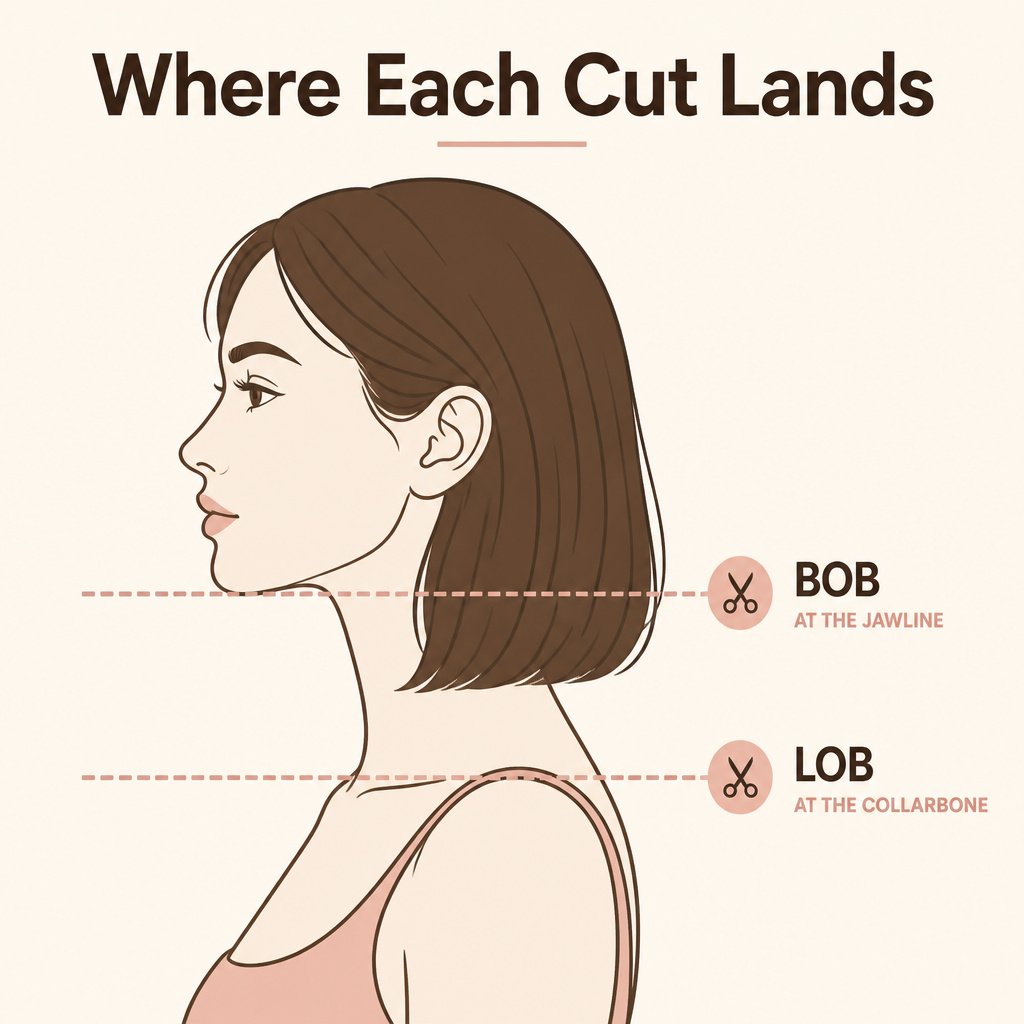
The bob sits at the jaw
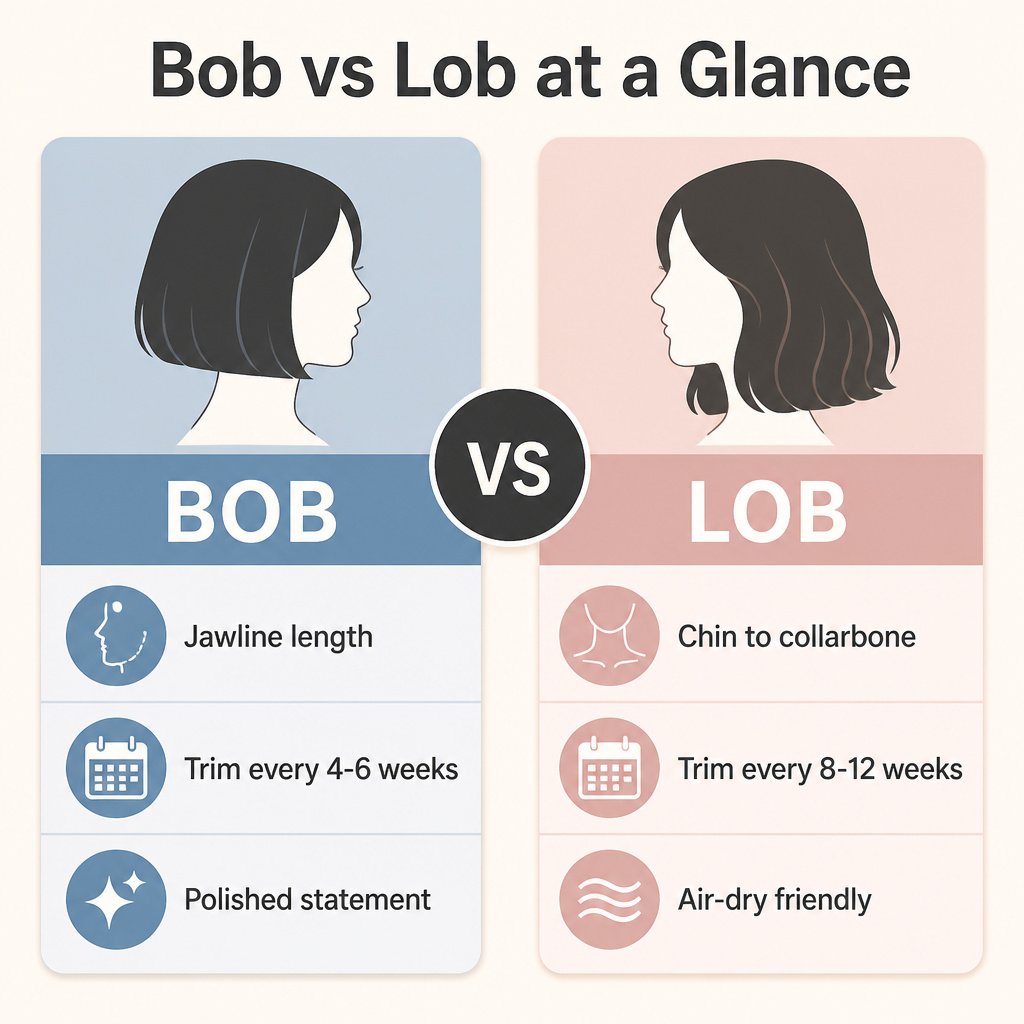
A classic bob falls at the jawline or slightly above it, anywhere from ear-lobe length to just under the chin. The cut frames the face directly, puts your jaw and neck on display, and makes a deliberate statement. Nobody falls into a bob by skipping trims.
Because the line sits so close to the face, precision matters. A bob shows every half inch of growth, which is why it earns its reputation as the higher-commitment cut.

The lob lands between chin and collarbone
The lob, short for long bob, runs from below the chin down to the collarbone. It keeps the shape and intent of a bob while leaving enough length for a low ponytail, beach waves, or a braid on a skipped-wash day, as NewBeauty’s bob-or-lob breakdown puts it, the lob offers versatility the shorter cut gives up.
Stylists reach for the lob as the safe recommendation because it works on nearly every face shape and grows out gracefully. It’s the cut you choose when you want a real change without closing any doors.

The Side-by-Side Comparison
| Factor | Bob | Lob |
|---|---|---|
| Length | Jawline or slightly above | Below chin to collarbone |
| Vibe | Sharp, deliberate, statement | Relaxed, versatile, low-key |
| Ponytail | Rarely possible | Low pony and braids work |
| Trim schedule | Every 4-6 weeks | Every 8-12 weeks |
| Grow-out | Awkward phase around the shoulders | Blends into long hair smoothly |
| Face framing | Spotlights jaw and neck | Softens and lengthens |
| Best-known risk | Wrong length can widen the face | Can look shapeless without tailoring |
| Commitment level | High | Low to medium |
Matching the Cut to Your Face Shape
Celebrity stylist Chris Appleton has said the key to a great bob is finding the right length for your face shape, and that single sentence explains most bob regrets. The line of the cut redraws the lines of your face. Here’s how it plays out shape by shape, drawing on The Right Hairstyles’ bob-or-lob guide.
Round faces
The lob usually wins. Length past the chin draws a vertical line that visually slims the face, where a chin-length bob can add width exactly where you don’t want it. If your heart is set on a bob, keep it angled, longer in front, and pair it with a deep side part to break the roundness.
Oval faces
Both cuts work, so decide on lifestyle instead. Oval proportions handle the bob’s directness and the lob’s softness equally well, which makes this the one face shape where the maintenance question should cast the deciding vote.
Heart and diamond faces
A jaw-length bob adds fullness right at the narrow chin, balancing a wider forehead or cheekbones. The lob flatters too, especially with face-framing pieces, but the bob is the cut that actively works for you here rather than just staying out of the way.
Square and strong-jawed faces
Soft beats sharp. A blunt bob ending right at a strong jaw doubles down on the angles, so go lob-length with soft waves, or choose a bob that ends clearly above or below the jawline instead of exactly on it.
Long faces
Width is your friend. A lob with side volume and waves balances vertical proportions, and a chin-length bob with movement does the same job. What to avoid is long, flat, center-parted length that stretches the face further.
Matching the Cut to Your Hair Texture
Fine hair
Short lengths are fine hair’s best trick. Taking away length takes away weight, and the ends look thicker the closer they sit to the root. A blunt, one-length bob reads dense and full because all the weight stays at the perimeter. These bob styles for fine hair show the effect across different lengths.
A blunt lob pulls off the same trick with more styling room, and there’s a full roundup of lob ideas for fine hair if that’s your lane. What fine hair should skip is heavy layering in either cut, since layers thin out ends that need every strand.
Thick hair
Thick hair needs the opposite treatment. A one-length bob on dense hair can mushroom into a triangle, so ask for internal layers or texturizing to remove bulk. The lob handles thickness more forgivingly, and a collarbone-grazing length with soft, diffused layers through the mid-lengths gives swing and shape without the pyramid effect, a point Parade’s lob guide echoes from the stylists it interviews.
Curly and wavy hair
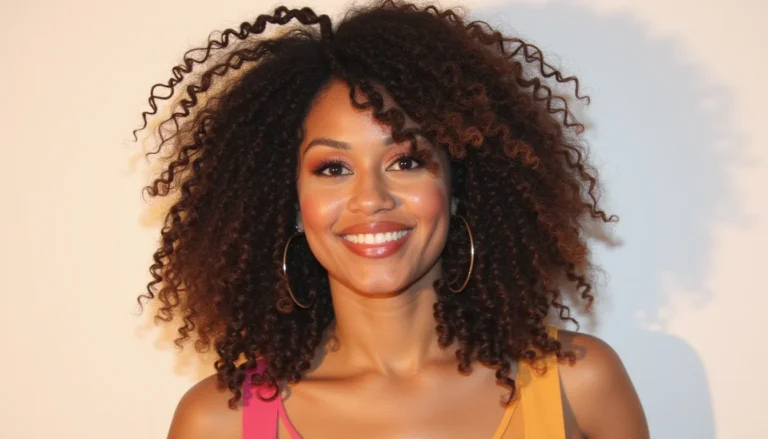
Curls shrink when they dry, so both cuts need to be planned longer than the target length. A curly bob is a genuinely striking look, these curly bob styles prove it, but it demands a stylist who cuts curls well. The lob is the easier ride for wavy textures, since the extra length weighs waves down just enough to keep frizz and poof in check.
The Maintenance Math
A bob’s sharp line grows soft within weeks. Most bob wearers book trims every 4 to 6 weeks to hold the shape, and stretching that to twelve turns the cut into an accidental lob-in-progress with none of the lob’s intent.
The lob forgives. Blunt versions want a reshape every 6 to 8 weeks, while layered and textured lobs go 8 to 12 weeks without looking grown out. At salon prices, that difference adds up to roughly half the yearly trim spend, and half the calendar juggling.
Grow-out runs the same direction. A lob blends into long hair almost invisibly, while a bob has to pass through the shoulder-length awkward phase, several months where the ends flip against your shoulders and refuse to sit. Anyone planning to grow their hair long again within the year has a strong reason to pick the lob.
Styling and the Real-Life Test
Picture a late morning, ten minutes to get out the door. The two cuts behave differently in that moment, and it’s worth knowing before you choose.
The bob asks for participation. Most bobs want a quick round-brush blow-dry or a pass with a flat iron to sit right, and a slept-on bob has opinions of its own. The payoff is that a styled bob looks polished in a way few other cuts match, and short length means the whole routine still stays under fifteen minutes.
The lob air-dries. Rough-dry it, scrunch in a texture spray, and the cut’s lived-in shape does the rest, which is exactly why stylists keep recommending it to clients who want minimal heat styling. On the days everything fails, a lob still goes into a low ponytail or braid. A bob mostly cannot, and half-up styles with mini claw clips become the fallback.
What the Current Trend Cycle Favors
Both cuts are having a moment, but they’re trending in different directions. The bob’s current form leans French, blunt, jaw-grazing, worn with curtain bangs or an undone finish rather than helmet-sleek. It pairs especially well with the soft shaping in these choppy bob ideas.
The lob has evolved into a customizable canvas, with butterfly layers, lived-in texture, and strategic face-framing pieces replacing the flat, one-length version of years past. Air-dry-friendly shaping is the through-line, and it’s a big part of why the lob keeps topping “most requested cut” lists season after season.
Which One Fits You
Before You Book: the Consultation Checklist
Stylists hear bob regret stories constantly, and most of them trace back to a rushed consultation. Cover these points first.
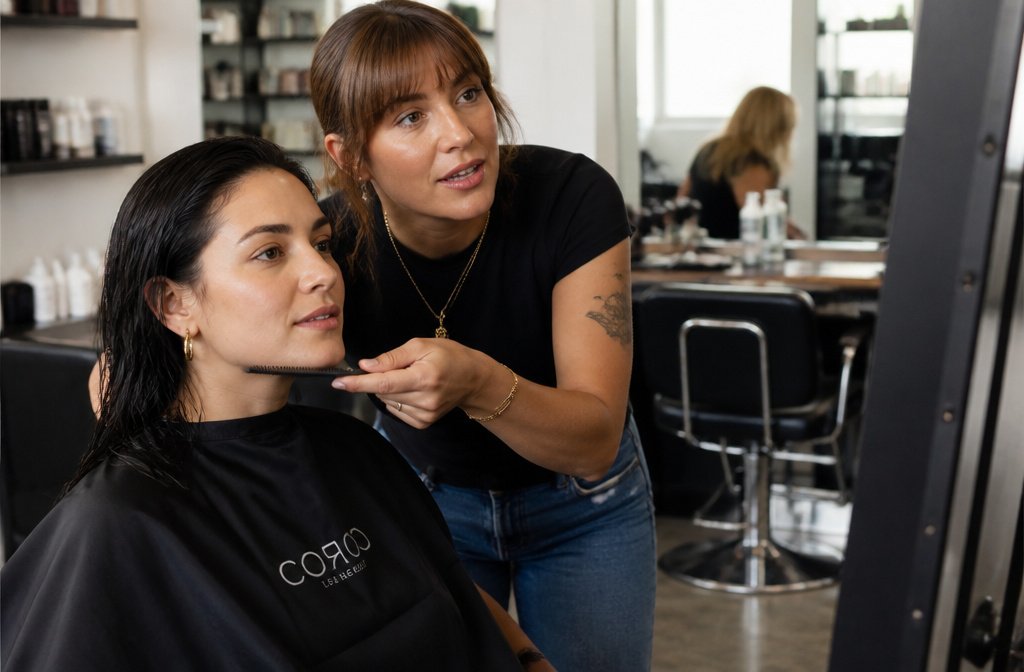
- Bring photos, then have your stylist show you with a comb exactly where the length would land on your face.
- Talk honestly about your styling routine, since a cut that needs a daily blow-dry fails the person who won’t do one.
- Mention any cowlicks, growth patterns, or a strong natural part, because short cuts expose all three.
- Confirm the trim schedule the exact cut will need before you commit to it.
- Listen if your stylist pushes back. They’ve seen the disappointment stories, and a modified version of your idea usually exists.
One more safety net worth knowing. If you’re torn, cut to a lob first. You can always go shorter at the next appointment, and plenty of stylists suggest exactly that two-step route to a bob.
Frequently Asked Questions
Q: Is a lob just a grown-out bob?
A: No, and the difference shows. A true lob is cut with intention, weight lines, subtle angles, face-framing, where a grown-out bob is yesterday’s shape stretched out of proportion. Same length, very different silhouette.
Q: Which is better for women over 50?
A: Both work, and the deciding factors don’t change with age. A soft, layered lob flatters thinning texture and stays easy to style, while a classic bob brings structure that fine, mature hair often lacks. These neck-length cuts for women over 50 sit right in the sweet spot between the two.
Q: Will a bob make my face look wider?
A: It can, if the fullest part of the cut lands beside the widest part of your face. Round faces run this risk most. An angled bob, a side part, or simply going lob-length solves it.
Q: How much length should I ask for the first time?
A: Err longer. Ask for collarbone length on the first cut, live with it for two weeks, then go shorter if you’re still curious. Hair comes off in seconds and back in months, so the staged approach costs nothing but a second appointment.
Q: Do bobs and lobs work with bangs?
A: Yes, and bangs often improve the balance. Curtain bangs soften a blunt bob and shorten a long face, while wispy or side-swept fringe gives a lob face-framing without commitment. The main caution is pairing heavy, straight-across bangs with a chin-length bob on a round face, which boxes the features in.
Q: What products do each cut actually need?
A: Short lists, different lists. A bob wants a smoothing cream or light serum for polish and a flat iron or round brush for shape. A lob wants a texture or sea-salt spray and a heat protectant for the occasional wave day. Neither needs a cabinet full of product, which is part of the appeal of going shorter in the first place.
The Verdict
The bob is the bolder cut, sharp, face-forward, and high-maintenance in the way a tailored jacket is. It rewards fine hair, heart and oval faces, and anyone willing to keep a standing trim appointment. The lob is the flexible cut, kinder to thick and wavy textures, kinder to round and square faces, kinder to busy calendars, and kind to you later when you decide to grow it out.
Choose with your routine, not just your inspiration photos. The cut you can actually live with on a rushed morning is the one that keeps looking good long after the salon blowout washes out. And when in doubt, take the two-step route, lob first, bob later, because scissors only cut in one direction.