25 Winter Nail Colors For The Season
A manicure changes more with the season than most people give it credit for. Deep reds, mossy greens, icy metallics, and matte neutrals all read another way under winter light than they do in July, which is why the same red that looked flat in summer can look expensive in December.
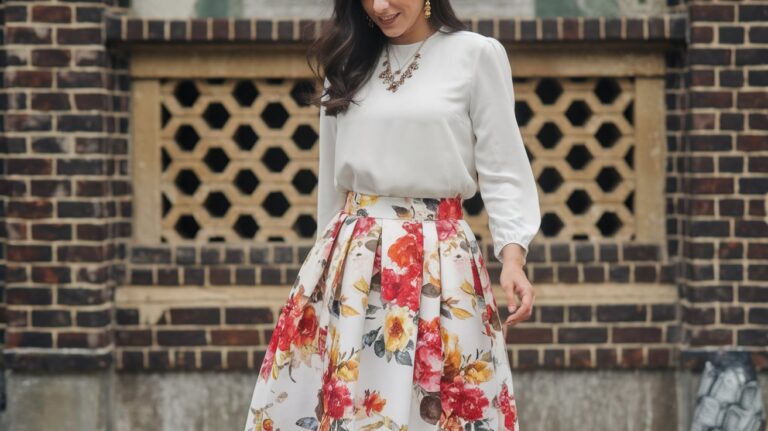
The 25 shades below cover jewel tones, metallics, neutrals, and a few unexpected picks, each with the specific application detail, pairing, or durability note that matters for that color. Our guide to pairing nail color with an outfit covers the styling side in more depth if you want it.
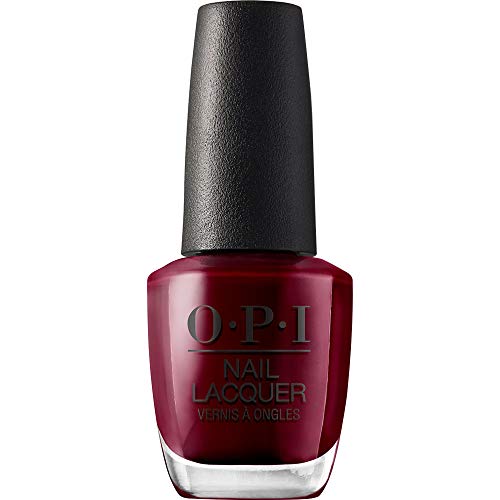
Deep Burgundy Wine
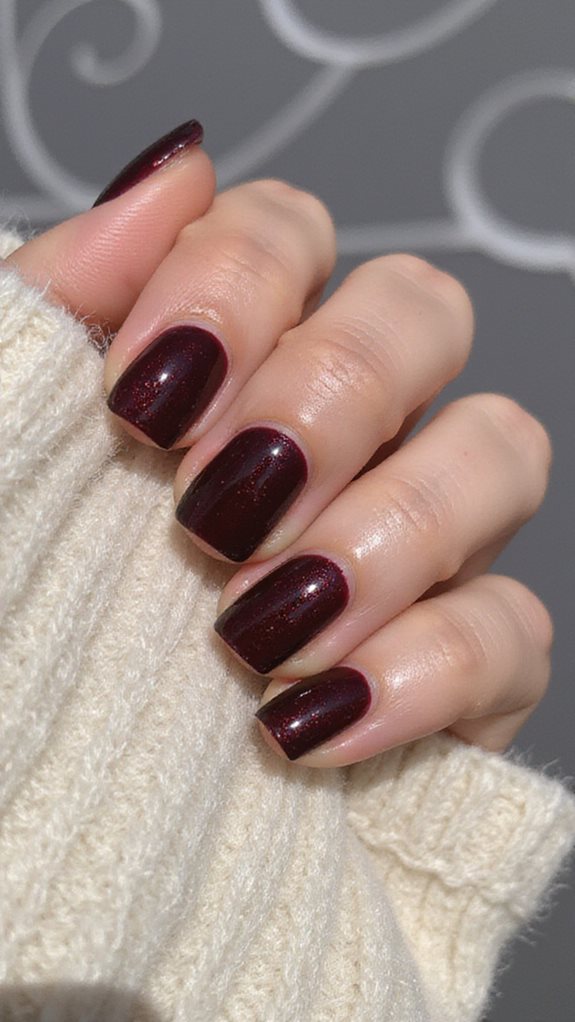
Burgundy sits between red and brown, close enough to cabernet that it reads as more expensive than a straight red at the same price point.
Two thin coats over a ridge-filling base give the deepest color without pooling at the cuticle. A gold foil accent on one nail dresses it up without touching the other nine.
This shade works from an office desk to a dinner reservation without a change, and it hides regrowth longer than a lighter polish would.



Icy Silver Chrome
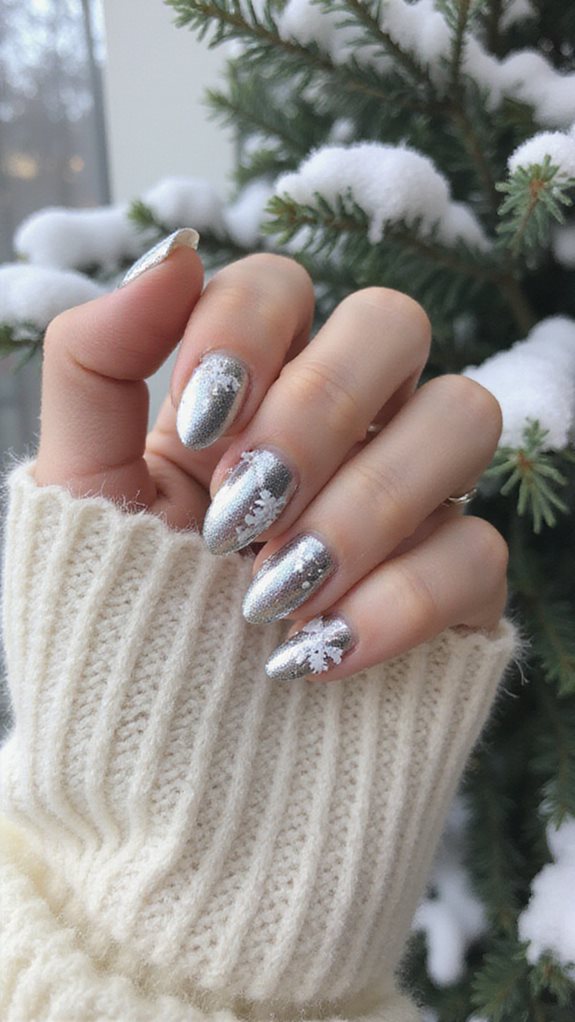
Chrome powder buffed onto cured gel polish, not brushed on like regular lacquer, is what gives silver chrome its mirror finish.
A black or deep gray base underneath makes the chrome read brighter than a nude base does, since the dark color reflects less light back through the powder.
Almond and stiletto shapes show off the mirror effect more than a rounded shape does, since the longer nail plate gives the light more surface to bounce across.


Forest Green Velvet
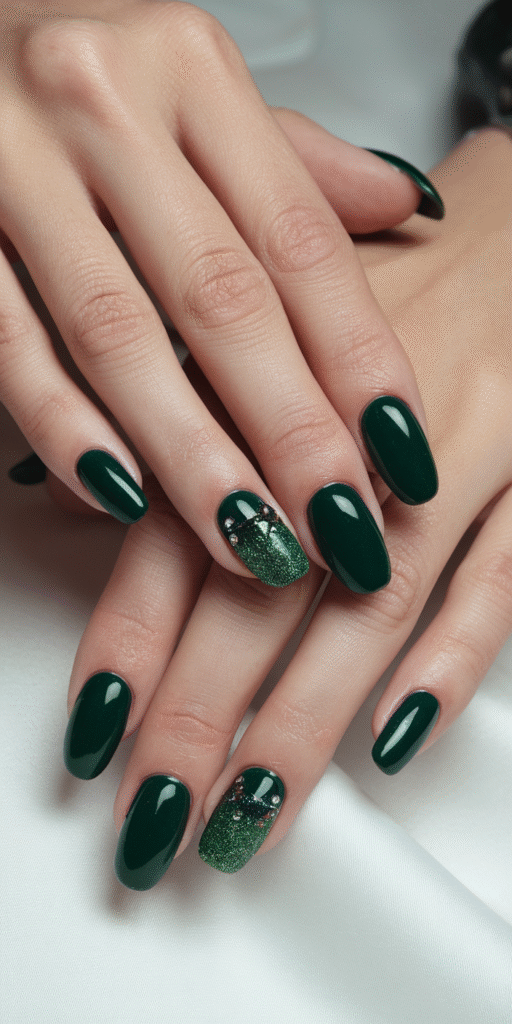
A matte topcoat absorbs light instead of reflecting it, which is what gives forest green its velvet look rather than a standard glossy finish.
Two coats of the green base build enough opacity before the matte seal goes on; one coat tends to look streaky under matte.
Gold accents on one or two nails read as intentional against the matte texture in a way they wouldn’t against a glossy finish.


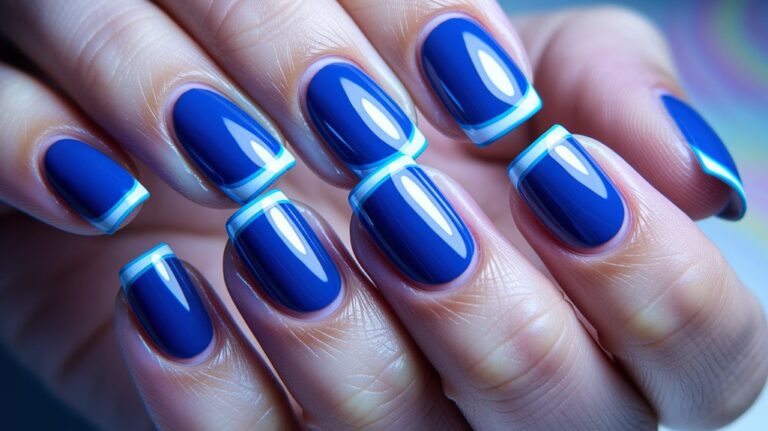
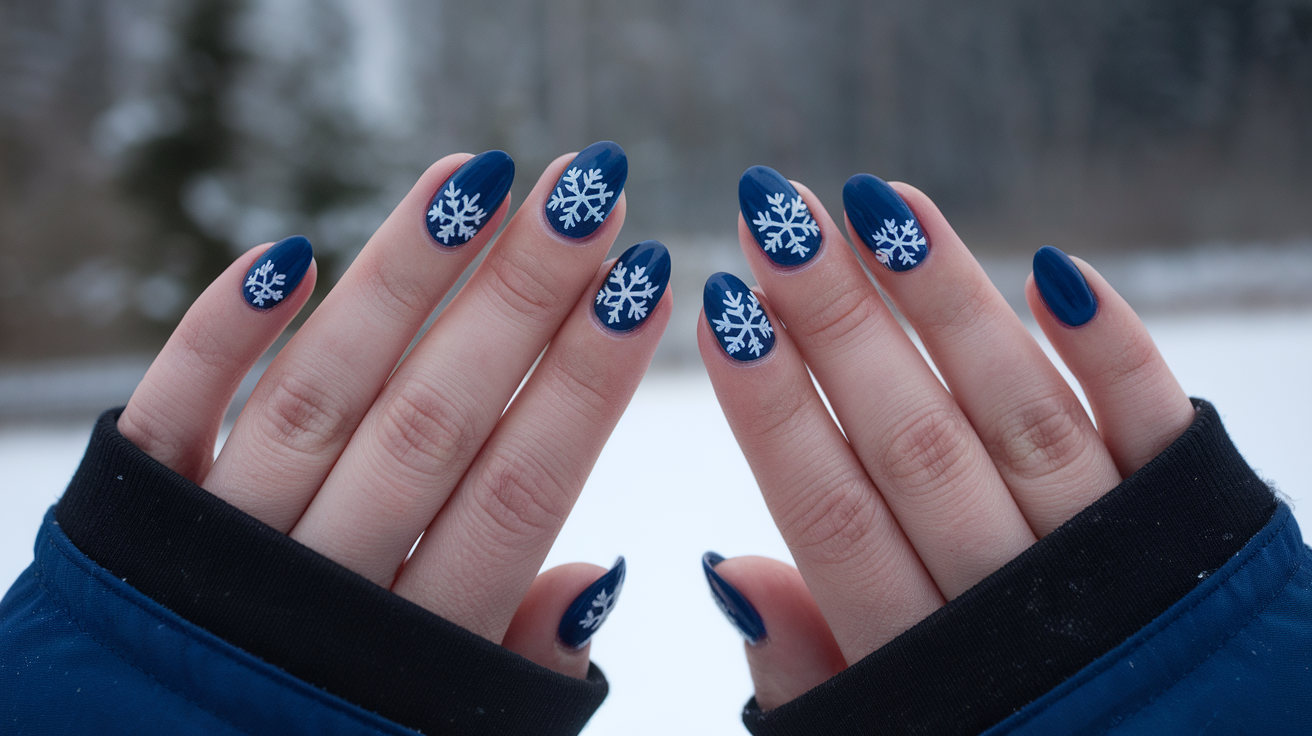
Midnight Navy Blue

Navy reads as softer than black under most lighting, close enough to pass for a neutral while still carrying real depth.
Metallic accents show up with more contrast against navy than against black, since the base color has less depth to fight against.
Silver jewelry keeps the look cool-toned; rose gold pulls warmth into an otherwise dark manicure. Both pairings take navy from a boardroom to a cocktail hour without a polish change.


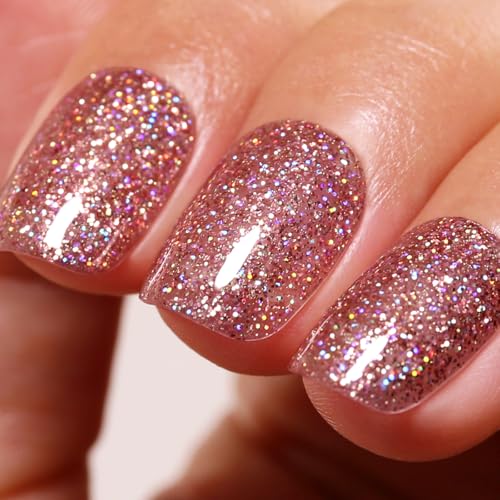
Shimmering Rose Gold
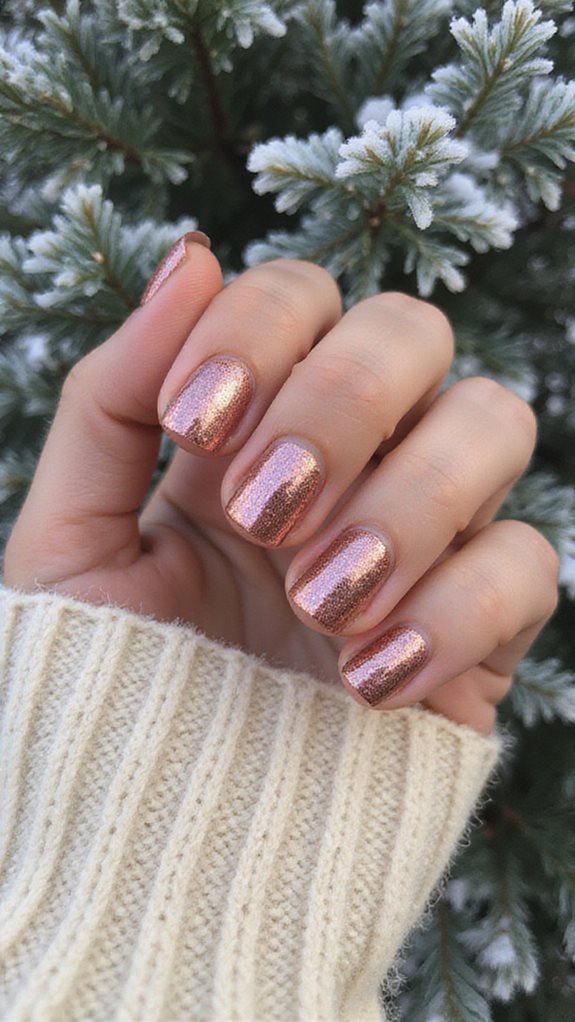
Metallic polish is more prone to streaking than cream polish is, so apply rose gold in thin coats and let each one dry all the way before the next.
A chrome topcoat over a nude base gives more shine than the metallic polish alone; a foil wrap gives the most mirror-like intensity of the three options.
Rings and bracelets in the same rose gold family tie the manicure into the rest of the look without needing to be an exact match.


Rich Chocolate Brown
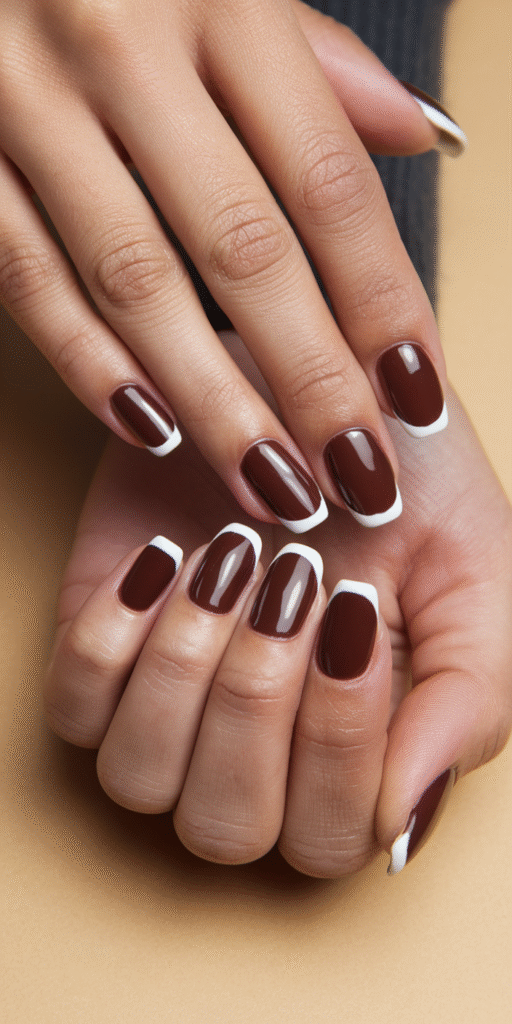
Chocolate brown pairs with a neutral winter wardrobe the way navy or burgundy might, without reading as quite as bold as those two do.
Matte finish gives it a velvety texture close to forest green’s; a glossy topcoat adds depth instead. Both hold up fine, and the choice comes down to how much shine you want at the tips.
An ombre fade from chocolate to cream at the tip is one of the more forgiving techniques here, since it doesn’t require a dead-straight line.


Classic Crimson Red
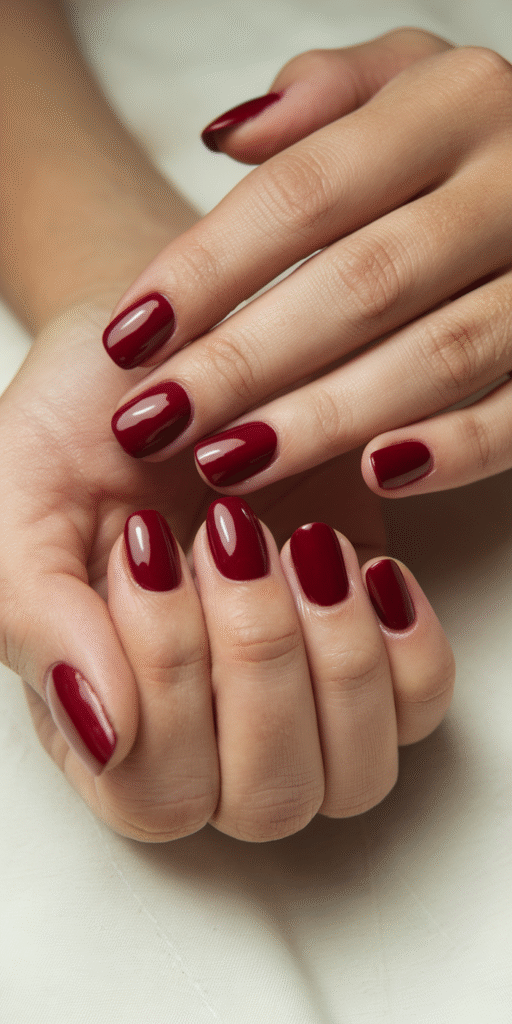
Crimson shows every streak more than a darker red does, so a striping brush and steady hand matter more here than with burgundy or black cherry.
A glossy topcoat makes red look wet and rich; matte trades some of that richness for a more modern, muted finish.
Nothing else on this list is a safer bet for a holiday party or a winter wedding, and it holds up under repeated glove removal better than lighter shades.


Frosted Pearl White
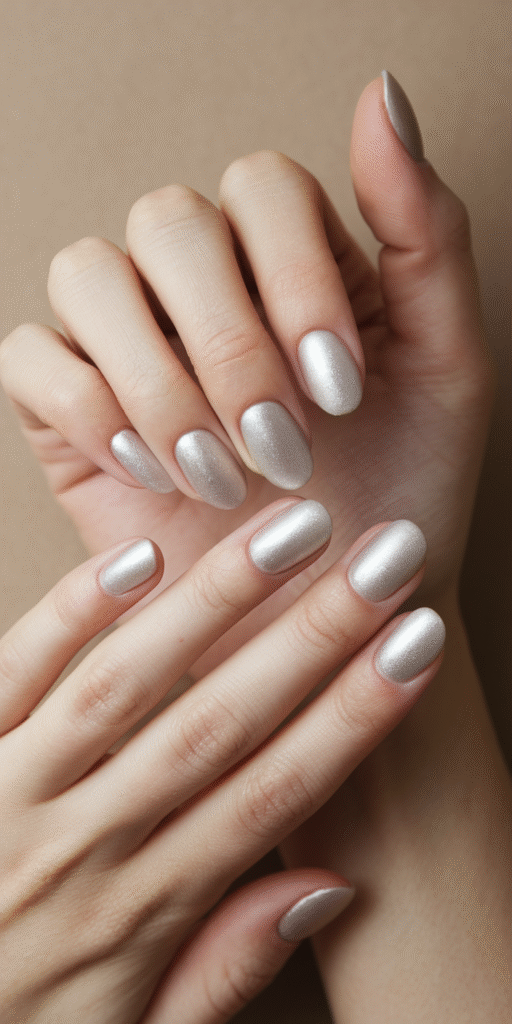
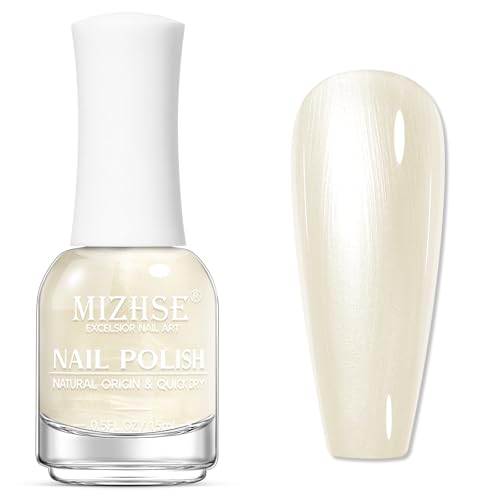
Layering translucent white over a nude base gives pearl white dimension instead of the flat, chalky look straight white polish tends to have.
An iridescent topcoat on top shifts color a touch depending on the light, which reads as more expensive than a flat white finish.
This one goes with both silver and gold jewelry alike, so it’s a safer pick than a warmer or cooler neutral if you haven’t settled on accessories yet. It also works as the base for a winter French tip if a full pearl manicure feels like too much.


Smoky Charcoal Gray
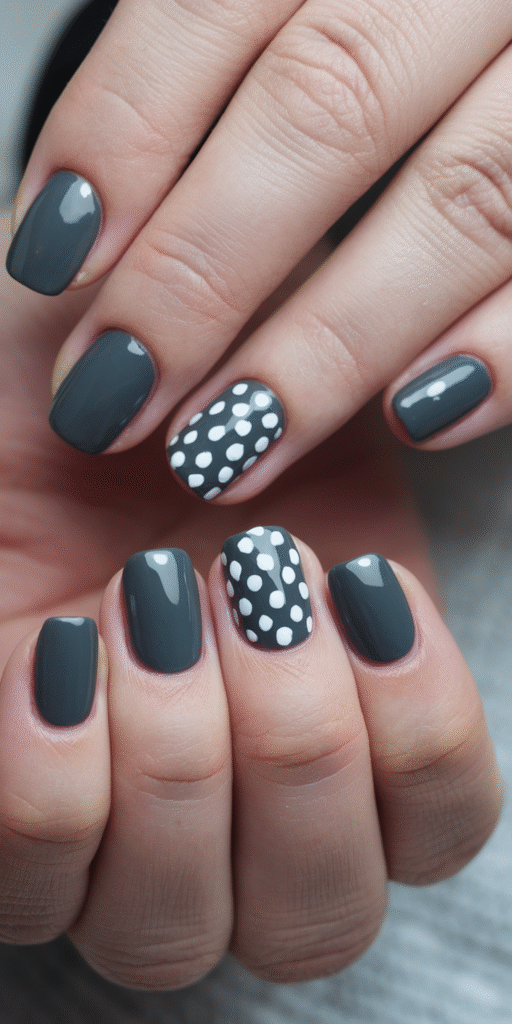
Charcoal gray gives most of black’s depth without the starkness, which is why it pairs with more colors in a winter wardrobe than true black does.
A gradient from deep charcoal at the cuticle to a lighter ash at the tip takes longer to apply than a solid color, but a makeup sponge dabbed across the polish cuts the time down by a good margin.
Alternating matte and glossy topcoats across the hand, rather than picking one finish for every nail, gives texture without adding a single extra color.


Emerald Jewel Tone
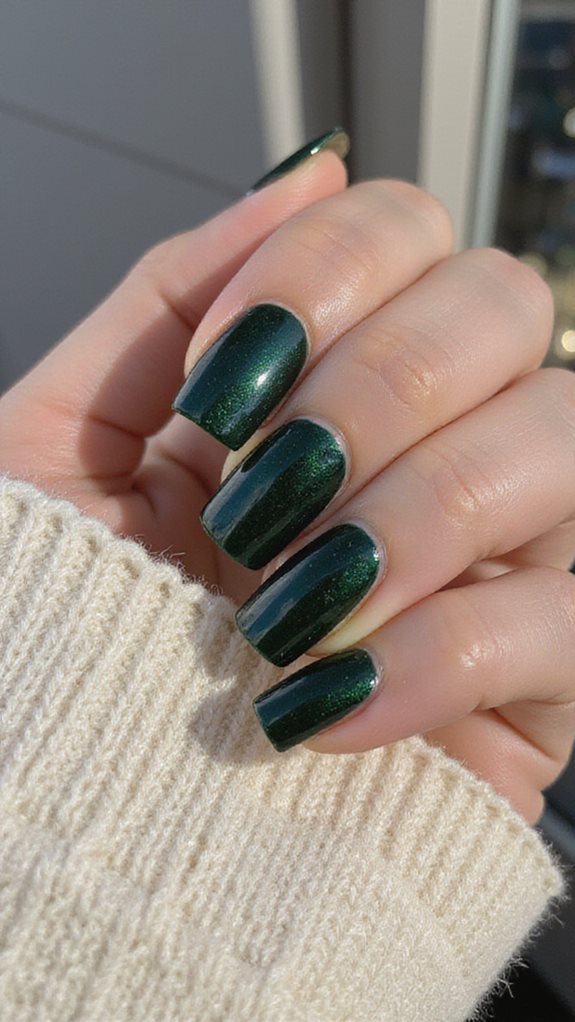
A saturated emerald needs a glossy finish to show its full depth; matte tends to mute jewel tones more than it does darker neutrals.
Worn solo, emerald reads as a deliberate color choice rather than a safe one. Paired with gold, it leans closer to traditional holiday styling.
If you already own emerald jewelry, matching the polish to it ties an outfit together without buying anything new.


Warm Caramel Latte Nails
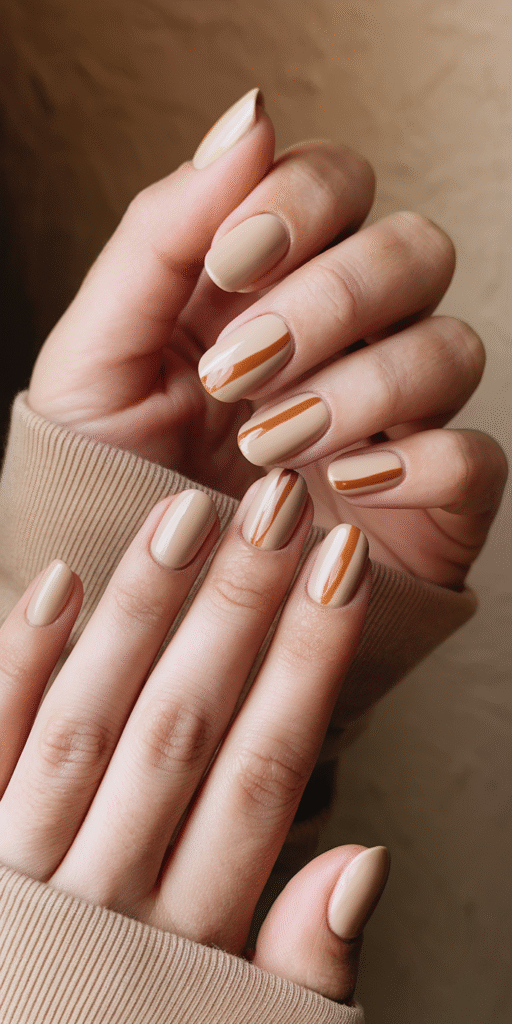
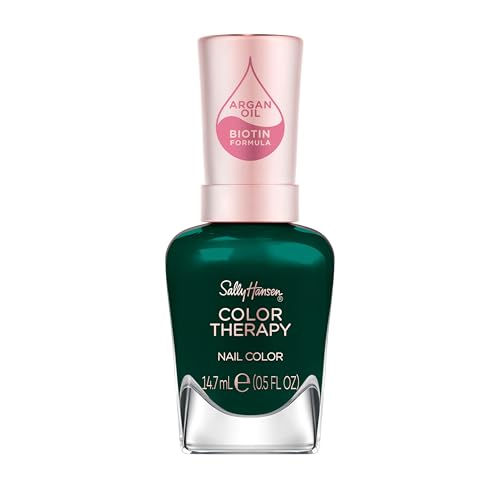
Caramel sits between beige and brown, warm enough to avoid the washed-out look a straight nude can have on cooler skin tones.
Glossy caramel looks polished for an office day; matte pulls the same color toward something more casual for a weekend.
Because it’s a neutral, this shade goes the longest between touch-ups of anything on this list, since regrowth at the cuticle blends in rather than standing out.


Sapphire Blue Sparkle
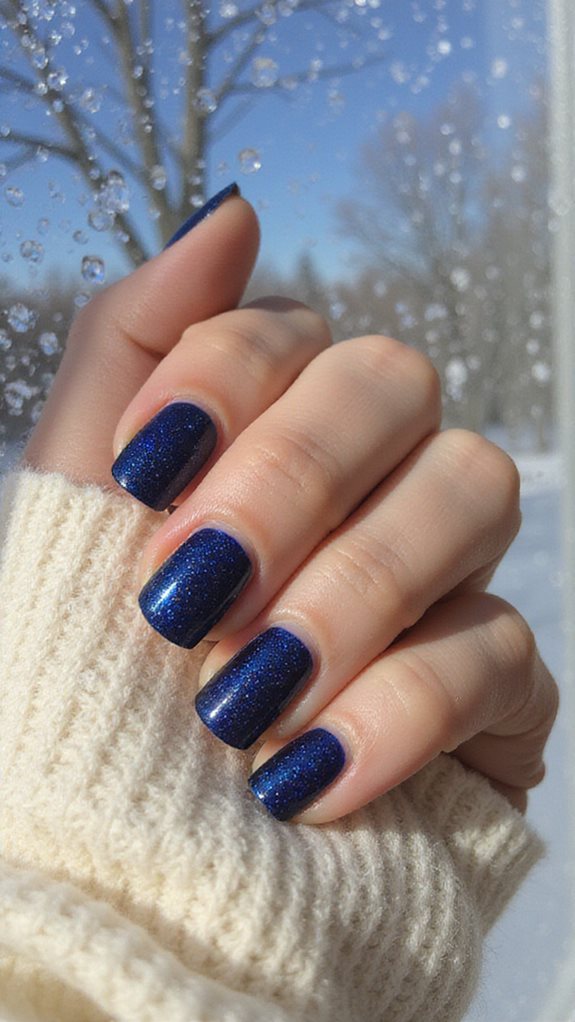
Glitter suspended in a blue base is what separates sapphire sparkle from a plain jewel-tone blue, and the glitter size determines how subtle or loud it reads.
Layered over a nude base, the same polish shows less color and more shimmer; applied at full opacity, the blue dominates and the sparkle becomes an accent.
Crisp white paired with sapphire on an accent nail reads as more winter-specific than pairing it with a neutral would.


Dusty Sage Green
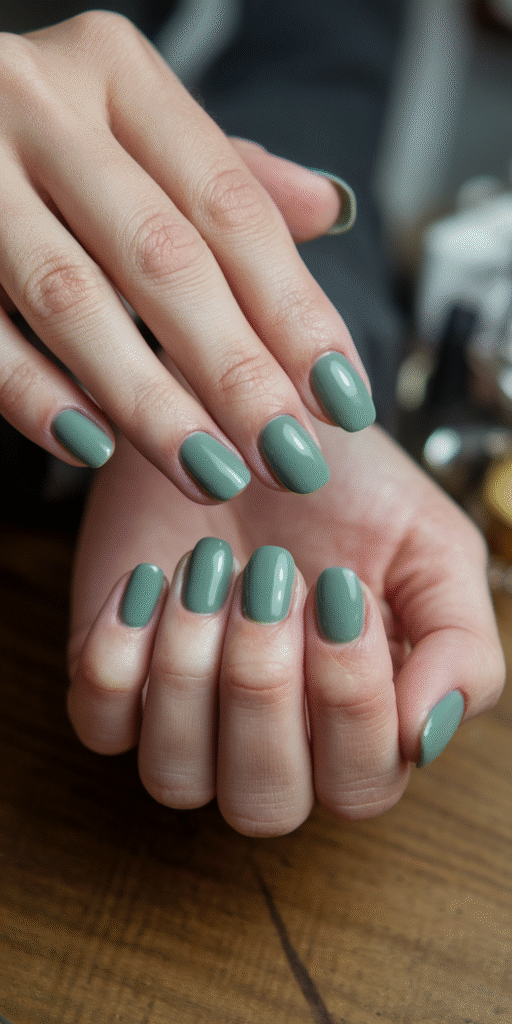
Sage sits between gray and green, and that in-between quality is why it works on both cool and warm undertones where a truer green might not.
Worn plain, it reads as a quiet, considered neutral rather than a color choice people notice right away.
Crisp white brings out its cool side; terracotta pulls it warmer; soft mauve softens the whole look further. All three pairings change the mood without changing the polish.


Plum Purple Perfection
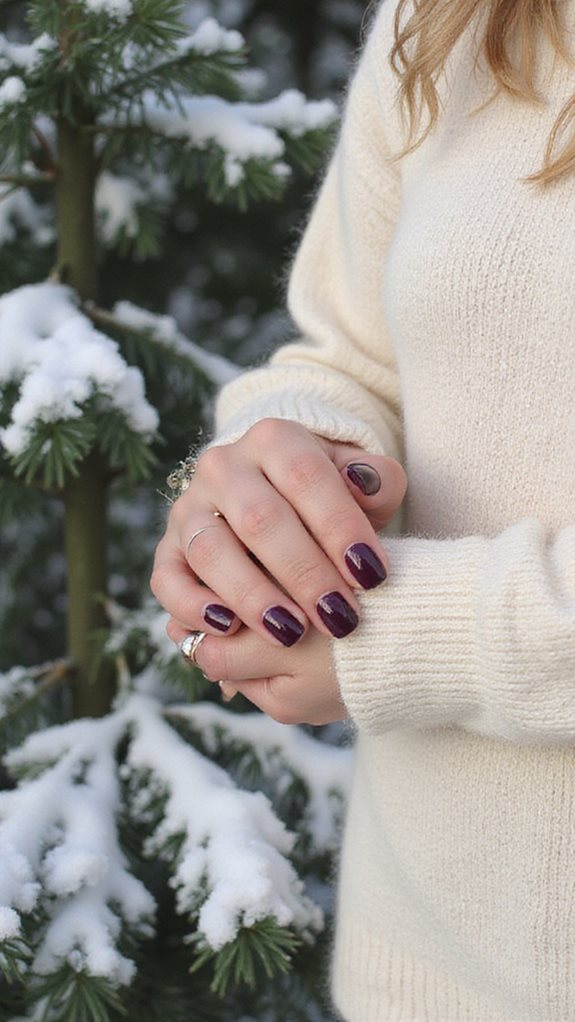
Plum spans a wide range on its own, from a wine-adjacent deep purple to a lighter mauve, so two people can both wear “plum” and land in different places.
A cream finish leans softer; satin adds a touch more richness without going full gloss.
An ombre from plum into burgundy at the tip works because the two colors sit close enough on the color wheel that the transition looks deliberate rather than muddy.


Gunmetal Metallic
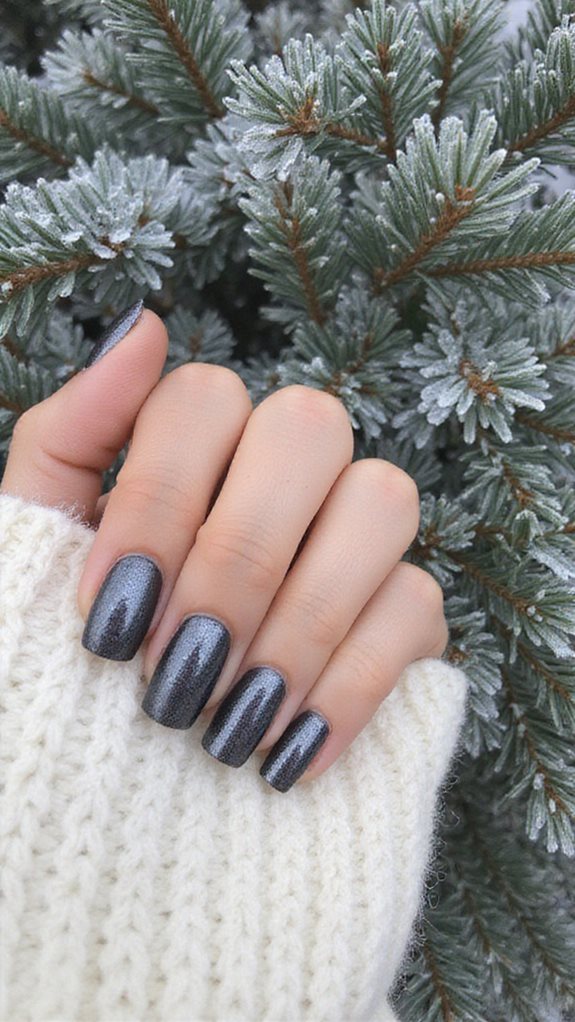
Gunmetal reads cooler and more industrial than silver chrome does, closer to brushed steel than a mirror.
It pairs with leather the way silver pairs with satin, which is worth knowing if your winter wardrobe leans more toward jackets than dresses.
Geometric line work in a darker gray shows up with more contrast against gunmetal than it would against a lighter metallic base.


Creamy Champagne Gold
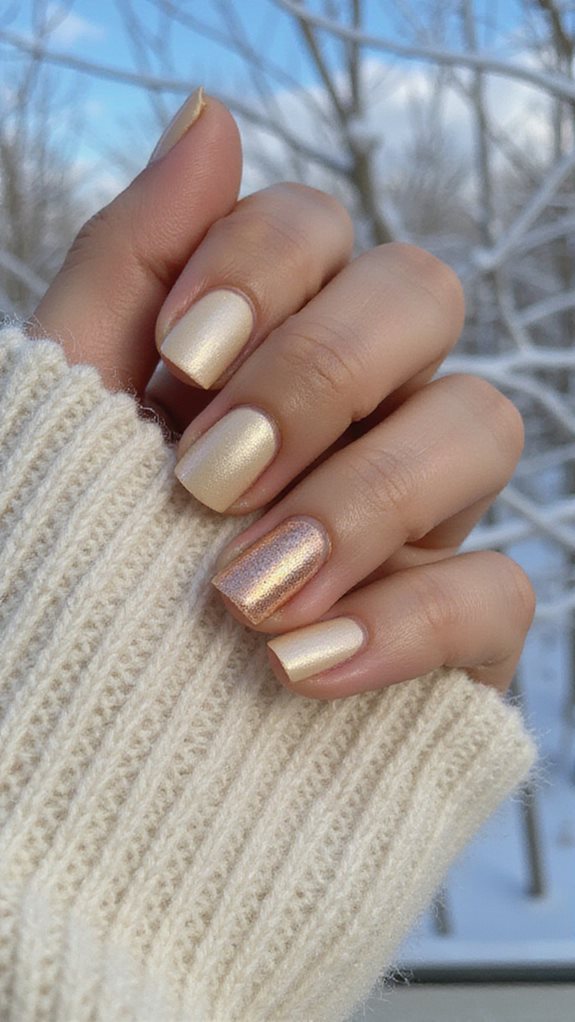
Champagne gold sits closer to warm beige than to true metallic gold, which is why it wears easier day to day than a bright gold polish would.
A well-formulated cream base in this shade covers in two coats without streaking, which isn’t true of every metallic-adjacent polish.
Tiny rhinestones at the cuticle or a scattering of fine glitter turn this from an everyday neutral into something built for a holiday party rather than a Tuesday at the office.


Black Cherry Noir
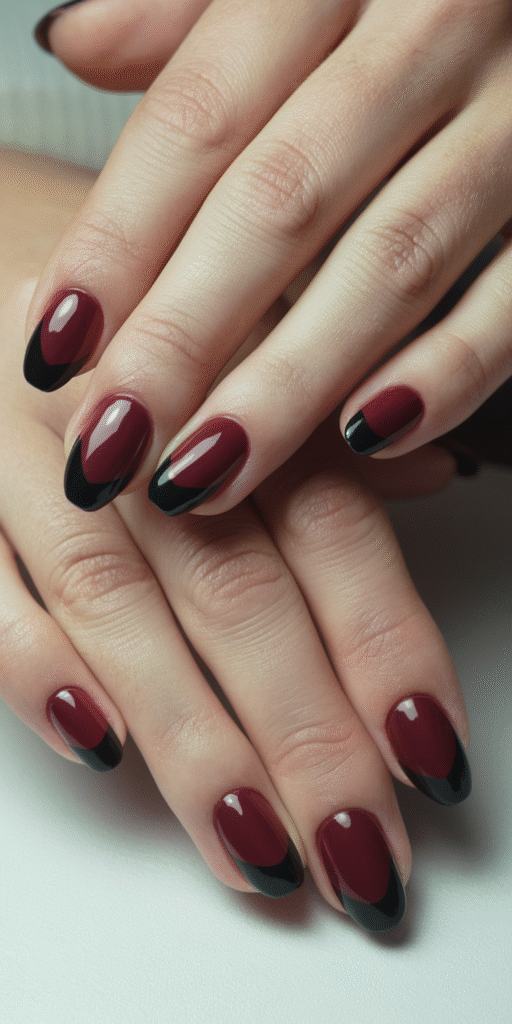
Black cherry sits a shade darker than burgundy, with enough purple in the undertone that it can look almost black in low light and read red once daylight hits it.
Glossy finish keeps the shade looking rich rather than heavy; matte or metallic topcoats push it in a moodier direction.
Because the color shifts with lighting, it photographs one way indoors under warm bulbs and another way outdoors, worth knowing before a big event with a photographer.


Glacier Blue Shimmer

Fine shimmer suspended in a pale blue base is what separates glacier blue from a flat baby blue polish.
Multiple coats build up real color; a single sheer coat over a nude base gives a frosty tip effect instead, which is a different look from the same bottle.
Both silver and white gold jewelry work with this shade, since the pale blue doesn’t clash with the undertone of the metal it’s set against.


Burnt Orange Spice
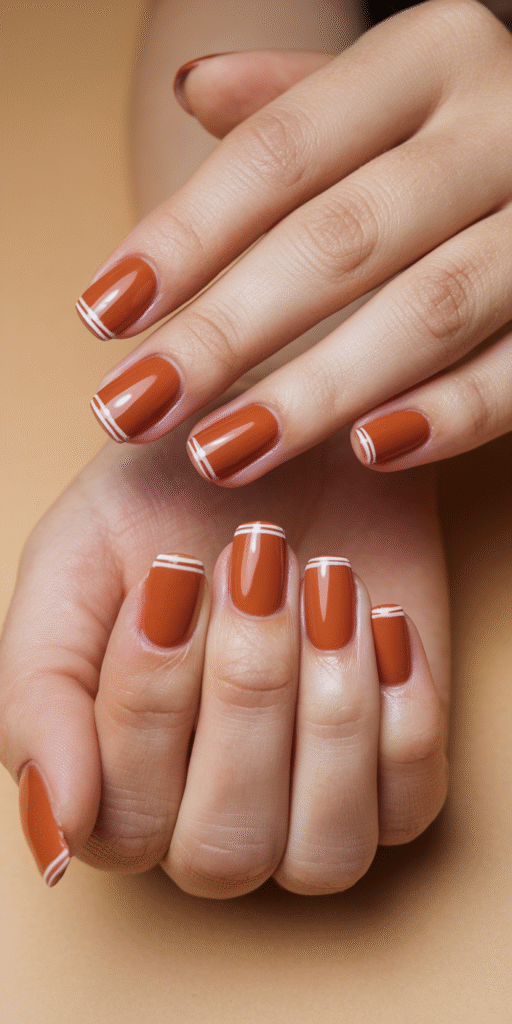
Burnt orange is the one shade on this list that carries over from fall almost untouched, rather than reading as a winter-specific pick.
Against a winter palette of navy, burgundy, and forest green, it stands out as warm contrast rather than blending in.
Copper shimmer over the top pushes it toward evening wear; left matte, it stays more casual for daytime.


Opal Iridescent Finish

Opal finishes shift between pink, blue, lavender, and pearl depending on the angle of the light, which is why the same bottle can look different in every photo.
A soft gray or white base underneath shows off the color shift with more contrast than a dark base would, since the iridescence has less competition.
Layered over burgundy or navy instead, the same topcoat gives a subtler, moodier shift with less of an icy edge.
Chrome-based opal formulas give the most shine; powder versions give a softer glow better suited to an office setting.


Cranberry Red Gloss

Cranberry lands between crimson and burgundy, close enough to both that it works as a stand-in for whichever one you’re missing.
The glossy finish is doing real work here; the same shade in matte loses some of the jewel-toned depth that makes cranberry distinct from a flat red.
A square shape reads more casual with this color; an elongated almond or coffin shape leans into cranberry’s more formal side.

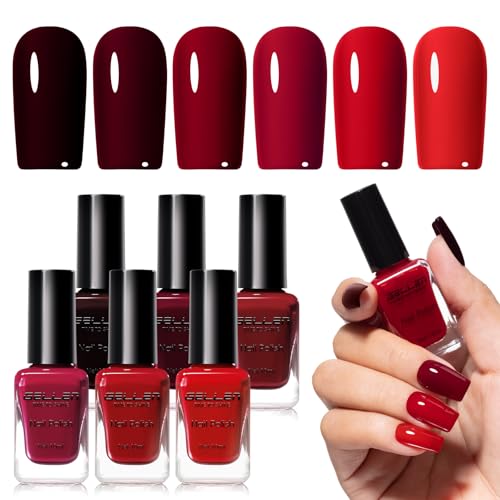
Taupe Nude Elegance
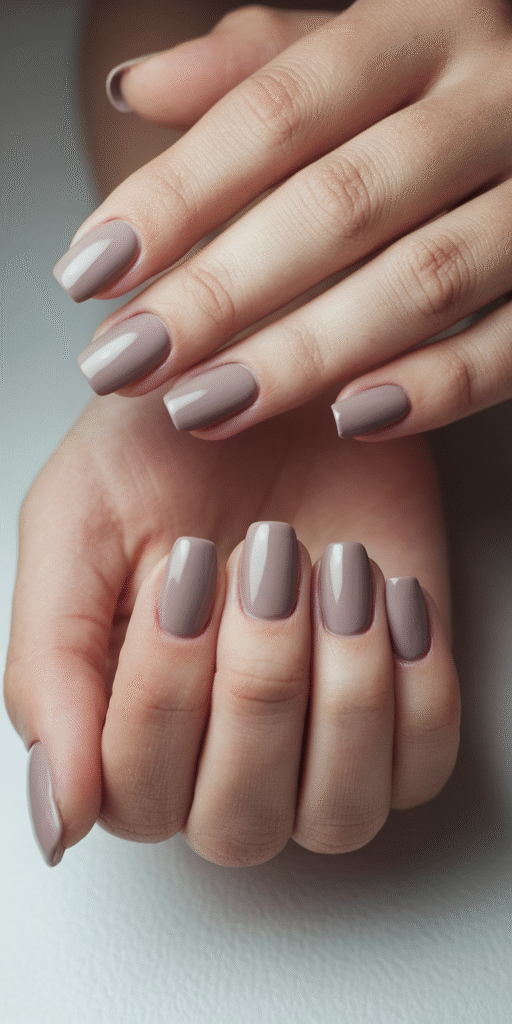
Gray-brown undertones set taupe apart from a standard pink-toned nude, which is why it reads as quieter and more considered than most neutrals.
Chrome accents on an otherwise plain taupe manicure give it modern edge without changing the base color.
A glossy topcoat adds depth to what can otherwise look flat; matte keeps it contemporary and low-key instead.
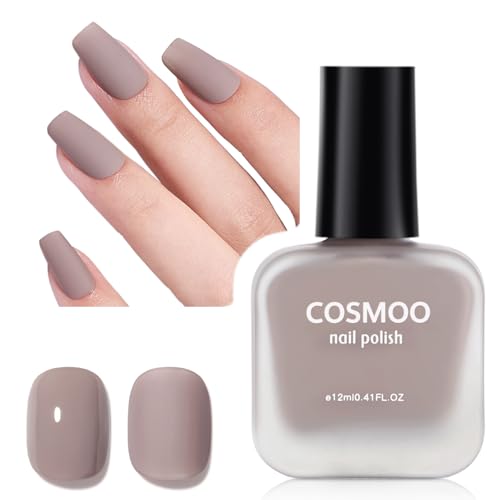


Pine Green Matte
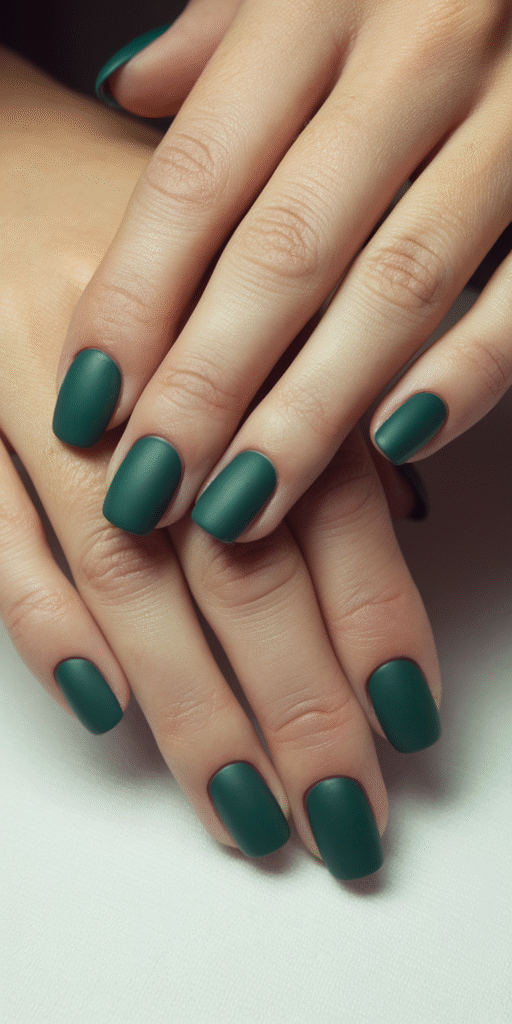
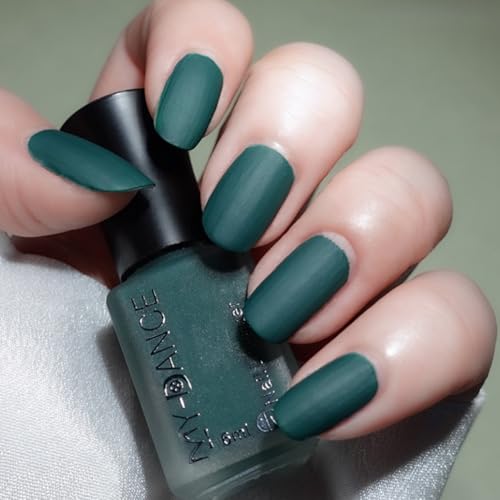
Pine green reads darker and more muted than forest green or emerald, closer to an evergreen branch than a gemstone.
A quality base coat, two thin layers of the green, then a matte seal gets the velvety texture without the streaking a single thick coat would cause.
Almond and coffin shapes carry the color’s mood better than a short round shape does, since the longer nail plate gives the dark shade more room to read.

Copper Penny Shine
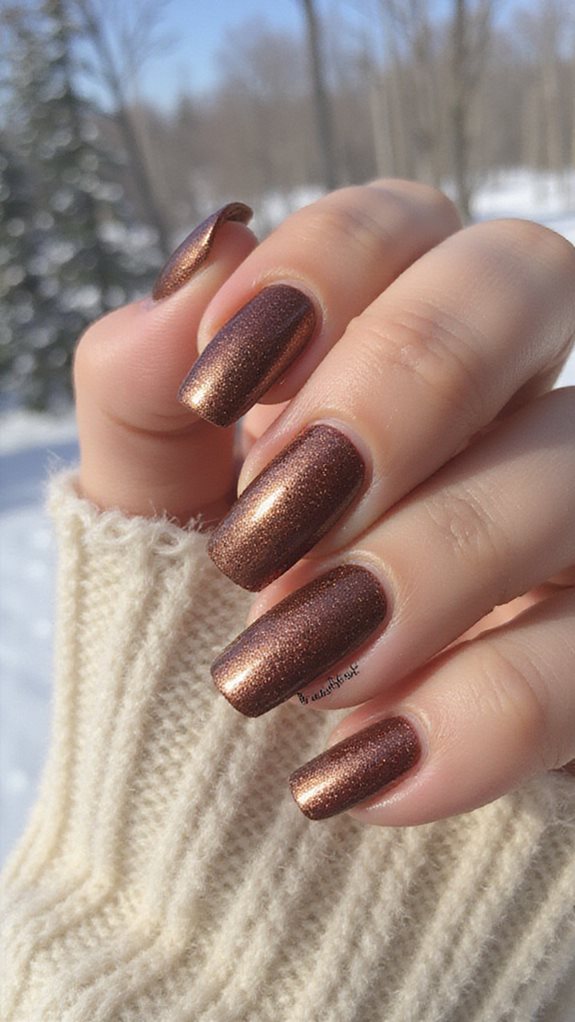
The matte shades on this list stay quiet; copper catches light the way a fresh-minted penny does.
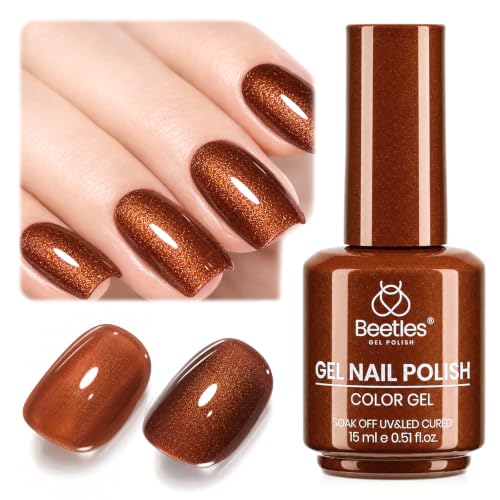
The warm, burnished tone works against winter’s usual cool palette instead of matching it, which is part of what makes it stand out.
Geometric negative space or an accent nail in burgundy or forest green pushes copper further without covering up the metallic base.


Winter White Cream
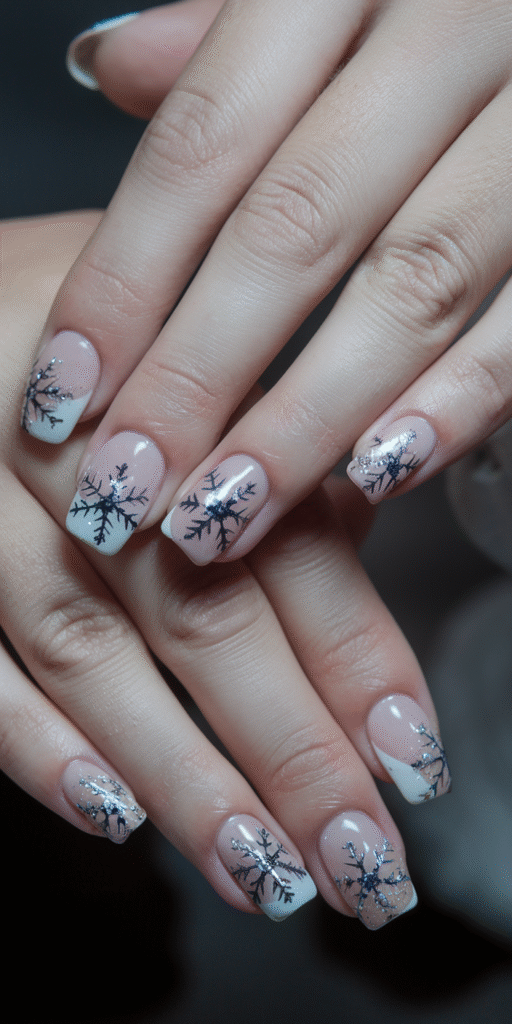
A hint of cream in the base keeps winter white from looking chalky the way a stark, cool-toned white can.
A rounder, shorter shape keeps this color casual; switching to almond or coffin stretches the finger out and dresses the same polish up.
Metallic accents or negative-space cutouts dress it up; left plain, it works as an everyday neutral that happens to fit the season.


Frequently Asked Questions
How Long Do Winter Nail Colors Typically Last on Natural Nails?
Regular polish on natural nails holds up for 5-7 days with a good base coat underneath. A fresh topcoat every couple of days slows down chipping at the tips, where most polish fails first.
Can I Mix Different Winter Nail Trends on Different Nails?
Mixing textures and colors across nails, sometimes called a mixed manicure, works well as long as one element stays consistent, the base color, the finish, or the shape, so the hand still reads as one look.
What Top Coat Works Best for Winter Nail Colors?
A long-wear, gel-like topcoat holds up best through winter. High-shine suits jewel tones, matte suits the moodier neutrals, and a glitter topcoat is the easiest way to add sparkle to any of the shades above without repainting the whole nail.
How Do I Prevent Winter Nail Polish From Chipping Quickly?
Sealing the free edge of the nail with topcoat, not just the top surface, stops most chipping before it starts. Cold, dry winter air also dries out cuticles faster than usual, and dry cuticles pull polish away from the nail sooner.
Are Gel or Regular Polish Better for Winter Nail Colors?
Gel lasts two to three weeks against regular polish’s five to seven days, but it needs a proper soak-off rather than peeling, which can strip layers off the natural nail. Regular polish costs less to maintain and comes off with plain remover at home.
Final Thoughts
Most of these shades come down to two decisions: a jewel tone or a neutral, and glossy or matte. Pick one from each pair and the rest of the styling falls into place.
Mixing textures, matte forest green next to icy chrome, or keeping it simple with a single coat of winter white cream, both work. For the psychology behind why certain shades read as more powerful than others, our piece on nail color and perception goes deeper into it, and our winter party outfit picks pair well with a few of the bolder colors above.