Balayage vs Highlights: Which Fits Your Hair Better
Sit in a salon chair and ask for brighter hair, and the next question is almost always the same. Balayage or highlights? Both lighten your hair, both add dimension, and both show up constantly on social media, yet they behave very differently on your head, in your schedule, and in your budget.
The right choice depends on your natural color, your hair’s condition, how often you’re willing to sit in the chair, and the kind of finish you want. This guide breaks down the real differences, what each one costs over a full year, which hair types suit each technique, and what dermatologists say about keeping lightened hair healthy.
What Separates Balayage From Highlights
The two techniques differ at the most basic level, in how the lightener gets onto your hair.
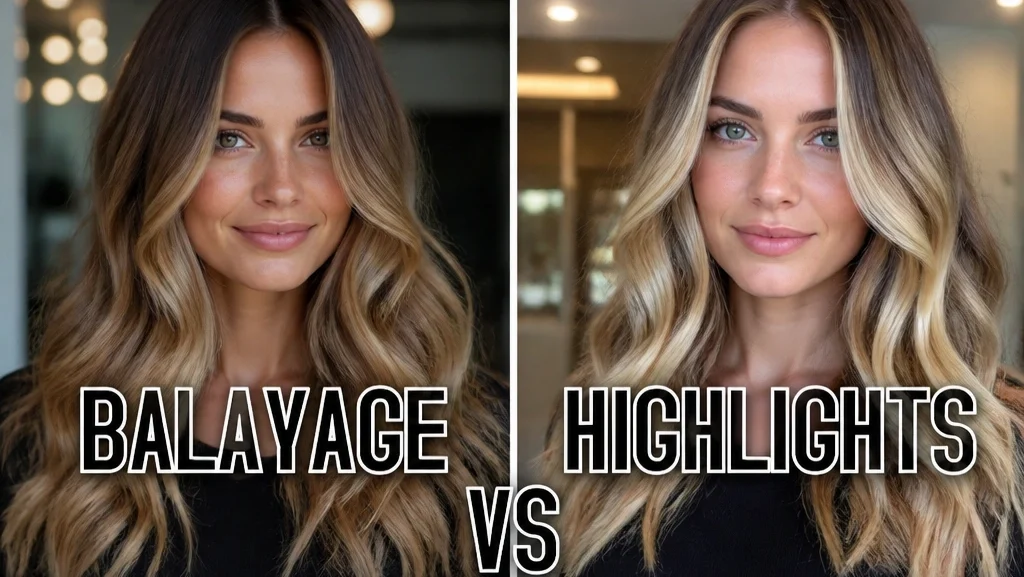
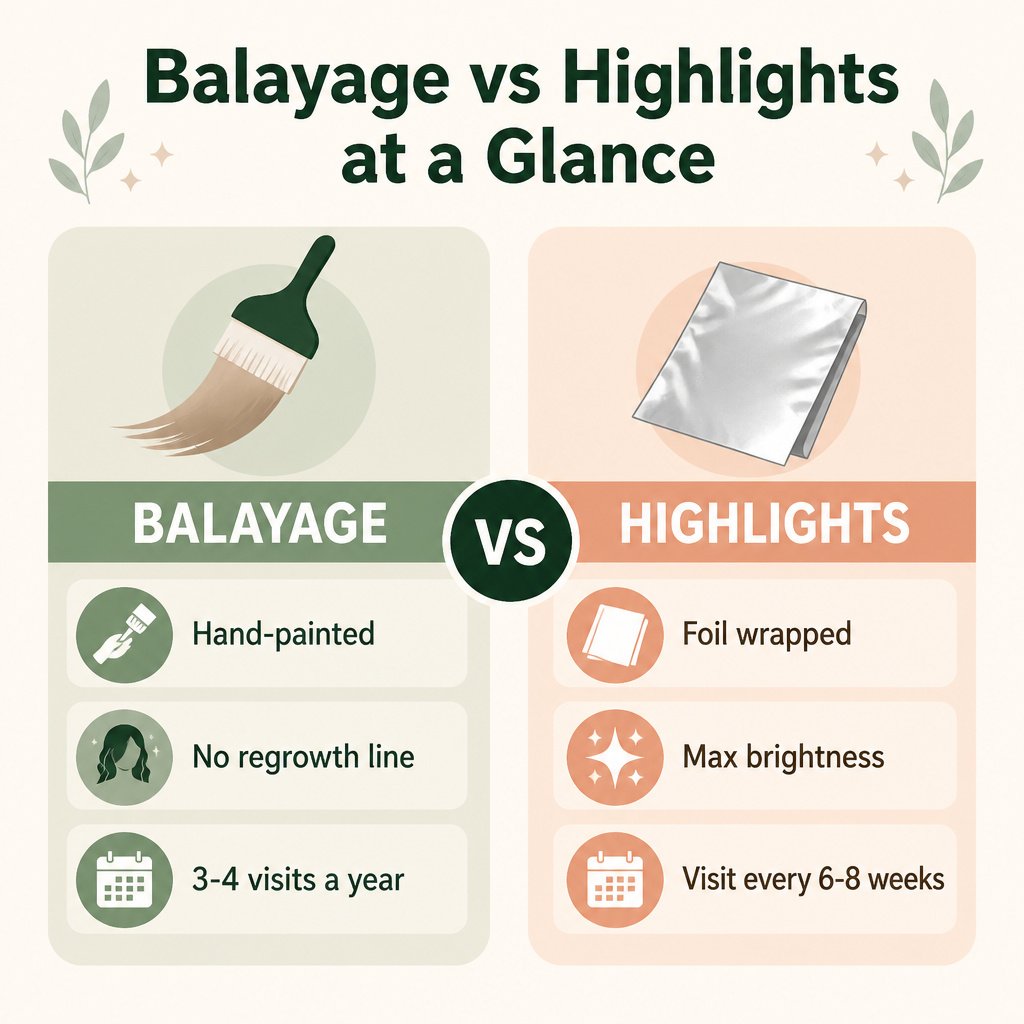
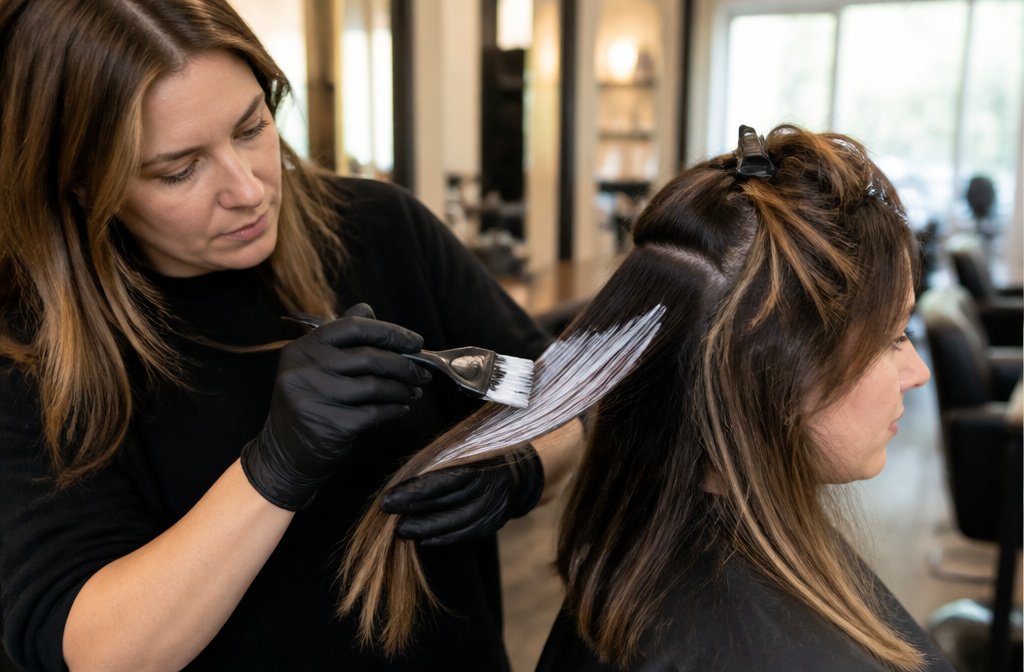
Balayage is hand-painted
Balayage comes from the French word for “sweeping,” and that describes the motion exactly. Your colorist paints lightener onto the surface of selected sections freehand, usually concentrating on the mid-lengths and ends while leaving the roots mostly untouched. No foils isolate the strands, so the lightener sits in open air and lifts more gently.
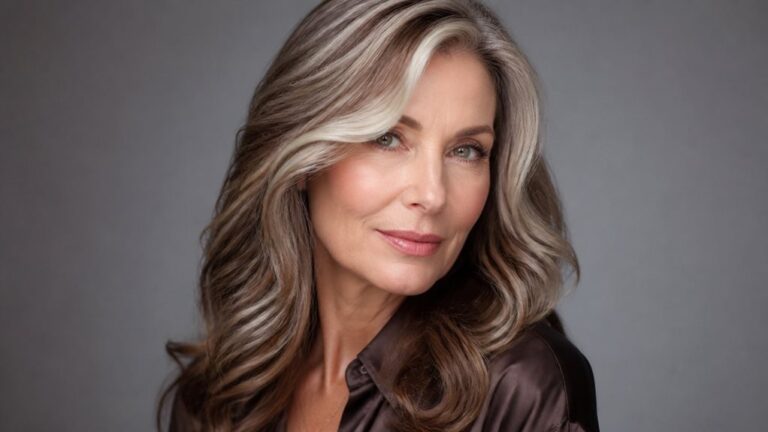
The result mimics what the sun does naturally. Color melts from darker roots into lighter ends with no visible lines, and every placement is customized to your haircut and face shape.
Highlights are foiled
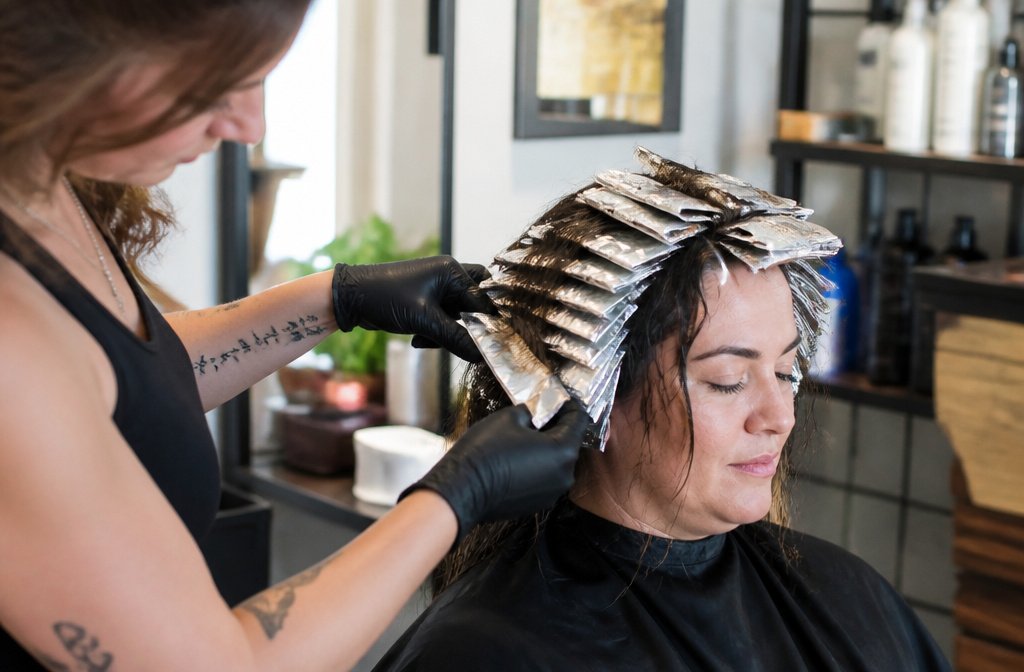
Traditional highlights take precise, woven sections of hair and wrap them in aluminum foil after the lightener goes on, saturating each strand end to end. The foil traps heat, which pushes the lightener to lift further and faster than open-air painting can.
That structure produces a brighter, more uniform result. Light pieces run through the hair from the root down, which delivers maximum brightness but also means regrowth shows at the scalp as your own color grows back in.
The Side-by-Side Comparison
| Factor | Balayage | Highlights |
|---|---|---|
| Application | Hand-painted freehand, no foils | Woven sections wrapped in foil |
| Placement | Mid-lengths and ends, roots left dark | Root to tip |
| Finish | Soft, sun-kissed, blended | Bright, uniform, defined |
| Lift power | Gentler, 2-3 levels typical | Stronger, 4+ levels possible |
| Regrowth line | None visible | Visible at roots by week 6 |
| Salon visits | Every 12-16 weeks | Every 6-8 weeks |
| Session time | 2.5-4 hours | 1.5-3 hours |
| Per-session cost | $150-$450+ | $100-$250 |
Grow-Out and Upkeep
The biggest practical difference between the two shows up about six weeks after your appointment, when your natural color starts coming back in.
Foiled highlights start at the scalp, so regrowth creates a visible line of demarcation. Most highlight clients are back in the chair every 6 to 8 weeks to keep that line from becoming obvious. Skip an appointment and the contrast between your roots and the lightened lengths announces itself in every photo.
Balayage sidesteps the problem entirely. Because the lightener never touched your roots, there is no line to grow out. The dark-to-light gradient simply stretches as your hair grows, and most balayage clients refresh every 12 to 16 weeks, with some pushing to five months. Between visits, a gloss or toner appointment keeps the lightened ends from turning brassy.
What Each One Actually Costs
Per session, highlights usually run cheaper. Partial foil highlights range from roughly $100 to $150 at most salons, with full heads running $150 to $250. Balayage starts around $150 and climbs past $450 for long, thick hair at high-end salons, because the freehand work takes more time and skill.
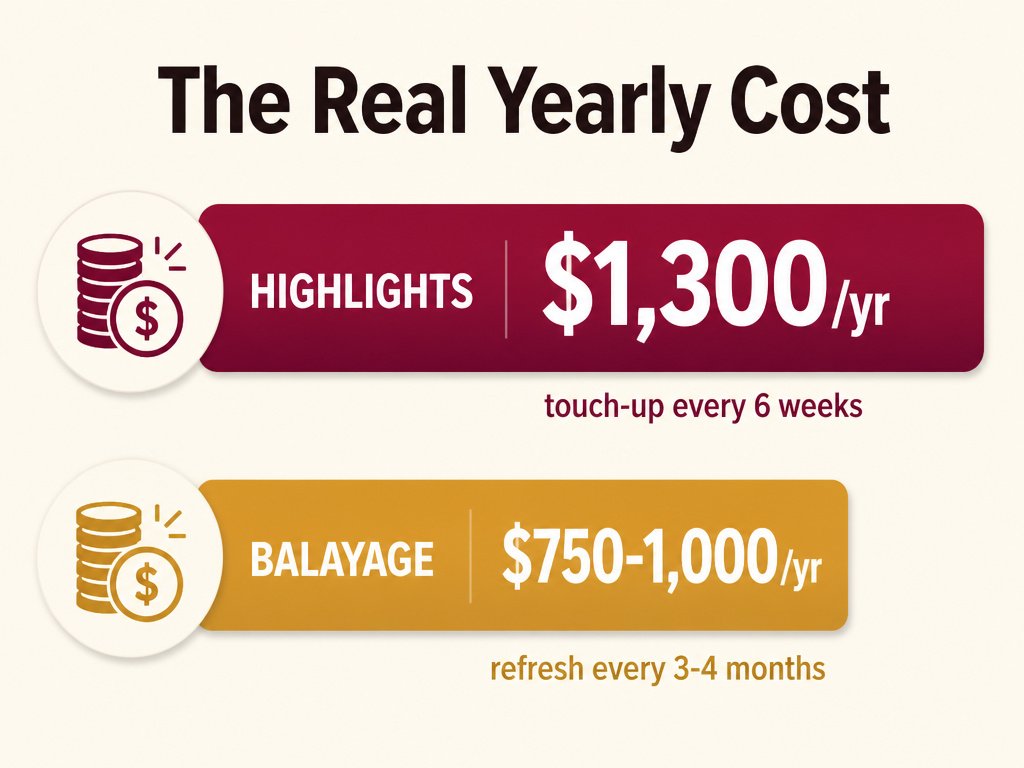
The yearly math flips the picture. A $150 highlight touch-up every 6 weeks adds up to roughly $1,300 per year. A $250 balayage refreshed every 3 to 4 months lands between $750 and $1,000. The more expensive appointment turns out to be the cheaper habit.
Matching the Technique to Your Hair
Neither option wins outright. Each one favors certain hair types, base colors, and lifestyles.
Fine hair
Fine strands over-process easily, and balayage’s lighter touch protects them. The soft, surface-level placement adds dimension without saturating every strand in lightener. If you love the precision of foils, ask for babylights instead. Those ultra-thin woven sections build brightness gradually and flatter fine hair without chunky contrast.
Thick or coarse hair
Dense hair swallows subtle color. Foiled highlights push enough lift through thick sections to make the dimension visible, where balayage can disappear into the bulk. Many stylists recommend a heavier balayage saturation or a foilyage approach for thick-haired clients who want the blended look with real brightness.
Dark brown and black hair
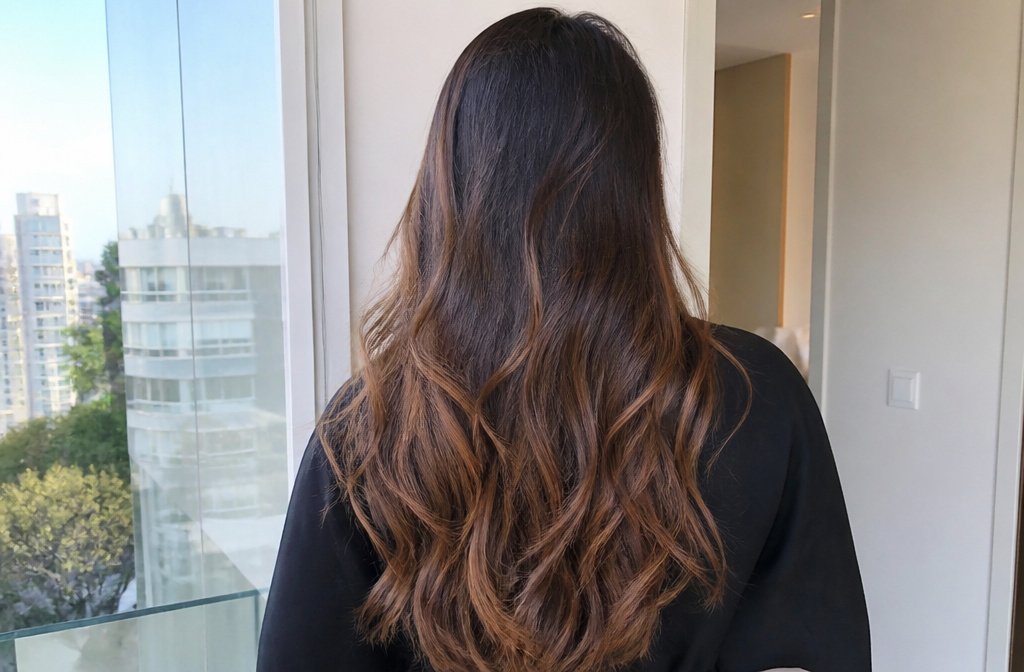
Dark bases have the most to gain and the most to lose. Balayage on dark hair produces caramel, honey, and warm chocolate tones that stay close to your natural depth, a look that suits deep brunettes and warm undertones. Our roundup of hair color ideas for brunettes shows how much range lives inside that two-to-three-level lift.
Chasing significant lightness from a base this deep is a different job. Foils lift dark hair four or more levels in a way open-air painting cannot, so blonde ambitions on black hair usually start with foil work, sometimes across multiple sessions.
Blonde and light brown bases
Lighter bases give both techniques an easy canvas. Highlights brighten blonde hair into a polished, all-over lightness, while balayage adds depth and movement that keeps blonde from looking flat. Browse these blonde balayage looks and some classic highlight inspiration side by side, and you can usually feel which finish you’re drawn to within a few photos.
Blending gray
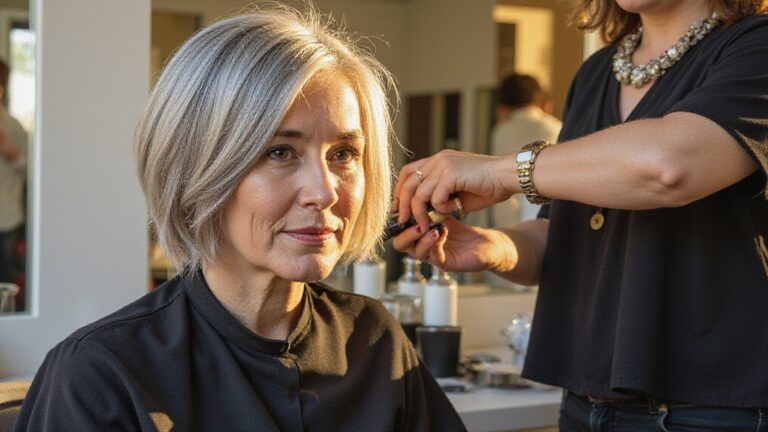
Scattered silver strands blend better with highlights, especially babylights, which weave fine lightness through the gray so it stops standing out against the base. Balayage helps once gray concentrates around the face, softening the transition instead of fighting it. Plenty of women lean into the change entirely, and these gray hair color ideas show how striking that route can look.
What Dermatologists Say About Damage
Any lightening service involves bleach, and bleach changes the hair shaft. Products that lighten hair strip the protective coating of the fiber, leaving strands thinner, weaker, and more porous, according to the Cleveland Clinic. Overdo it and hair turns limp and breakage-prone.
The good news is that both of these techniques already follow the safer path. Cleveland Clinic experts note that partial highlights are gentler than all-over color because fewer strands touch the chemicals. The American Academy of Dermatology adds two rules worth keeping. Stick to one chemical process at a time, and try to stay within three shades of your starting shade.
Between appointments, a color-safe shampoo, a weekly bond-repair or deep-conditioning mask, and lower heat-styling temperatures protect the investment. Stretching the time between lightening sessions matters more than any single product, which quietly hands balayage another advantage, since its schedule does that by design.
The Middle Ground: Foilyage, Babylights, and Money Pieces
Plenty of salon menus now blur the line between the two camps, and three hybrids dominate.
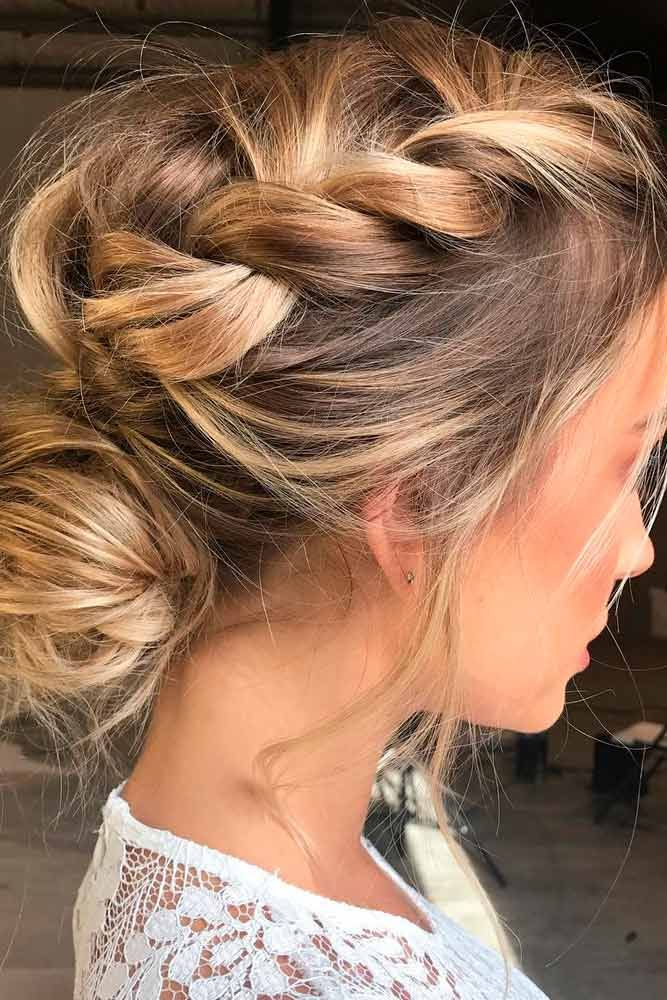
Foilyage hand-paints lightener balayage-style, then wraps the painted sections in foil to trap heat. The result keeps balayage’s blended placement while borrowing foil’s lifting power, which makes it the go-to for dark hair that wants real brightness without stripes, as explained in Madison Reed’s foilyage guide.
Babylights are ultra-fine foiled highlights woven in tiny sections. They create a lit-from-within glow, flatter fine hair, and soften the first scattered grays without an obvious color change.
Money pieces concentrate brightness in the two face-framing panels at your hairline, usually two to four levels lighter than the base. A money piece takes 60 to 90 minutes in the chair, pairs with either technique, and delivers the biggest visual change per dollar of anything on this page. Wella’s face-framing guide covers how stylists place them for different face shapes.
Where Ombre and Sombre Fit In
Two more terms cause confusion at the consultation, so it helps to place them on the map. Ombre is a horizontal color transition, dark on top melting into a distinctly lighter bottom half, with the change happening band by band rather than strand by strand. It makes a bolder statement than balayage and shows an obvious two-tone effect.
Sombre is simply a softer ombre, with less contrast between top and bottom. Balayage is the technique most stylists now use to create both effects, which is why the words get tangled. Think of ombre and sombre as destinations and balayage as the road, then tell your stylist the destination and let them pick the route.
Keeping Either One From Fading
Lightened hair fades the same way no matter which technique put the color there, and a few habits stretch the life of both.
- Wash in lukewarm water with a sulfate-free, color-safe shampoo, since hot water opens the cuticle and lets tone escape faster.
- Work a purple or blue toning shampoo into the rotation once a week to neutralize brass, purple for blonde tones and blue for orange tones on brunettes.
- Cut heat-styling temperatures below 350°F and never skip the heat protectant, because lightened strands scorch faster than virgin hair.
- Shield your hair from summer sun and chlorine, both of which push lightened pieces brassy or green within a single vacation.
- Book a gloss between lightening appointments rather than re-lightening early, which refreshes tone with zero additional lift damage.
Which One Fits You
Questions Worth Raising at Your Consultation
A ten-minute consultation prevents most color regrets. Bring photos of results you like, then cover these points before anyone mixes lightener.
- Show your inspiration photos and confirm they’re achievable from your current base in one session.
- Get the full quote up front, including the toner and gloss, which are sometimes billed separately.
- Find out what the grow-out will look like at the 8-week and 16-week marks.
- Raise any history of relaxers, henna, or box dye, since old chemistry changes how your hair lifts.
- Check which take-home products they recommend and why, before you’re standing at the register.
Frequently Asked Questions
Q: Which is less damaging, balayage or highlights?
A: Balayage, in most cases. It touches fewer strands, skips the roots, and lifts more gently without foil heat. The longer gap between sessions also gives hair more recovery time. That said, damage tracks the level of lift more than the technique, so a heavy balayage can stress hair more than a few conservative foils.
Q: Can I switch from highlights to balayage?
A: Yes, and stylists do this conversion constantly. Your colorist paints over the existing highlighted pattern and lets the old foil work blend into the new gradient, sometimes adding a root shadow to erase the demarcation line in a single visit.
Q: How long does balayage last?
A: The placement lasts 3 to 5 months before it needs a refresh, since there’s no root line to expose. The tone fades sooner. Expect a toner or gloss around the 8-week mark to keep the lightened pieces from going brassy.
Q: Is balayage more expensive than highlights?
A: Per session, usually yes, often by $50 to $150. Per year, usually no. Highlight upkeep on a 6-week cycle costs more over twelve months than balayage refreshed every 3 to 4 months.
Q: Which looks more natural?
A: Balayage, by design. The freehand placement copies the way sun lightens hair, with depth left at the root. Highlights deliver a brighter, more deliberate finish that reads polished rather than beachy. Babylights split the difference if you want foil precision with a natural effect.
Q: Do balayage and highlights work on short hair?
A: Both do, with adjustments. Highlights suit pixies and short bobs well because there’s less length for a gradient to develop. Balayage needs a few inches to show its melt, so on shorter cuts stylists concentrate it around the face and crown, and shades like these caramel tones work especially well at that scale.
The Verdict
Balayage wins on upkeep, grow-out, gentleness, and yearly cost. Highlights win on brightness, lift power, precision, and per-session price. Neither is objectively better, and the honest answer to “which fits your hair better” comes from three questions. How light do you want to go, how often will you realistically get to the salon, and how much lightener can your hair’s current condition handle?
Subtle warmth over deep brunette with four salon visits a year points to balayage. Bright, uniform lightness you’re happy to maintain every 6 to 8 weeks points to foils. And if you genuinely can’t pick a side, foilyage exists precisely because thousands of clients before you couldn’t either.