20 Neck-Length Haircuts For Women Over 50
Not every good haircut has to be short or high-maintenance. Neck-length cuts sit between a cropped style and longer layers, which gives a stylist more to work with when the goal is masking thinning, softening a strong jawline, or just cutting down on daily styling time.
The cutting technique behind each of these matters more than the name of the style. Two bobs can look nearly identical in a photo and behave completely differently depending on how the layers are placed and where the weight sits.
Classic Bob at the Neck for Women Over 50
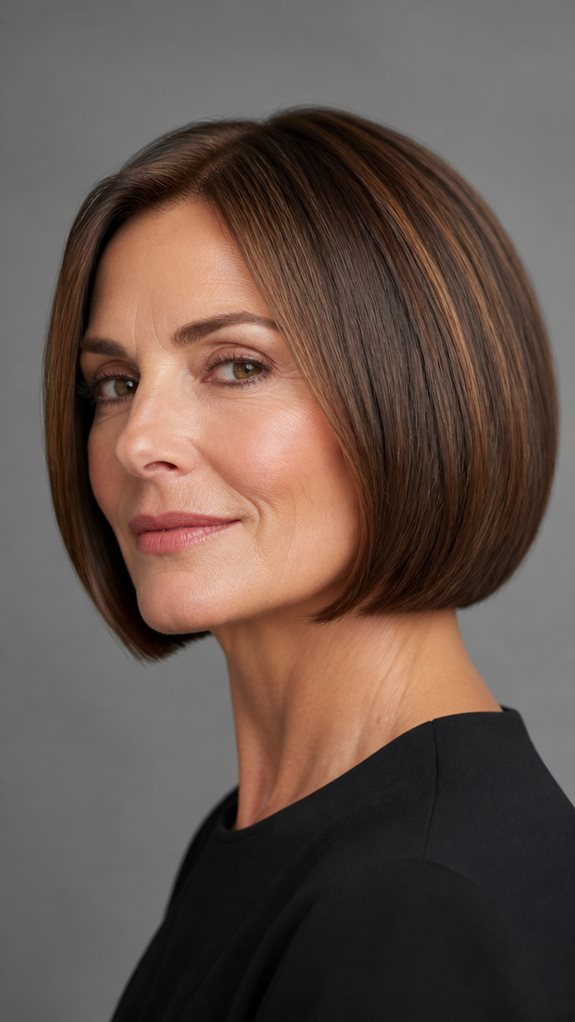
A one-length bob is cut with the head straight down rather than tipped forward, which keeps the weight line even instead of shorter in the back.
Length matters more than it looks like it would here. Landing an inch too short causes the ends to flip outward instead of curving under, which is one of the most common fitting mistakes with this cut.
Because the weight sits heavy at the ends, this shape holds for six to eight weeks between trims before it starts to lose its line.


The Sleek Blunt Cut That Never Goes Out of Style
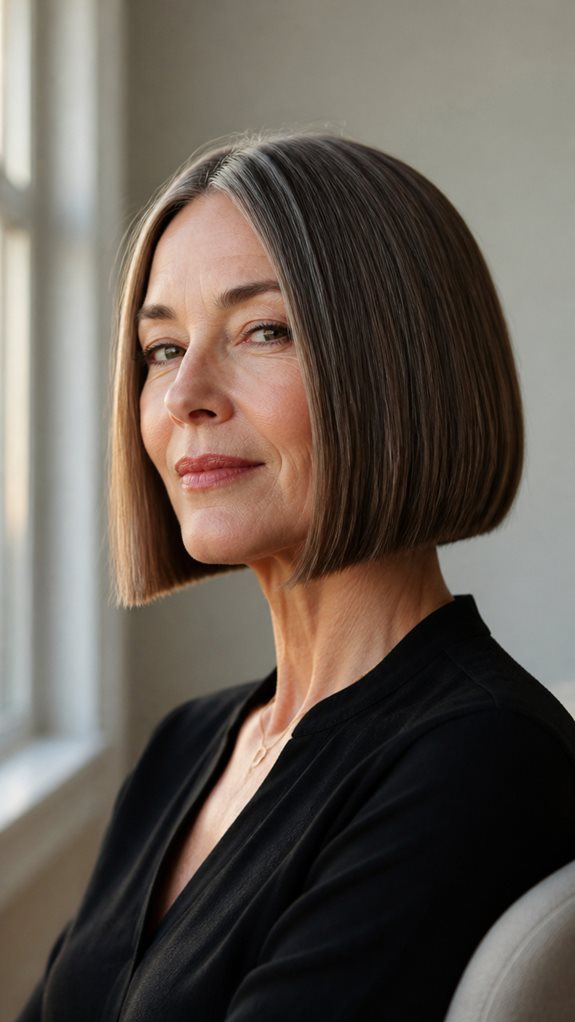
A good stylist checks the blunt line dry, not just while the hair is wet. Any natural wave shrinks the hair up as it dries, which can leave the line uneven if it was only checked wet.
A flat iron pass in one direction, rather than going back and forth over the same section, keeps the cuticle smooth instead of roughing it up and dulling the shine.
Because there’s no layering to disguise a growing-out line, this cut needs trims closer to every five to six weeks to keep the edge crisp.


Layered Neck-Length Cuts for Fine or Thinning Hair
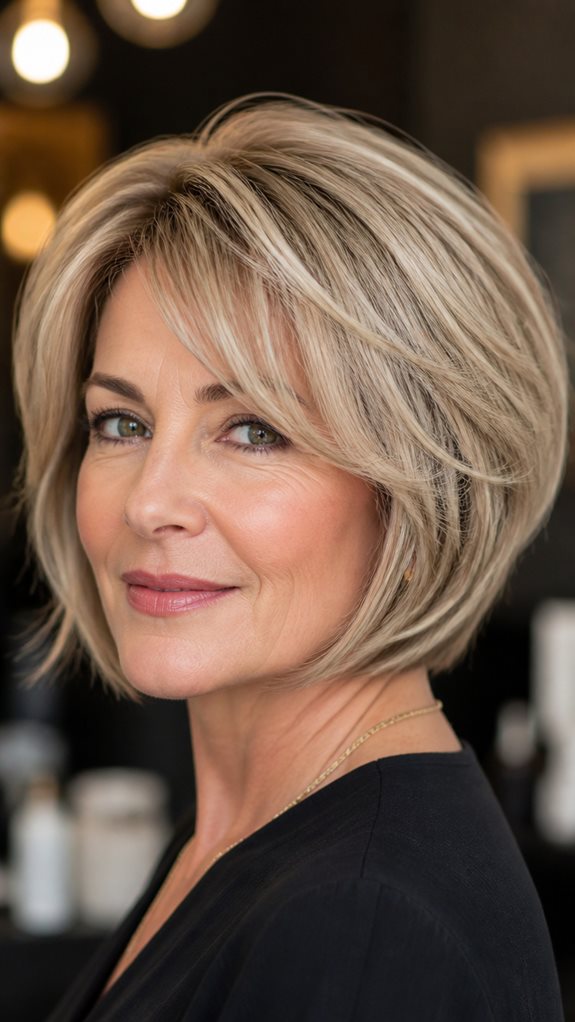
Point-cutting, small vertical snips into the ends rather than a single straight line, adds texture without removing the bulk that fine hair can’t afford to lose.
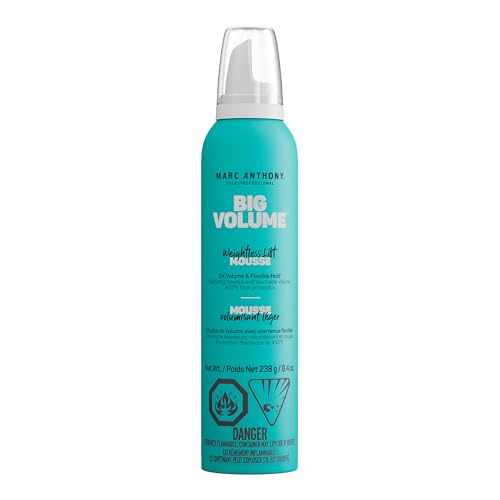
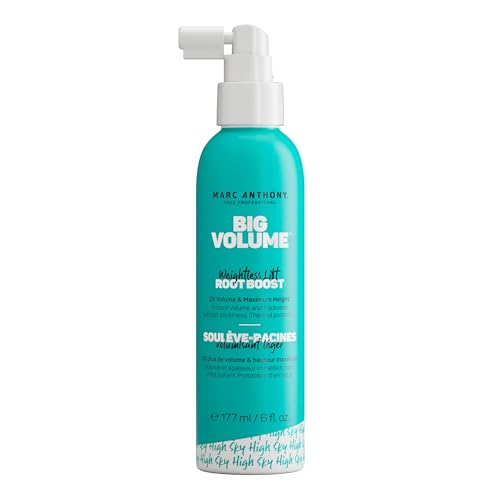
Root-lift mousse belongs at the roots only. Applying it through the mid-lengths just weighs fine hair down instead of helping it.
Blow-drying against the direction hair naturally falls, rather than straight down, is what actually builds lift at the root instead of just drying the hair flat. Our haircuts for thinning hair over 50 guide has more cuts built around this same problem.

The Textured Lob That Adds Instant Volume
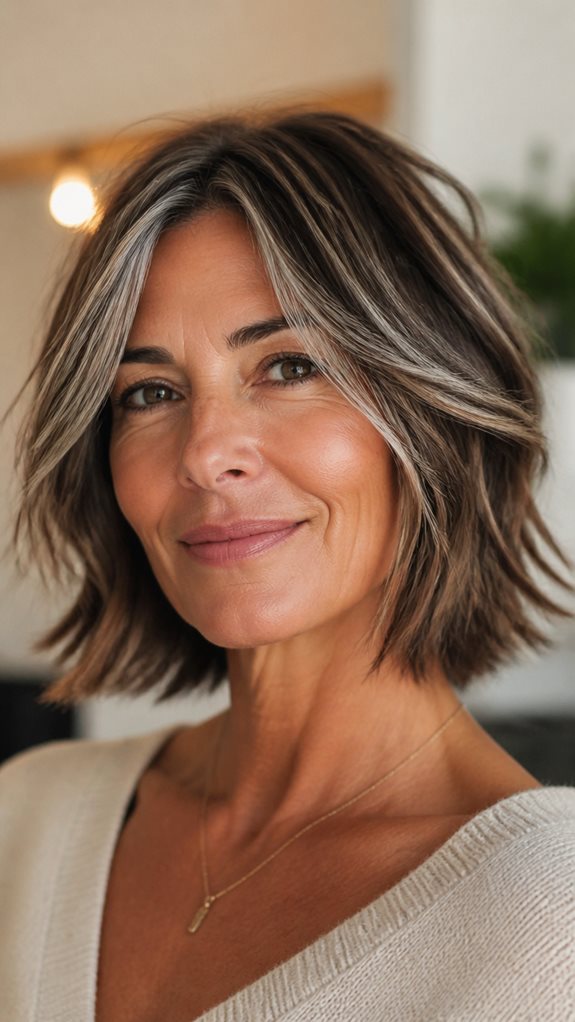
The layers concentrate in the top third of the length rather than running all the way through. That concentration creates lift without thinning the ends out too much.
A round-brush blowout needs sections no wider than about an inch to actually build volume at the root. Wider sections just move air over the hair without lifting it.
This cut works especially well once hair has lost some of its natural density, since the layering does the volume work the hair used to do on its own.

Face-Framing Layers That Soften Your Features
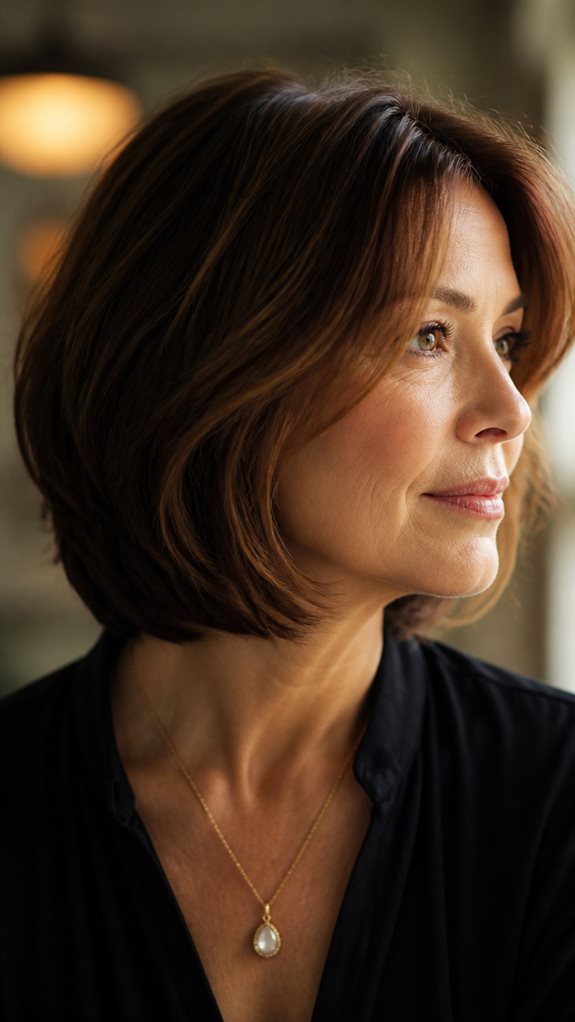
The starting point for these layers should be measured from the cheekbone, not the ear or jaw, since that’s the point that actually softens a square or angular jawline.
The layer should be cut on a diagonal rather than straight across. A straight cut at this length can look like an accidental too-short section instead of an intentional face-framing piece.
This works across straight, wavy, and lightly textured hair without needing to change the technique, since the placement is doing the work, not the texture.

Wispy Neck-Length Cuts for a Light, Airy Look
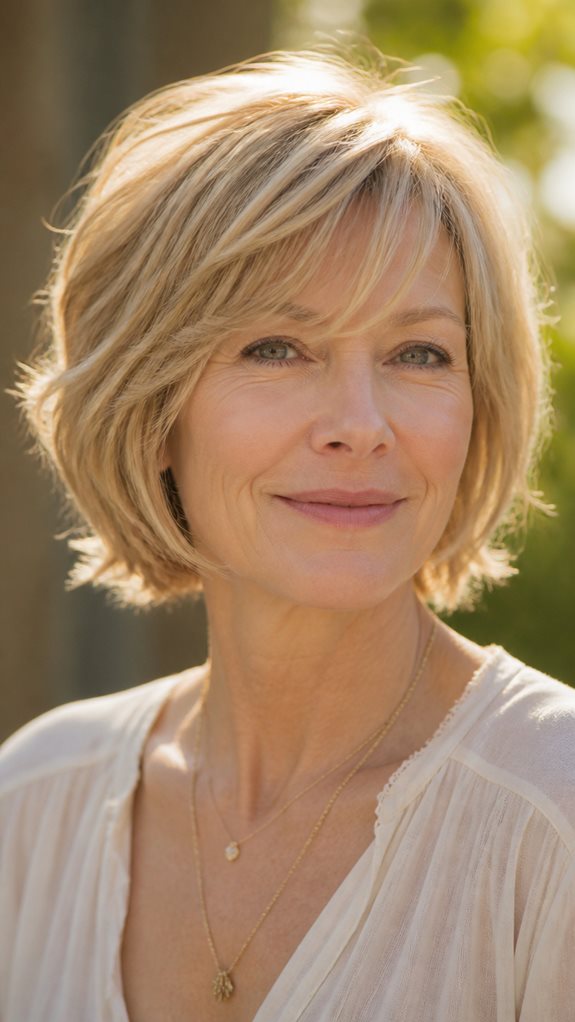
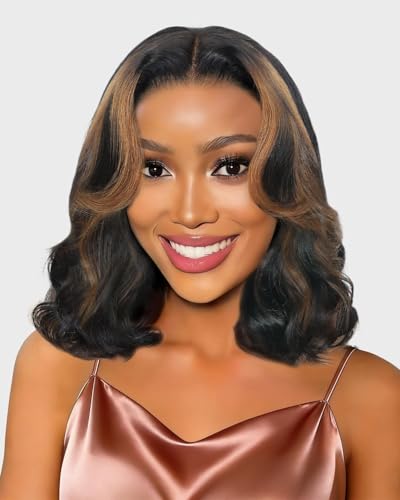
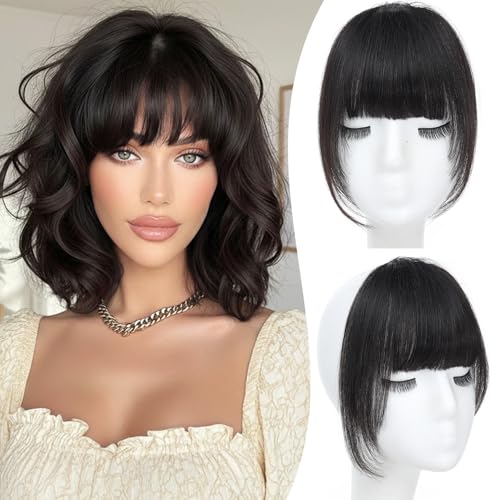
Texturizing shears remove weight in small increments across the whole cut instead of concentrating it in one place. Spreading the removal out is why the result doesn’t look choppy.
A razor can create a similar texture, but it leaves blunt-ended stubble on hair that’s already fine, which shears avoid.
Styling stays simple here. A light-hold mousse or texturizing spray is enough, since the cut is already doing most of the work.

The Angled Bob for a Modern, Polished Finish
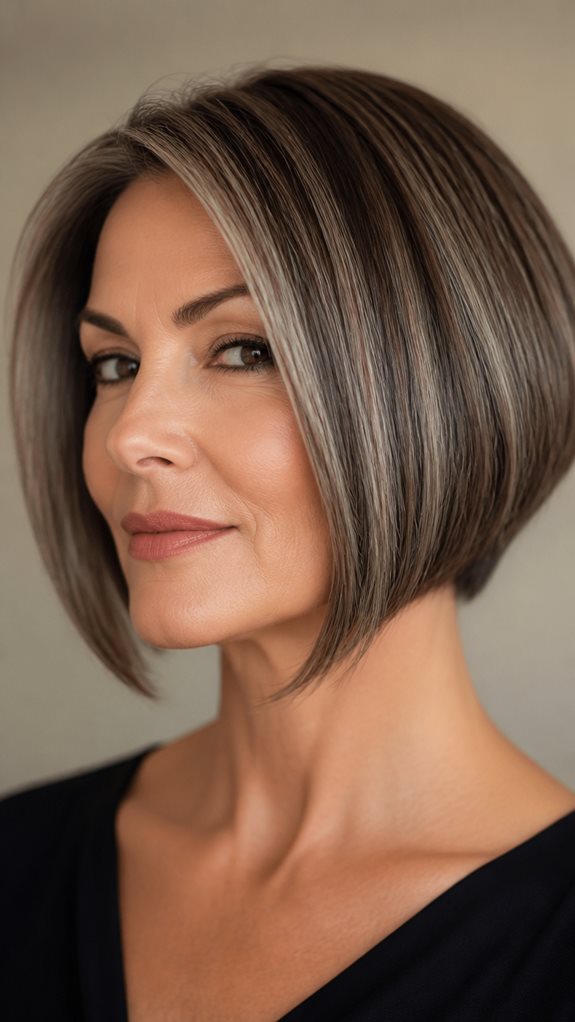
The angle is really just the difference in length between the front and back, usually one to three inches. The steeper that difference, the more the shortest point at the nape shows growth first.
A three-inch or steeper angle needs trims closer to every five weeks. A subtler one-inch angle can stretch closer to eight.
Sharper angles tend to suit oval and heart-shaped faces; a subtler angle is usually more flattering on rounder features.


Wavy Neck-Length Haircuts With Natural Movement
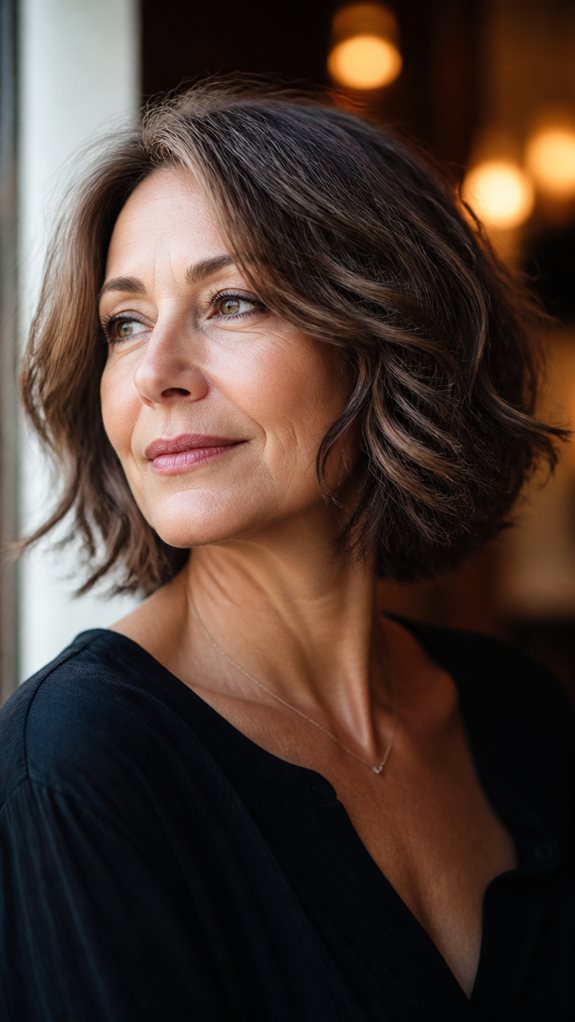
Internal layers cut with the head tilted forward remove weight from underneath, which lets the wave pattern show through instead of getting pressed flat by the top layer of hair.
Loose, undone waves hold up better at this length than tight, structured curls, which can look stiff once they drop to shoulder or neck length.
With a diffuser, cup the sections and hold them still rather than raking through while drying. Raking breaks up the wave pattern instead of encouraging it.


Bold Asymmetrical Cuts for Women Over 50
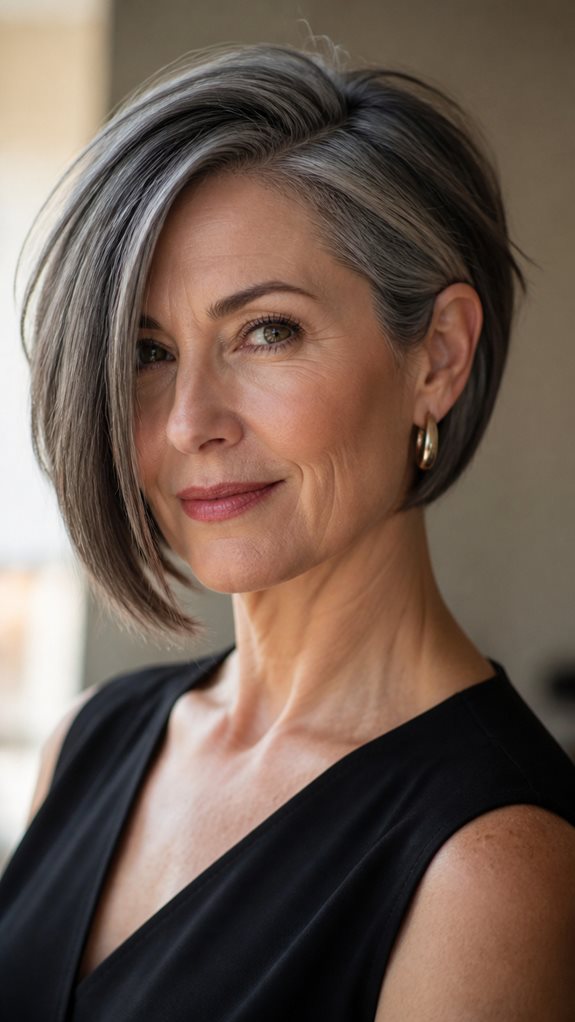
The length difference between the two sides needs to be at least two inches to come across as a deliberate choice. Anything smaller can look like an uneven cut rather than an intentional style.
A flat iron creates the clean, precise lines that sharpen the contrast between the two lengths — those crisp lines are most of why this cut photographs so well.
Deep, saturated colors like brunette or burgundy make the asymmetry read more clearly than a lighter, lower-contrast shade would.


The Shaggy Neck-Length Cut Making a Comeback
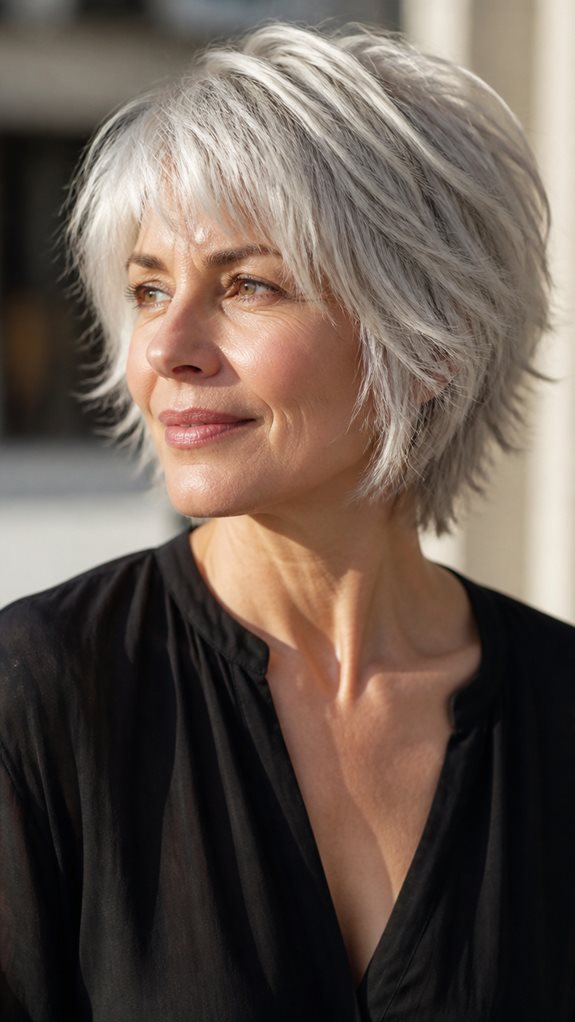
The layers run at a steep angle through the whole head, not just at the ends, and that full-head angling is the real difference between a shag and a standard layered cut — it’s where the piecey look comes from.
Curtain bangs for this style get cut with a center part first, then blended into the face-framing layers so there’s no hard line between the two.
The layered construction adds real volume and movement to fine or thinning hair, which is a big part of why this cut has come back into style. Our shag haircuts over 50 collection has more variations built on this same shape.


Neck-Length Haircuts That Work for Thick Hair
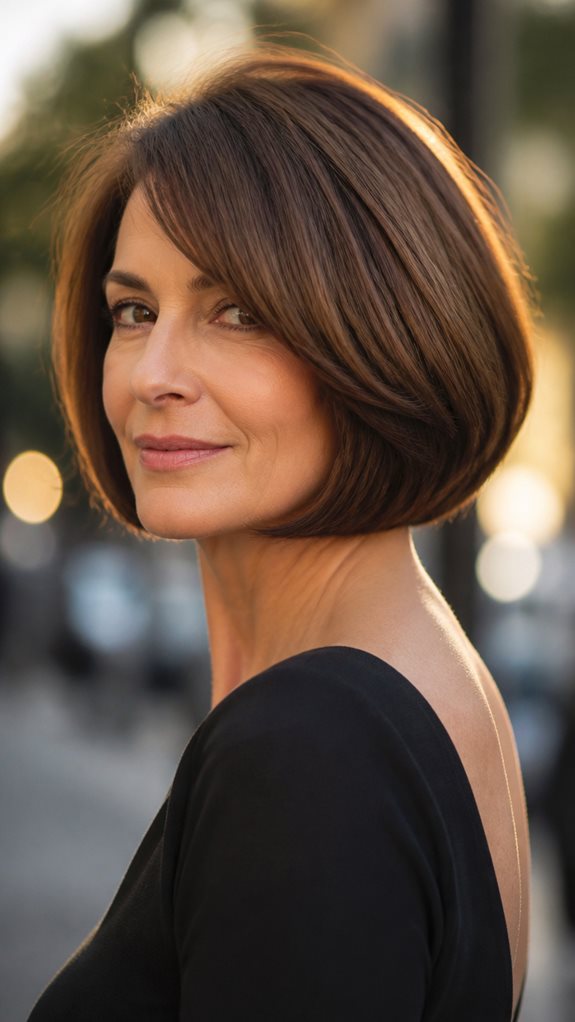
Internal thinning with texturizing shears removes bulk from underneath the visible layer without shortening the overall length.
Thinning too close to the scalp causes flyaways, so a good stylist keeps that work at least an inch away from the root.
A smoothing serum on damp hair, followed by blow-drying downward with a paddle brush, tames frizz and keeps the cut’s lines clean through the day.


The Inverted Bob With a Longer Front Section
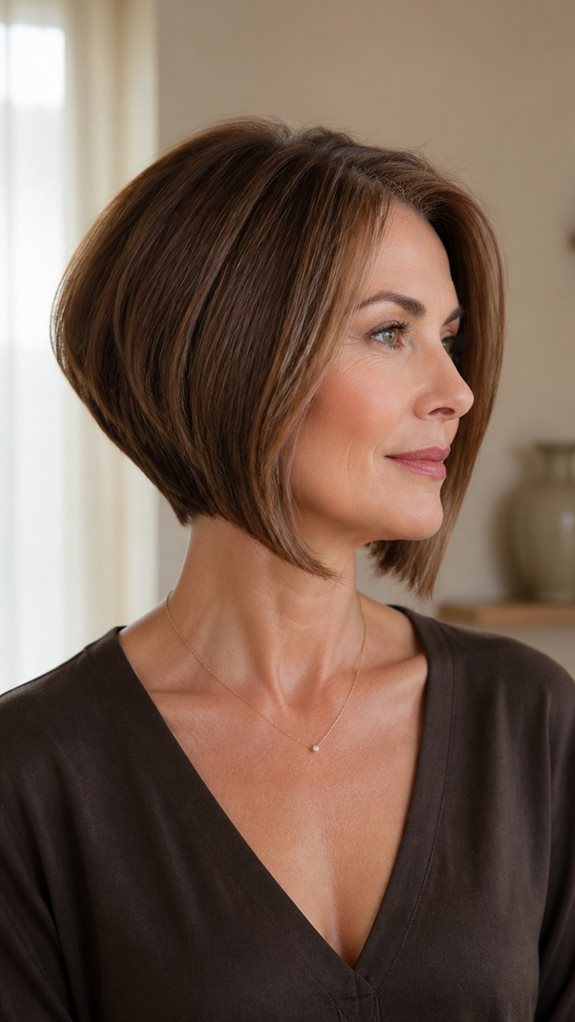
The back sections are cut with more graduation, shorter and stacked, than the front. That graduation is where the volume difference between the two comes from.
Blow-drying the back with the round brush rotated fully under builds lift specifically at the crown, which a simple downward blow-dry won’t do.
A flat iron on the longer front pieces keeps them sleek against the jaw while the back stays lifted, so the two sections come together as one intentional shape.


Neck-Length Styles That Look Great With Gray Hair
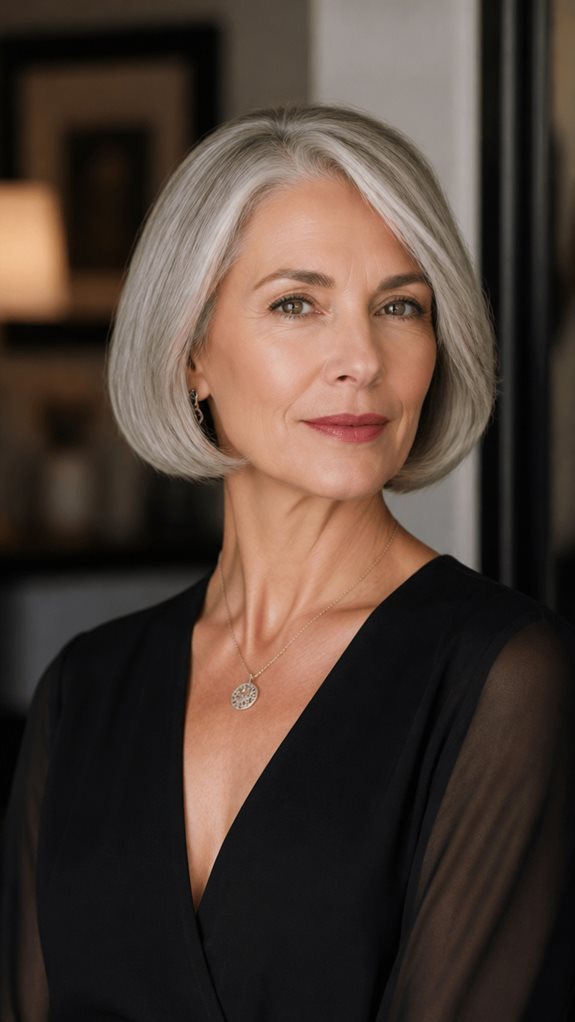
A blunt lob shows off the natural texture and dimensional tones gray hair often has; a soft shag adds enough movement to keep it from looking flat.
Gray hair is usually coarser and holds less moisture than pigmented hair, so a heavier cream or serum tends to work better than a lightweight product marketed for fine hair.
A purple or blue shampoo weekly keeps brassiness down, and a gloss every four to six weeks maintains brightness between visits. Our hair color shades for women over 50 guide goes deeper into the toning side of this.


Soft Curls at Neck Length for a Romantic Look
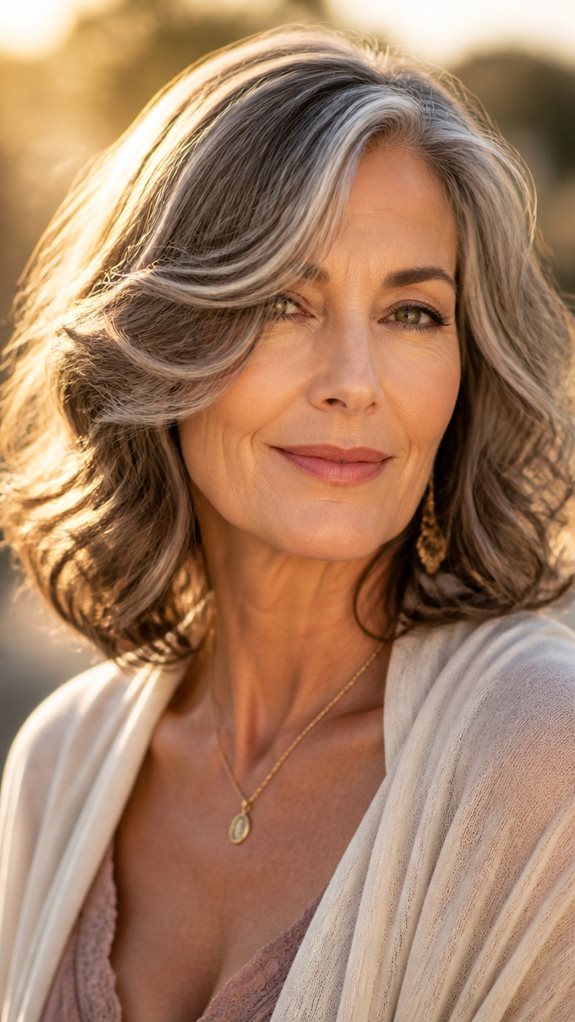
Alternating curl direction, away from the face on some sections and toward it on others, mimics natural texture better than curling every piece the same way, which tends to look obviously set.
A one-inch curling iron or flexi rods both work well for loose waves that fall right at the nape without needing constant touch-ups.
A diffuser attachment refreshes the curl pattern between washes, which stretches this style out longer than it would last with a flat blow-dry.


The Choppy Bob for Women Who Want Edge
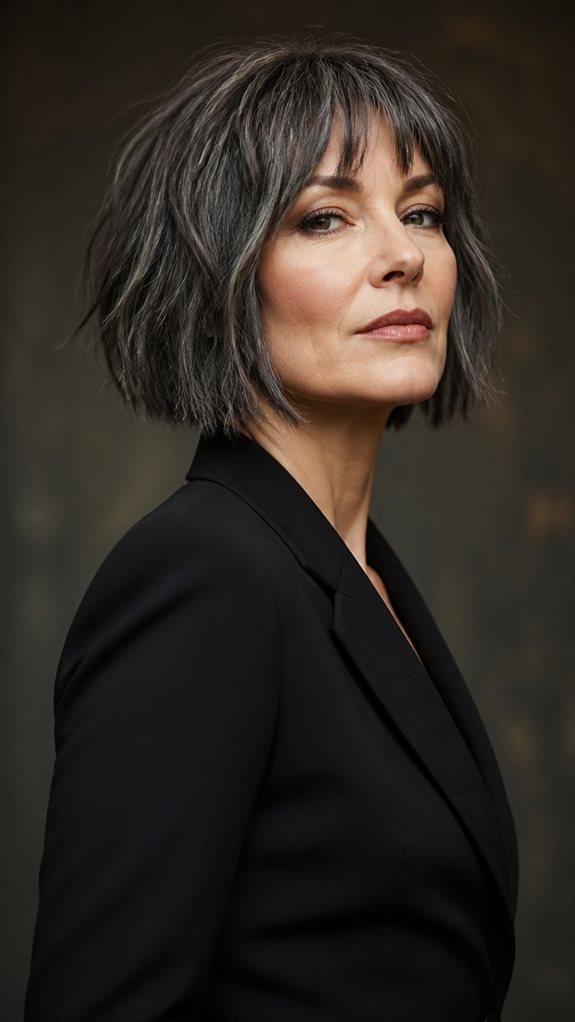
Point-cutting at varied angles across the ends, rather than one uniform pass, creates the irregular edges that make this cut look choppy instead of just layered.
Fine hair tends to suit this cut particularly well, since the uneven ends create the illusion of more density than a blunt line would on the same amount of hair.
Ask for point-cut ends rather than blunt lines. That one change is most of the difference between an ordinary bob and this style.


Neck-Length Cuts That Pair Well With Bangs
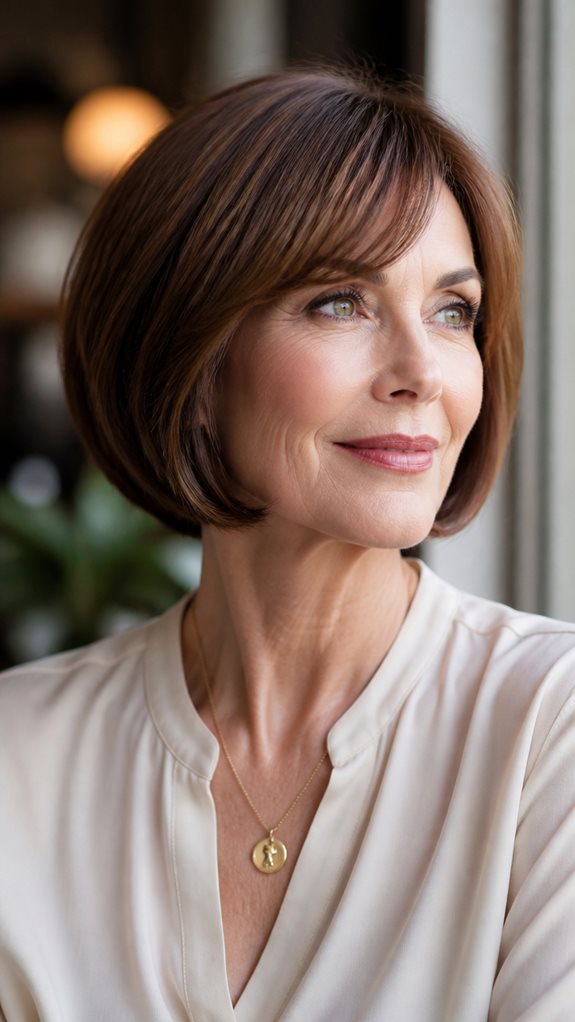
Bangs get cut dry, after the rest of the haircut is finished and styled, since hair behaves differently wet than dry and bang length shows that difference more than any other part of the cut.
Keeping the overall length short reduces the total weight you’re managing day to day, which makes bangs easier to keep styled without extra effort.
Fine hair suits wispy or curtain-style bangs that don’t overwhelm the rest of the cut; thicker hair can handle a blunt or side-swept fringe without losing shape. Our medium-length haircuts with bangs guide covers this pairing at a slightly longer length.

Side-Parted Styles That Flatter Mature Faces
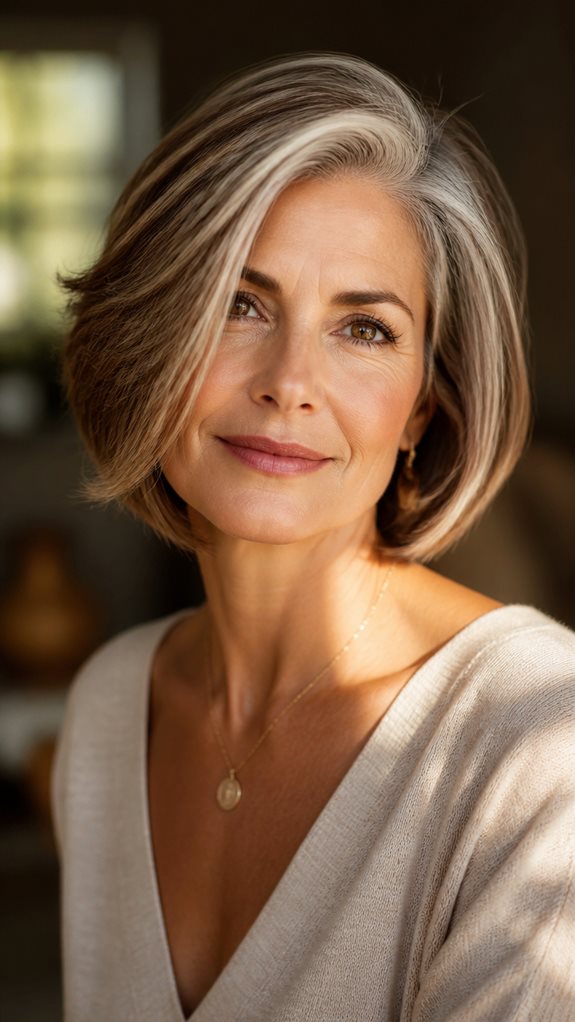
Part placement measured off the highest point of the eyebrow arch, rather than the center of the face, determines how much volume shows on the heavier side.
This asymmetry adds volume on one side while the other side skims closer to the cheekbone, which works especially well paired with a neck-length cut.
Wearing it tucked behind the ear gives a cleaner look; letting it fall forward softens the effect for a more casual day.
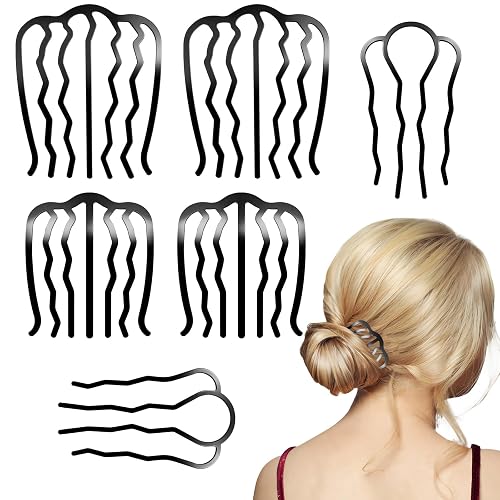


Low-Maintenance Neck-Length Cuts for Busy Women
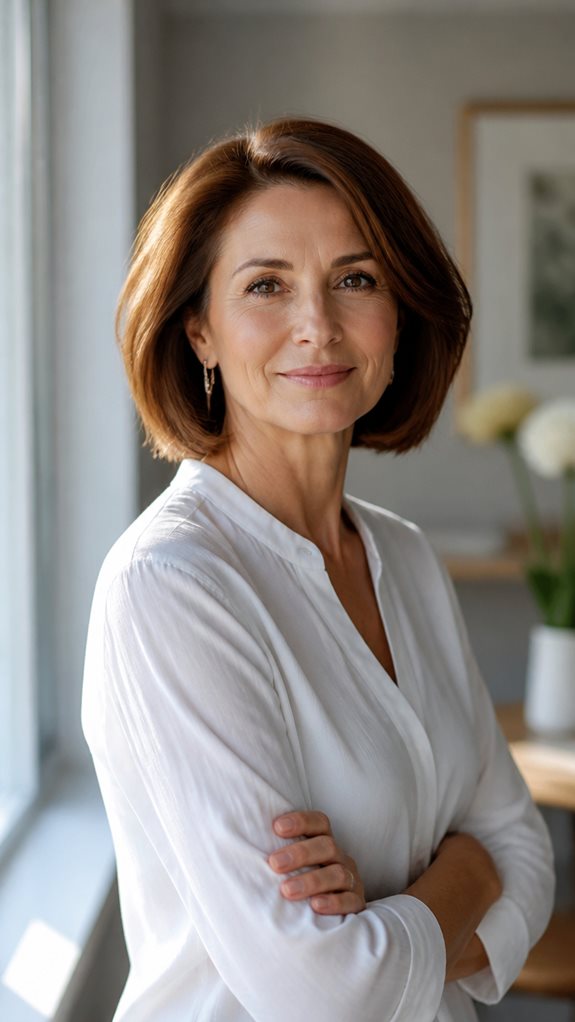
The single biggest factor in daily styling time is whether the cut was shaped to fall the way the hair naturally dries, rather than forcing a shape that needs a blow-dryer to look right.
A blunt bob with a slight bevel holds its shape for days between washes; a textured lob with layers air-dries into shape without any heat tool involved.
Balayage or a single-process color stretches root touch-ups out further than high-contrast color does, which cuts down on salon visits too.


The Blowout Bob for a Smooth, Salon-Worthy Finish
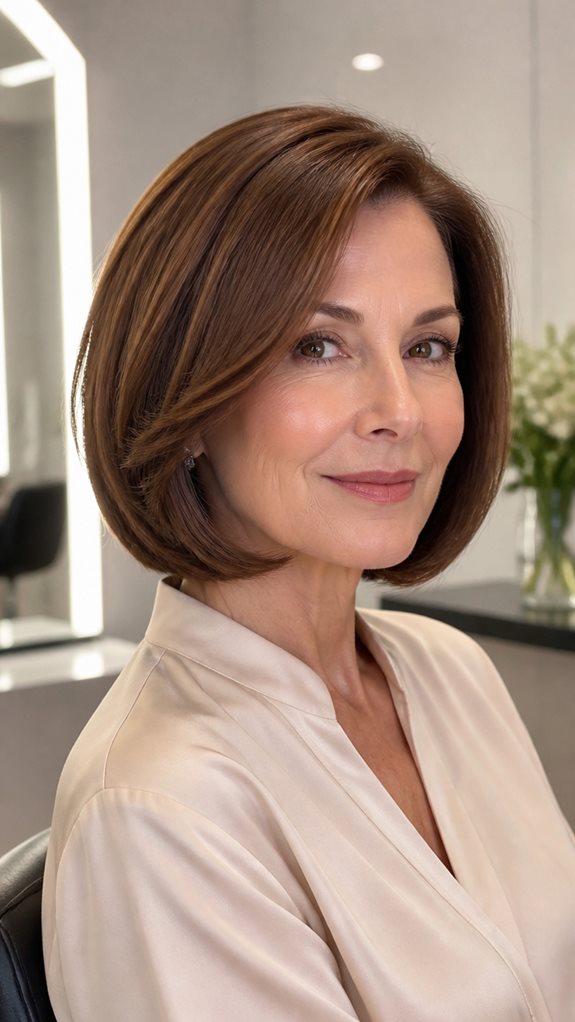
Round brush barrel size should roughly match the curl diameter you want. A brush that’s too large for the length can’t tension the hair enough to actually roll the ends under.
Blow-drying downward, following the direction of the cuticle, seals it flat — that’s the real source of the shine, more than any product applied afterward.
A lightweight smoothing serum applied before drying locks the shape in for three to four days before it needs redoing.
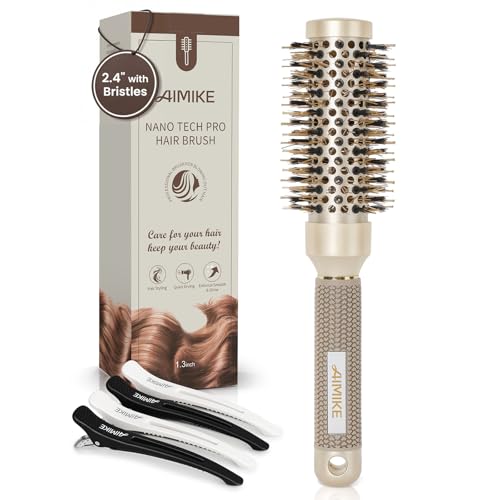
How to Choose the Right Neck-Length Cut for Your Face Shape
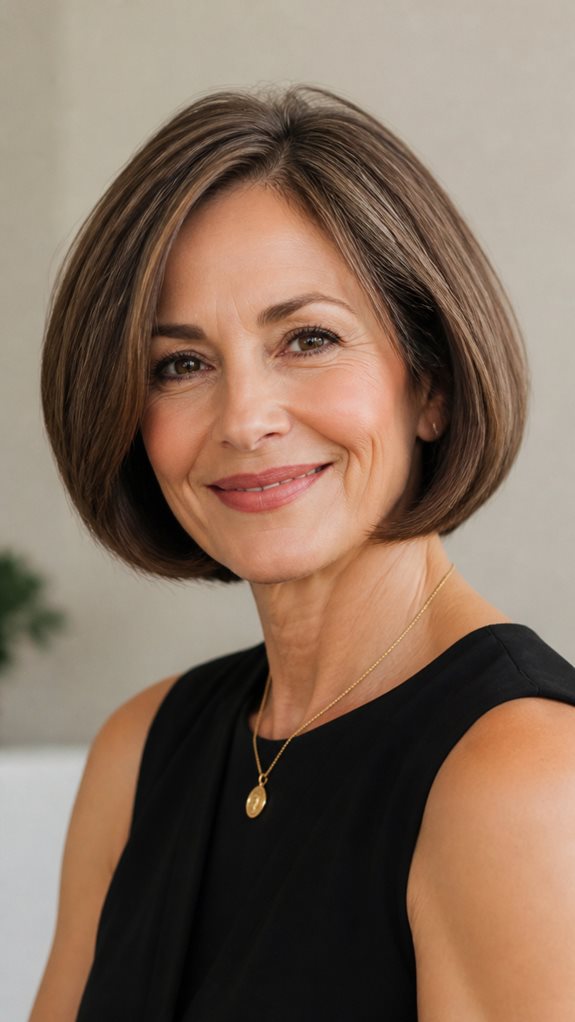
A quick way to check your face shape at home is measuring length against width with a tape measure. Length noticeably greater than width usually points to oblong or long; roughly equal measurements point toward round or square.
Round faces gain structure from an asymmetrical lob; square faces benefit from soft, layered cuts that ease a strong jawline. Heart-shaped faces do well with a chin-grazing bob that balances a wider forehead.
Oval faces can wear nearly any neck-length style, which makes hair texture the real deciding factor. Fine hair does best with blunt lines that look fuller; thick hair needs layering to keep bulk under control.

Frequently Asked Questions
Can Neck-Length Haircuts Help Disguise a Double Chin Effectively?
It depends on where the layers end. A line that stops right at or just below the chin draws a horizontal line at the widest point, which can call more attention to it rather than less. Layers that end clearly above or well below that point do more to redirect the eye upward instead.
How Often Should Women Over 50 Trim Neck-Length Hair?
Every six to eight weeks for most cuts. Hair grows roughly half an inch a month, and at this length that growth shows up faster relative to the overall shape than it would on longer hair, since the ratio of new growth to total length is tighter.
Do Neck-Length Cuts Work Well With Hair Extensions or Not?
Tape-ins blend more realistically at this length than clip-ins do, since clip-in wefts need a few extra inches of hair below the cut line to stay hidden. At true neck length, clip-ins often show at the root unless the cut is already on the longer end of the range.
Can Hormonal Changes Affect How Neck-Length Haircuts Hold Shape?
Yes. Lower estrogen thins the diameter of each hair strand, and finer strands don’t carry the same weight to fall into a clean blunt line the way thicker hair does. Volumizing products and slightly more frequent trims help the shape hold as that changes.
Are Neck-Length Haircuts Suitable for Very Active, Sporty Women?
It depends on exactly how short the cut is. Length needs to clear the collar for a ponytail to hold at all during a workout. Anything shorter than that, right at or above the collarbone, is genuinely difficult to tie back securely.
Final Thoughts
The cutting technique behind a neck-length style matters more than the style name. Where the layers start, how the weight is removed, and how the cut is meant to dry all decide whether it actually works for your hair type and face shape.
Bring a clear photo to your appointment and ask your stylist to explain the specific technique they’re using, not just the finished look, especially if you’re moving to a shorter length for the first time.