23 Modern Shaggy Hairstyles for Women Over 50 To Try This Year
Hair often changes over time, getting finer, softer, or losing some of its natural volume. Shaggy cuts hold up well against all three of those changes, since the layering does the shaping work that thicker, denser hair used to do on its own.
The technique behind each version below matters more than the label. Where the layers start, how steep the angle is, and whether the ends are point-cut or razored all decide how a shag actually behaves day to day.
The Classic Shag That Never Gets Old
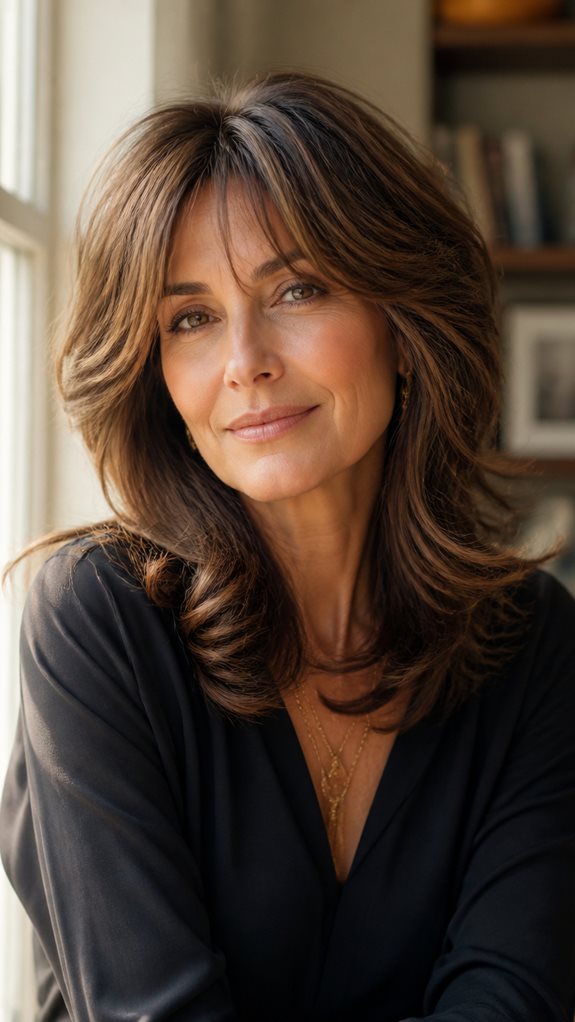
The angle the layers are cut at off the head, closer to 45 to 90 degrees rather than the shallower angle used for softer, blended layers, is what separates a shag from a standard layered cut.
Curtain bangs work best blended directly into the front layers rather than cut as a separate section, so there’s no hard line where the bangs end and the rest of the cut begins.
A razor removes more bulk in a single pass, which suits thicker hair. A point-cut, small vertical snips into the ends, is gentler and keeps the same texture without over-thinning finer hair.



Curtain Bangs That Take Years Off
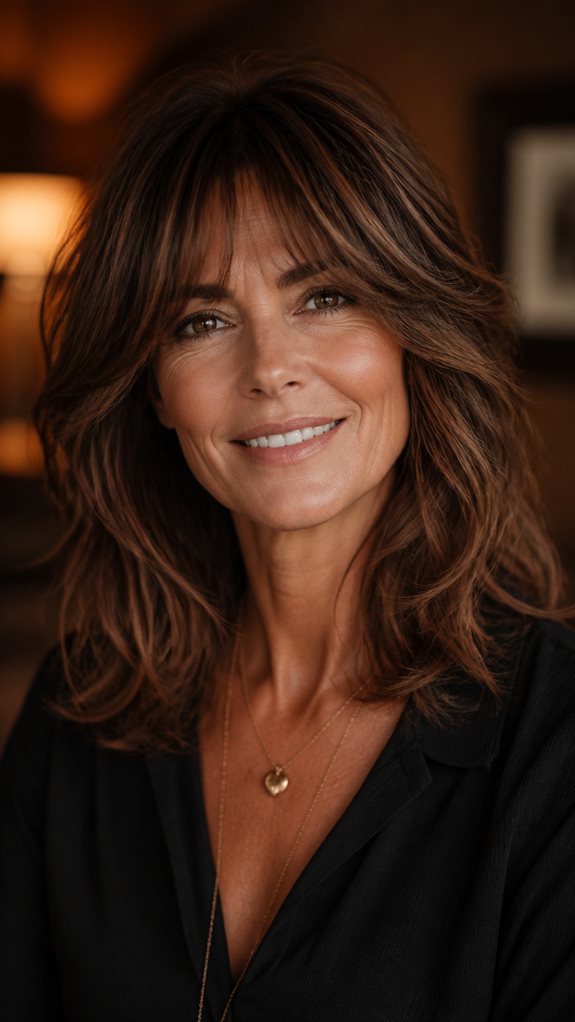
Curtain bangs get cut dry so the natural fall and any shrinkage from drying are already accounted for, rather than getting cut wet and coming out shorter than planned.
A true center part, not one slightly off-center, is what creates the actual curtain shape framing both sides of the face evenly.
Because they’re already blended into the face-framing layers rather than cut as an isolated piece, a couple extra inches of growth still tucks behind the ear instead of needing an emergency trim. Our curtain bang haircuts for medium hair collection has more takes on this same shape at a slightly longer length.


Choppy Layers for Fine Hair Over 50
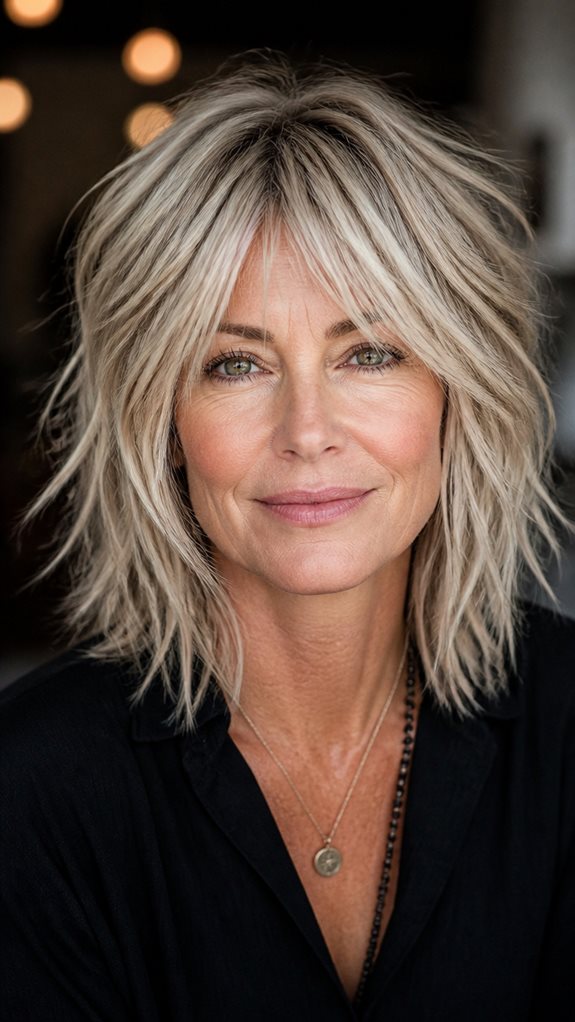
Point-cutting straight into the ends works better than a razor for fine hair. A razor can thin it out too far and leave stray wisps, where point-cutting keeps the ends looking thicker while still breaking up a blunt line.
Stacking shorter layers underneath longer surface pieces is what actually builds the illusion of density, rather than cutting layers evenly throughout.
A diffused blowout finishes the job without heavy product, since fine hair loses movement fast once it’s weighed down. Our haircuts for thinning hair over 50 guide covers more cuts built around this same goal.


The Modern Mullet-Inspired Shag
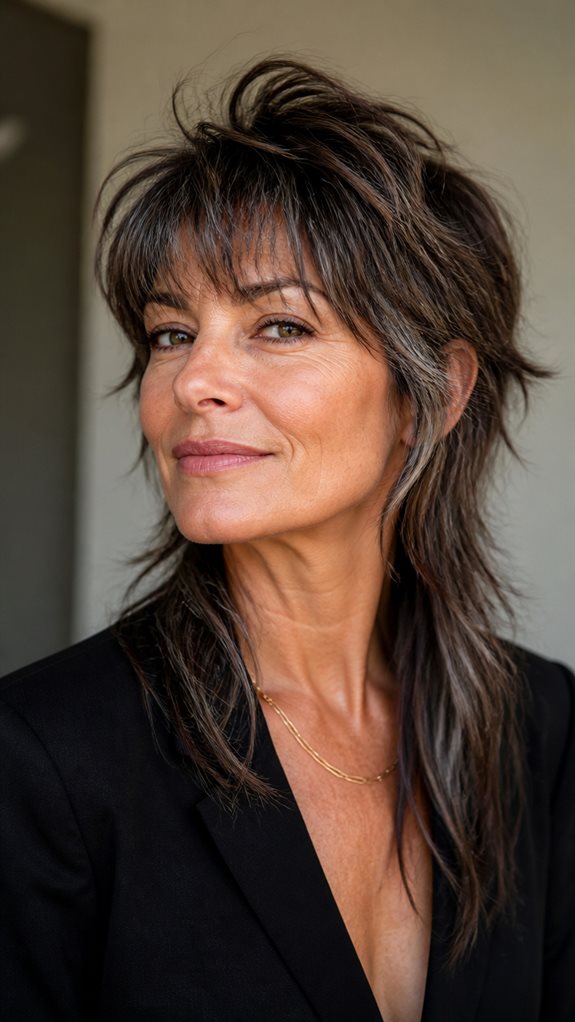
This version keeps the back two to four inches longer than the crown, a smaller gap than a true 1980s mullet, where the difference can run six inches or more.
The feathered look at the ends comes from blow-drying with a round brush, pulling the ends under and flicking them out on the last pass, not from the cutting technique alone.
This structure draws the eye upward and softens a strong jawline, which is part of why the shape holds up well past whatever decade it was originally popular in.

Soft Waves With Face-Framing Pieces
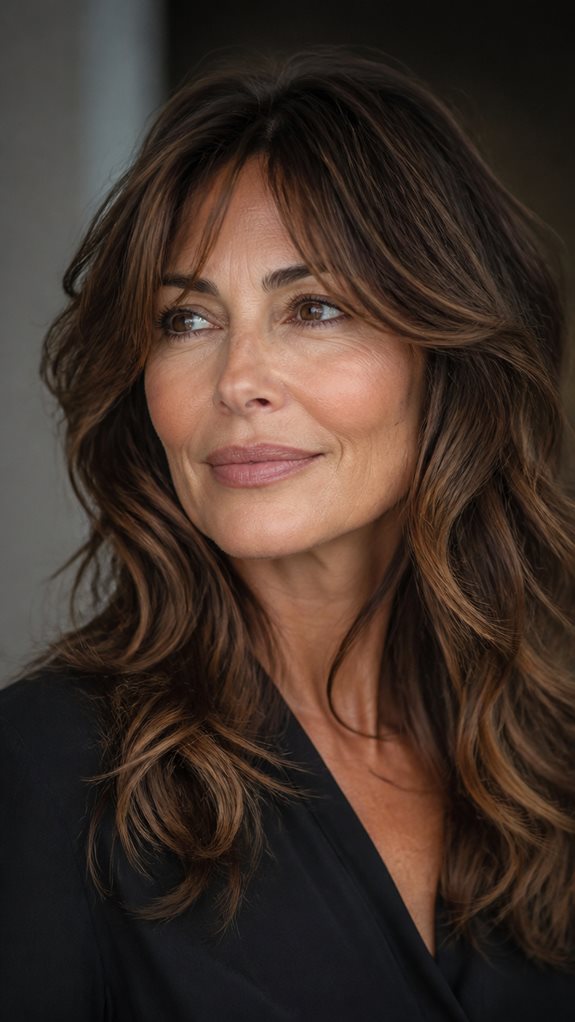
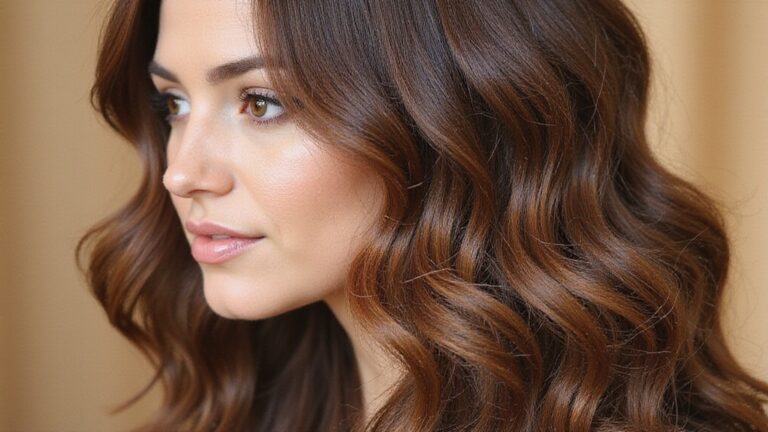
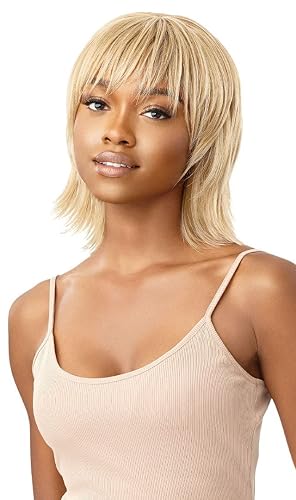
Face-framing pieces start at the cheekbone and angle toward the jaw, cut with internal layering so they curl separately from the rest of the hair instead of moving as one solid piece.
A styling cream, not a gel, applied to damp hair before diffusing avoids the crunchy finish gel tends to leave on a wave pattern like this one.
For women over 50, softening sharp angles this way tends to work better than a blunt, single-length cut would at the same length.


Short Shaggy Bobs Women Over 50 Love
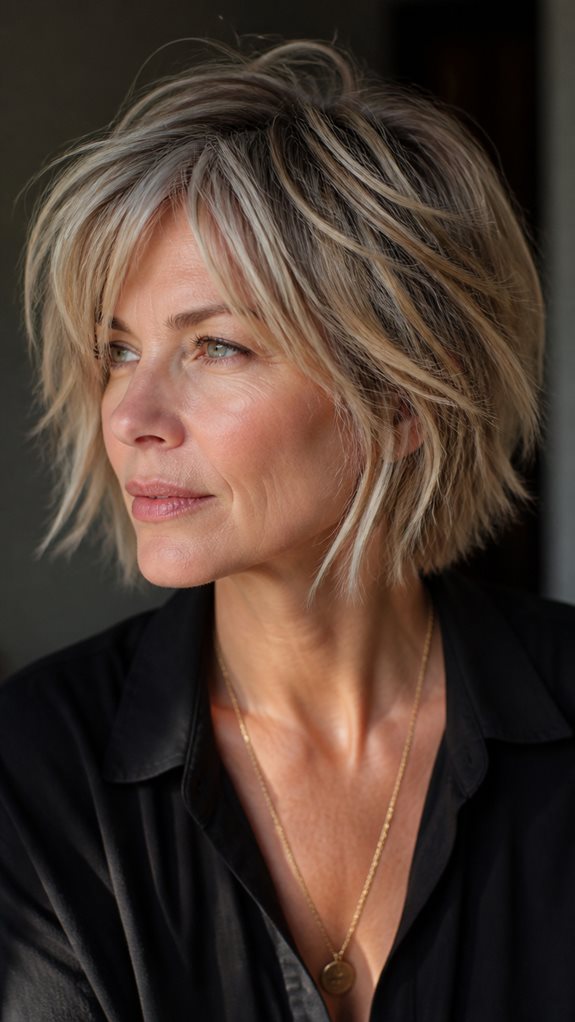
Undercutting at the nape, removing bulk from underneath only, thins out density at the back while leaving the visible length exactly where it was.
Holding a diffuser close to the scalp without moving it through the hair is what actually separates the ends into pieces, rather than just adding overall volume.
This cut wears tousled for a casual day or smoothed with a flat iron for something more polished, without needing a different haircut for either look.


The Relaxed, Lived-In Shag
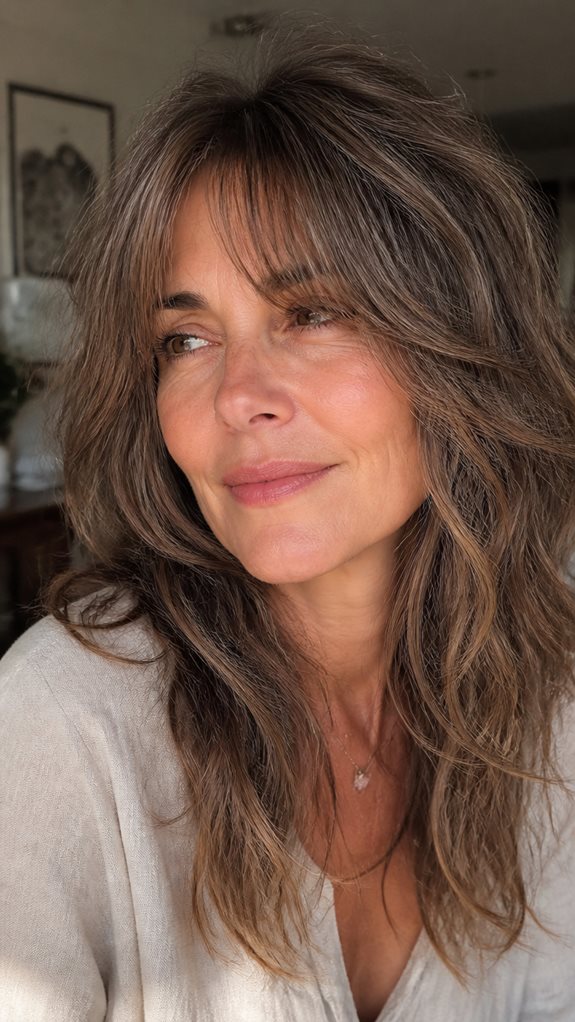
The layers here start well below the chin rather than near the crown, so the shape relies on texture instead of dramatic length changes, which is what separates it from the shorter, choppier shags earlier in this list.
Sea salt spray applied to damp hair, not dry, distributes texture more evenly and avoids leaving visible salt residue once it dries.
Straight, wavy, and naturally coarse hair all carry this version well, since the long layers give each texture room to move on its own.


A Layered Shag Built for Thick Hair
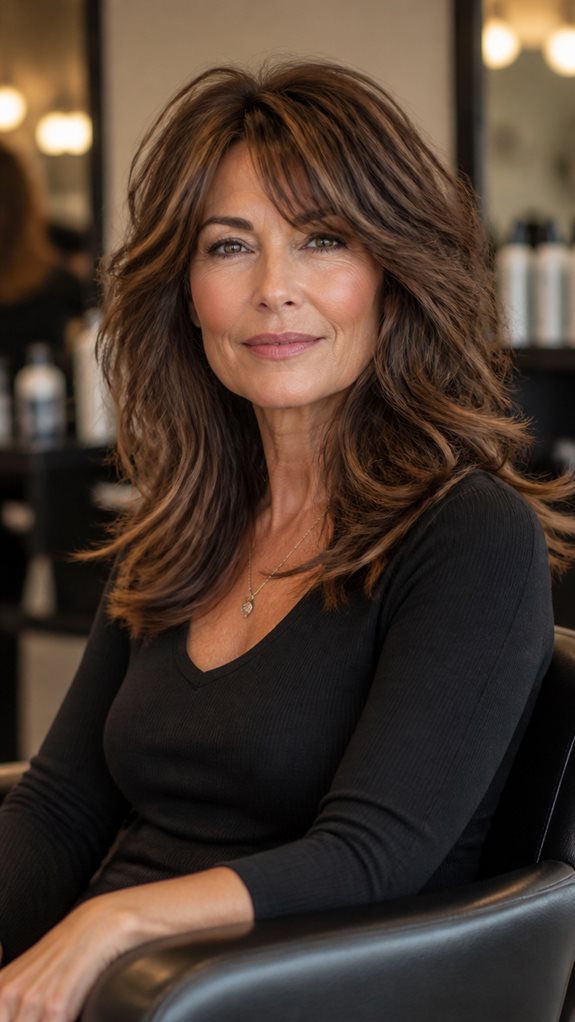
Layers carved starting from the mid-shaft, rather than close to the scalp, remove bulk without leaving the crown looking thin the way cutting too close to the root can.
Razoring works well here, unlike on fine hair, since thick hair has enough density to spare what a razor removes without looking over-thinned.
Curtain bangs blend into the layers underneath rather than sitting as a separate block, and a lightweight texturizing spray keeps everything separated instead of falling into one heavy mass.


Wispy Ends That Feel Fresh and Light
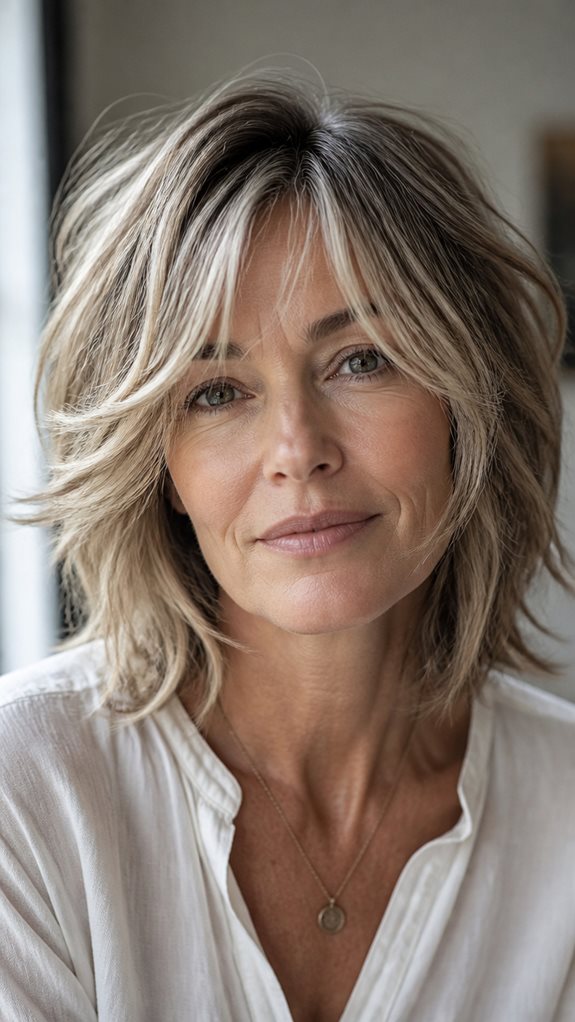
The point-cutting or razoring here happens only in the last half-inch of the ends, not throughout the cut, which keeps this wispy rather than a full shag.
Texturizing spray belongs at the ends only. Applying it near the roots adds weight exactly where this style is trying to avoid it.
This detail works as a finishing touch on almost any length, since it’s a small adjustment to the ends rather than a full restructuring of the cut.


The Low-Maintenance Shag for Busy Women
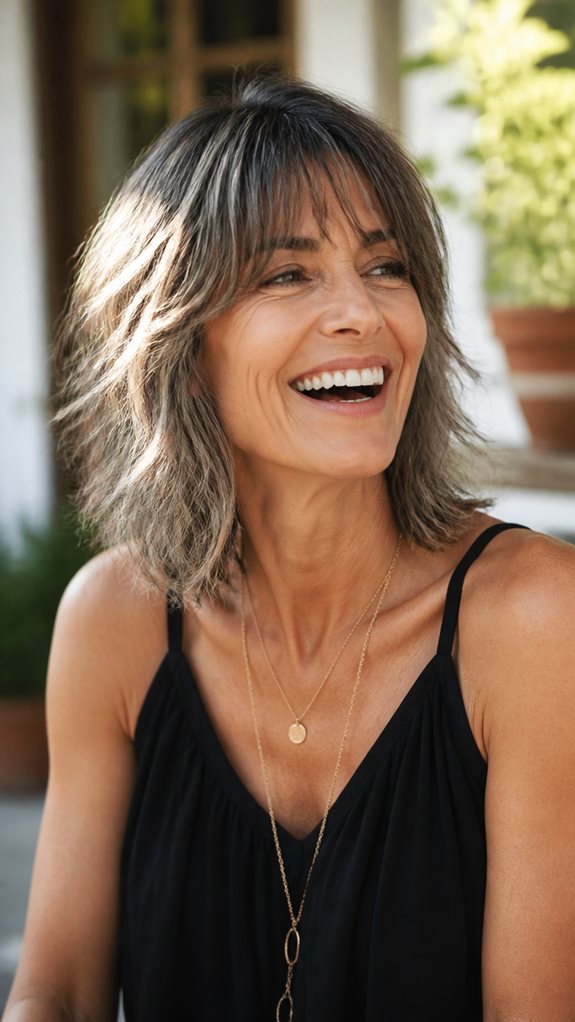
Cutting the shag to fall the way hair naturally dries, rather than shaping it to need a diffuser every day, is what actually keeps daily styling time short.
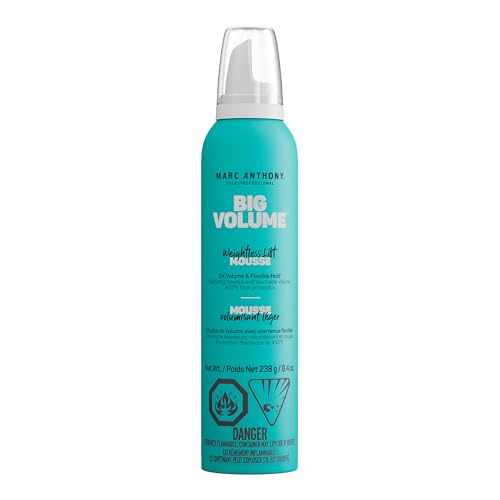
A quick scrunch with lightweight mousse after washing is usually all this version needs to look finished.
Because the layers already vary in length throughout, there’s no single grown-out line the way a blunt cut has, so a trim can stretch out a bit longer before the shape looks overdue for one.


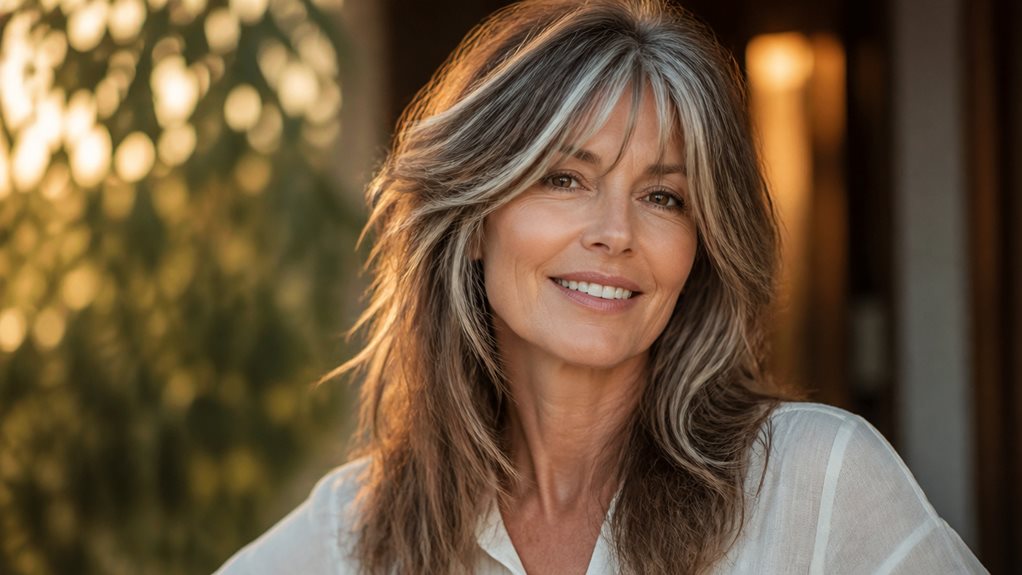
Gray Hair Shag Cuts That Look Incredible
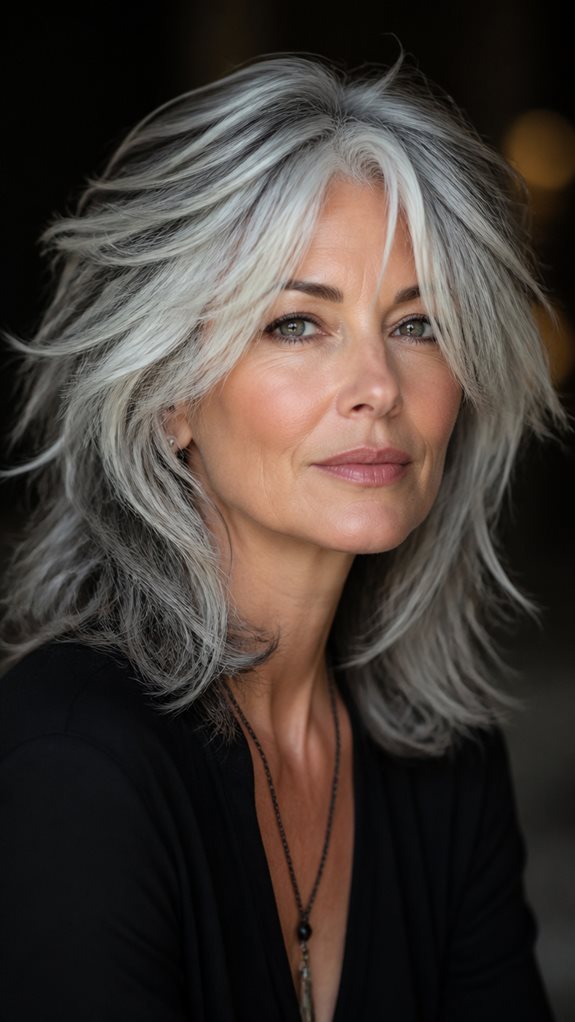
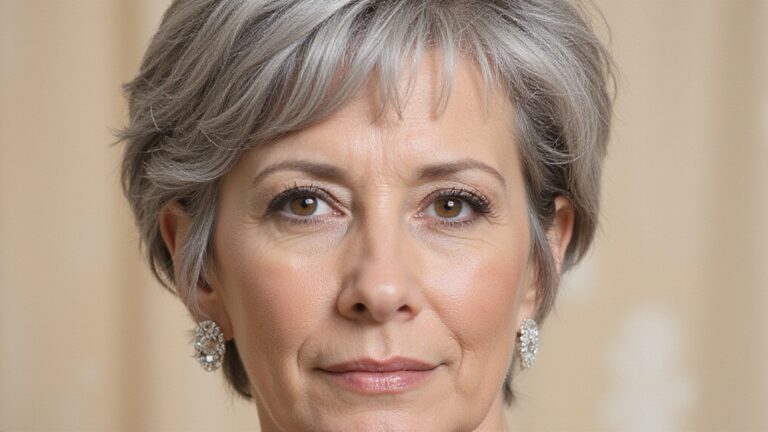
Gray hair is usually coarser than pigmented hair, so it often needs slightly more thinning at the same length to move the way a shag is supposed to.
A shag’s exposed layers catch light from more angles than a solid blunt shape, which means any yellowing in gray hair shows up faster and more visibly here.
A purple or blue shampoo weekly and a gloss every four to six weeks keeps that tone under control. Our gray hairstyles for women over 50 guide has more cuts built specifically around this hair type.


The Feathered Shag Making a Comeback
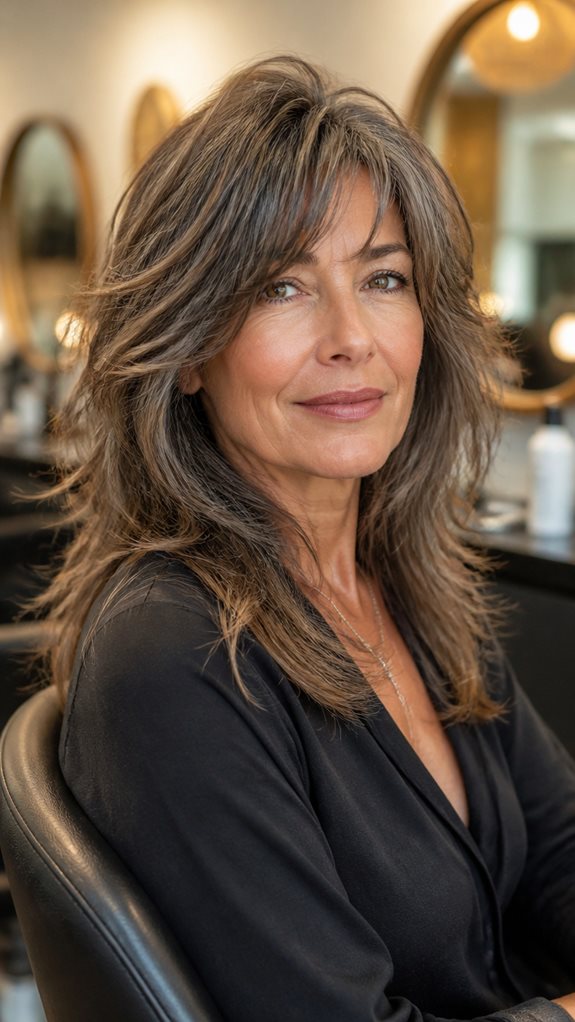
Point-cutting the ends happens first, then the feathered effect gets built afterward with a round brush during the blowout. The two steps work together, not as substitutes for each other.
Soft, sweeping layers frame the face without adding bulk, which is a real gap from the heavier, boxier version of this cut from the 1970s.
A lightweight volumizing mousse applied before drying holds the shape through the day without leaving it stiff.


Shoulder-Length Shags That Hit Just Right
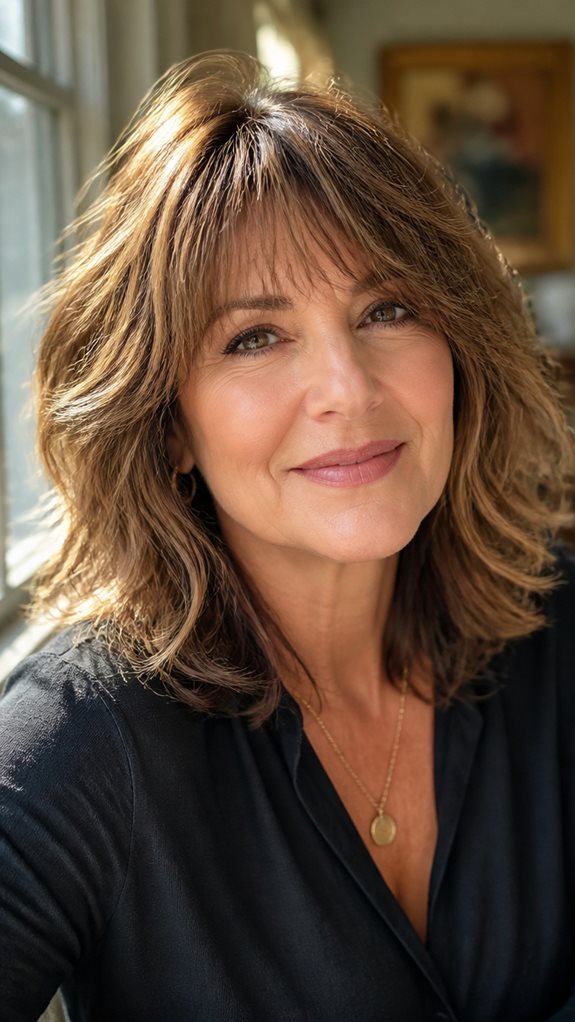
An inch shorter tends to land right at the cheekbone, which adds more lift and structure; an inch longer drops closer to the jaw for a softer effect.
That half-inch difference genuinely changes how the cut frames the face, which is why measuring precisely matters more here than on a longer, more forgiving length.
Curtain bangs pair especially well at this length, softening the forehead without adding extra length to manage day to day.

Bold Texture for Natural and Wavy Hair
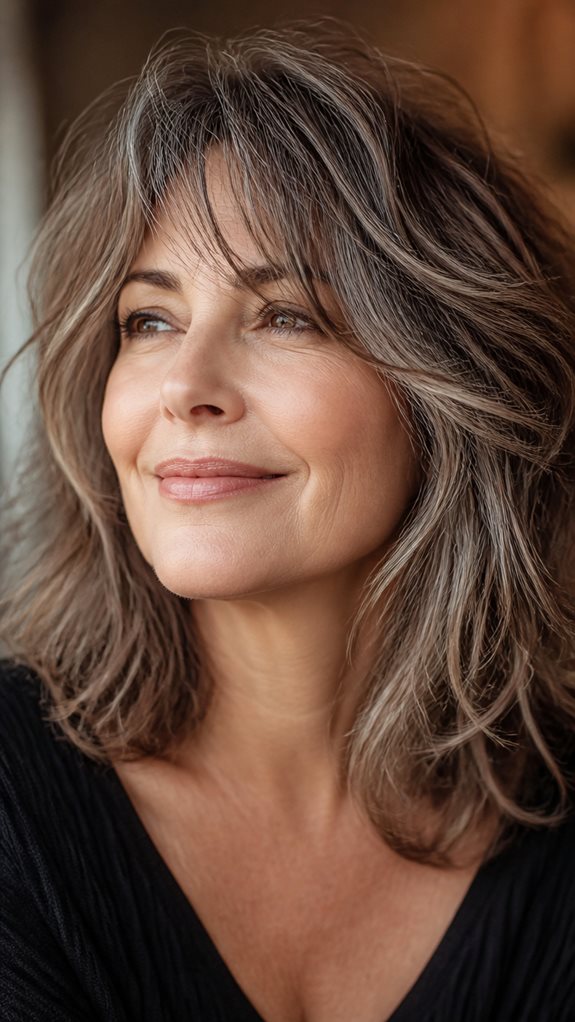
Wavy hair usually gets cut dry rather than wet, since wet waves can spring up unpredictably once dry and throw off a shape that looked right in the chair.
Razor-cut or point-cut layers through the mid-lengths and ends work with the wave pattern instead of adding bulk right at the roots.
Scrunching upward into the scalp while diffusing, rather than pulling down through the hair, encourages the wave pattern instead of stretching it out flat.

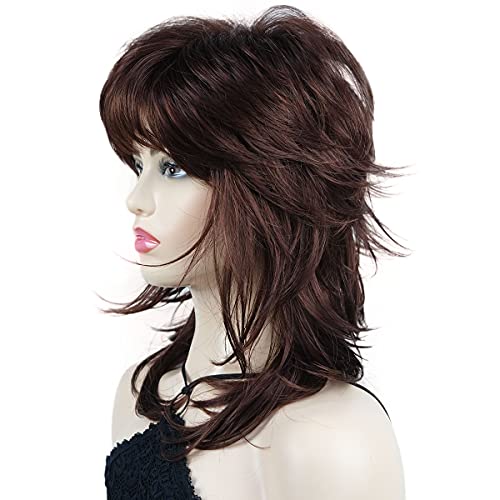
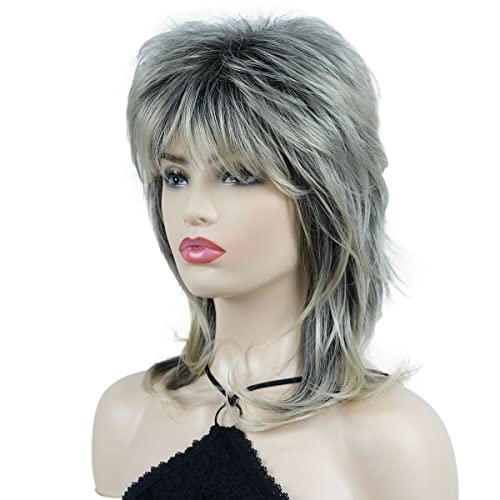
Shaggy Pixie Cuts With Maximum Edge
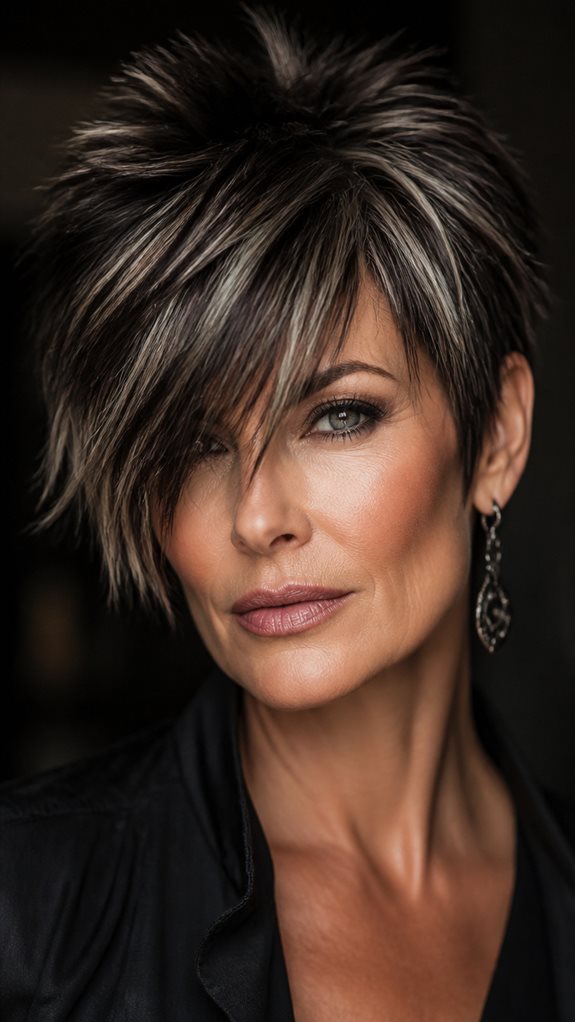
Keeping the crown an inch or so longer than the sides is what gives this pixie room for texture and volume styling that a fully cropped cut doesn’t have.
Choppy layers, razored ends, and deliberate disconnection between sections build the edge here, while still softening the face at the same time.
A texturizing spray or light pomade activates the layers without weighing down the crown length. Our edgy pixie cuts for fine hair collection covers more variations at an even shorter length.

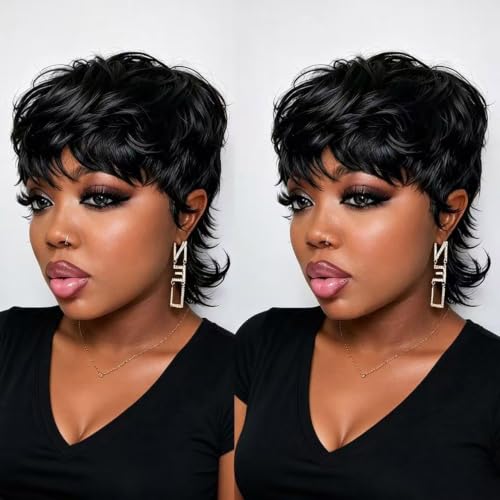

The Blunt-Cut Shag for a Polished Finish
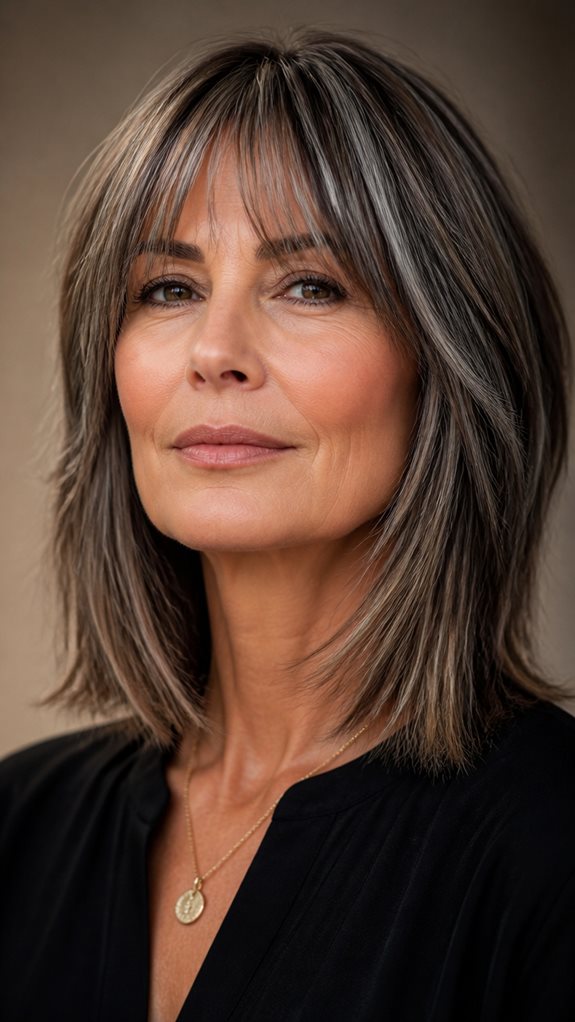
This combines two techniques rather than one: the outer perimeter stays cut blunt while the interior layers get razored, which is why it takes a more experienced stylist to get the balance right.
The blunt perimeter anchors the shape so it doesn’t drift toward looking undone, which matters more as hair density shifts naturally after 50.
Soft internal layering adds visual weight right around the crown and ends, which is usually where thinning shows up first.

Bangs or No Bangs: How to Decide
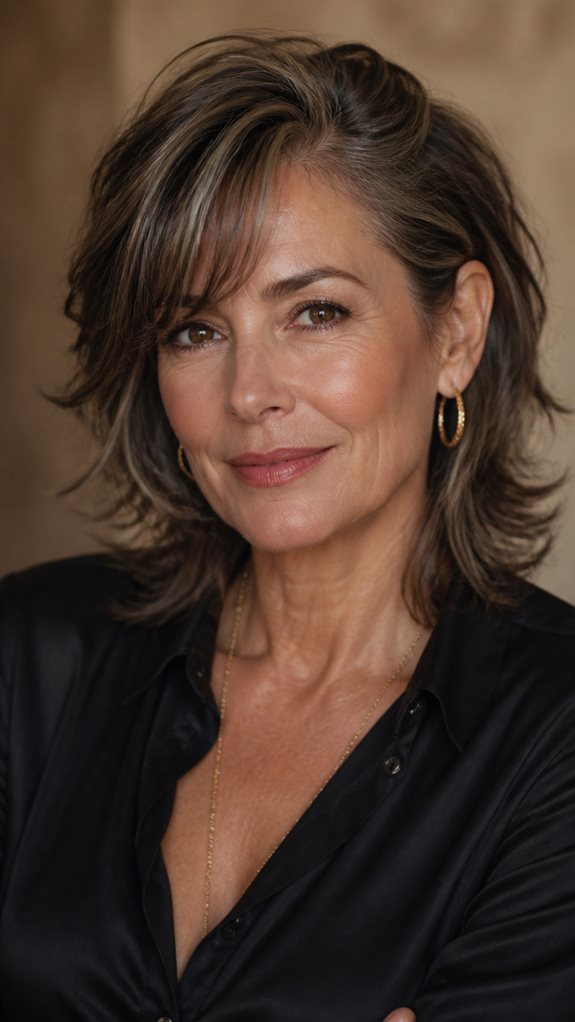
Longer face shapes tend to suit curtain or side-swept bangs, which add width; round or square shapes usually do better with wispy bangs that elongate the face instead.
The real maintenance difference is trim frequency: bangs need attention every three to four weeks, while the rest of the cut can stretch to six or eight.
If that extra trim schedule doesn’t fit your routine, going bang-free with the same layered structure still gets most of the same face-framing benefit.

Collarbone-Length Shags Worth Bookmarking
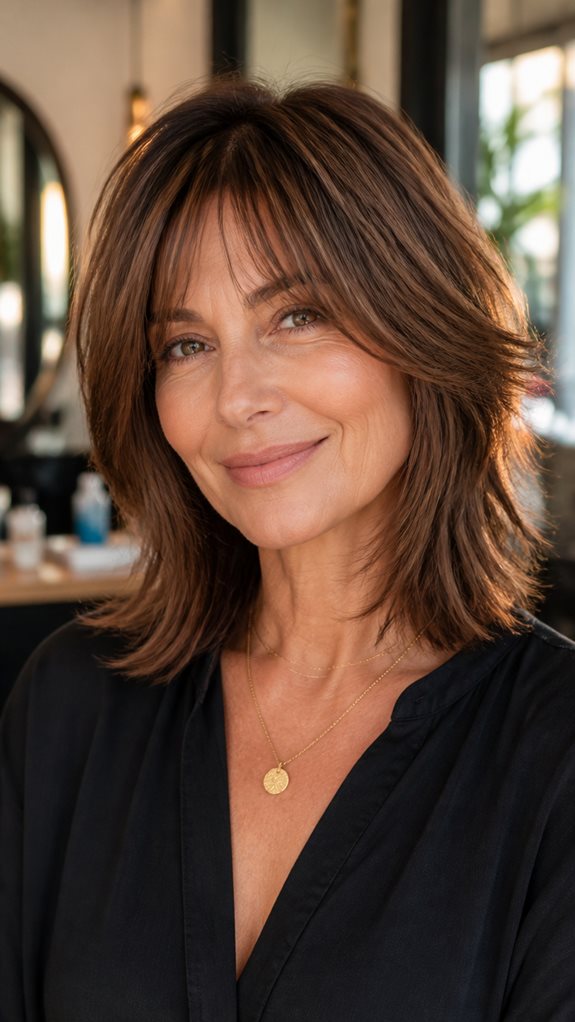
This length still reaches a low ponytail or half-up style, which the shorter shags earlier in this list can’t manage. That’s a genuinely practical reason to pick this length over a shorter one.
Air-drying with a curl cream builds a lived-in wave on its own, and a diffuser adds volume without frizz if you want a bit more lift.
Curtain bangs at this length frame the face without adding much extra daily styling, since the length is already doing most of the work.


The Retro 70s Shag Reimagined for Today
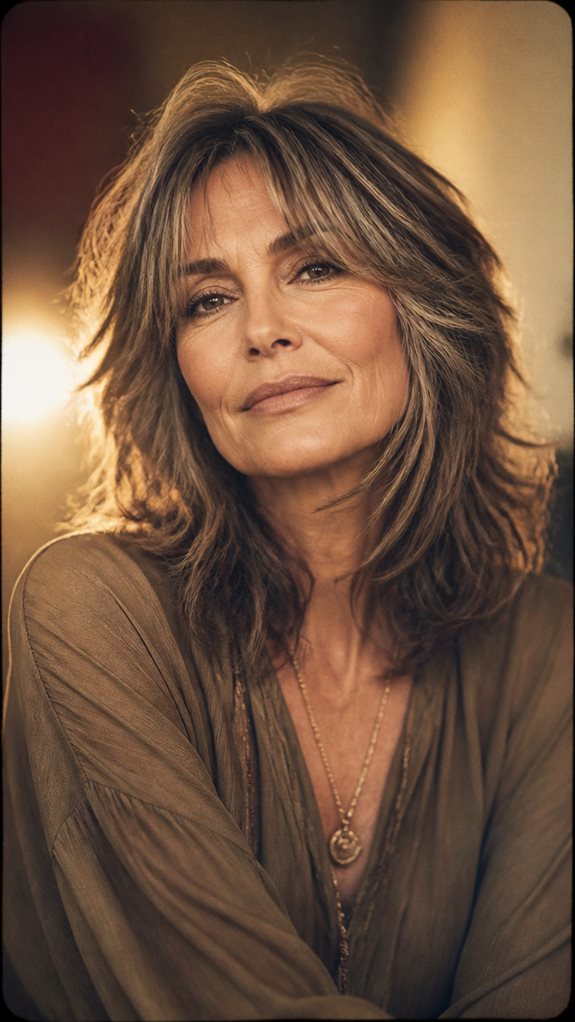
The real difference between a vintage 70s shag and this version comes down to where the layering starts. The original started high, near the crown; this one starts lower, around the cheekbone, for a softer transition.
Warm caramel, butterscotch, or sun-kissed highlights add depth the original era typically skipped, since most 70s shags were left as a single flat color.
Texture sprays and a diffuser stand in for the heavier blow-dry techniques of the original, keeping the same silhouette with a lighter touch.


How to Style a Shag With Minimal Effort
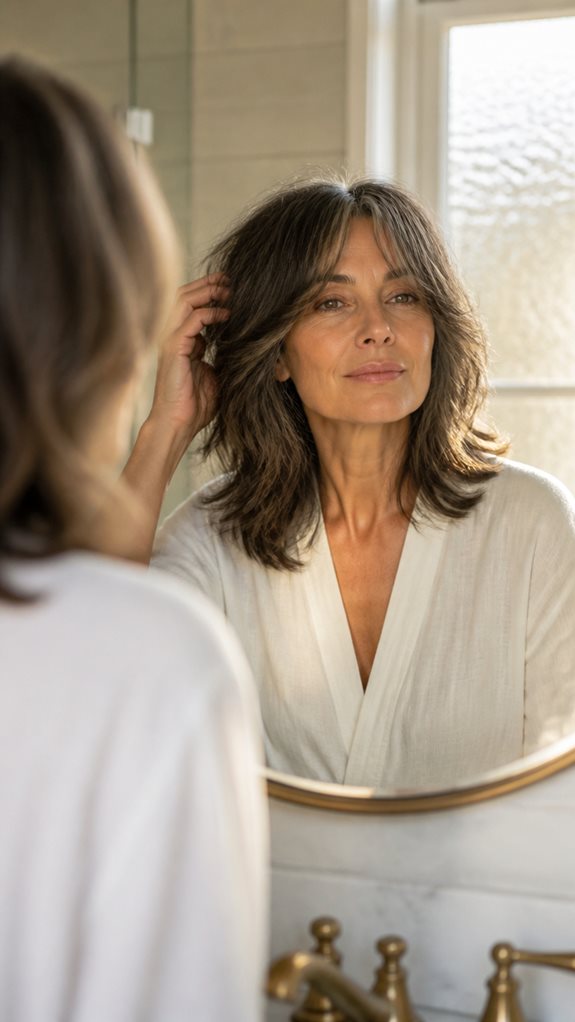
Work a dime-size amount of lightweight mousse or texturizing spray into damp hair, then scrunch and air-dry. Using more than that is the most common reason a shag ends up looking weighed down instead of textured.
A diffuser attachment adds definition without stiffness, while heavy creams tend to flatten the layers this cut depends on for its shape.
A quick finger-tousle once the hair is dry is usually the last step needed, since the cut itself is doing most of the actual work.


Which Shag Cut Suits Your Face Shape
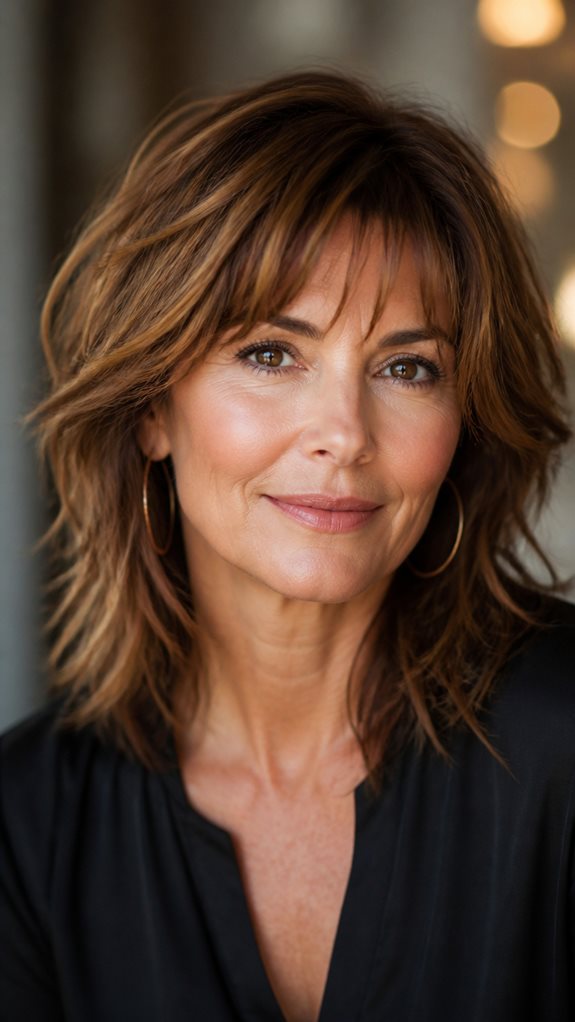
Oval faces can wear almost any version of this cut. Round faces do better with longer layers, since shorter ones tend to add width rather than the vertical length a round face benefits from.
Square faces suit soft, wispy curtain bangs that break up angular features, and heart-shaped faces do well with volume built near the jawline to balance a wider forehead.
Oblong faces tend to look better with shorter, choppier layers that add width instead of extending an already long face further.



How Often to Trim a Shaggy Cut
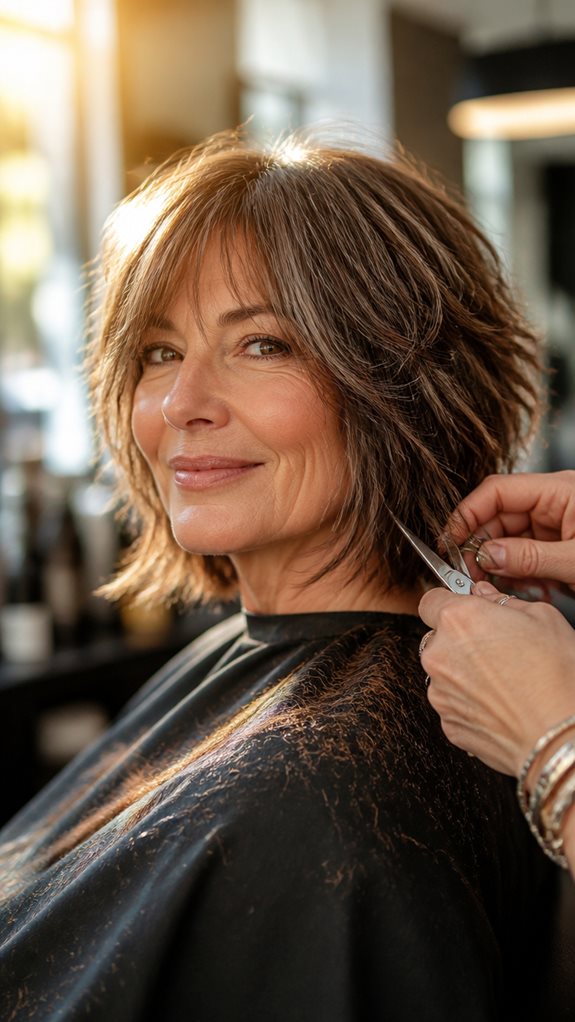
Six to eight weeks keeps the layers defined and any fringe looking intentional. Hair grows roughly half an inch a month, and with this many separate layers, that growth shows unevenly across the cut faster than it would on a blunt shape.
Stretching to ten weeks works fine if you’re deliberately growing the cut out. Beyond that, the layers start losing their distinct shape and blend into one length.
Booking the next appointment before leaving the salon is a simple way to stay on that schedule without a last-minute scramble.


Frequently Asked Questions
Can a Shag Cut Work on Very Short Hair Under Three Inches?
Yes. A stylist can build texture variation with precision layers and choppy ends even at this length. A texturizing spray used regularly keeps the definition from falling flat between visits.
Are Shag Cuts Suitable for Women With Thinning Edges or Hairline Issues?
Yes. Layers cut softly around the edges frame the face without drawing attention to the hairline, while textured layers through the rest of the cut add the volume that draws the eye elsewhere.
Can You Get a Shag Cut if Your Hair Is Chemically Relaxed?
Yes, a shag works on relaxed hair. A stylist adjusts the layering and thinning technique to account for how relaxed hair moves differently than natural texture, but the cut itself translates well.
Does a Shag Cut Work Well With Hair Extensions or Clip-Ins?
Yes, as long as the extensions are layered to match the existing cut rather than added as one uniform length. Matching layering is what keeps the blend looking like one cut instead of two different textures stacked together.
Is a Shag Cut Appropriate for Very Formal or Professional Workplace Environments?
Yes. Smoothing the layers with a round brush and a light smoothing serum, rather than leaving them tousled, gives the same cut a more polished, buttoned-up finish for the office.
Final Thoughts
The technique behind a shag matters as much as which version you pick. Where the layers start, how steep the angle is, and whether the ends are razored or point-cut all decide how the cut actually behaves once you’re styling it yourself.
Bring a clear reference photo to your appointment and ask your stylist to walk through the specific technique they’re planning to use, especially if you’re moving to a shag for the first time.