21 Trendy Bixie and Shag Cuts for Women Over 50
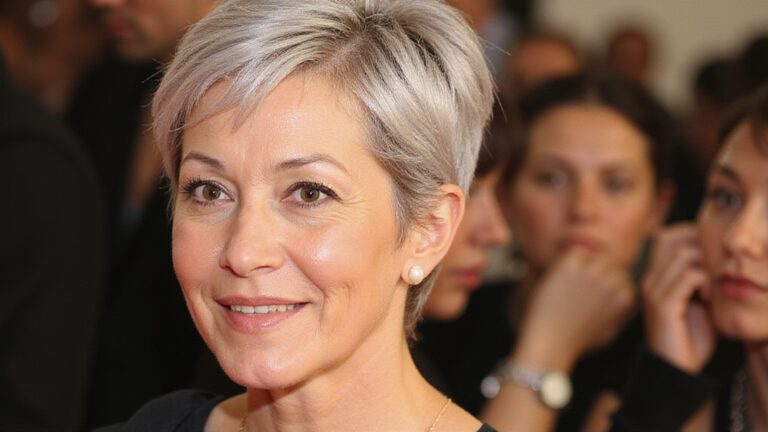
If you’re over 50 and craving a fresh, modern look, bixie and shag cuts deliver exactly that. These styles add volume, texture, and dimension while flattering a range of face shapes and hair types.
Some readers want a polished classic bixie. Others want a shag with loose, textured movement. Either way, there’s a version built for you here.
Keep reading to find the cut, the styling trick, or the product that changes your next salon visit.
The Classic Bixie Cut for Women Over 50

A classic bixie splits the difference between a bob’s length and a pixie’s crop, landing on a shape that flatters a wide range of faces. It softens strong features and adds dimension where finer bone structure needs it.
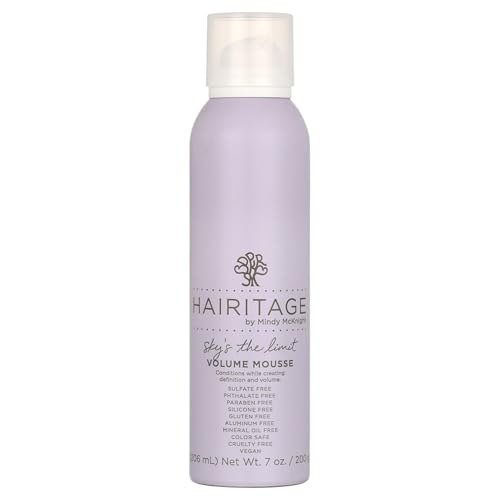
Styling one is simple. A texturizing cream or light mousse defines the layers and controls volume without much fuss.
Finger-drying adds natural movement. A round brush, used instead, creates a sleeker, more refined finish.
It needs trims every four to six weeks to hold its shape. Skip that window and the structure grows out fast, which is worth knowing before you commit to it.


Soft Bixie With Face-Framing Layers
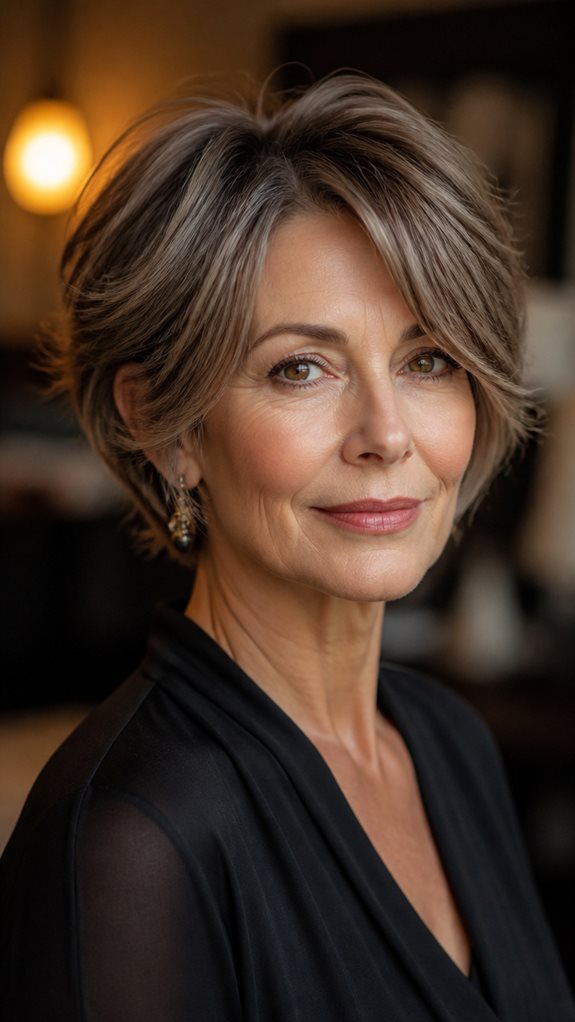
If your features run soft, this version of the bixie meets them there instead of fighting them. It’s a gentler take on the classic cut, built around movement rather than sharp lines.
Strategic layers soften the jawline and cheekbones while still highlighting your best features. The finish reads polished, not overworked.
It carries more texture and fluidity than a structured bixie, with layers tailored to your specific face shape. It works well for fine or medium hair, adding body that a blunt line can’t.
A light mousse or texturizing spray is all it needs between salon visits.
Textured Bixie for Fine or Thinning Hair
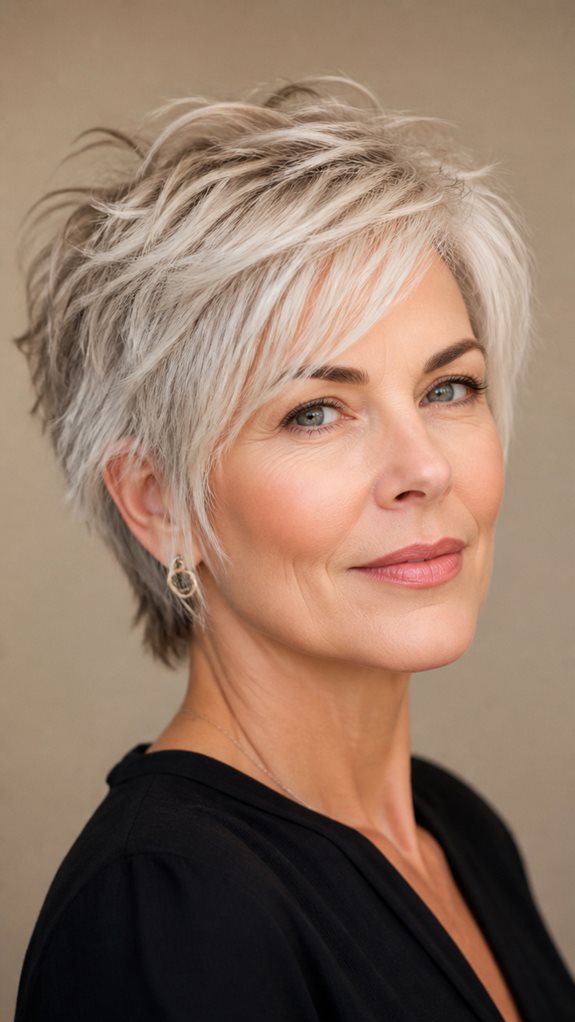
Fine or thinning hair doesn’t rule out a bixie. Strategic layers remove unwanted bulk while creating the look of density and movement.
Point-cutting and razor techniques on the ends deliver a volume boost without weighing hair down. Keeping the crown slightly longer maximizes lift, while the sides taper softly toward the neckline.
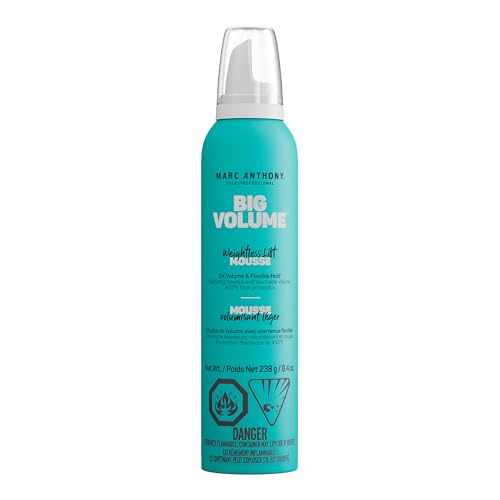
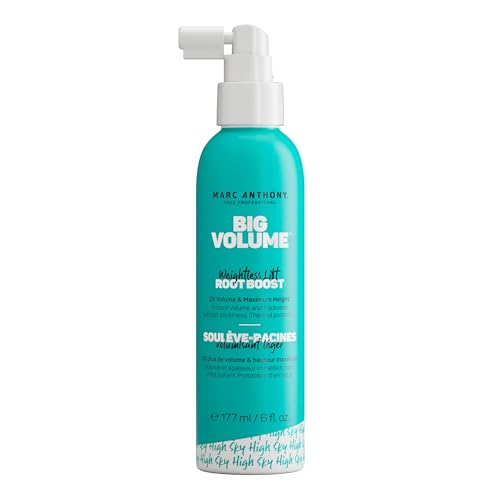
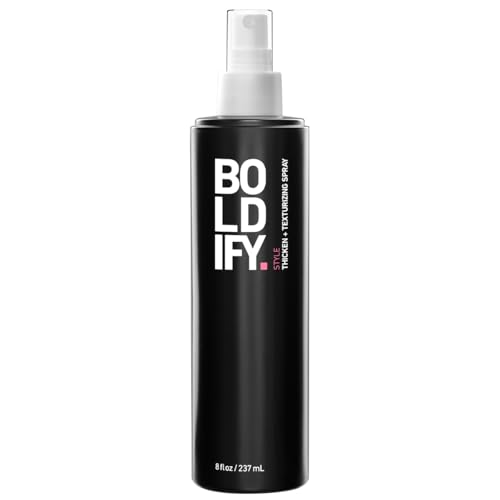
Lightweight volumizing mousse or texturizing spray applied at the roots amplifies fullness between salon visits. The piece-y finish makes hair look fuller.
The Wispy Bixie That Softens Strong Features
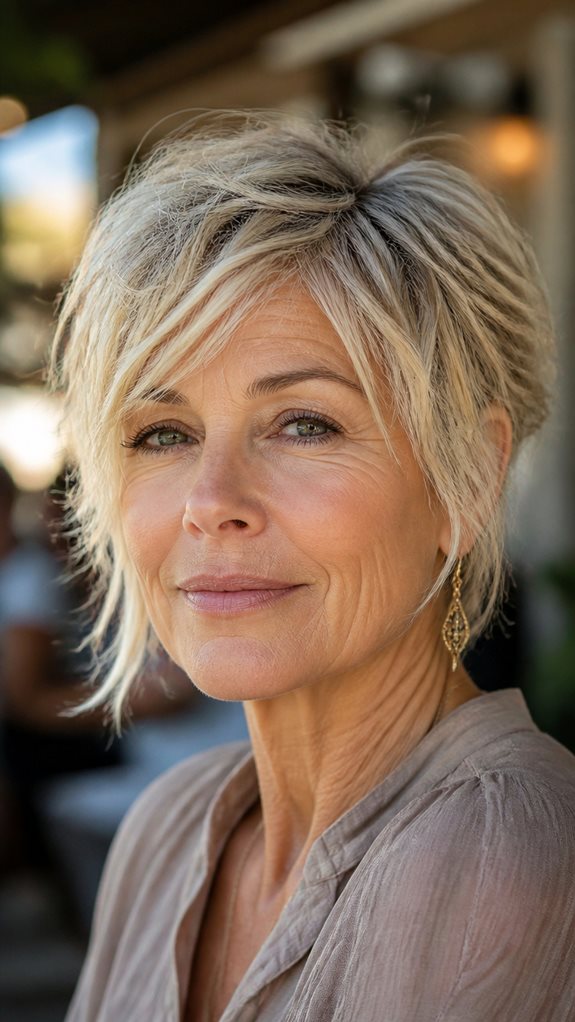
Sharp features don’t need a haircut that hides them. They need one that works with them, and the wispy bixie does that through feathered ends and light layering.
Delicate fringe and airy texture pull attention away from sharp lines while keeping the overall shape clean.
Stylists get this effect through point-cutting and texturizing techniques that let pieces fall loosely instead of sitting flat. It suits a strong jawline, prominent cheekbones, or a defined forehead particularly well.


Bold Bixie With Undercut Nape Detail
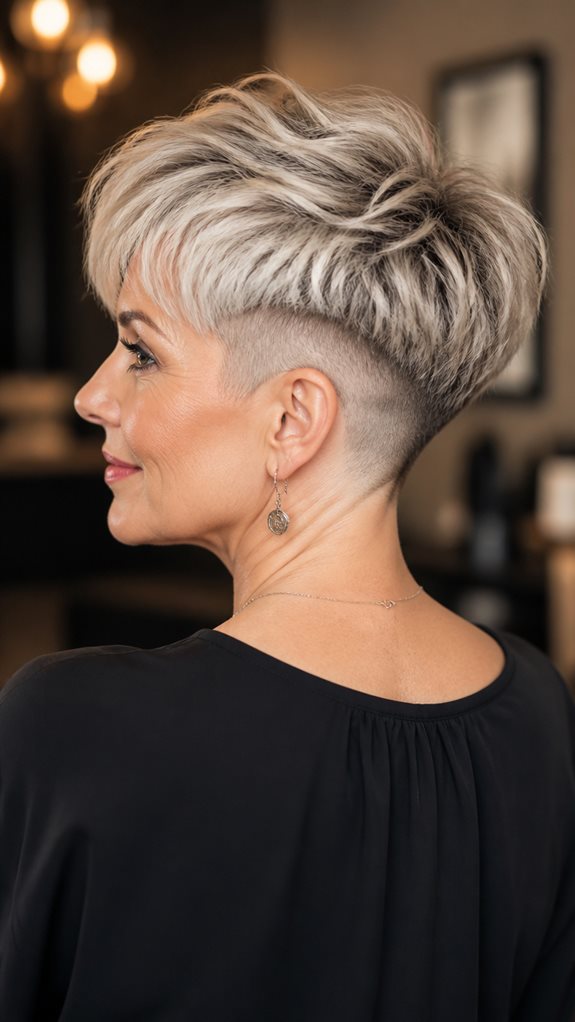
An undercut nape isn’t for everyone, but on the right person it turns a simple bixie into something sharper. The shaved or closely clipped nape creates instant contrast while the silhouette on top stays clean.
Undercut styles like this one add structure to the volume on top. Pairing it with a bold color, deep burgundy, platinum, or rich copper, pushes the look further.
It’s not a low-key cut, and it does need more frequent trims to keep the nape line crisp. That upkeep is the honest cost of the sharper shape.

Curly Bixie Cut for Natural Texture
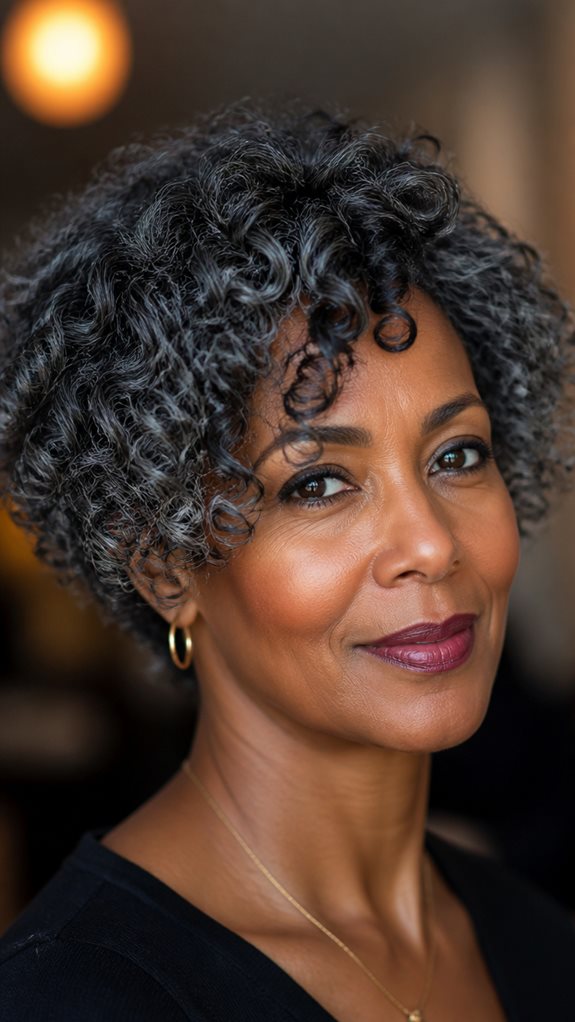
Curly hair carries weight that flattens curl pattern over time, and a bixie removes enough of it to let curls spring back. Shorter layers lift curls off the neck and shoulders, restoring definition that length used to suppress.
Your curl pattern becomes the point of the style instead of something to manage around it. Maintenance drops once the length is gone, which makes mornings faster.
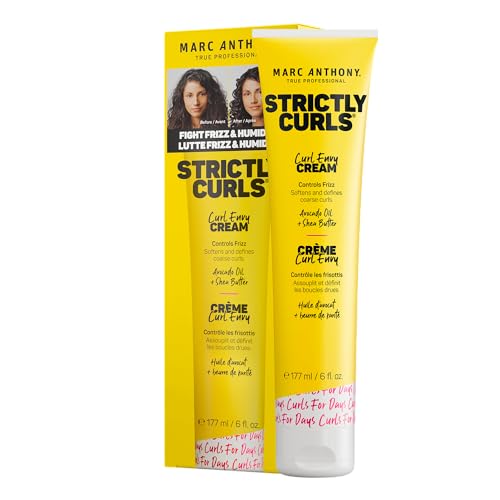
Ask your stylist to cut the curls dry, so each coil lands at its true length without a shrinkage surprise. A curl-defining cream on damp hair keeps it looking held together from morning to night.


The Silver Bixie That Embraces Gray Hair
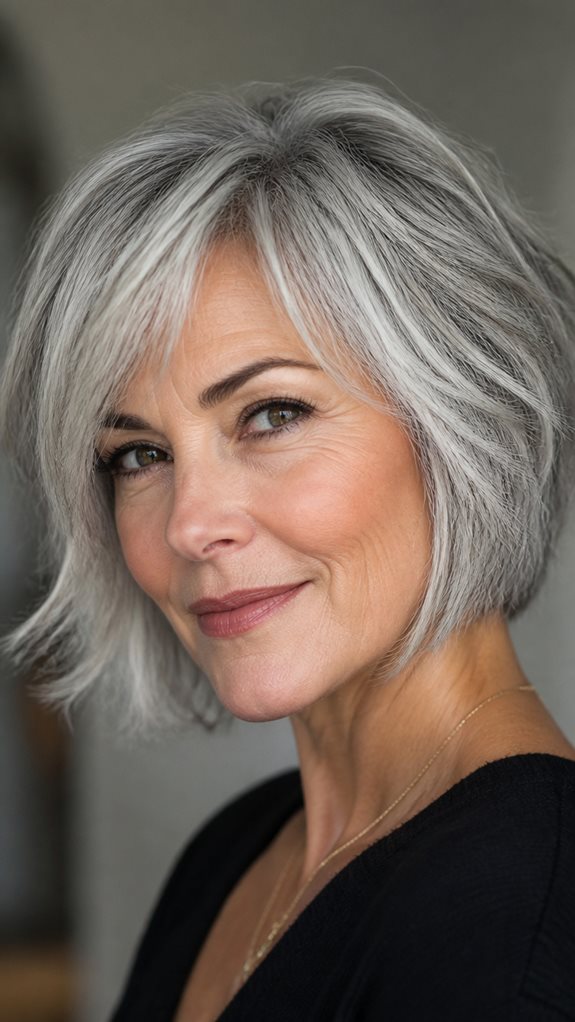
Gray hair reads differently on a bixie than it does on longer styles, since the structured layers catch and amplify the natural shine that dyed hair can’t replicate.
Shorter sides and a textured crown draw attention to your face, while the contrast between lighter and darker gray tones adds visual depth on its own, no color needed.
Request a tonal gloss treatment to boost shine and keep brassiness down. It’s a low-maintenance combination once the cut and gloss are dialed in.

Asymmetrical Bixie for a Modern Edge
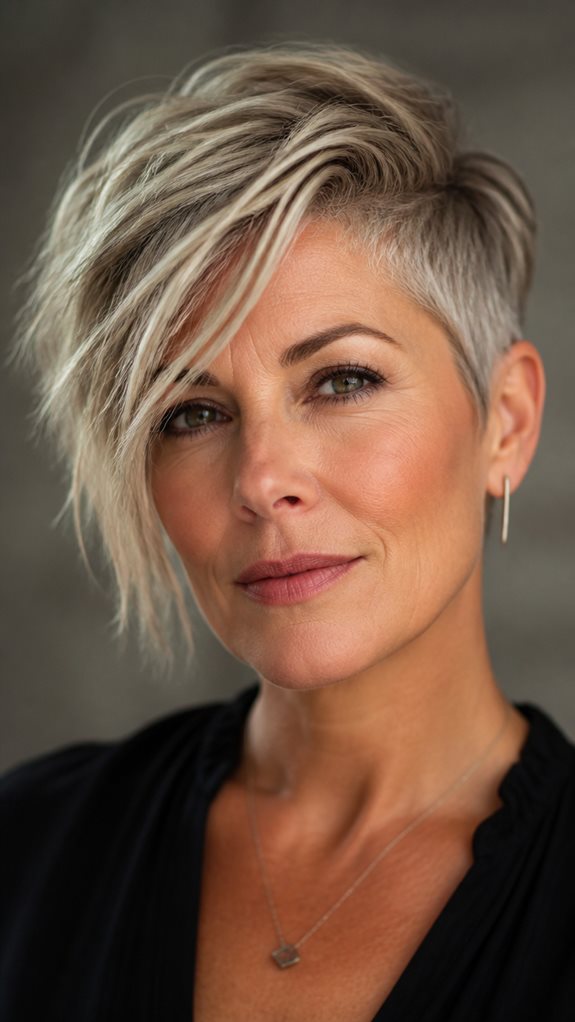
An asymmetrical bixie isn’t subtle, and it isn’t meant to be. Pairing one longer side with one cropped side creates deliberate, unexpected contrast.
The shape adds structure with an edge, and it creates natural movement without much styling effort behind it.
The longer side can graze the cheekbone or jaw while the shorter side sits tight above the ear. Your stylist can adjust the length difference based on your face shape, so the contrast looks like a choice, not an accident.

The Classic Shag Cut for Women Over 50
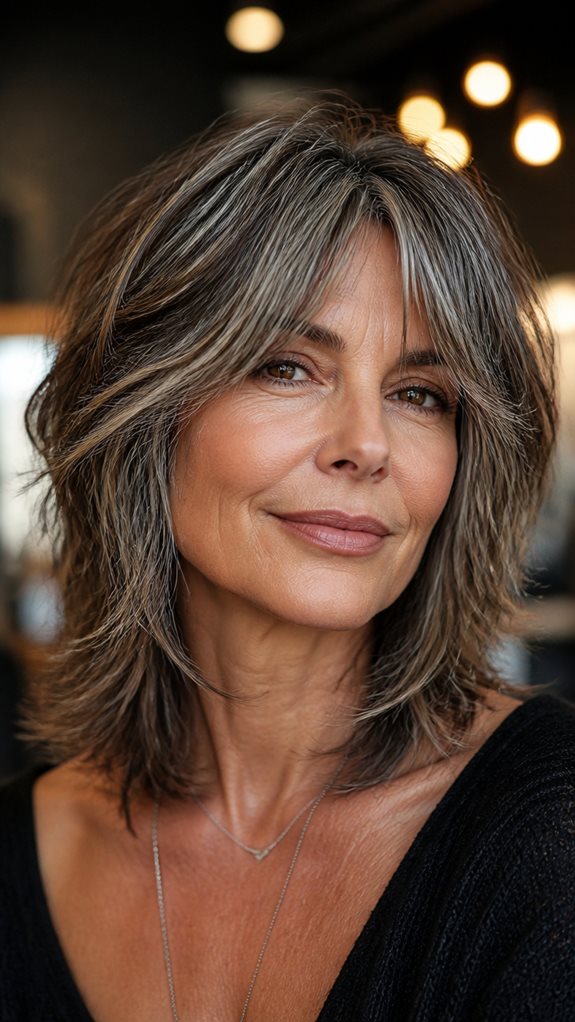
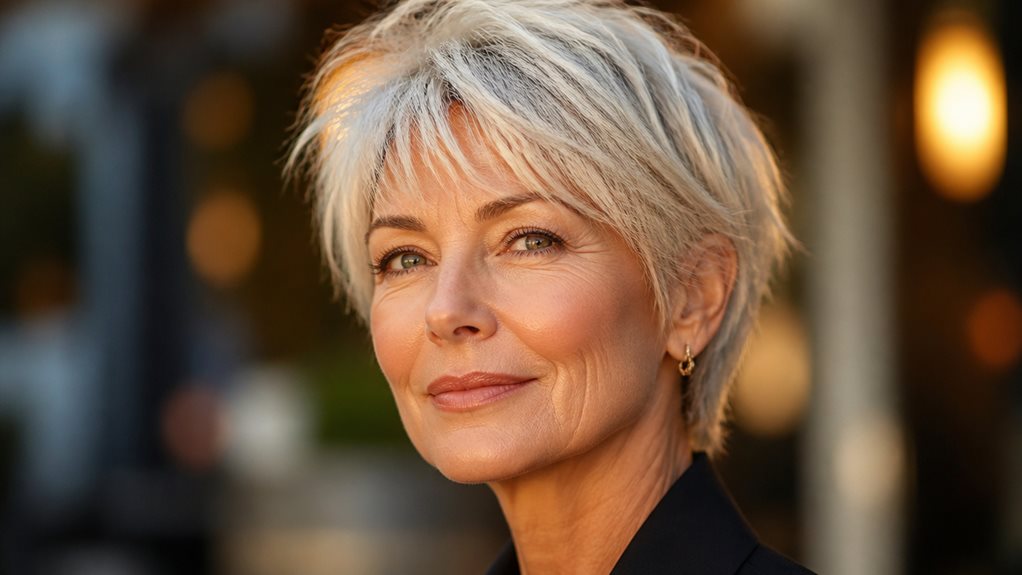
A shag trades the bixie’s cropped precision for looser, textured layers, which is the appeal if you want movement over structure. It’s a timeless option that frames the face without feeling severe.
Strategic layering adds volume at the crown and mid-lengths, lifting fine or thinning hair without heavy product. It works across hair types, which keeps it low-maintenance without going flat.
Curtain bangs pair well with a shag, softening the face while keeping the lived-in look intact. Together, the cut delivers movement and dimension in one shape.
There’s a wider range of shag lengths and textures in this guide to shaggy hairstyles for women over 50, if you want to compare more variations before committing.


Curtain Bang Shag With Feathered Layers
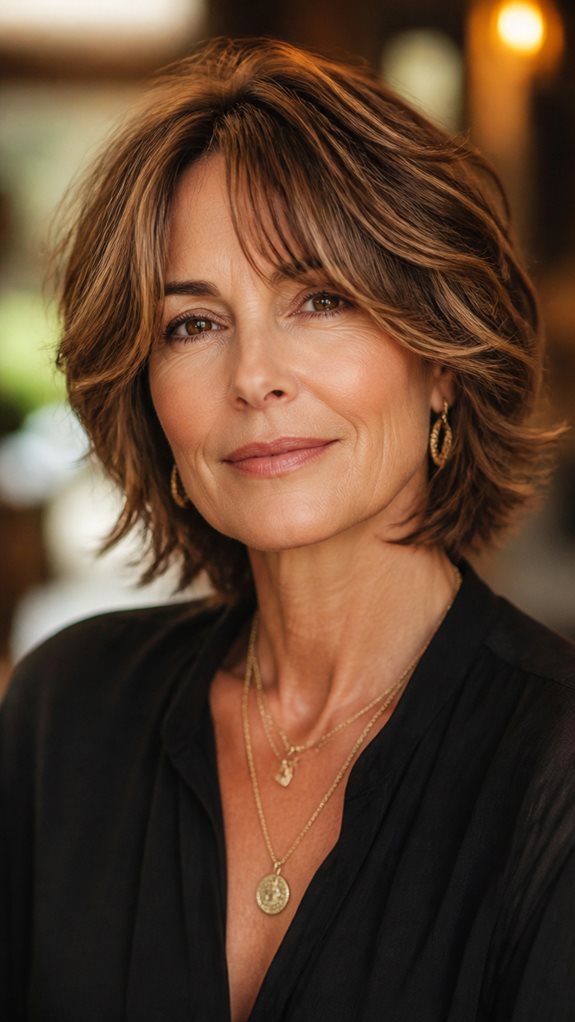
Center-parted curtain bangs change the whole read of a shag, blending soft, sweeping fringe with airy, feathered layers through the rest of the cut.
The bangs sweep outward naturally, softening the forehead and drawing the eye toward the cheekbones. Feathered layers through the mid-lengths and ends keep the whole shape light.
It’s low-maintenance by design. Air-drying alone brings out the flow of the cut.
Have your stylist work in face-framing graduation and point-cut ends for that lived-in finish. It reads youthful without needing much styling time.


Short Shag That Adds Serious Volume
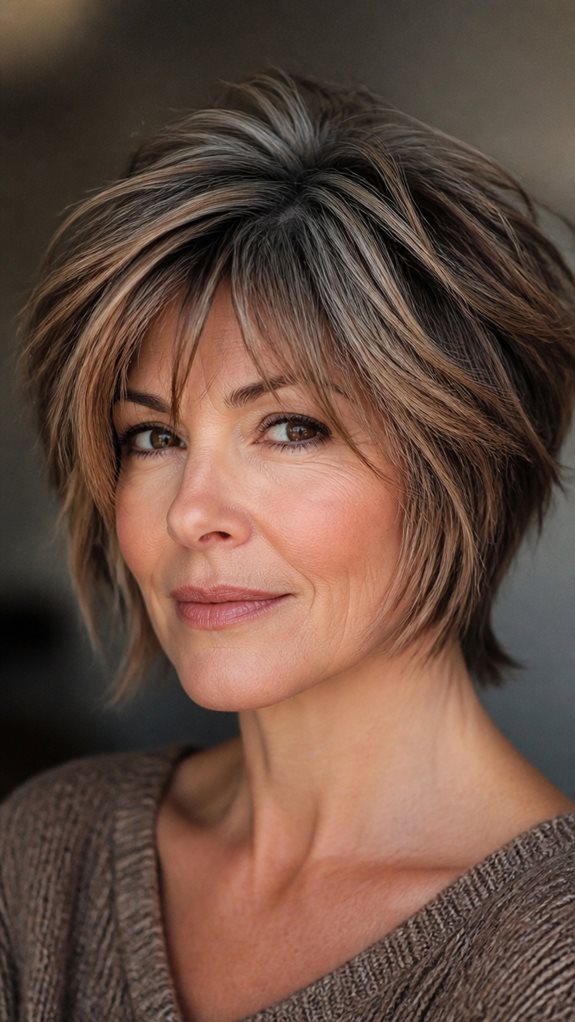
Fine or thinning hair benefits most from a short shag’s built-in lift. Layered, razored structure lifts hair from root to tip, so it looks fuller without added length.
Blow-drying upside down, or using a diffuser, amplifies the shag’s built-in body for maximum volume. Lightweight mousses or root-lifting sprays work with the cut’s natural texture rather than fighting it.
A longer crown section paired with face-framing layers adds strategic height that makes hair look genuinely thicker.
For more targeted options on thin strands, this collection of haircuts for thinning hair over 50 lays out additional cuts built for the same problem.

The Shaggy Bob for Shoulder-Length Hair
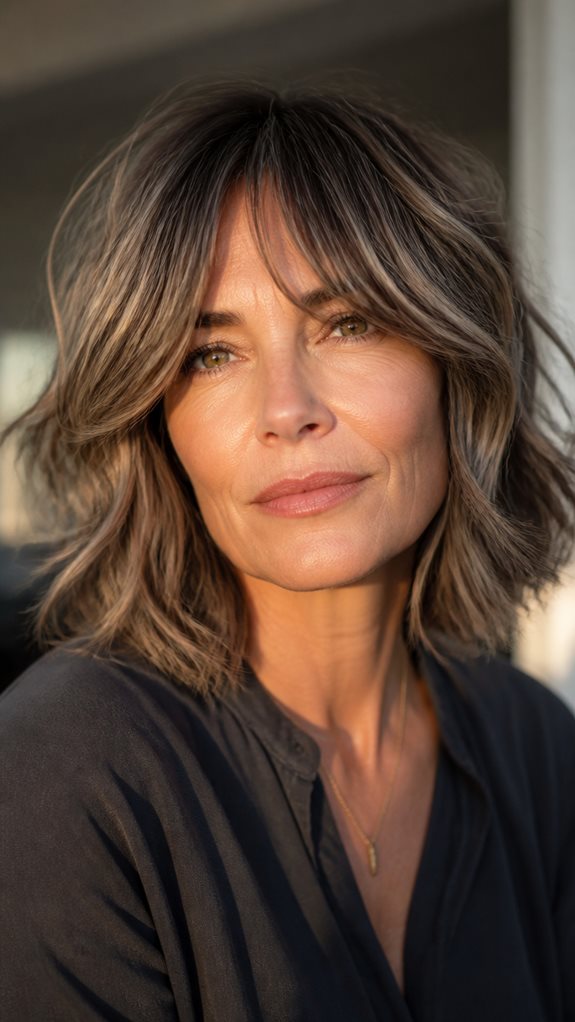
A shaggy bob sits between a full shag and a blunt bob, holding at shoulder length with texture instead of a hard line. It softens facial features and works on both straight and wavy hair.
A quick rough-dry with a diffuser and a light cream pulls the look together. It gives you serious style without the full commitment of a longer cut.
The layered structure adds natural volume and works across a wide range of face shapes and hair textures.
Shoulder length isn’t the only option worth weighing. The trade-offs between shorter and longer shapes get a closer look in this bob vs. lob comparison.

Wolf Cut Shag for Thick or Wavy Hair
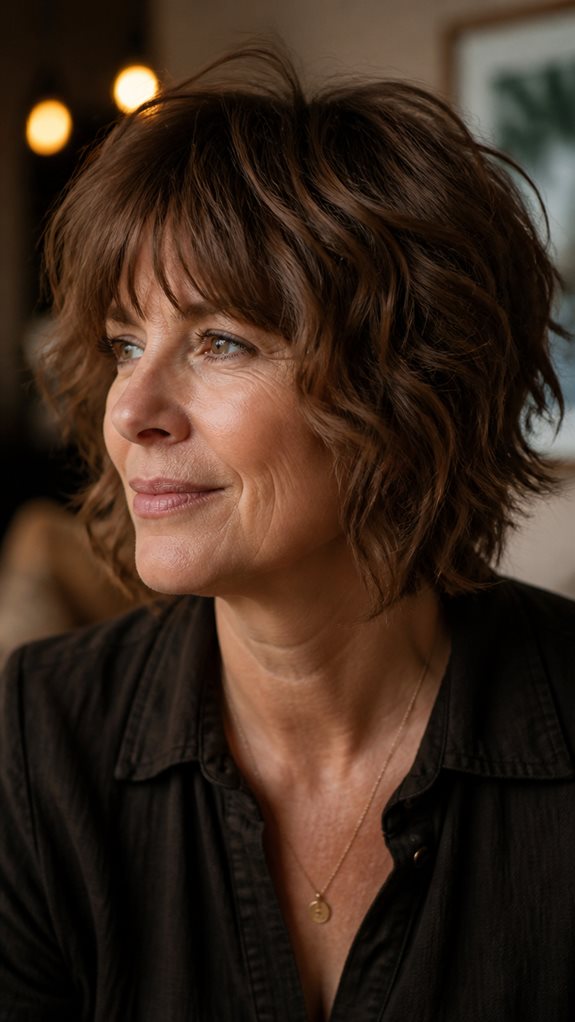
Thick or wavy hair can turn heavy fast, and the wolf cut shag exists to fix exactly that. Heavy layering and curtain bangs remove bulk while keeping natural texture intact.
Graduated layers build volume at the crown without daily styling. Point-cutting the ends prevents the triangular, poofy shape thick hair tends to fall into.
Scrunch a light mousse into damp hair and diffuse on low heat. The cut tends to improve between salon visits rather than needing constant upkeep.


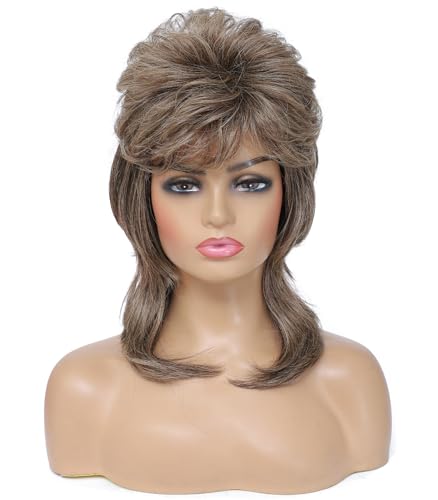
Pixie Shag for the Boldest Look of All
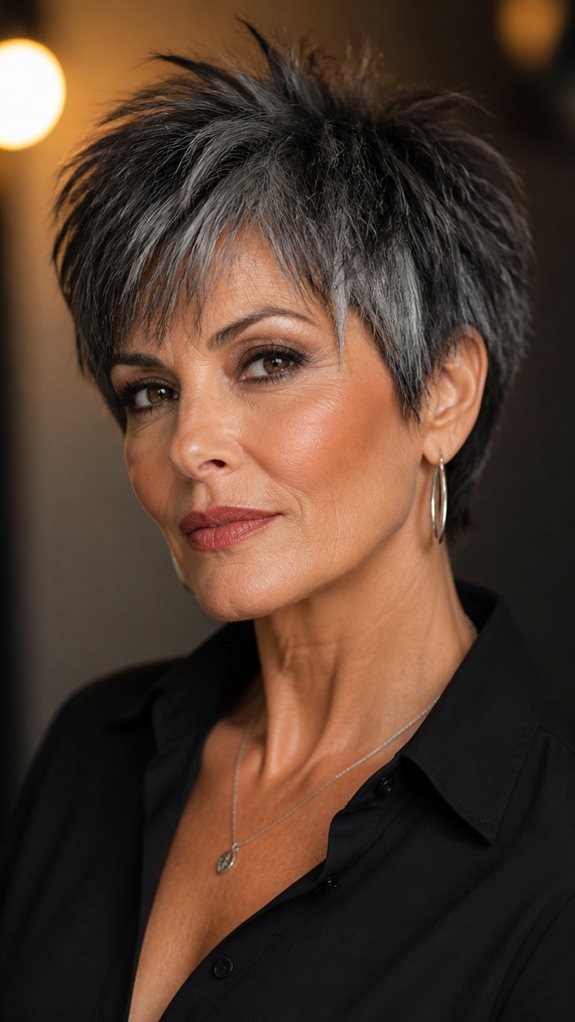
The pixie shag doesn’t hold back. Cropped sides, feathered layers, and a textured crown combine into the boldest expression of the shag cut.
It delivers serious edge while staying surprisingly low-maintenance day to day. Soft, face-framing pieces flatter mature bone structure without dulling the overall impact.
A lightweight pomade or texturizing spray defines the layers and lifts the crown. This one commits you to short hair fully, so think it through before you cut that much off.
If a fully cropped shape appeals more than a shag hybrid, these edgy pixie cuts for fine hair after 50 go deeper into that direction.

Shag Cut Styles That Work With Cowlicks
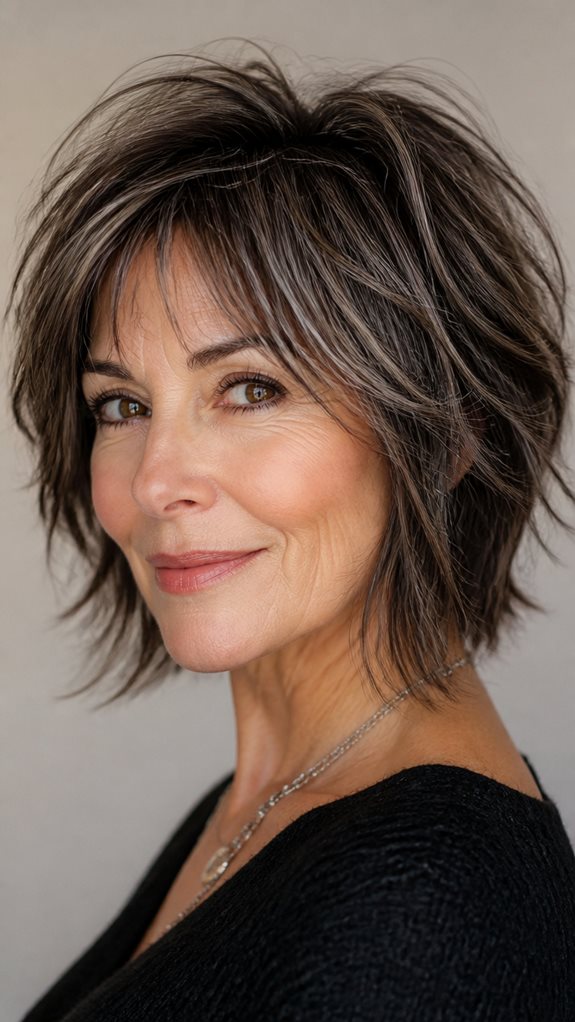
Cowlicks usually get blamed for ruining a haircut, but a shag works with them instead of fighting them. Strategic layering redistributes weight around the growth pattern rather than forcing it flat.
Curtain bangs or wispy fringe positioned over a crown cowlick let its natural direction work for you. Side-swept layers redirect stubborn swirls, and textured graduation at the nape softens whorls that resist smoothing.
Point-cut ends, rather than blunt lines, blend more naturally with a cowlick’s growth pattern than a hard edge would.



Which Cut Suits Your Face Shape Best?
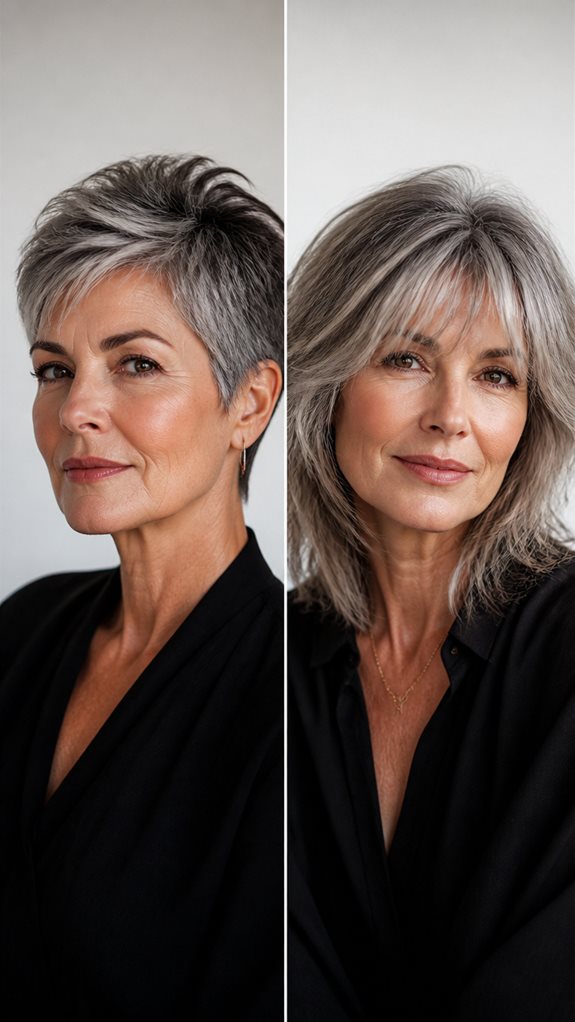
Face shape decides more about which cut works than hair type does. Oval faces handle both the bixie and the shag with ease, so that’s the easiest starting point.
Round faces benefit from a bixie’s elongating structure, which draws the eye upward. Square jawlines find their match in a shag, where layered movement softens angular bone structure.
A skilled stylist assesses your proportions before recommending a direction, so the cut works with your natural structure instead of against it.

How to Style a Bixie or Shag in 5 Minutes
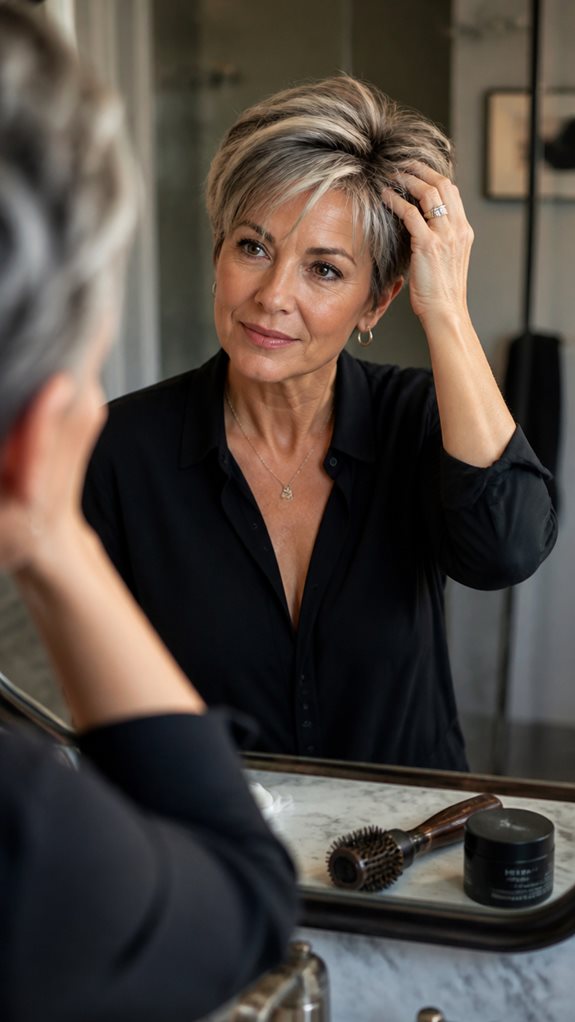
Neither cut demands a long morning routine once you know the moves.
Apply a dime-sized amount of texturizing cream to damp hair, then diffuse or air-dry. A flexible-hold spray at the end locks in movement without stiffness.
For the shag, a diffuser and a lightweight curl cream are the only two tools you actually need.
Scrunch upward while drying to build volume and define the layers. Both cuts respond well to minimal product and minimal heat, which suits a five-minute morning.


What to Tell Your Stylist at the Salon
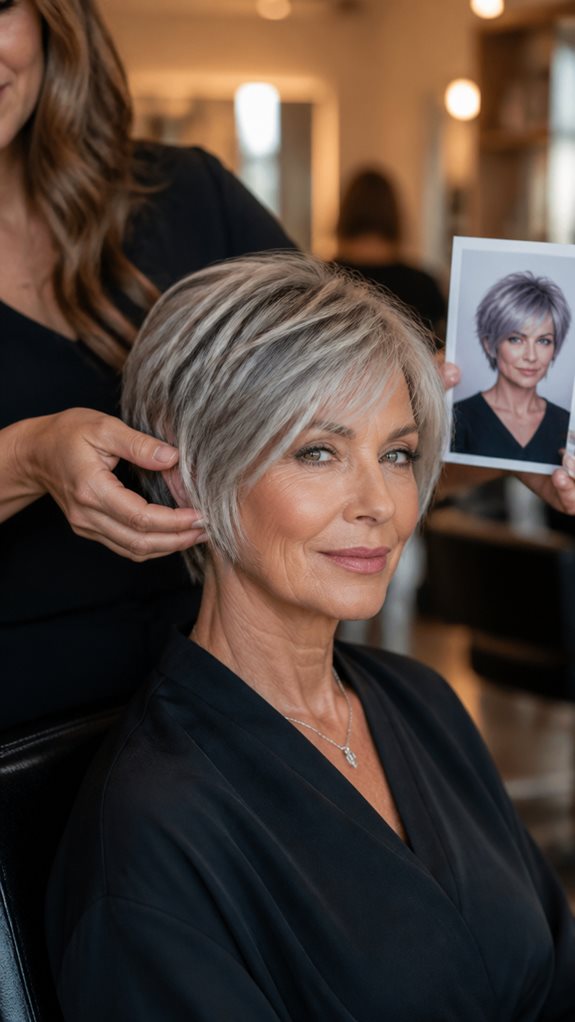
A good haircut starts with the conversation before the scissors come out. Tell your stylist you want a bixie or shag tailored for mature hair, and share your texture, density, and how much time you realistically spend styling each morning.
Bring reference photos of women your age wearing these cuts. It gives your stylist a far more accurate target than a description alone.
Be direct about the type of layers you want, soft and face-framing or edgier and disconnected, and say what you want for crown volume and the neckline finish. If you color your hair, mention it early since it changes how the layers fall.


Frequently Asked Questions
Can a Bixie or Shag Cut Work With Very Curly Hair Extensions?
Yes. Curly hair extensions work with both cuts, but you’ll need consistent maintenance to keep the layers blended and defined rather than tangled at the roots.
Are Bixie and Shag Cuts Considered Professional Enough for Corporate Workplaces?
Both work fine in corporate settings when styled sleekly. They come across as modern, tidy choices that hold up in a professional environment without looking fussy.
How Much Do Bixie and Shag Cuts Typically Cost at a Salon?
Expect to spend $60 to $150, with the range depending on your location, your stylist’s experience, and any added services like coloring or texturizing.
Can You Transition From a Bixie to a Shag Without a Full Haircut?
You can grow one into the other. Ask your stylist to add layers and texture gradually as the length comes in, instead of starting over with a fresh cut.
Do Bixie and Shag Cuts Require Special Pillowcases to Prevent Frizz Overnight?
Special pillowcases aren’t required, but satin or silk cuts down on friction. That keeps layers defined and smooth by morning instead of frizzed from cotton.
Final Thoughts
A bixie and a shag solve different problems. One trims down to a cropped, structured shape, the other keeps length with loose, textured layers, and both flatter women over 50 when the cut is matched to face shape and hair type.
Bring the details from this guide, whichever cut fits your hair, to your next salon appointment and talk through them with your stylist before the scissors start.