23 Simple Winter Nail Designs for Short Nails
Short nails have less room for a design to go wrong, which is an advantage in winter. A matte burgundy, an icy blue tip, or a single chrome accent nail looks deliberate on a shorter nail bed in a way a busy pattern doesn’t.
The 23 designs below lean on color and one accent detail rather than full-nail patterns, since patterns tend to look cramped once you’re working with less surface area. The short oval nail ideas piece covers shape pairings if you want more on that side of it.
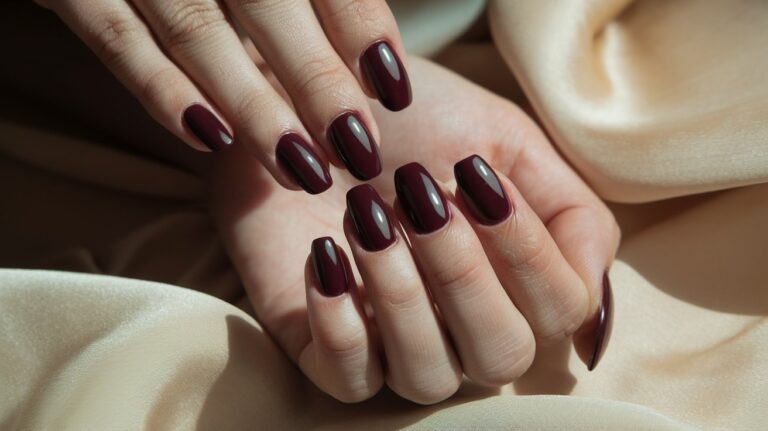
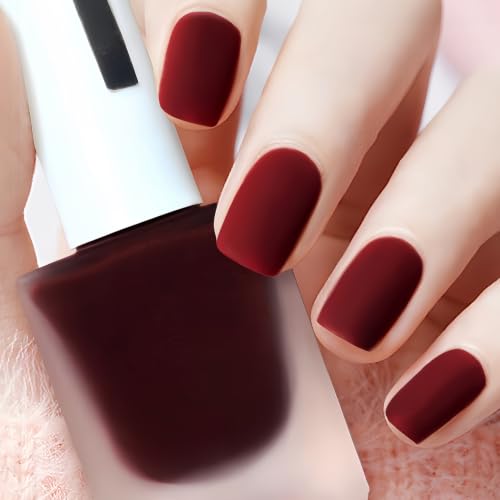
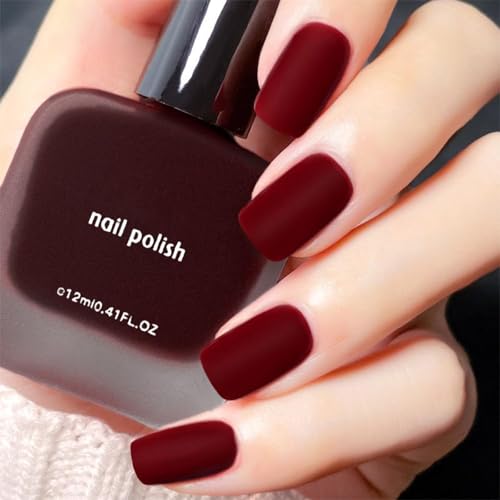
Classic Matte Burgundy

A blue-based burgundy suits cooler skin tones; a brown-leaning one suits warmer tones. Both work on short nails without needing any extra detail.
Two thin coats, each dried before the next, give full color without pooling at the cuticle. Wipe the nail with alcohol first to strip any oil that would keep the matte topcoat from grabbing.
Brush the matte topcoat on in one pass per nail. Going back over it while it’s setting is what causes the streaking people tend to blame on the polish itself.


Icy Blue Tips
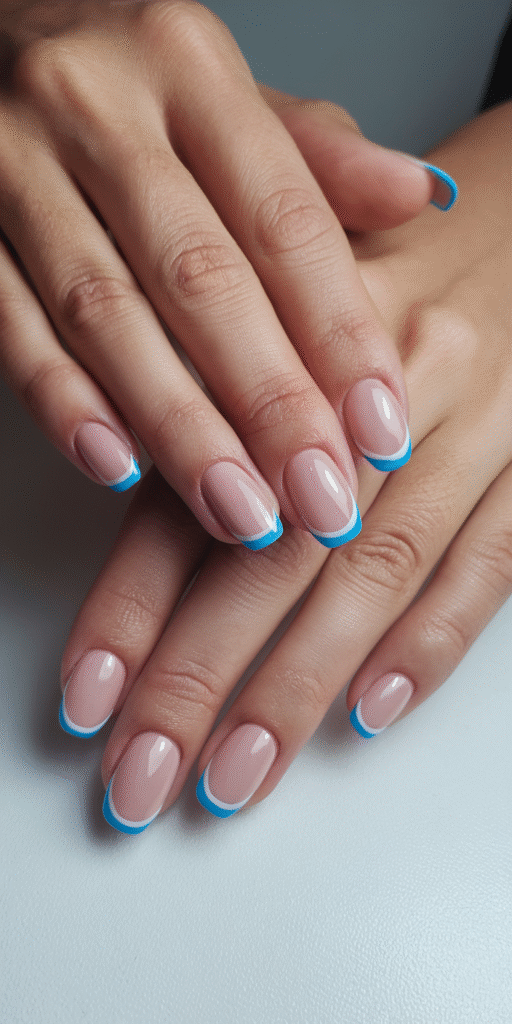
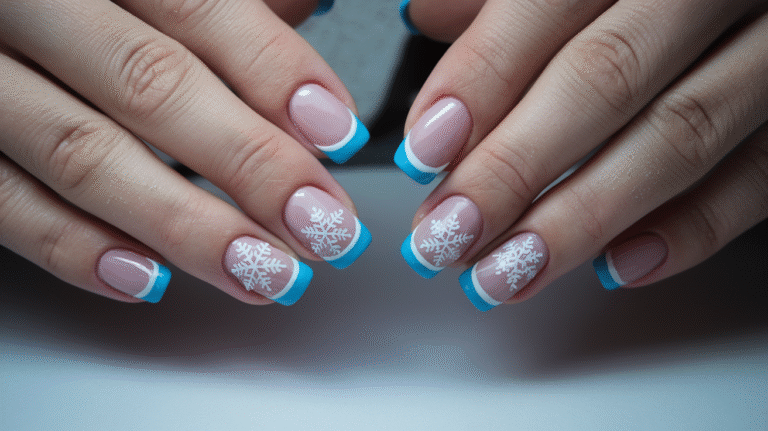
Swapping white for a cool-toned blue at the tip keeps the French shape but changes the whole feel, closer to frost than to bridal.
A sheer nude or clear base underneath lets the blue tip stand alone rather than competing with a colored base. A metallic or shimmer-infused blue comes closer to actual ice than a flat one does.
This design works on any length, and that’s part of why it’s simple to recreate the way it’s pictured. For more takes on this same shape, the short French tip designs piece has you covered.

Silver Chrome Accent Nails

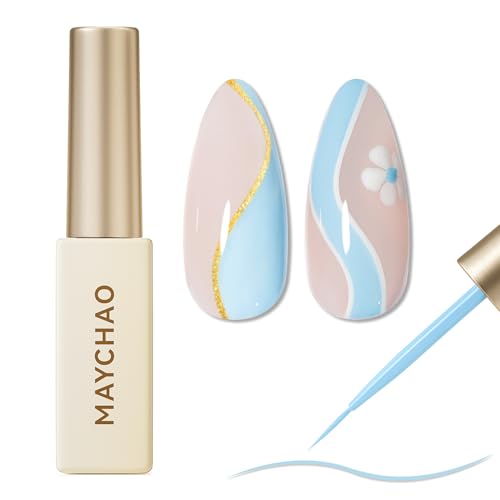
Chrome powder buffed into tacky gel with a silicone applicator gives a cleaner mirror finish than brushing chrome polish straight from the bottle.
One or two accent nails, most often the ring finger, keep the effect from overwhelming a short nail bed the way a full set of ten would.
A no-wipe topcoat matters more here than with most finishes; standard topcoats dull chrome and take the mirror effect down to a plain shimmer.


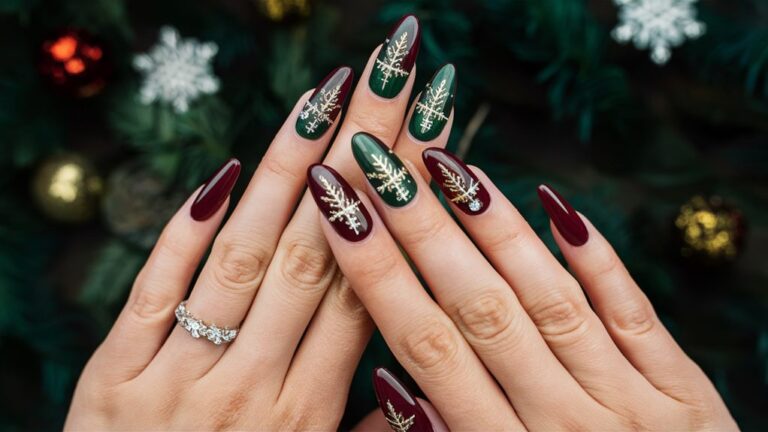
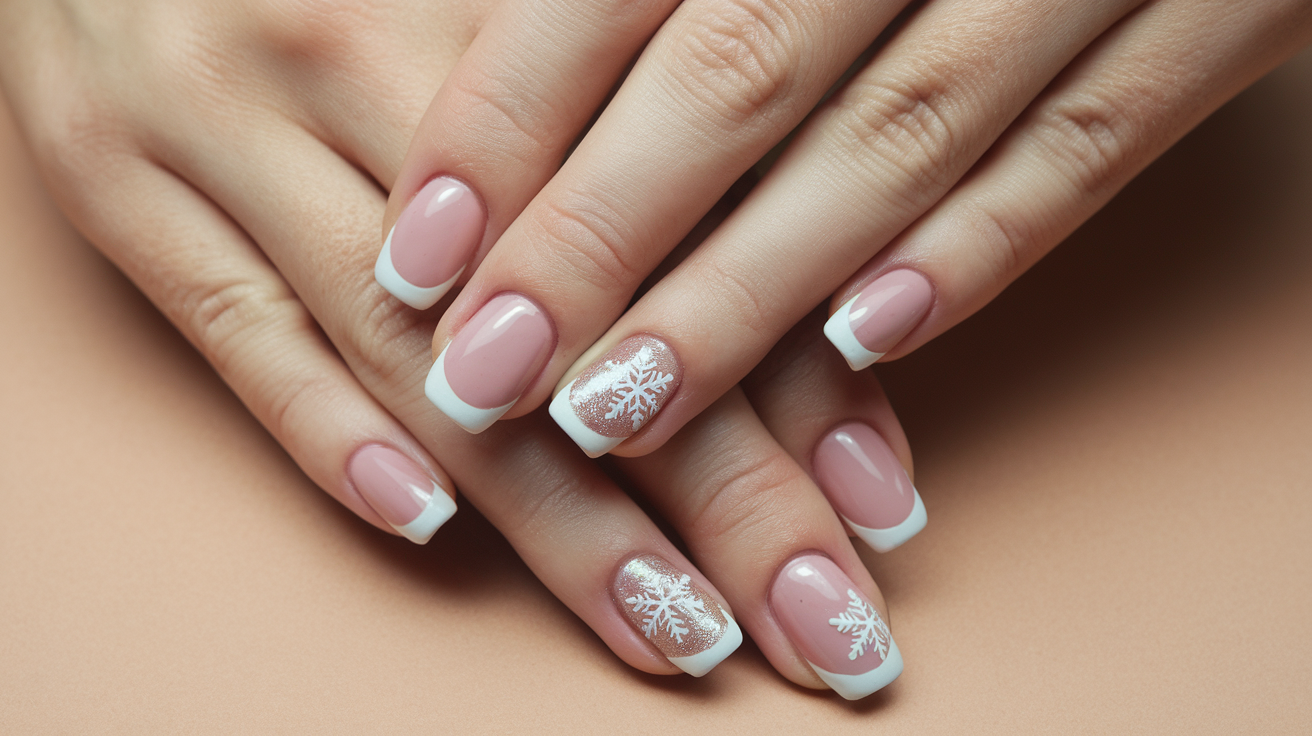
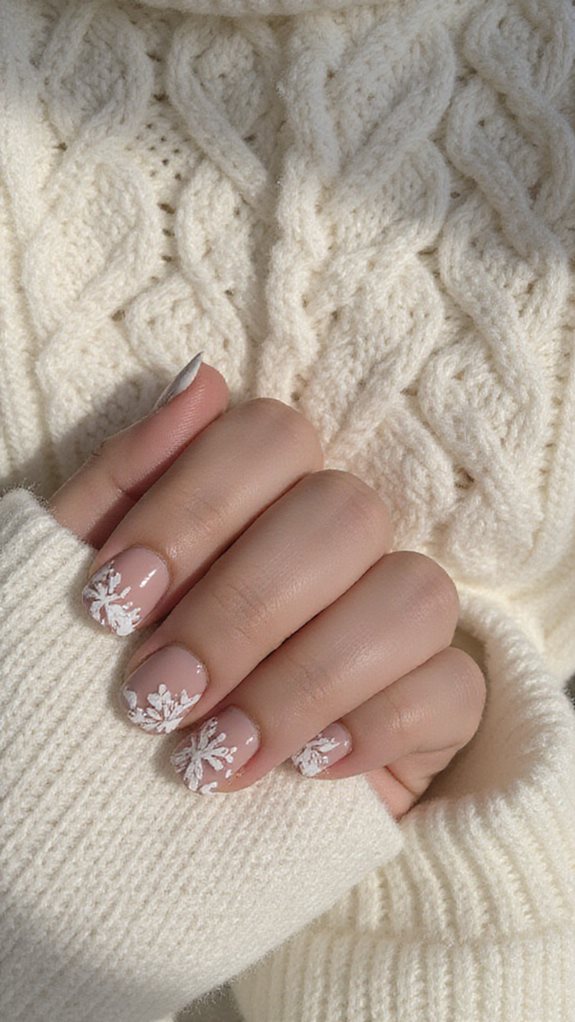
Minimalist Snowflake Details
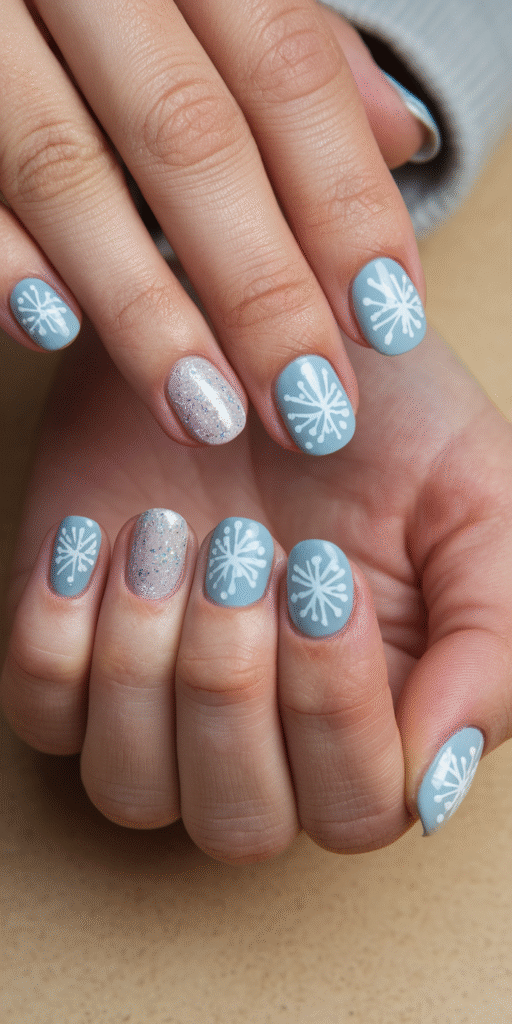
A snowflake is just three crossing lines radiating from a center point, which is why it’s one of the easier freehand designs to learn even on a small nail.
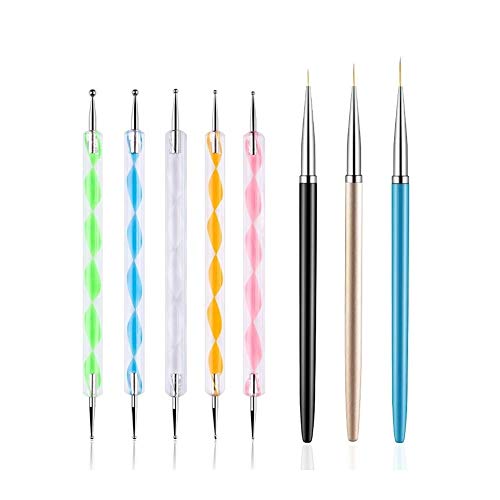
A dotting tool adds small dots where the lines cross for extra detail. Keeping the design to one or two accent nails, rather than the full set, is what keeps it from looking cluttered on shorter nails.
A high-pigment white gel gives full opacity in one stroke, so the lines stay thin instead of building up into a bulky, uneven shape.


Deep Forest Green
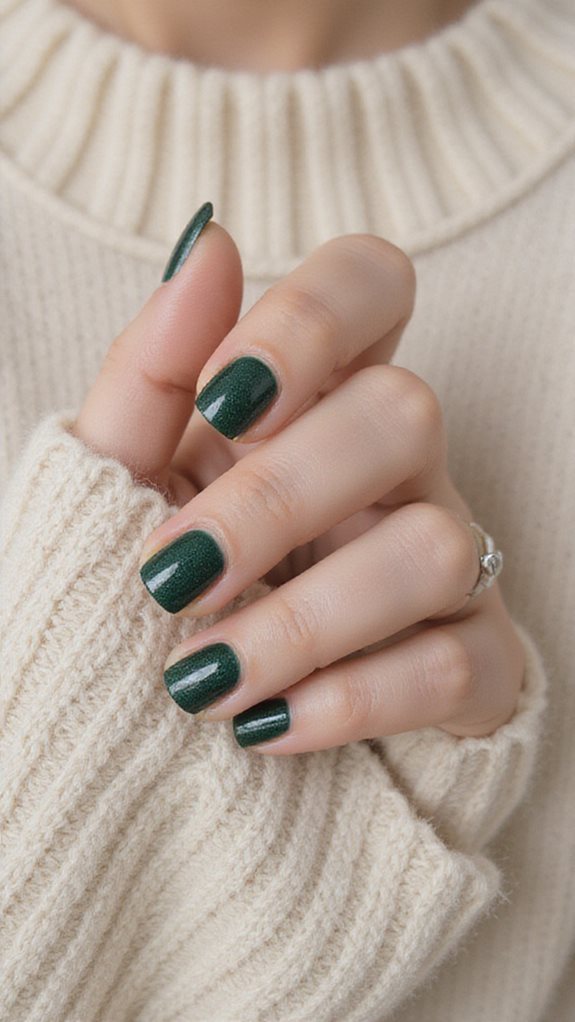
Forest green gives most of the holiday-red mood without being red at all, which is worth knowing if you want something festive that doesn’t look like a Christmas color outright.
Two coats of a pigment-dense green cover a neutral base with no patchy spots left showing. Gold or silver micro-dots along the nail bed, added with a dotting tool, turn the color into a mini constellation pattern without needing freehand skill.
A matte topcoat over the glossy green adds contrast without changing the color, and it suits cooler skin tones better than a straight glossy finish does.


Nude With White Dots
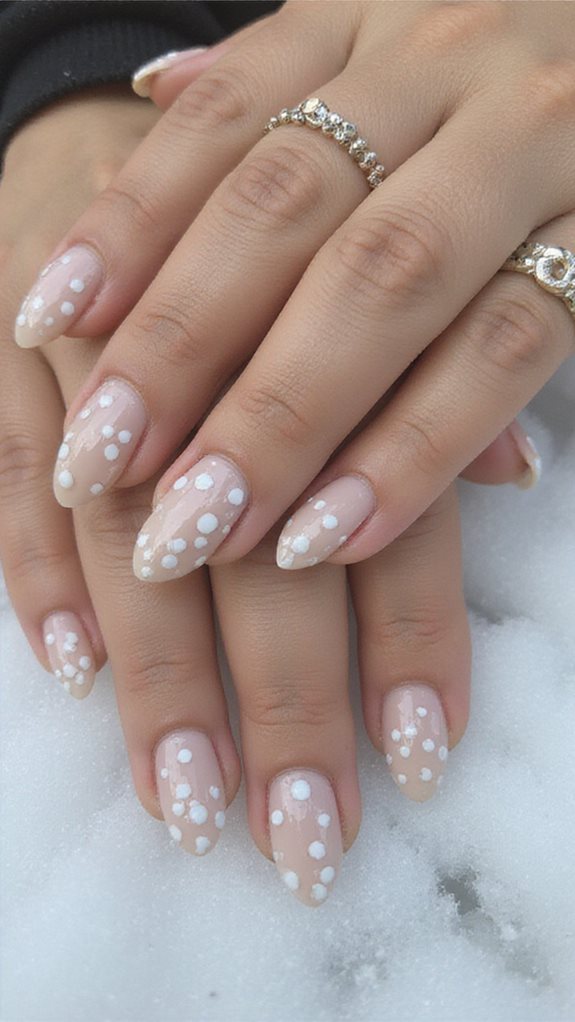
A dotting tool, or a bobby pin in a pinch, gives more even circles than trying to dot with a regular polish brush.
Two coats of nude base need to dry to a solid, even color before any dots go on. A grid pattern comes across as tidy and professional; dots clustered near the cuticle feel more casual and asymmetric.
White gel polish covers a dot in one pass, where a regular lacquer often needs two, which matters on a design with this many individual dots to fill in.


Navy Blue and Gold Flakes
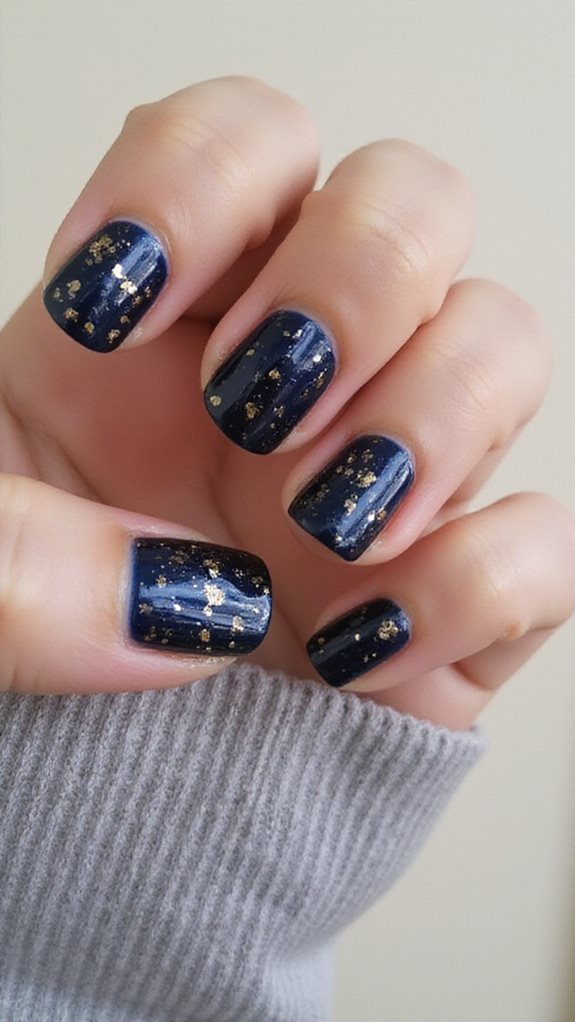
Gold flakes pressed into the second coat of navy while it’s still tacky is what makes them stick; pressing them onto dry polish just means they fall off within the day.
Concentrating the flakes at the tips gives a gradient look; scattering them at random gives a starrier, more even sparkle.
A thick gel topcoat needs to cover every flake edge all the way, since any exposed edge is where the flake starts lifting first. This combination suits a shorter nail well, since the concentrated sparkle doesn’t need much canvas to read.


Sheer Pink With Silver Glitter
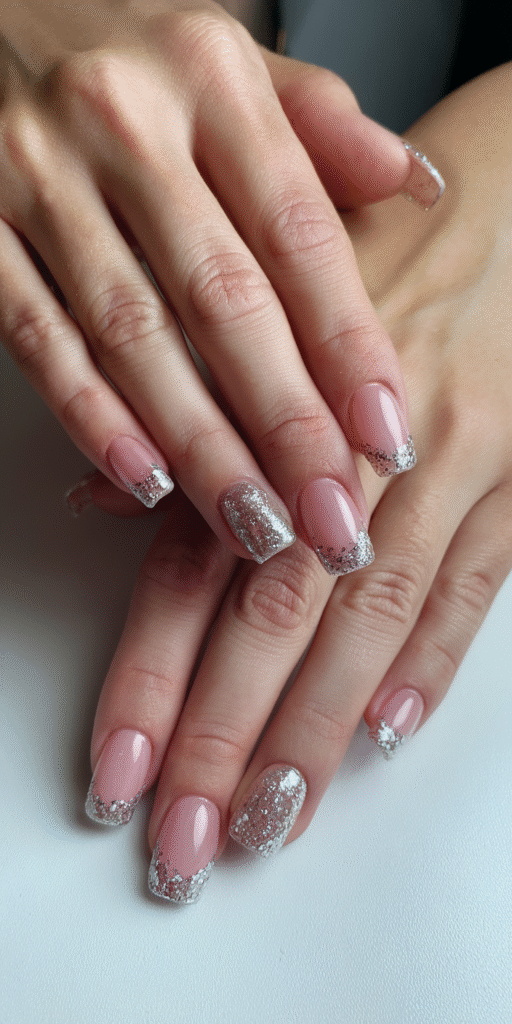
A sheer pink base with silver glitter leans delicate rather than formal, and that’s what makes it easy to wear on an ordinary day, not just for an occasion.
Full coverage across the nail gives an even shimmer; glitter concentrated at the tips gives a gradient; glitter dabbed on one accent nail keeps the rest of the hand quiet.
Wait about a minute between sheer coats so each one doesn’t drag into the last. Because the base is sheer, this design doesn’t shorten the look of the nail the way an opaque dark color can.


Sweater Weather Knit Texture
A knit-textured stamping plate turns cream, caramel, burgundy, or forest green into something that looks like a sweater instead of plain polish.
Raised gel lines traced in an X and V pattern give the stamped design actual texture instead of a flat print. A matte topcoat kills the shine so the finish looks closer to fabric.
This one is detailed enough that it works best as a single accent nail rather than across the whole hand, on a shorter nail bed most of all.


Frosted White Ombre
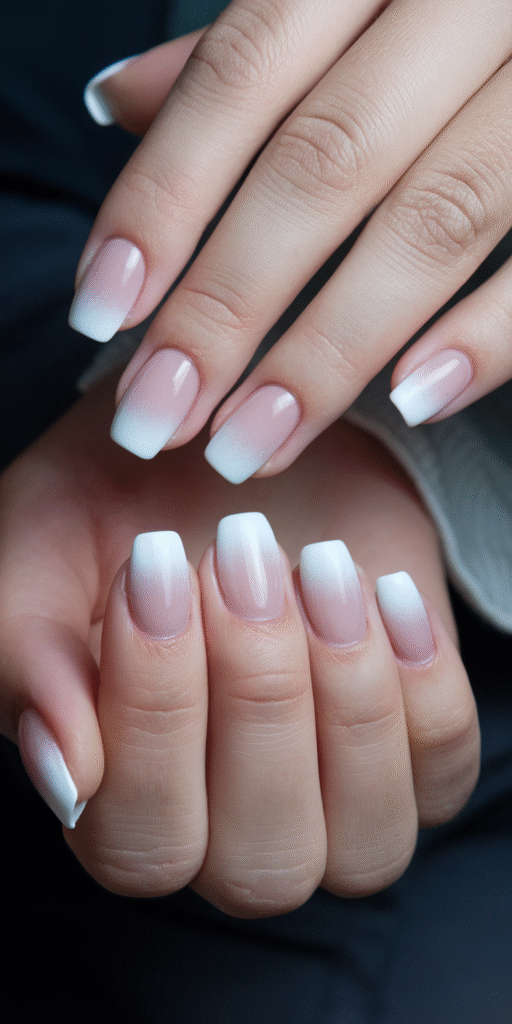
Dabbing white polish with a makeup sponge, rather than painting it on, is what builds the gradual fade from sheer at the cuticle to opaque at the tip.
Blending two or three white shades, from milky to solid opaque, gives more depth than a single white polish alone can manage.
A matte topcoat reads closer to actual frost; a glossy one reads more like glass. Either finishes the effect, and the choice comes down to which you’d rather have on your hand.


Cranberry Red Solid
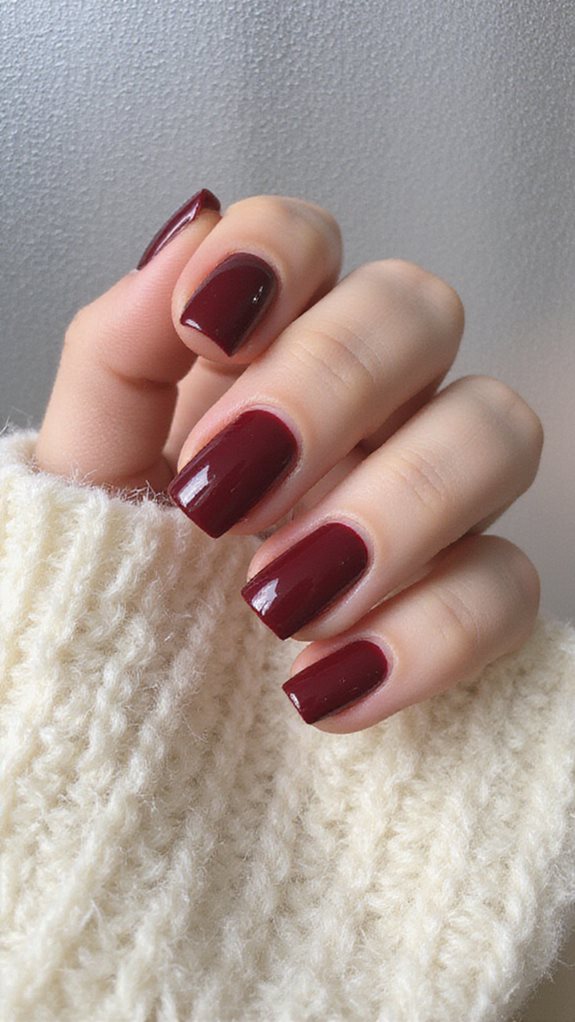
A cool-toned cranberry with blue undertones feels more wintery than an orange-based one, even though both fall under the same “cranberry” name.
A high-pigment gel formula needs two coats for full opacity, over a ridge-filling base that keeps a short nail bed looking even.
Capping the free edge during application, not just painting the top of the nail, is what stretches the wear out to about three weeks instead of one.


Pale Gray With Pearl Finish
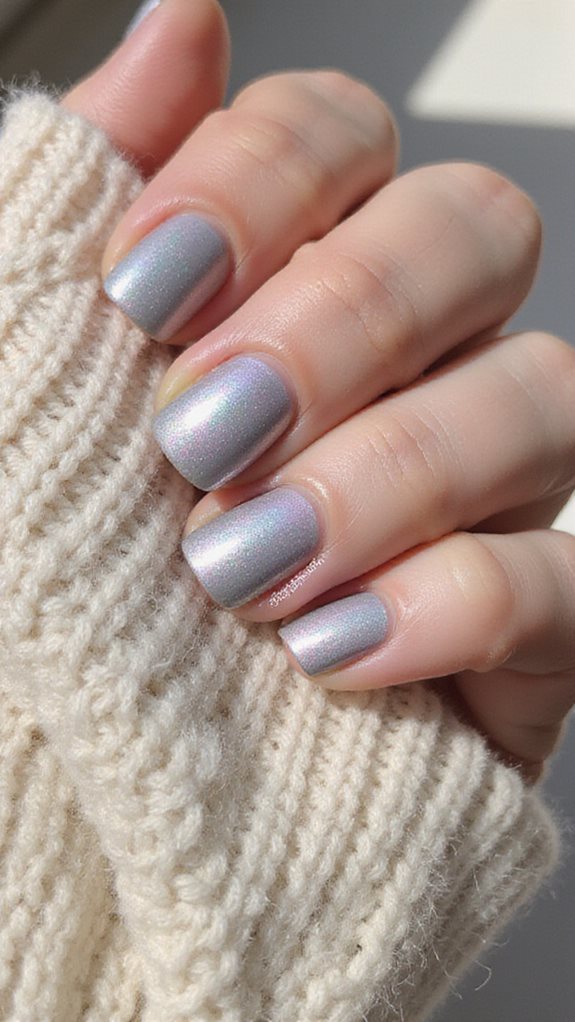
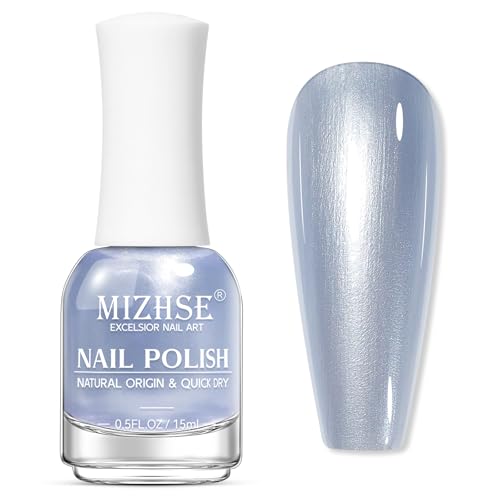
A formula with real mica particles gives a softer, more genuine pearl shine than one relying on synthetic shimmer alone.
The same ridge-filling base and two-coat approach from earlier shades applies here too. Three strokes per nail, center, then each side, keeps the coverage even without going back over wet polish.
Waiting about ninety seconds before the topcoat lets the pearl particles settle flat instead of streaking under the brush.


Chocolate Brown and Cream Stripes
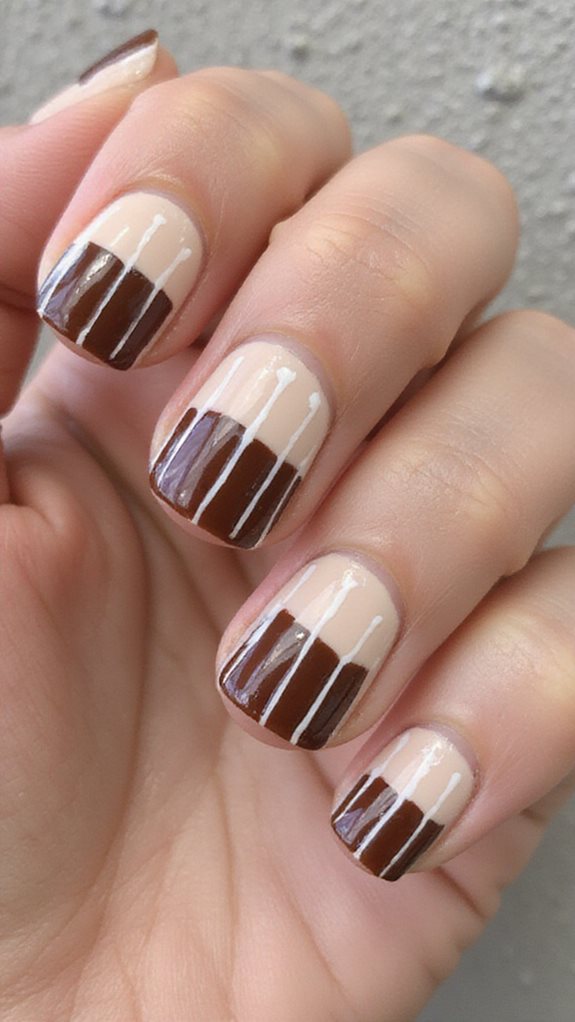
Chocolate and cream sit close enough together in tone that stripes between them look coordinated rather than high-contrast.
Striping tape gives cleaner lines than a freehand brush if you haven’t practiced striping before; a detail brush gives more character once you have.
Varying the stripe widths, some thin, some thick, adds depth that a set of identical, same-width stripes doesn’t have.


Holographic Topcoat on Short Nails
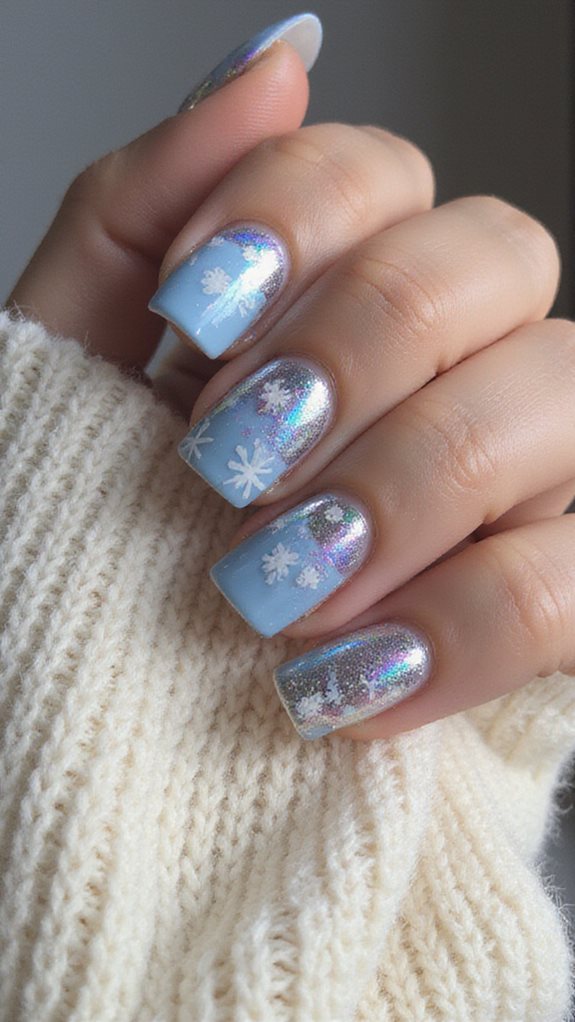
A holographic topcoat over navy, burgundy, or black gives movement to a short nail without needing any actual nail art underneath.
Fine particle formulas give a subtle shimmer; chunkier formulas give a bolder rainbow effect. One thin layer over base polish that’s dried all the way is all this needs.
The prismatic finish holds for about a week to ten days before it starts to look dulled by everyday wear.


Evergreen With Tiny Gems
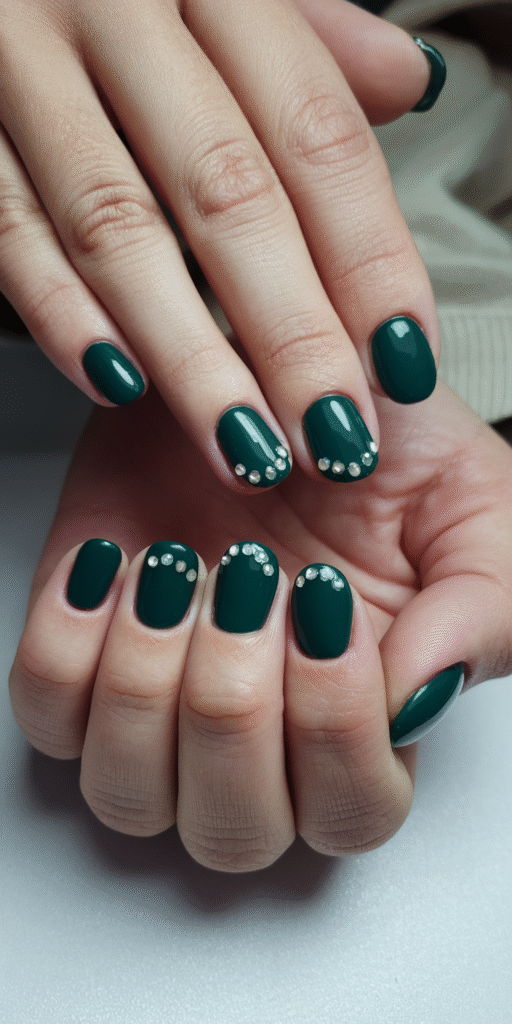
Two coats of an evergreen or emerald base leave the nail dark enough for the crystals to stand out against it.
Tweezers or a dotting tool place 2mm crystals with more control than fingers can manage. A line along the cuticle stays tidy; a cluster on one ring finger works better as a focal point instead.
Crystals lift first at any spot the topcoat missed, so go over each edge twice rather than trusting one pass to seal it.
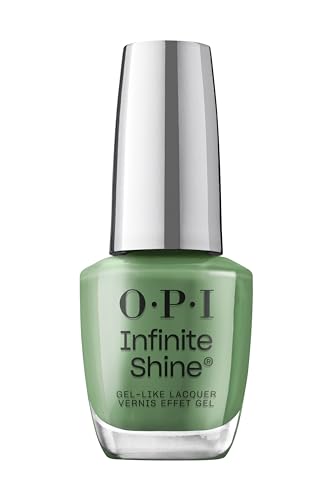


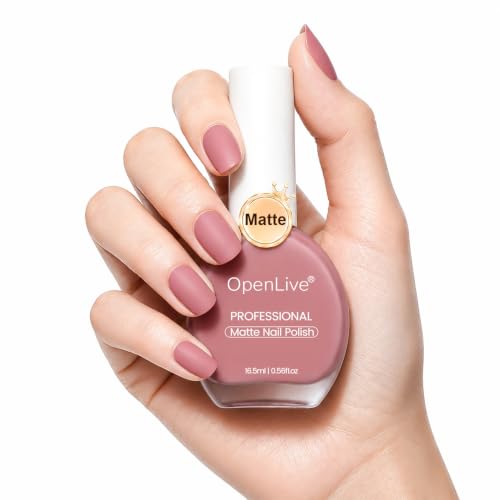
Dusty Rose With Matte Topcoat
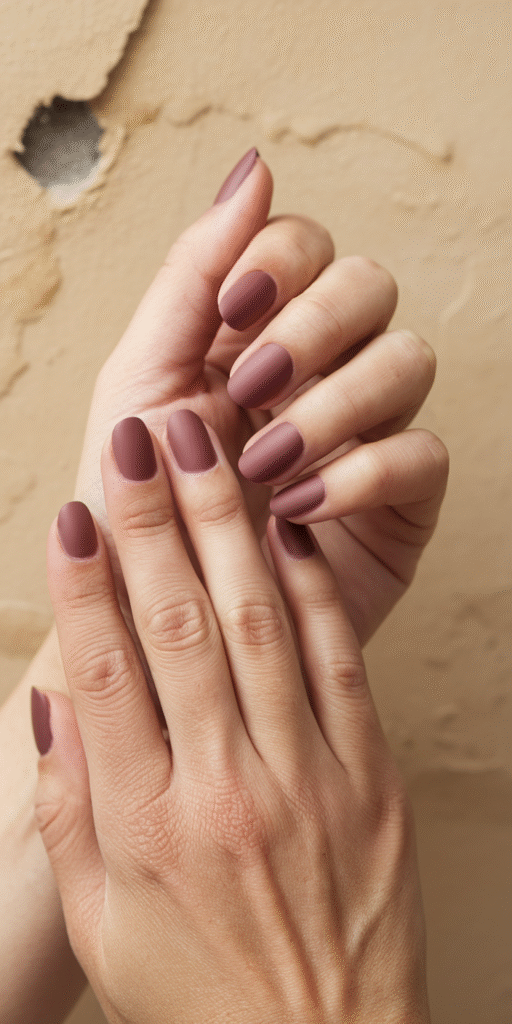
Dusty rose leans neutral enough to suit winter’s muted palette without looking like a summer pink.
Two coats of color go on before the matte topcoat. One even pass of matte finish avoids the shine patches that come from brushing over the same spot twice.
Matte finishes show wear faster than glossy ones, so plan on a fresh topcoat every three or four days if you want the flat finish to stay consistent.


Black and White Plaid
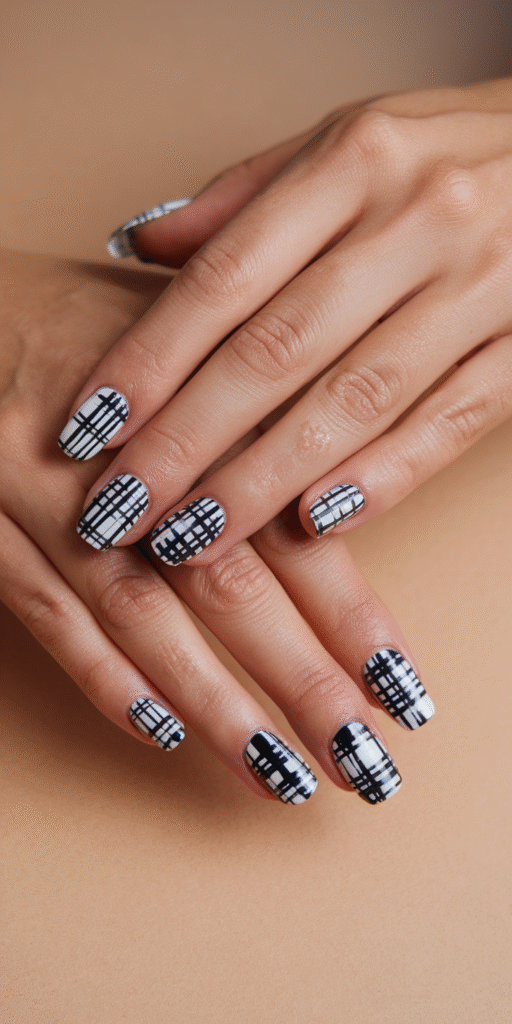
Vertical stripes with a fine-tipped striping brush go on first, over a white base; horizontal stripes cross them once the first set is dry.
Alternating thin and thick lines gives the plaid more depth than stripes of one uniform width would.
This design takes longer than most on this list, so it suits a day when you’re not rushing between other tasks.


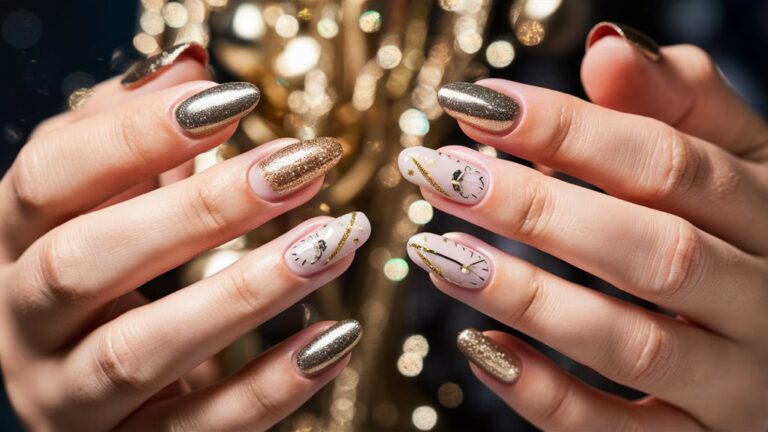
Champagne Shimmer
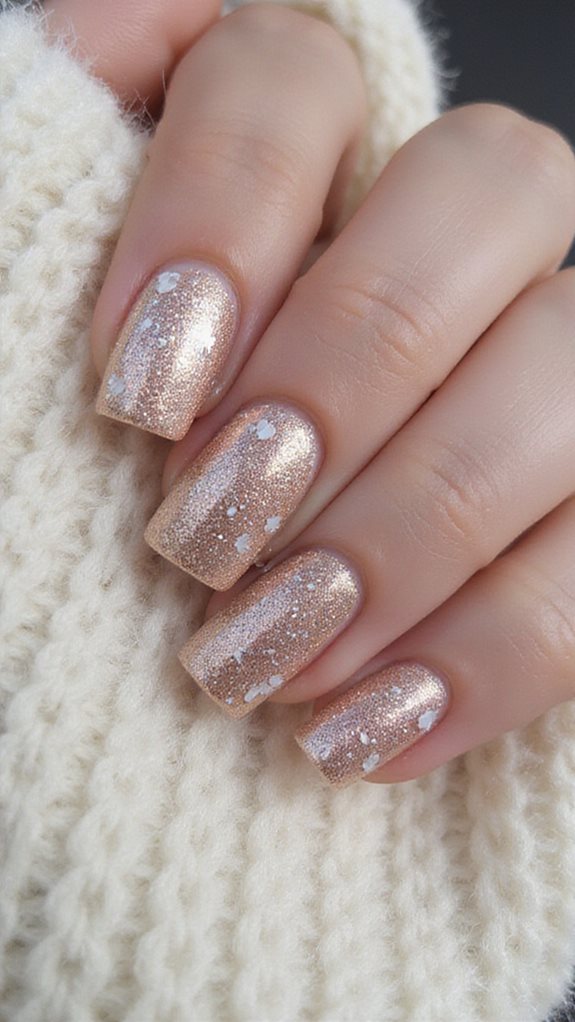
Champagne shimmer needs a short nail bed less than most colors do, since the reflective particles catch light the same way regardless of nail length.
Two thin coats prevent the shimmer particles from clumping the way one thick coat can. Layered over a nude base, the metallic effect reads stronger without changing the overall color.
A gel topcoat seals the fine-milled particles for a mirror-like finish that holds up under everyday handwashing better than a regular topcoat does.


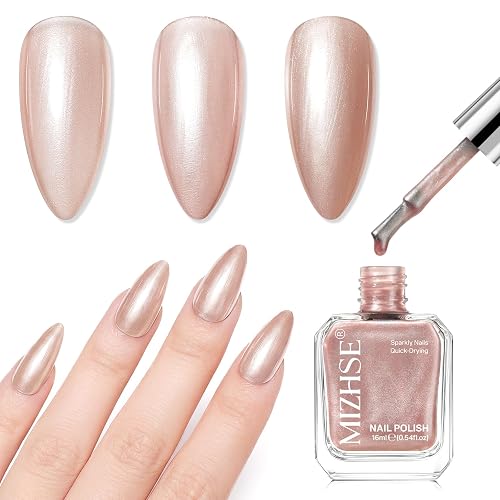
Snowflake French Tips
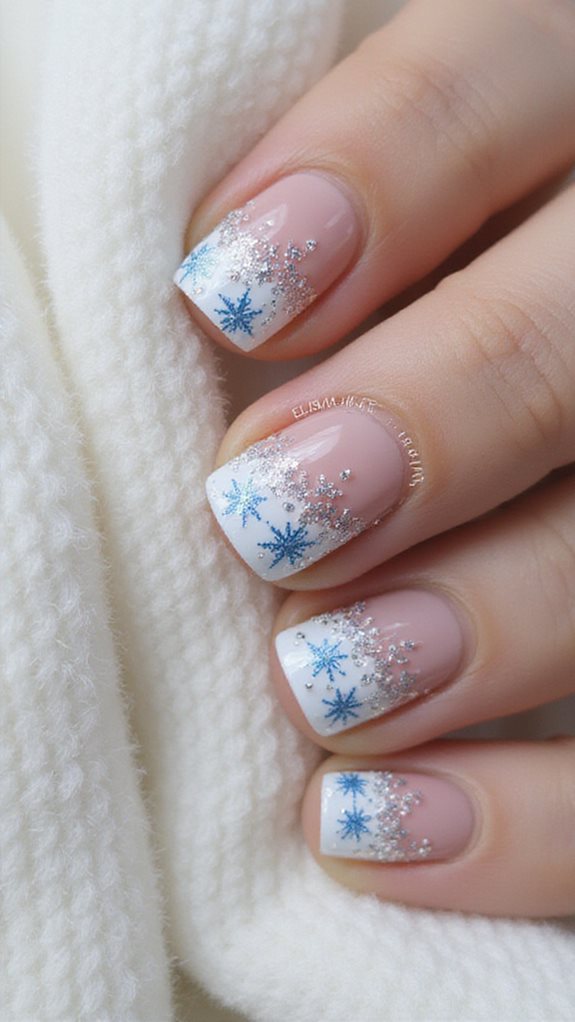
A sheer nude or pale pink base sets up a French line that comes across as soft rather than stark before any snowflake goes on.
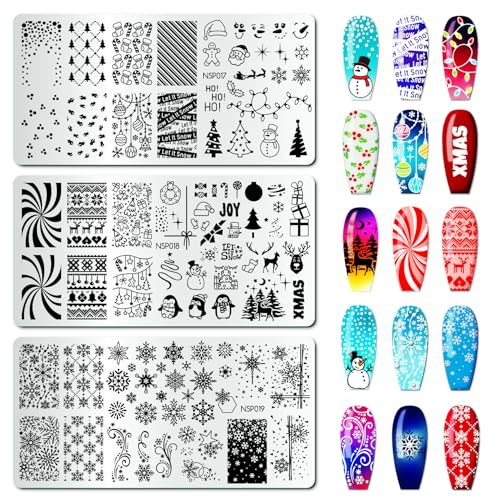
Once the white tip cures, a fine detail brush or a stamping plate adds the snowflake along the tip’s edge. A dotting tool builds a six-pointed shape one dot at a time if you don’t have a stamping plate on hand.
Steady pressure while applying keeps the snowflake from smearing into the tip line underneath it. There’s more variation on this same idea in the winter French tip designs collection.


Deep Plum With Glossy Finish
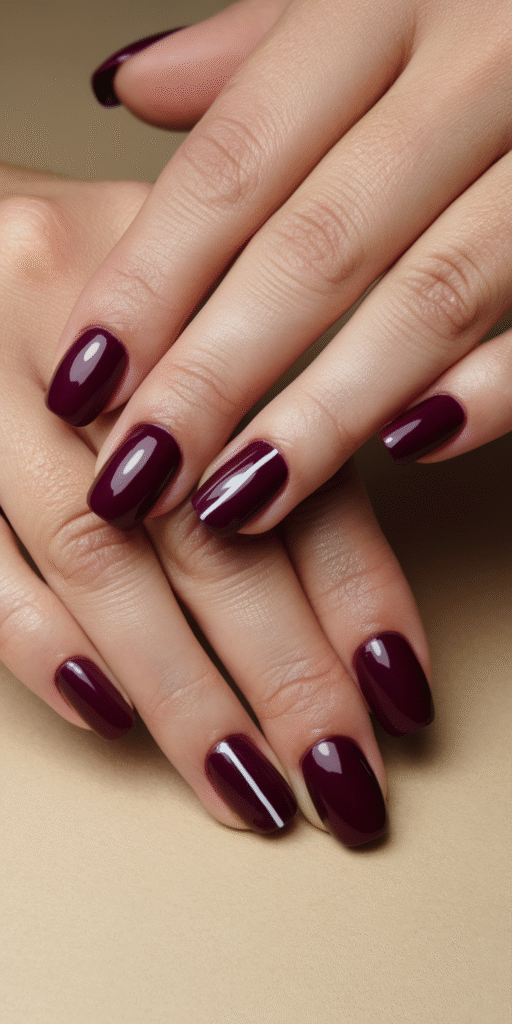
Plum needs two thin layers, not one heavy one, or the deep color turns muddy instead of rich.
Glossy topcoat applied within a couple of minutes of the color drying bonds better and resists smudging more than waiting too long between steps.
A fresh topcoat every three days keeps the shine from fading before the color itself starts to chip.


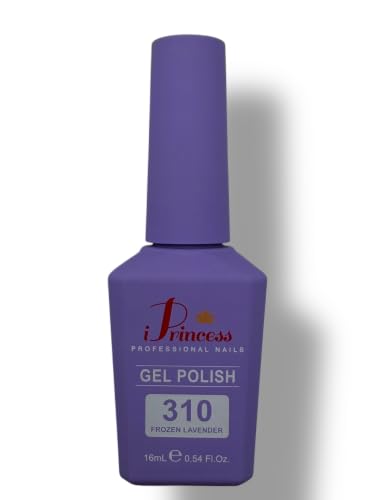
Icy Lavender
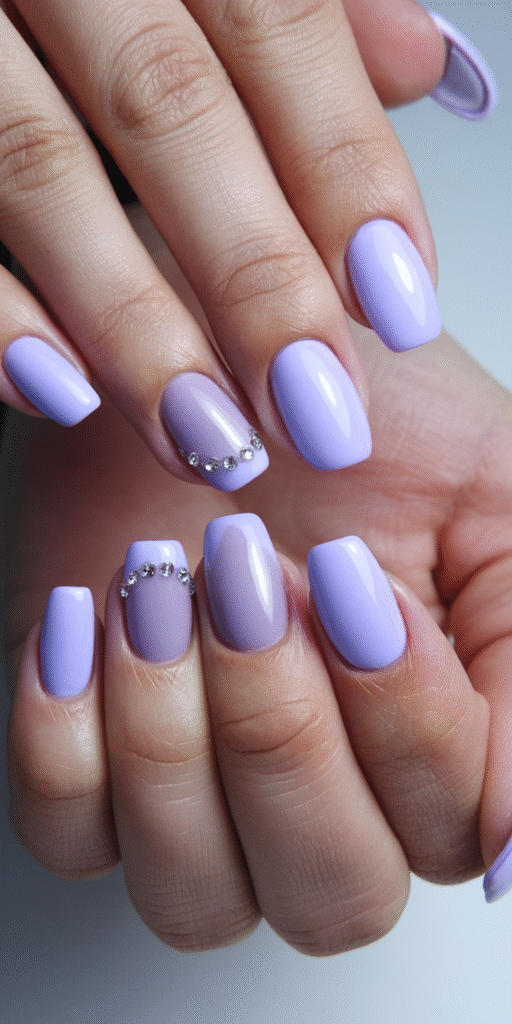
Lavender sits cool enough on the color wheel to feel wintery without leaning as dark as navy or plum.
Two coats of thin, even polish give full color payoff on a short nail without needing a third. A gradient from pale ice to deeper violet, blended with a makeup sponge, adds dimension without a full color change.
A high-gloss topcoat keeps the pastel from reading chalky, which is the main risk with lighter shades like this one.


Copper Metallic
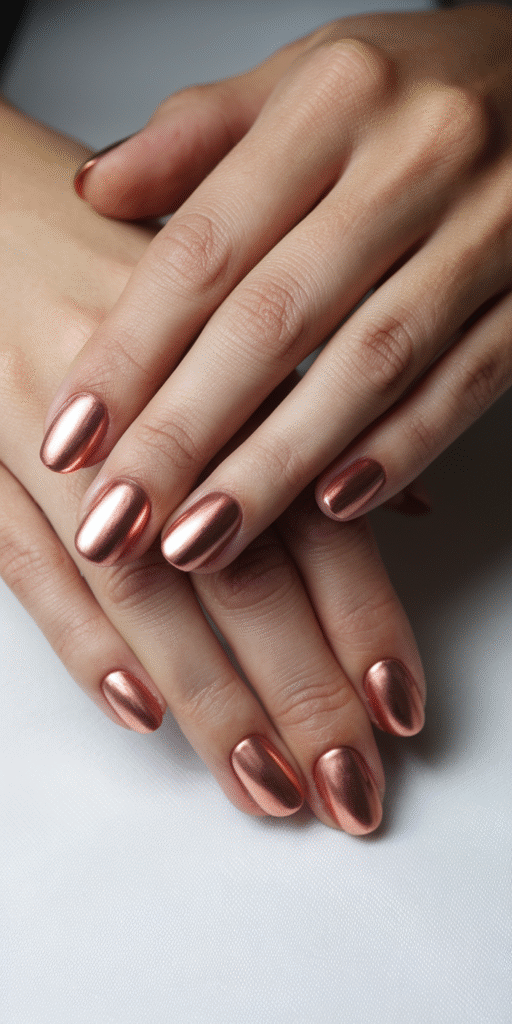
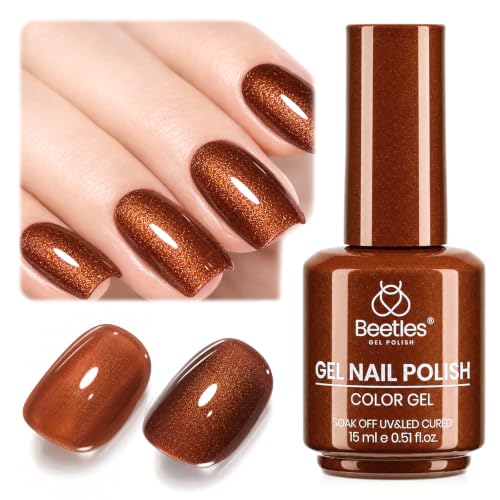
Copper’s rose-gold undertone warms up winter’s usual cool palette in a way plain gold or silver doesn’t.
Building copper up in two thin layers over a ridge-filling base lets the metallic sheen catch light at different angles instead of sitting flat.
Layered over burgundy or forest green rather than worn alone, copper functions as an accent rather than the main color, and a high-gloss sealer keeps the shine from dulling over the week.


Winter White With Silver Striping
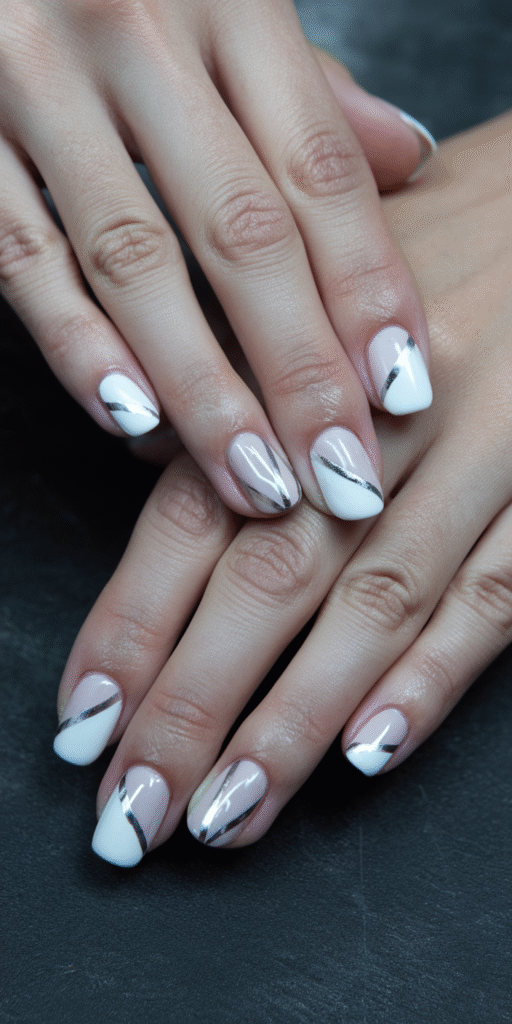
Beginners get straighter results from tape than from a brush; once you’ve practiced freehand striping a few times, the brush starts adding character the tape can’t.
Two coats of white base need to sit solid and opaque before any silver goes on top. Parallel stripes, a chevron, or one single accent line are all built the same way; the tape placement is the one thing that changes.
The simplicity of white and silver is what keeps this from feeling crowded on a short nail.


Frequently Asked Questions
How Long Do Winter Nail Designs Typically Last on Short Nails?
About one to two weeks with regular polish and a fresh topcoat every couple of days. Cuticle oil and gloves outdoors both slow down the chipping cold, dry air tends to speed up.
What Nail Shape Works Best for Short Winter Nail Designs?
Rounded or squoval shapes give the most surface area to work with on a short nail, and they hold up better against chipping than a squared-off edge does.
Can I Do These Winter Designs at Home Without Professional Help?
Most of these come down to a steady hand, a dotting tool, and striping tape for the straighter lines. None of them need salon equipment to pull off at home.
How Do I Prevent Chipping on Short Nails During Winter?
A quality base coat, cuticle oil worked in daily, and gloves during cold outdoor stretches all help. Dry winter air pulls moisture from the nail bed faster than most people expect, and that dryness is what leads to chipping.
What Base Coat Should I Use for Winter Nail Designs?
A ridge-filling or strengthening base coat with calcium, keratin, or nylon fibers holds up best under the darker shades on this list and keeps them from staining the nail underneath.
Final Thoughts
Most of these designs share the same backbone: two thin coats, a topcoat matched to the finish you want, and a sealed free edge. Get those three right and almost any color on this list holds up.
Store metallic and chrome polishes upright so the pigment doesn’t separate, and let each gel layer cure all the way before moving to the next. If you want something that leans further into the holiday theme, the short Christmas nail designs collection has more options.